

 Newsletters


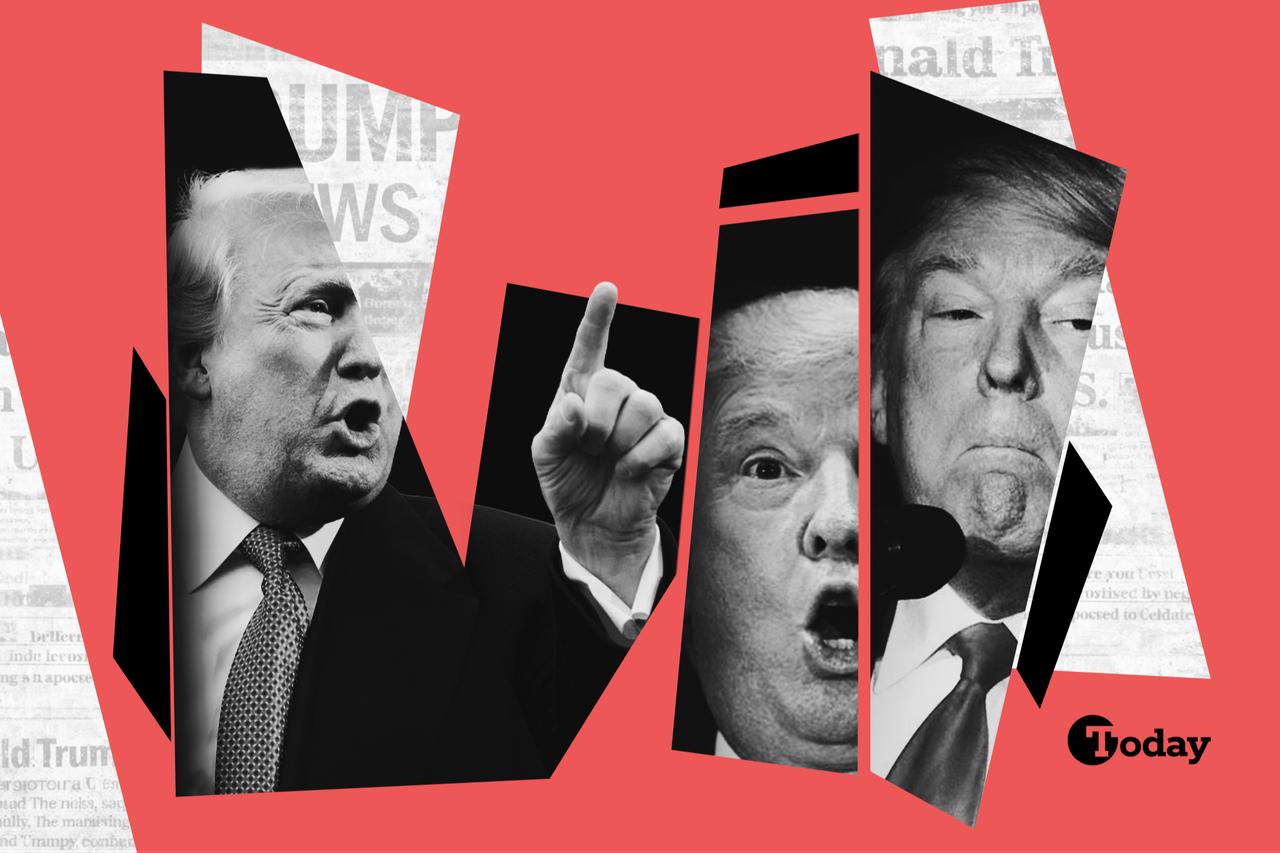


Reality is impossible to pinpoint inside the frenzied time warp between neuroscience and Trump's self-certified alternative universes.
Trump insists that his war against Iran is over, yet the gunfire continues to blaze from Lebanon to the Persian Gulf. The Strait of Hormuz is open, albeit closed. In a recent social media post, the only convicted felon to be elected commander-in-chief of the United States of America called Iranian officials “very different” and “strange.” He added Tehran was “begging” for a deal, while demanding that they “better get serious soon.”
The long-term consequences of Operation Epic Fury are quite clearly global in size and scope, but they just as clearly don’t exist in Trump’s separate reality.
I could tell you why.
But I can’t. I’m “Old Ink,” gagged by the Goldwater Rule, an ethical muzzle that states, “Don’t say what everyone is already thinking, and if you say it professionally, you’re fired.”
Although the Goldwater Rule smacks less of a virtuous recommendation and more like an energy drink, the directive was formally adopted by the American Psychiatric Association in 1973. It prohibits psychiatrists from diagnosing public figures they haven’t personally examined and obtained consent from.
The guideline emerged after a 1964 incident in which a magazine surveyed psychiatrists regarding Republican presidential candidate Senator Barry Goldwater. Many declared him a lunatic, unfit for office—a sentiment fed by President Lyndon Johnson's TV ad that showed a young girl sniffing a daisy, vaporized by a nuclear bomb presumably triggered by Goldwater.
Goldwater sued. Goldwater won. Psychiatry lost. And ever since, mental health professionals have treated public commentary on politicians the way toddlers treat electrical outlets: With caution, fear, and irresistible urges.
Still, none of the psychiatrists I know are keen to tell you what they think of Trump’s brain, which has done for impulse control what feral raccoons did for garbage can security.
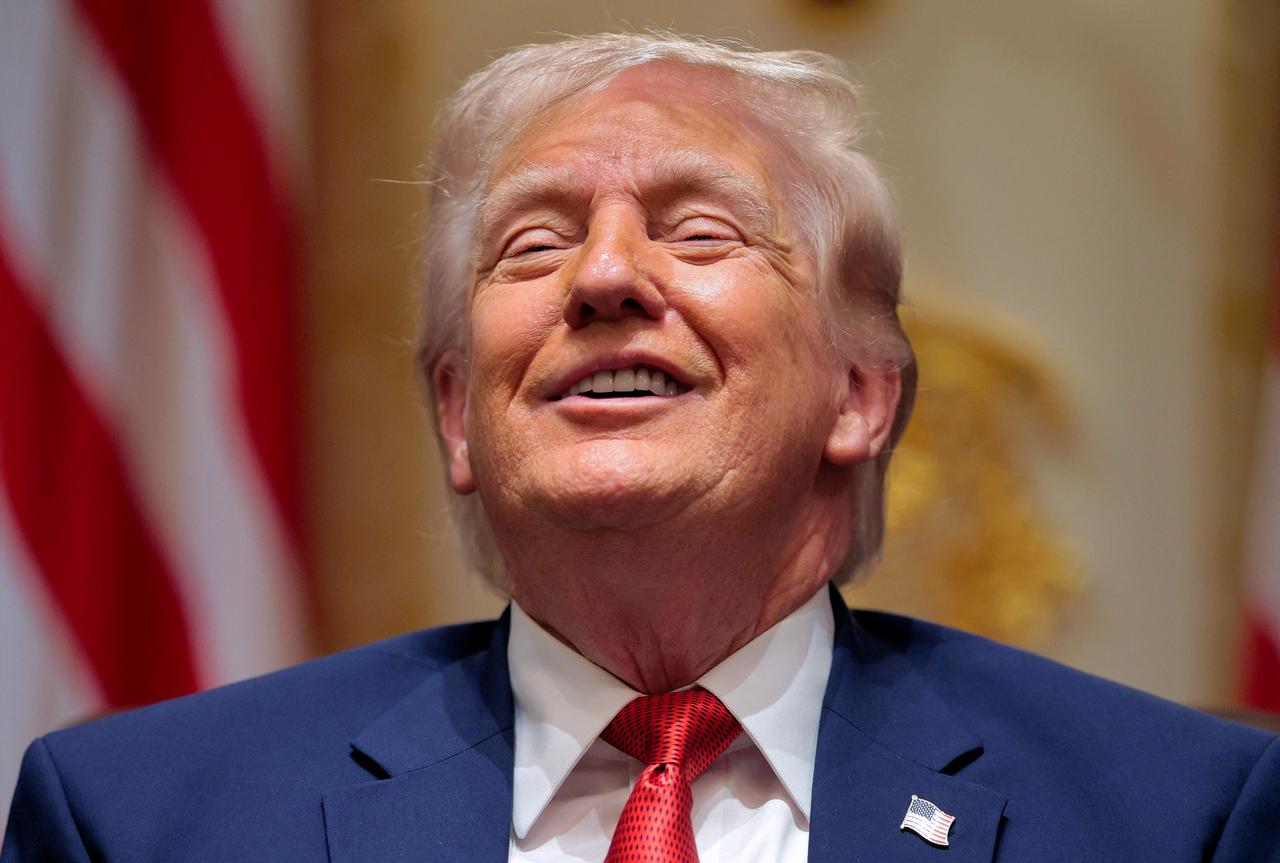

Back in 2016, the boffins at Oxford University issued an early storm warning. Their study of “psychopathic traits” concluded that Trump’s derangement ranked above Adolf Hitler and only just below Idi Amin, Saddam Hussein and Henry VII.
Dr. Kevin Dutton’s report twisted Washington’s then 6,800 news correspondents into an awkward position. They had eyes, ears and, soon enough, archives of Trump quotes that read like dialogue from “One Flew Over the Cuckoo’s Nest.” But they balked at connecting dots that were not just connected, but holding hands and singing tunes from “The Rocky Horror Picture Show.”
Part of this hesitation remains institutional. Nobody wants to be accused of “armchair diagnosis,” a phrase that sounds benign until you realize it can end careers faster than a 3 a.m. Trump dump on Truth Social.
And thus we arrive at the Great American Compromise: describing presidential behavior in agonizing detail while refusing to name what it might mean.
Trump’s public statements are not whispered in leaks or filtered through anonymous sources. He delivers them at rallies, press conferences and on social media with the subtlety of raw methamphetamine on a lab rat.
In one war update, he spoke in sweeping, declarative terms about preventing catastrophe and asserting dominance, insisting, in effect, that America would not allow events to happen, even as they were already unfolding in real-time.
Last Thursday, for instance, reporters in the Oval Office silently gulped through Trump’s rage-fueled outburst against the cost of Sharpie pens, all while energy costs continued (or did not) to skyrocket globally and NATO declined to help reopen the already open Strait of Hormuz.
Confusion is a word we’ve invented for an order that’s not understood—except in America, where it’s called the Goldwater Rule.
Or, maybe, as Trump crowed upon winning the 2016 Republican presidential primary election in Nevada, “I love the poorly educated.”
There’s a recurring pattern. Conflicts described as already resolved; victories declared in the middle of ongoing operations, and a tendency to narrate reality as if it were a TV movie that can be wrapped up before the commercial break.
Now, to be clear, this Old Inkster isn't diagnosing anything, just simply observing that if reality were a group project, Trump would be the guy declaring the undertaking finished while everyone else is still updating their Zoom app.
The difficulty is not a lack of material, but an overabundance of it. Trump’s public record includes statements that critics say reflect grandiosity, a lack of empathy, and an elastic relationship with the truth. These are traits that mental health professionals have publicly discussed, often at great professional risk.
One group of experts argues there’s a “duty to warn” the public, a phrase that sounds less like medical ethics and more like a frantic shout before a mudslide.
But invoking such language runs headlong into the Goldwater Rule, which insists on putting a decorative pillow over a fire alarm. This creates the Mar-a-Lago Paradox: the more publicly observable the behavior, the less permissible it is to interpret it.
Think of a lifeguard instructed to describe drowning as “energetic splashing.”
White House correspondents, those pale acolytes of access journalism, aren’t technically shackled by the rule. But their panic perfumes the Oval Office gaggle with the aroma of Trump Victory 47 cologne, nudging them toward the soft, padded corners of language.
“Controversial remark…Unconventional rhetoric…Norm-breaking behaviour.” All of them bloodless, antiseptic phrases designed to launder the grotesque into something you can sip with morning coffee.
A deeper paranoia congeals at the bottom of the cup: Escalation. The unspoken terror that if one legacy newsroom snaps and calls the thing what it is, the rest will follow in a frothing pack. And, suddenly, it’s trench warfare, reporters flinging diagnoses at each other like containers of Starbucks Iced Lavender Matcha Latte.
It would get real nasty real fast. Campaigns hiring their own pet neurologists and psyche-hustlers, politics devolving into a clinical demolition derby, each side trying to out-pathologize the other in a swamp of Instagram sludge.
Perhaps this is why the time warp refuses to die.
It lingers. Stubborn and ugly.
And so we arrive at, as every lacquered political guest on cable news says, “the bottom line at the end of the day”—that smug little idiom rolled out before retreating to commercial.
The Goldwater Rule, that strange relic of psychiatric self-restraint, has pulled off a minor miracle.
In the age of total exposure—where every one of Trump’s twitches, rants and midnight transmissions rattles the global nervous system—the rule has distorted the most glaring and reasonable line of questioning into a query only asked by those having an egocentric and antisocial personalities marked by a lack of remorse for their actions, an absence of empathy for others, and often criminal tendencies.
Not because the evidence isn’t there.
But because somewhere along the line, we all agreed—quietly, nervously—there’s a sort of policy not to ask.
So, as Operation Epic Fury rocks on, Let's Do the Time Warp Again.


 Set as preferred source
 Set as preferred source


 2 min read

 1 min read



