Newsletters




There’s a moment somewhere between midnight and moral collapse when the numbers stop behaving like numbers and start acting like deliriums.
Five hundred billion dollars.
That’s not an investment. That’s a weather system.
That’s a sandstorm made of cash, sweeping out of Riyadh and Doha and Abu Dhabi, blasting across the green lawns of Europe and the luxury-good-branded boardrooms of global sports.
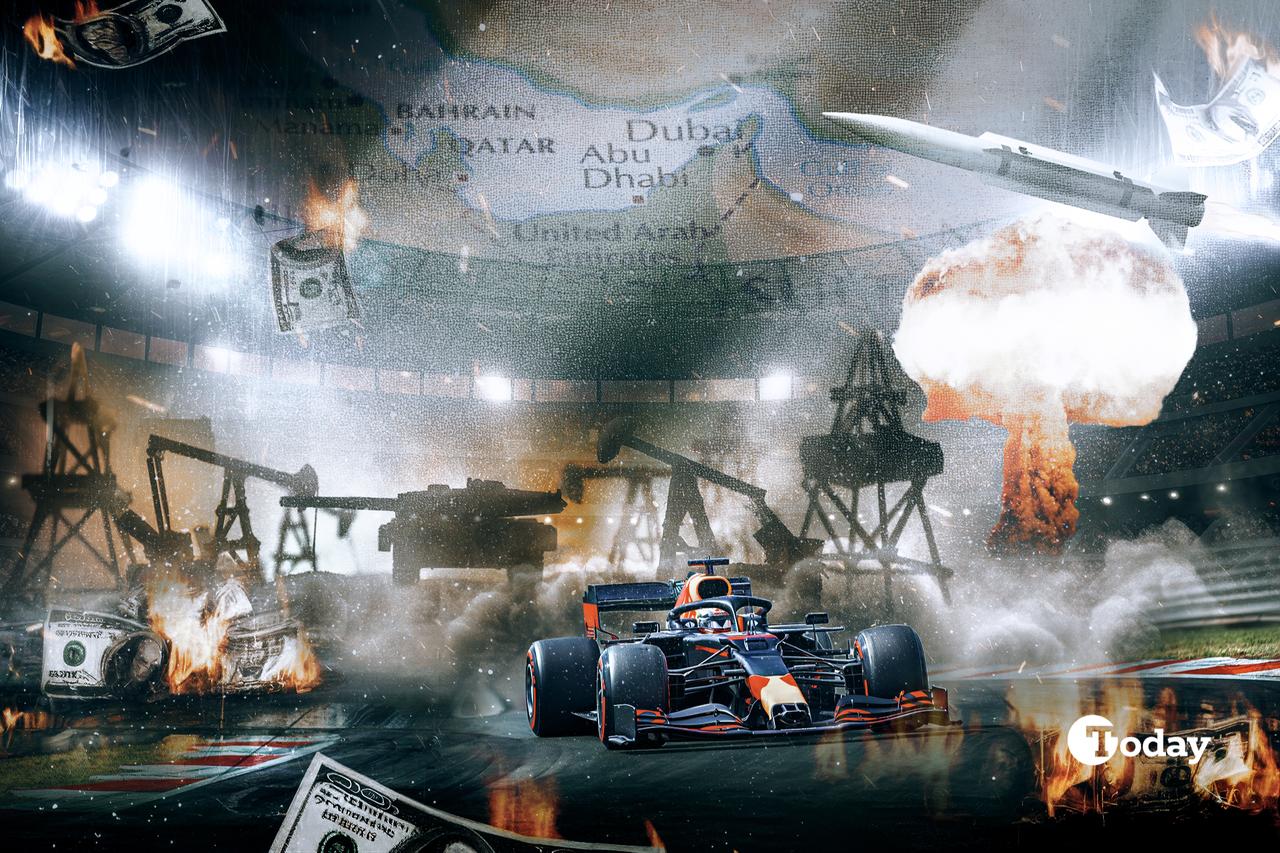
These dunes of gold dust are the foundation for a peculiar new ecosystem, where football clubs are no longer clubs, tournaments are no longer competitions, and fans are just data points orbiting a petrochemical sun.
Amateur goalkeeper and 1957 Nobel Laureate Albert Camus was the first to feel the emerging climate change. “All I know most surely about morality,” the French author of “The Plague” reckoned, “I owe to football.”
First, it was a dribble.
A quiet acquisition here. A quaint sponsorship there and the feted “Mattress Makers” of Atletico Madrid—currently 13 points down to Barcelona—napping inside Riyadh Air Stadium. Paris St. Germain belongs to Qatar; Manchester City answers to Abu Dhabi, and a grim, defiant chunk of northeast England has been annexed by a Middle Eastern sovereign wealth fund with more sozzled liquidity than Newcastle Brown Ale.
Then came Revelation: a $220 billion World Cup in Qatar, golf tours built like private armies, Formula One engines screaming across artificial islands, and footballers traded as miracle cures for cancer, price-tagged for geopolitical utility.
It wasn’t about profit.
These were not investments in the Wall Street sense. They were instruments of narrative control. Soft power with stadium lights. The “Dubaification” of games.
A $5 billion golf league that bleeds money is not a catastrophe. It’s an indicator when Gunners and Galacticos alike tattoo “Fly Emirates” on their game shirts. These are globally transmitted memorandums. Re: How We Can Outspend the System Itself.
And for a while, the LIV Golf message and all the others worked.
The Gulf became unavoidable. You could not watch football, golf, boxing, motorsport, or even esports without brushing up against the machinery of state-backed capital. The whole sports-industrial complex began to tilt—subtly at first, then violently—toward the desert.
But the problem with storms is they always burn out.
Prepare a different ledger.
Not the glossy brochures of Saudi Arabia’s sovereign wealth fund, but the long, bellicose arithmetic of war. How about a conflict with 90 million Iranians—not a quick surgical affair, but a prolonged, infrastructure-shredding, region-wide full-tilt boogie calamity.
“If Iran doesn’t FULLY OPEN, WITHOUT THREAT, the Strait of Hormuz, within 48 HOURS from this exact point in time,” U.S. President Donald Trump raged in a Truth Social post at 19:44 Eastern Time on Saturday, “the United States of America will hit and obliterate their various POWER PLANTS, STARTING WITH THE BIGGEST ONE FIRST! Thank you for your attention to this matter."
Psychotic escalations are scheduled to start as America tonight tunes into March Madness; they don’t cost billions. They cost trillions, not counting the cascade charges on those who can’t afford a $4,000 courtside seat to the NCAA Division 1 Men’s Basketball Tournament.
The U.S. never learned that lesson in Iraq and Afghanistan, where the meter ran past $2 trillion with the apathy of a cabbie driving through hell. A Gulf war—fought in the Arabian oil patch, with cities in the blast radius and oil infrastructure under fire—would not be cheaper. It would be existentially more expensive.
And suddenly, that $500 billion sports binge starts to look like loose change in a burning asylum.
The math is brutal. The sovereign wealth of a sovereign wealth fund is not infinite. It’s vast—nearly $2 trillion combined in some cases—but SWFs are built on the volatile premise that oil revenues continue, stability persists, and capital can flow outward rather than inward.
War reverses that flow instantly.
Airports before stadiums. Power grids before player transfers. Desalination plants before Champions League dreams.
You don’t renew a $100 million-a-year football contract when your ports are on fire.
You don’t bankroll a loss-making golf league when your artificial islands need re-floating.
You don’t host Formula One when the track becomes a military asset.
And that’s when the illusion files for bankruptcy.
Oil-fueled sports empires are structurally dependent on continuous subsidy. Remove the subsidy, even briefly, and the whole contrivance begins to droop. We already see hints of this: leagues that don’t turn a profit, clubs whose valuations rely on owner injections, and events that exist only because someone is willing to write a check the size of a small nation’s gross domestic product (GDP).
Take away the check, and the system reverts to gravity.
Clubs get sold. Contracts shrink. Competitions disappear. The great petro-spectacle collapses on itself like the proverbial tent in a sandstorm.
And the rest of the world will pivot with astonishing speed. Football outlived Chinese emperors, world wars, and television executives. It will survive sovereign withdrawal, too.
But the Gulf states?
They face a harsher reckoning.
Sports were never their endgame. It was a link, a scheme to convert oil wealth into global relevance before the wells ran dry.
If that bridge is blown halfway—forsaken by war, consumed by necessity—then what remains is a very expensive memory to nowhere.
According to Mr. Google’s aggregator, $500 billion buys a lot of spectacle.
It buys World Cups and superclubs and leagues that shouldn’t exist but do anyway. It buys influence, attention, and legitimacy.
It certainly does not buy immunity from instability, the oldest and most widespread mega-sporting event in the Middle East.
So it’s a safe wager that sometime this week—far removed from the Iranian missiles en route to the luxury Opus by Omniyat Tower in Dubai or a Japanese-Silk Road fusion lunch at Hocho in Riyadh—a C-suite full of designer suits and bespoke thawbs will realize the war is about to celebrate its first thirty days of action, at a regional loss of about $3 billion to $5 billion a day.
LIV Golf? Manchester City? Formula One Grand Prix circuit fashion shows cancelled in Bahrain and Saudi Arabia? Name your preferred pastime. They were never investments. They were what the Instagram influencers now fleeing Dubai call flexes.
Such significant “moments,” like empires and oil booms, have a habit of imploding all at once.


 Set as preferred source
 Set as preferred source


 7 min read