Newsletters




The city always looks different when the lights stay on too long. Like it’s afraid of the dark, or worse, what the dark might remember.
Washington and Jerusalem are glowing like that lately—bright, brittle, and a little bit insane. It’s the glow of a house that knows it’s about to burn but hasn't decided whether to call the fire department or pour gasoline on the carpet.
Philosophers reckon history turns on hinges. Quiet ones, usually. But now and then, history kicks the door open and lights a cigarette in the hallway.
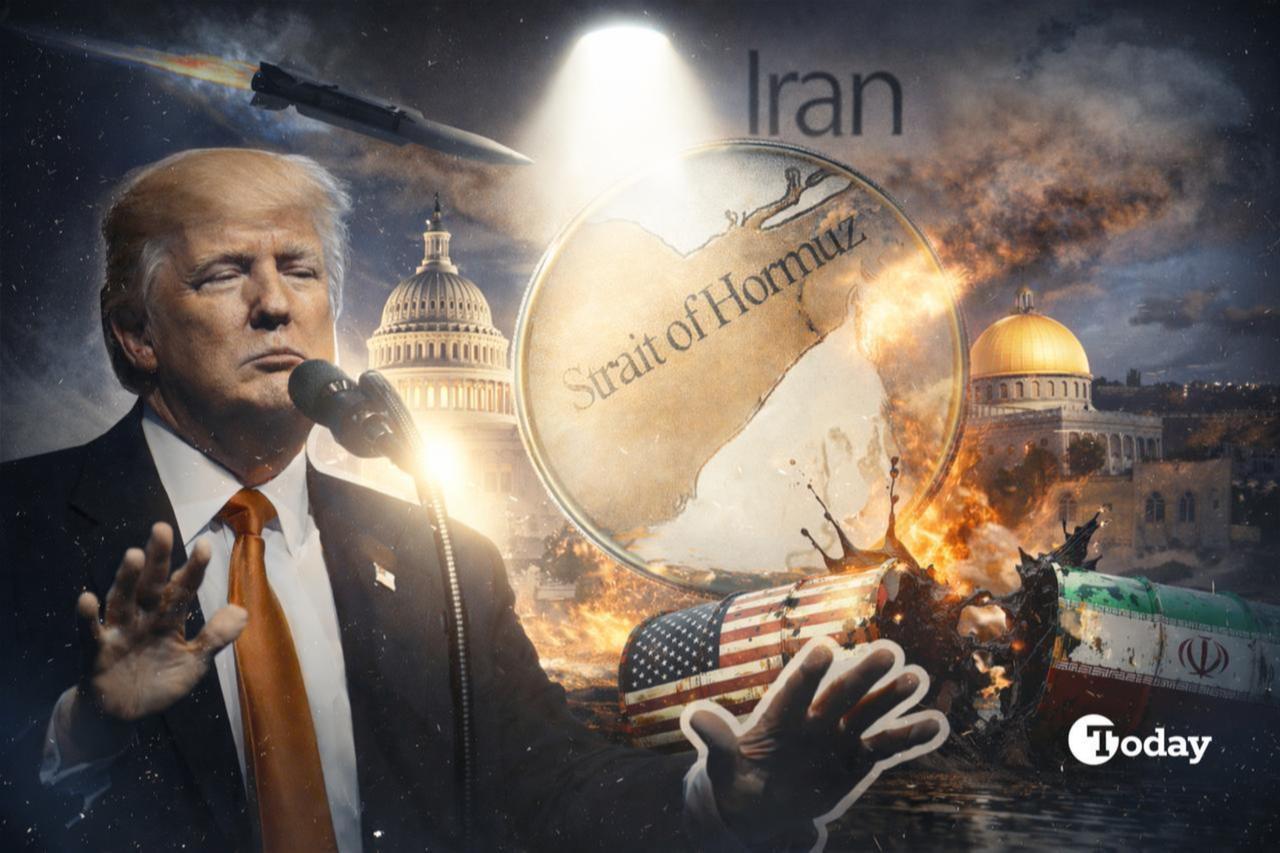
That’s the mood now with U.S. President Donald Trump looming over the chessboard like a man tired of pretending the pieces matter. If he becomes the first leader to rip Iran’s nuclear capability out by the roots, not with treaties, but with iron and fire, then something older than policy dies.
Not fades. Dies. Buried without ceremony.
Diplomacy was always a polite fiction. A velvet glove hiding a knuckle-duster. But at least the glove was there. Now the glove’s been pawned, and the fist is all that’s left.
Strength, actual strength—the kind that leaves scorch marks and empty airspace—starts to look like the only language anyone remembers how to speak.
That’s when the vertigo sets in, and Lord Byron’s aristocracy of blackguards arrives.
You can hear it from the grizzled theologians when they try to keep their voices steady. Rowan Williams—a former Archbishop of Canterbury who spent a lifetime parsing the divine from the merely human—calls the rhetoric "diabolical" and says there’s “something demonic” in the bloodstream of American politics.
Not hyperbole. Diagnosis. He’s looking at a culture that used to dress its violence in Sunday clothes and noticing it’s started to enjoy the nakedness.
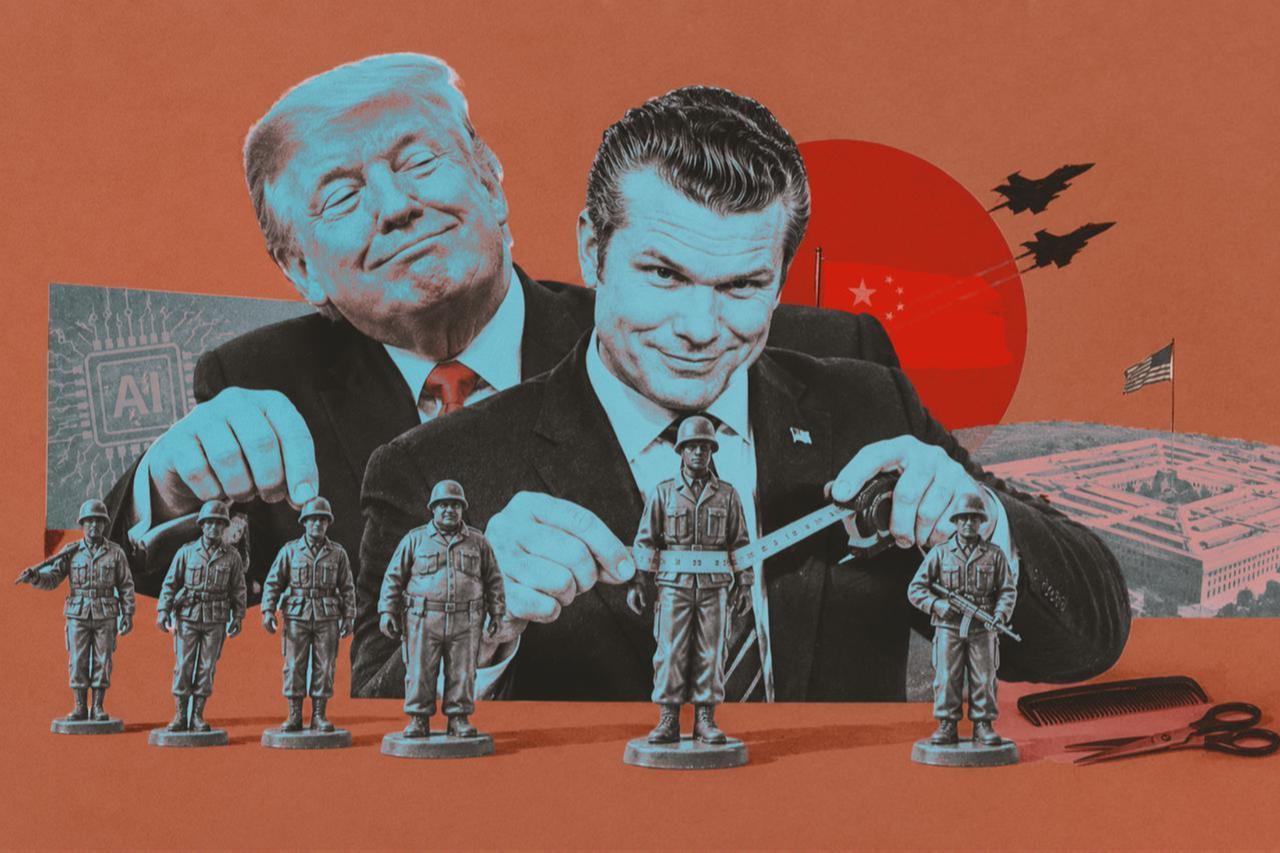
And there’s U.S. Secretary of Defense Pete Hegseth, talking like war is a backyard barbecue, and the missiles are just another kind of seasoning. Somewhere along the line, the warmongers got makeovers. Soft lighting. Better PR.
They grin like theme park mascots now—cuddly and reassuring, as long as you don’t look too closely at what’s dripping from the gloves.
Why not call it the Disneyfication of destruction?
Cinderella’s Castle is still there. So are the Magic Kingdom’s fireworks. But the fantasy underneath is now wretched enough to bring a tear to a glass eye.
You start to wonder if America and Israel have developed a taste for their own nightmares.
Because here’s the thing about violence when it stops pretending: It gets efficient. It also gets profitable.
On Feb. 27, 16 bets—clean, precise, almost surgical—each pulled in $100,000 by correctly predicting the timing of U.S. airstrikes against Iran. Not the outcome. The timing. That’s not intuition.
That’s a watchmaker’s knowledge of when the gears will turn. Later, a single gambler walked away with more than $550,000 after betting that Ali Khamenei would topple, just minutes before he was taken out in an Israeli operation that read less like strategy and more like inevitability.
By April 7, the market wasn’t even pretending anymore. Before Trump announced a temporary ceasefire, traders stacked $950 million on falling oil prices. They weren’t wrong. They weren’t even nervous.
Somewhere between the first missile launch and the last market correction, war stopped being a geopolitical crisis and became a tradable asset class.
The old question used to be whether war was hell. Now it’s whether it’s liquid.
Lawmakers talk about insider trading, about leaks and whispers in the dark. Experts furrow their brows and write reports that no one reads.
But the deeper rot isn’t in the mechanics. It’s in the appetite.
People aren’t just watching history happen. They’re betting on it. Timing it. Monetizing it. Like gamblers leaning over a roulette wheel, except the ball is a city, and the table is the world.
And once you can bet on violence, why stop there?
Why not wager on diplomacy, too? Put odds on a handshake. Futures on a ceasefire. Derivatives tied to the duration of a blockade in the Strait of Hormuz.
Someone, somewhere, is already building the interface. Clean lines. User-friendly. A little ticker scrolling across the bottom: Probability of escalation: 63% and rising.
Out in the strait itself, the theory this weekend turned back into blood and metal. An Indian tanker captain—voice cracking, fury breaking through the static—shouted into the radio as Iranian Revolutionary Guard boats closed in.
“You gave me clearance to pass!
My name is listed as number 2 in your papers!
Now you’re firing on me?
Give me a chance to turn around and go back!”
There’s no algorithm for that kind of desperation. No hedge against the moment a human voice realizes the rules have changed mid-sentence.
But back in the markets, the bets keep coming. How long until Israel annexes southern Lebanon? Which side chokes the Strait first? How many hours between ultimatum and detonation? The numbers move. The profits stack. The story writes itself in digits and smoke.
This is where the existential dread creeps in—not as a scream, but as a slow, cold understanding. If violence is faster, clearer, and more profitable than diplomacy, then diplomacy becomes theater.
A ritual we perform out of habit, not belief. And if that’s true, then the entire legacy model of politics—the conferences, the communiqués, the careful choreography of disagreement—starts to look like a relic.
The World Economic Forum and the G-20 Summit become museum pieces, something you visit on weekends to remember how people used to pretend they had a choice.
The darker thought is that maybe we never did.
Maybe the polite century, the one that believed in process and persuasion, was an intermission. A pause between acts in a much older play where power is measured in impact craters and the only real currency is fear. If Trump closes the Iranian file with a decisive, violent flourish, it won’t just be a policy victory or a catastrophe, depending on where you stand. It will be a proof of concept.
Force works. And it pays.
That’s a dangerous lesson to learn in public.
Because once it’s learned, it doesn’t stay put. It spreads. Other leaders take notes. The center doesn’t hold because no one is trying to hold it anymore. They’re too busy calculating the odds.
And America—this bright, restless, overlit country weeks away from hosting the 2026 World Cup—starts to feel different. Harder. More brittle. Like it’s lost the habit of doubt. In its place comes something colder: a mordant pessimism darker than coffin air that doesn’t bother with hope because hope doesn’t move markets.
The lights stay on. The city hums. Somewhere, another bet is placed, another outcome priced, another future quietly sold to the highest bidder.
And in the distance, if you listen carefully, you can almost hear the hinge turning.


 Set as preferred source
 Set as preferred source


 7 min read