Newsletters


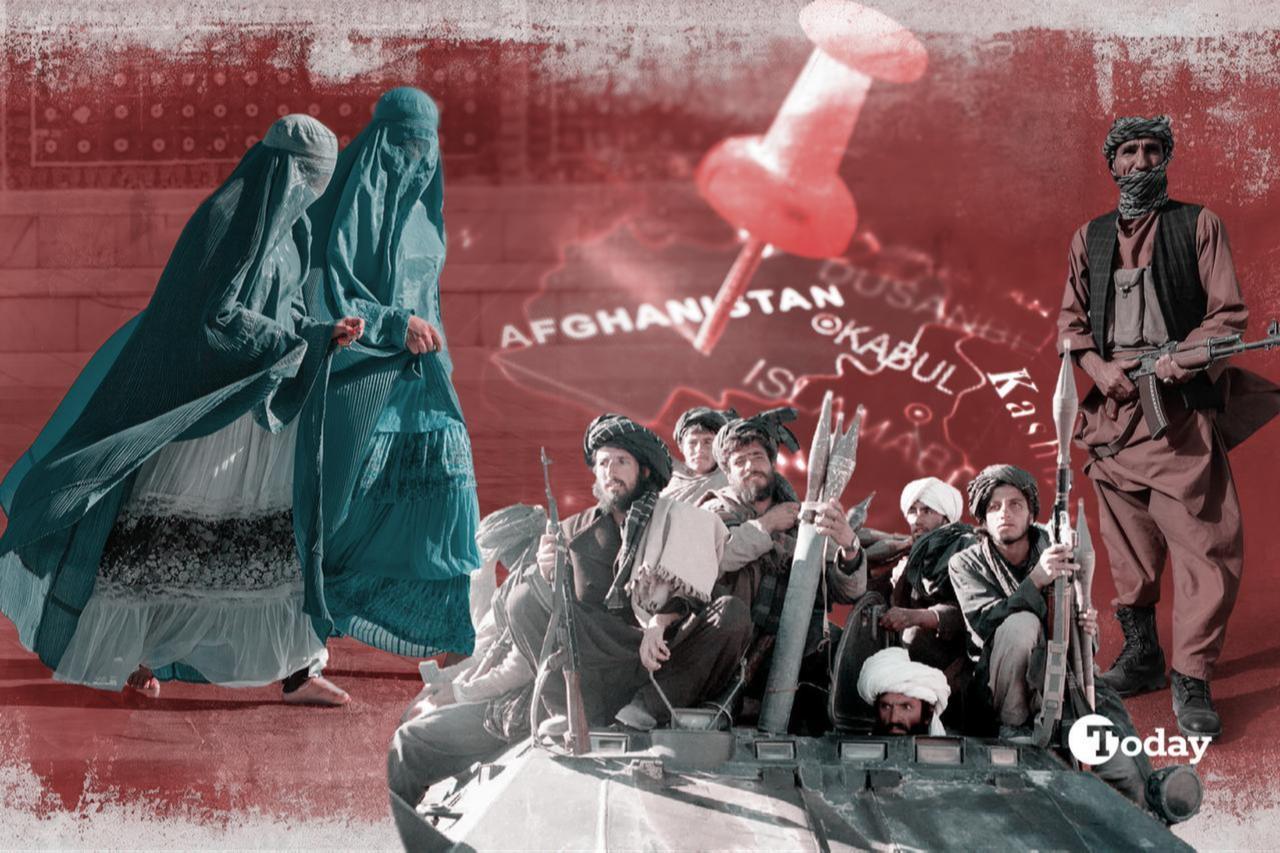


As Russia deepens cooperation with Afghanistan's rulers, it faces a growing tension between regional influence, connectivity ambitions and its own security concerns.
Few countries have warned consistently about the dangers emanating from Afghanistan more than Russia. Yet Moscow is now deepening military cooperation with the Taliban government that controls the territory from which many of those threats originate.
The military-technical cooperation agreement signed in Moscow between Russian Security Council Secretary Sergei Shoigu and Taliban Defense Minister Mohammad Yaqoob marks another milestone in the rapid transformation of relations between the two sides.
Although the contents of the agreement remain undisclosed, its symbolism is unmistakable. It follows Russia's decision to remove the Taliban from its list of banned terrorist organizations and its subsequent recognition of the Taliban government in 2025.
Taken together, these steps indicate that Moscow is no longer merely engaging the Taliban as a political reality. It is gradually incorporating Afghanistan into a broader framework of Russian regional strategy.
The question is whether that strategy can deliver influence and stability simultaneously.
Russia's growing engagement with Afghanistan is driven by considerations that extend far beyond counterterrorism.
The withdrawal of the United States from Afghanistan created a geopolitical vacuum that regional powers have been seeking to fill. For Moscow, Afghanistan occupies a strategically important position linking Central Asia, South Asia, and the wider Middle East. Influence in Kabul provides leverage across multiple theaters simultaneously.
Economic considerations are equally important. Bilateral trade exceeded $530 million in 2025 and continued to expand during the first months of 2026, while discussions surrounding infrastructure, energy cooperation, transport connectivity and mineral development have accelerated.
Russian policymakers increasingly view Afghanistan not as a peripheral security problem but as a potential component of wider Eurasian integration.
Particularly significant is the Trans-Afghan Corridor, which could connect Central Asia to Pakistan's ports through Afghan territory. Russian and regional planners view the project as a potential extension of broader Eurasian transport networks, with projected freight volumes eventually reaching several million tonnes annually.
Such routes complement Moscow's efforts to diversify trade networks and reduce dependence on Western-controlled economic corridors. In an era of sanctions and geopolitical fragmentation, alternative transport routes have acquired growing strategic value.
Afghanistan's considerable reserves of copper, lithium and other critical minerals further strengthen its geopolitical relevance. While Russia possesses substantial mineral resources of its own, securing influence over future extraction projects offers both economic opportunities and strategic advantages in an increasingly competitive global environment.
Maintaining influence in Afghanistan is also important because Moscow does not want post-American Afghanistan to become exclusively dependent on Chinese economic power.
While Beijing's investments, mining interests and connectivity initiatives continue to expand, Russia seeks to ensure that it remains an indispensable political and security actor in the country's future.
Moscow's objective is not necessarily to compete with Beijing but to ensure it remains a consequential player in Afghanistan's future.
More broadly, maintaining relevance in Afghanistan is one way for Russia to ensure that influence across the heart of Eurasia is not monopolized by any single external actor.
Russia's Afghan policy is therefore not simply about Afghanistan. It is about Moscow's wider ambition to remain a decisive actor in the evolving Eurasian order.
Yet the deeper Russia becomes involved in Afghanistan, the more difficult it becomes to reconcile engagement with its own security assessments.
Only days before the military agreement was signed, senior Russian officials publicly warned about the deteriorating terrorist landscape in Afghanistan.
Federal Security Service Director Alexander Bortnikov warned that Islamic State-Khorasan was actively recruiting across Central Asia and among migrant communities linked to Russia.
Shoigu separately stated that between 18,000 and 23,000 militants affiliated with more than 20 extremist organizations remain active inside Afghanistan.
These warnings are consistent with repeated assessments by the United Nations and regional security organizations documenting the continued presence of ISIS-K, Al-Qaeda, Tehreek-e-Taliban Pakistan, the Islamic Movement of Uzbekistan and other militant groups operating from Afghan territory.
Moscow argues that engagement offers the most practical means of managing these threats. In the Kremlin's view, the Taliban remains the only force capable of preventing a complete security vacuum and limiting the expansion of extremist groups.
There is logic to this argument. Isolation has produced few positive results, while the collapse of Taliban authority could generate even greater instability across Central Asia.
Yet the strategy rests on an uncomfortable assumption: the Taliban can simultaneously serve as a partner in countering extremism while governing a territory that continues to host a broad ecosystem of militant organizations.
While the Taliban has demonstrated determination in confronting militants, it has been far less successful in addressing wider networks that continue to concern neighboring states.
The distinction between suppressing a direct rival and dismantling an entrenched militant landscape is substantial.
Moscow's engagement also grants the Taliban greater international legitimacy despite persistent concerns over militant activity inside Afghanistan. The Kremlin appears to believe engagement offers leverage, but critics argue recognition may be advancing faster than meaningful security improvements.
For Moscow, this remains the central strategic gamble.
The most immediate test of Russia's Afghan strategy may ultimately emerge not in Kabul but in Islamabad.
Over the past decade, Moscow has steadily expanded relations with Pakistan through energy cooperation, defence contacts and regional diplomacy.
At the same time, many of Russia's long-term connectivity ambitions depend upon stable transport routes linking Central Asia, Afghanistan and Pakistan.
Pakistan's security concerns present perhaps the greatest external challenge to Russia's Afghan strategy.
Moscow increasingly views Pakistan as an important partner in regional connectivity and energy cooperation, yet many of those ambitions depend upon stability in exactly those border regions where Islamabad continues to accuse Afghan-based militant groups of operating.
This creates a delicate balancing challenge for Moscow.
On one hand, Russia seeks deeper engagement with the Taliban to advance connectivity, trade, and regional influence. On the other hand, its broader Eurasian ambitions require constructive relations with Pakistan, whose security concerns regarding Afghanistan remain unresolved.
The contradiction is unlikely to disappear. If stability improves, Russia could emerge as one of the principal beneficiaries of a new network of transport and economic corridors linking Central and South Asia.
If insecurity persists, Moscow may find itself increasingly entangled in the very security challenges it hopes engagement will mitigate.
The military cooperation agreement therefore represents far more than a bilateral understanding between Russia and Afghanistan. It reflects Moscow's broader attempt to shape the geopolitical landscape of post-American Eurasia.
Whether that effort succeeds will depend on a question that remains unanswered.
Can the Taliban evolve into a reliable partner for regional stability while continuing to govern a territory that remains a focal point for transnational militant activity?
In betting on engagement, Moscow is wagering that the Taliban can become a stabilizing force before Afghanistan's militant landscape overwhelms the state's capacity to control it.
If that assumption proves correct, Russia could emerge as one of the principal architects of a new Eurasian connectivity framework stretching from Central Asia to South Asia.
If it proves wrong, Moscow may discover that influence in Afghanistan brings liabilities as well as leverage. The outcome will shape not only Russia's position in post-American Afghanistan but also the future balance of power across Eurasia.


 Set as preferred source
 Set as preferred source



 4 min read