Newsletters


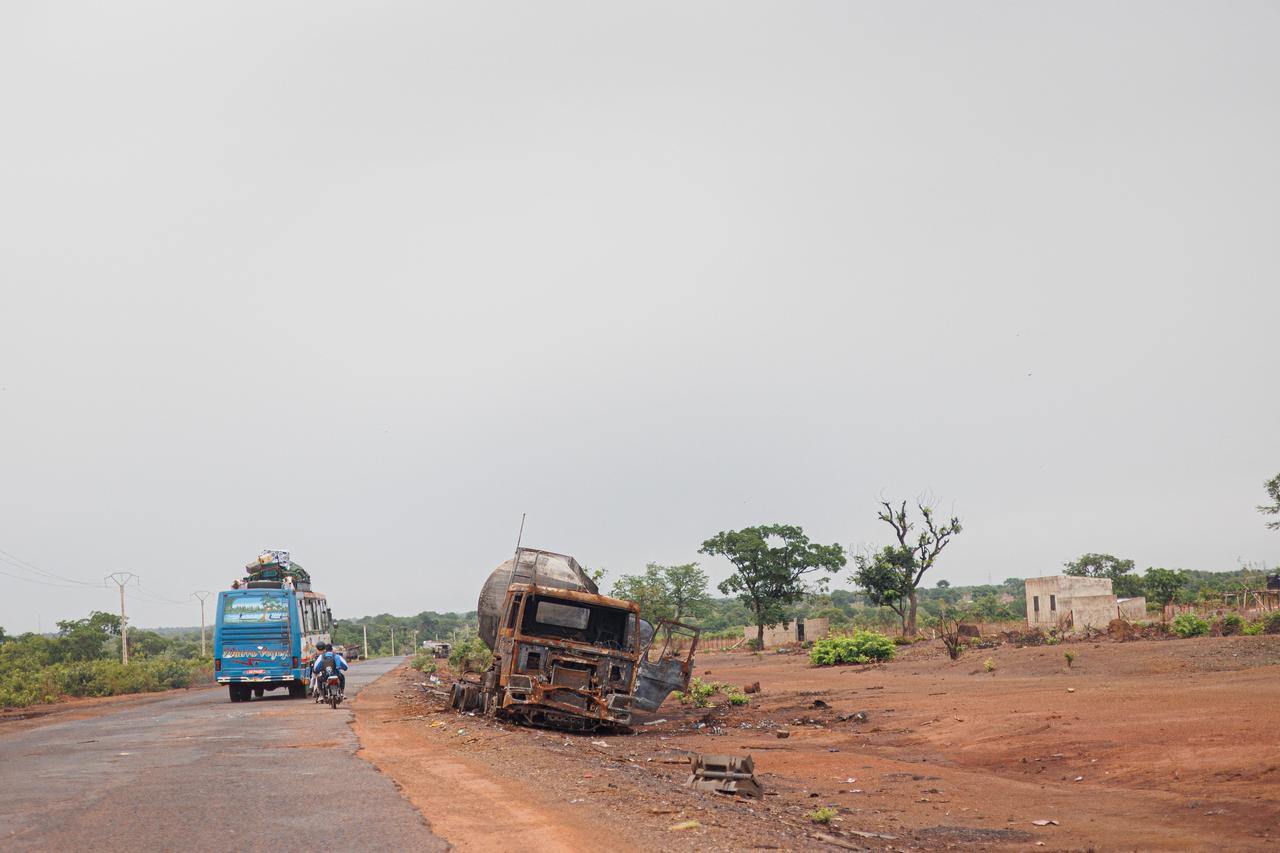


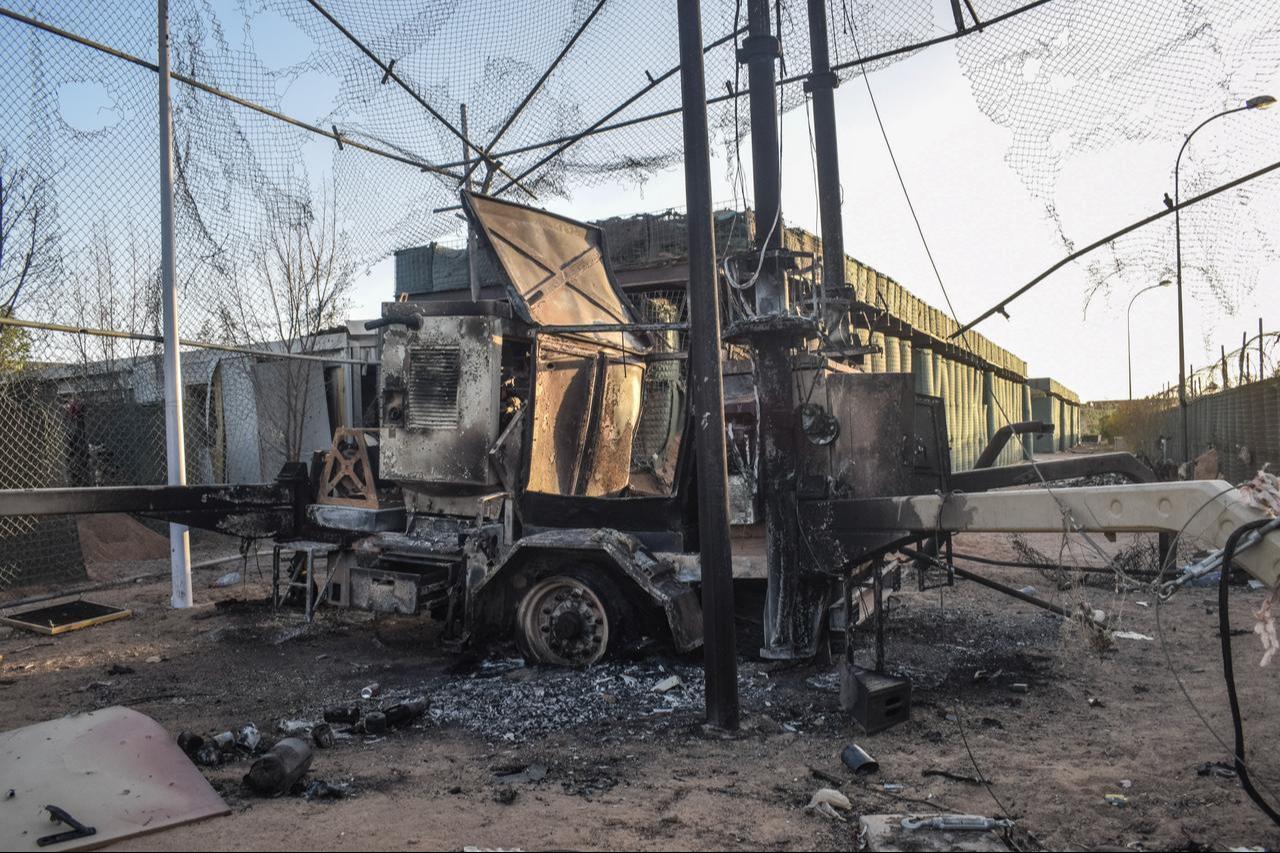
On the morning of April 25, a coordinated series of attacks striking a massive arc from Bamako to Kidal delivered a stark reminder: the conflict in Mali has fundamentally shifted.
The killing of Defense Minister Sadio Camara, the pressure on military facilities in Kati, and renewed claims of control in the north should not be interpreted merely as a reflection of Mali’s internal security crisis.
Instead, this escalation serves as a critical litmus test for external partners seeking to forge deep, lasting ties with the region—a test that Türkiye, too, must now face.
The latest attacks created a situation that goes beyond the security shocks Mali has grown accustomed to, producing simultaneous pressure from the capital’s outskirts to the northern corridors on the same day.
While Kati and the area around the airport are seen as the nerve center of Bamako, the Kidal–Gao line is perceived as the set of arteries leading to the north and the country’s border regions. Therefore, recent developments have not only created new points of conflict, but they have also begun to rigorously test the claim that the state is an actor capable of reaching “everywhere.”
Ankara's relationship with Mali has evolved far beyond symbolic diplomacy. The technical groundwork for this defense cooperation was explicitly laid in 2022, when Mali’s Ambassador Issa Ousmane Coulibaly stated that his country sought to leverage Türkiye’s four decades of counterterrorism experience.
As part of this deepening security partnership, the Malian army upgraded its fleet from Bayraktar TB2 to Akinci drones, quickly integrating the advanced Turkish UAVs into active combat operations. This defense relationship was on full display at the BAMEX Fair in November 2025, where roughly 30 Turkish defense giants, including Aselsan and Otokar, showcased their hardware.
This positioning shows that Ankara is no longer viewed merely as a hardware supplier, but as a strategic partner helping build an integrated defense ecosystem. The numbers back this up: exports to Mali climbed from $87 million in 2021 to $111 million in 2023.
Beyond defense, Turkish companies are securing a broader footprint in Mali's critical infrastructure, highlighted by the construction of a 60-megawatt heavy-fuel power plant to anchor the country's energy sector.
So, how does all this accumulated experience open up room for maneuver for Ankara in post‑April 25 Mali?
When it comes to external actors in the Sahel, the first question asked has shifted from “what do you bring?” to “where do you come from?” France has withdrawn, but it has left behind deep mistrust. Russia and the African Corps are visible on the ground; however, their capacity to engage with the local population remains quite limited.
In this context, Türkiye’s lack of a French colonial legacy or a Soviet‑style intervention history provides a unique basis that other countries cannot easily replicate. In my opinion, this advantage is Türkiye’s most strategic asset in the Sahel.
Technical specifications can always be upgraded. But the trust forged by historical memory is absolute; it either exists or it does not.
Türkiye’s initial entry into this geography drew its strength from a clean historical slate, free of colonial baggage. Today, the challenge lies in erecting a concrete strategic structure on that foundation without compromising the unique trust.
Over more than 30 years, Türkiye developed a military doctrine in a challenging security environment where conventional and unconventional threats coexisted in its rural struggle against the PKK.
The Turkish Armed Forces (TSK) possess deep, field-tested experience in area denial, integrated reconnaissance and strike drone operations, local community engagement, and localized intelligence networks. This institutional knowledge is already well-recognized in nations like Somalia and Nigeria, and it is now being watched with growing interest across the wider Sahel.
Türkiye has also had to reconsider its own internal security policies over time. Approaches relying solely on hard military methods and focusing on tactical success in the field were seen to produce high social costs in the long term. This experience highlighted the need to think about security within a more complex model that incorporates intelligence, diplomacy, development, and coordination with local governance. The hybrid approach that has emerged from this process actually aligns with Mali’s need for a “balance between security and society.”
Mali’s struggle against armed actors like JNIM and the FLA, which operate in both rural and urban arenas and are fueled by different ideological and ethnic memories, presents a complex picture that goes far beyond a one‑size‑fits‑all security prescription.
Türkiye’s experience with multi‑faceted threats carries concrete reference value at this point. Moreover, Türkiye does not stop at selling military equipment; it also offers a comprehensive model that includes post‑sale training, technical support, and field consultancy. Crucially, this model is designed to avoid creating dependency—it equips the partner nation to build and sustain its own capacity from the ground up.

Immediately after the attacks, the fastest and most visible move Türkiye can make is to keep humanitarian aid channels active.
Turkish Cooperation and Coordination Agency (TIKA), the Turkish Red Crescent, and the Turkish Religious Foundation have already established a certain presence in the region. Transforming these structures into a crisis‑specific humanitarian intervention package would be a highly functional step, both practically and diplomatically.
Providing health, food, and logistical support to help daily life in Bamako return to normal as quickly as possible would show that Türkiye is an actor that goes beyond mere rhetoric.
Short‑term humanitarian contact also serves as the cement of a long‑term relationship of trust. It would be reductive to interpret this only as a public‑relations move. These steps also strengthen the legitimacy base for future defense and political cooperation.
Türkiye’s opening to Africa has, from the very beginning, not proceeded within a narrow framework based only on trade and defense cooperation.
Bridges built in the fields of humanitarian diplomacy, cultural contact and education have become fundamental pillars of this policy. At this point, humanitarian steps taken in Mali will strengthen Ankara’s image as a “partner that steps onto the field and remains at the table in times of crisis.”
This, in turn, increases Türkiye’s interest in other parts of the continent and lays a stronger foundation for future economic and political partnerships.
The Bamako administration’s needs are not confined to acquiring weapons systems. Intelligence analysis to support field commands, protocols for engaging with local populations and the capacity for sustainable operational planning are becoming increasingly critical.
The TURKSOM model established by Türkiye in Somalia stands out here as a concrete example. Adapting a similar military training and advisory framework to Mali could benefit both countries and contribute to regional stability.
What distinguishes this model from other approaches is that Türkiye does not operate under a logic that increases the partner army’s dependency. On the contrary, training local personnel in Turkish institutions and building capacity through academic cooperation and joint exercises lay the groundwork for a self‑sufficient defense structure. For the Malian army, this represents both a symbolic and a practical gain.
Türkiye’s most ambitious role in the region could be to build a unique mediation capacity in diplomatic arenas where both the West and Russia have closed doors, by maintaining dialogue with actors within the AES framework.
Türkiye’s mediating role in the Ethiopia–Somalia crisis and its diplomatic contacts regarding Sudan are recent examples of this capacity being tested. Ankara’s increasingly visible mediation style is based on flexible diplomacy that does not align with a single bloc and keeps dialogue open with all parties as far as possible.
In the Malian context, this could mean a diplomatic platform capable of generating ideas around the same table with the Bamako administration, neighbors under the AES umbrella, and, when necessary, ECOWAS actors.
Constructive contacts with Algeria would both soften airspace disputes and create openings to update the legacy of past mediation on the northern dossier.
Although adopting a similar model in the Sahel may not seem easy today, it may become a viable option in the medium term as political conditions mature.
As the crisis in Mali deepens, the window for any outside power to shape the terms of engagement is rapidly closing. Türkiye enters this critical juncture with a distinct advantage: tangible infrastructure on the ground, field-tested operational experience, and a deep reservoir of regional goodwill.
With its non‑colonial identity, a defense capacity refined over more than 40 years of counterterrorism, and the trust capital built through humanitarian diplomacy, Ankara stands before one of the rare opportunity windows that can both contribute to Mali’s security and enhance its own strategic depth.
As long as this window remains open, taking action carries far more value than trying to interpret events after it has closed.


 Set as preferred source
 Set as preferred source


 7 min read