Newsletters


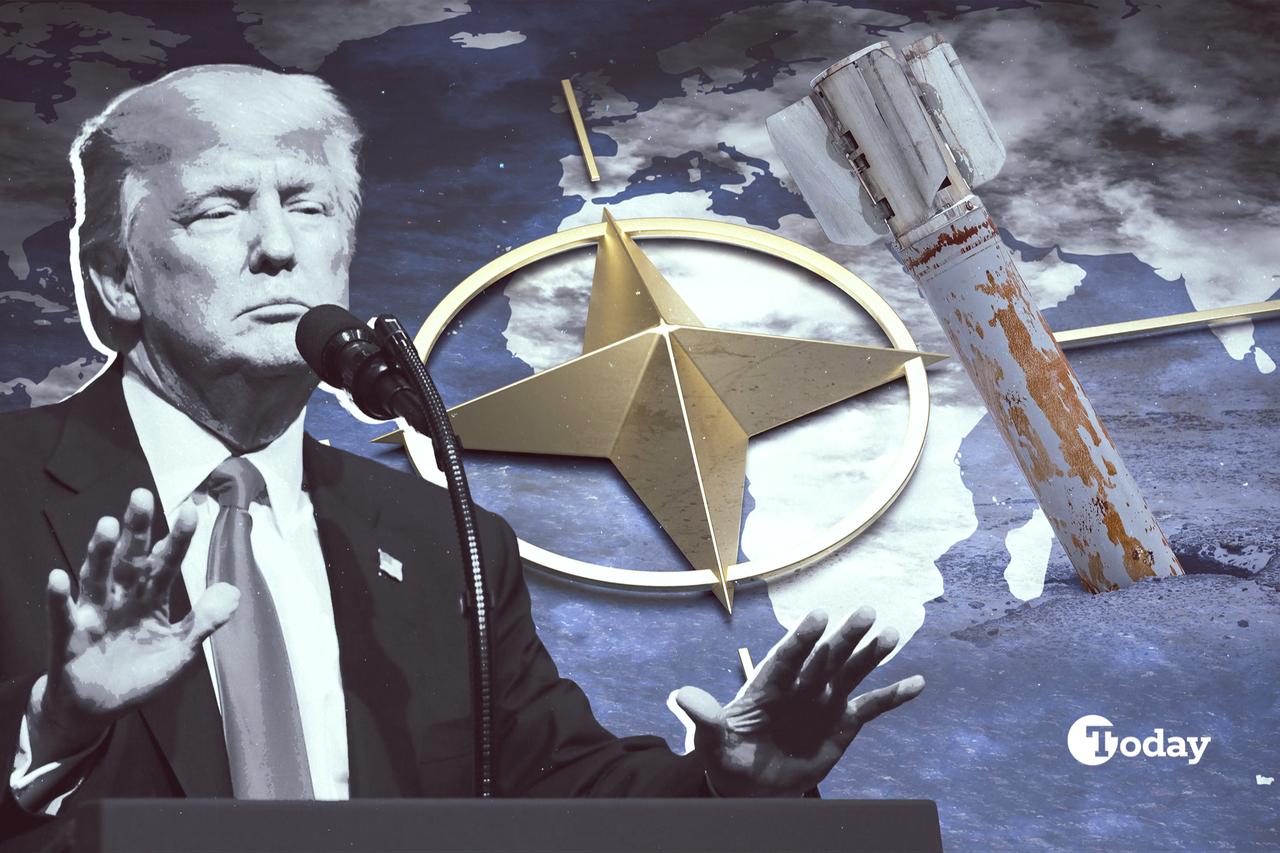


U.S. President Donald Trump’s description of NATO as a “paper tiger” in an interview with The Telegraph, coupled with his framing of a potential withdrawal from the alliance, citing a lack of support in the Iran conflict, sent the international community into a frenzy.
The president said the issue is “beyond mere reconsideration,” which is even more troubling.
In his second statement to Reuters, he took his stance a step further.
“I am definitely and without a doubt considering this”, Trump said, announcing that he would express his “disgust” toward NATO in the speech he was due to deliver to the nation at midnight.
On the same day, Foreign Minister Marco Rubio also spoke at length without mincing his words.
No doubt that relations with NATO would need to be reviewed once the conflict had ended, he asserted, describing Europe’s stance as “extremely disappointing."
So what is really going on? Are we witnessing the unravelling of a 77-year-old collective defense architecture, or is this part of Washington's meticulously orchestrated pressure strategy?
To answer this question, rather than taking Trump’s rhetoric at face value, one must analyze the underlying structural logic and strategic calculations.
The U.S. stance on NATO cannot be reduced to either a sudden outburst of anger or political inconsistency; rather, it is the final and most severe phase of a long-maturing strategic project aimed at rewriting the alliance’s operating rules.

Although Trump’s rhetoric regarding a possible withdrawal from NATO goes back years, his latest comments were seen as the most disparaging to date. This suggested that the rift was now approaching a point of no return.
However, what analysts should focus on at this stage is not so much what Trump has said, but rather the calculation behind his words.
For Washington, acting exclusively in accordance with its own national interests under all circumstances is the most important consideration.
However, this ideological framework is compounded by a specific grievance in the current crisis. The allies have effectively refused to participate in a war initiated by the U.S. without prior consultation with them.
European capitals have, from the outset, characterized this war as a conflict that was “initiated unilaterally” and “without their consultation”; on this basis, they have refrained from supporting operations against Iran.
This is where Washington’s real problem begins. The war with Iran will not end in a week or a month. The pressure on the Strait of Hormuz will continue to threaten global energy markets.
The fact that the U.S. is the world’s leading oil producer will not be enough to protect American consumers from rising prices, for oil is traded on a global market.
In other words, the fact that the strait remains under Iranian control is also putting economic pressure on Washington. This practical necessity lies behind Trump’s request for assistance from allies.
So what role does the NATO threat play in this picture?
First, from a legal standpoint, it is extremely difficult for the U.S. to withdraw from NATO.
The 2023 law explicitly prohibits the president from withdrawing from the alliance without the approval of two-thirds of the Senate or a resolution by Congress. Moreover, one of the law’s co-sponsors in the Senate was none other than then-Senator Marco Rubio.
Republican Senator Thom Tillis, for his part, summed up the situation with striking bluntness: “The president cannot withdraw from NATO. However, he can poison the well if he wishes; he can render the alliance dysfunctional if he wishes.”
This is precisely what Trump has done: systematically eroding the alliance’s credibility without formally withdrawing, and turning this erosion into a bargaining chip.
This strategy involves a multi-layered calculation. The first layer is clear: forcing a choice upon European capitals that their domestic publics cannot bear.
 1 min read
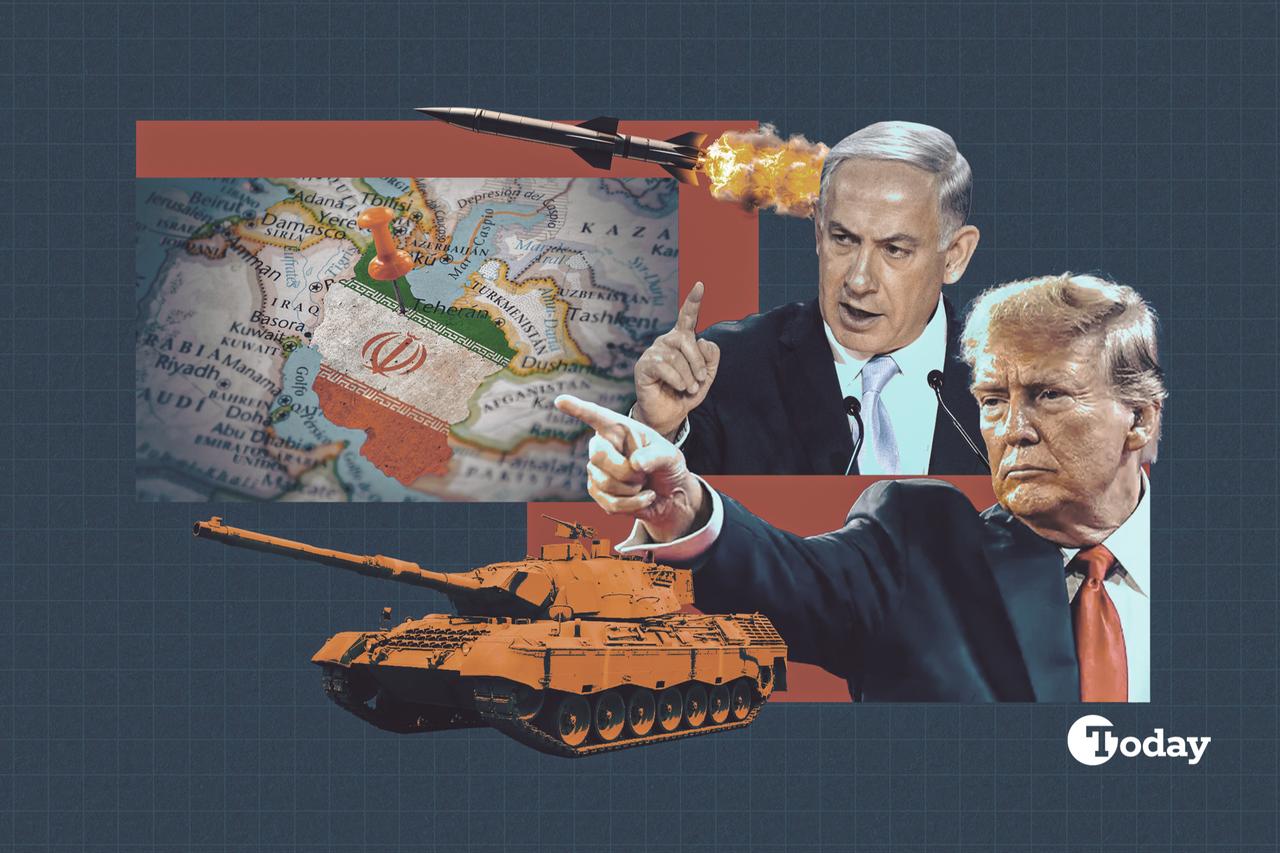
The rapid rise in energy prices following Iran’s de facto closure of the Strait of Hormuz hit European voters hard; this situation had made it politically almost impossible for leaders to back the war.
Given both domestic public pressure and economic constraints, the assessment that Europe had been caught in a stranglehold seemed reasonable. However, Europe’s response clearly demonstrated that this calculation did not hold water.
Spain closed its airspace to flights from the U.S., the U.K. rejected a request to deploy a warship, whilst Germany announced that it would not take part in any military operations for the duration of the conflict. European leaders actually chose to test Trump’s bluff.
The second layer reflects a somewhat more nuanced calculation: fundamentally transforming the alliance’s structure and decision-making mechanisms.
The Telegraph reported that Trump has also put forward a proposal to prevent members who fail to meet their defense spending commitments from participating in alliance decisions.
This is an extremely critical point for NATO’s principle of decision-making, which effectively grants weaker members a right of veto. In this context, the likelihood that Trump’s true aim is not to withdraw from the alliance, but to restructure the balance of power within it in Washington’s favor, is growing.
The third layer is the Ukraine card.
The Financial Times reported that Trump threatened to halt arms shipments to Ukraine to force Europeans to join a coalition to reopen the strait.
This step creates a multi-layered threat mechanism that extends American pressure on European security far beyond the Iranian issue. Bringing Ukraine’s support to the table as a bargaining chip amounts to targeting Europe’s deepest security concerns.
Just as it is an analytical error to reduce Trump’s rhetoric on NATO to mere rhetoric, interpreting it as a sign of an intention to withdraw is equally misleading.
The actual picture is far more complex.
Washington wishes to redistribute the alliance’s costs, responsibilities and political benefits.
Rubio’s remarks provide the strongest evidence for this argument. The Secretary of State explicitly emphasized that all these issues would be put on the table after the war, stating: “If NATO exists to defend Europe but does not grant us the right to use its bases, that is not a good arrangement."
This statement reflects a willingness to renegotiate rather than to withdraw. The question of “value” is being raised; in other words, the alliance’s significance to the U.S. in terms of the cost-benefit balance is being scrutinised.
This scrutiny is an attempt to gain leverage at the negotiating table.
However, should the U.S. officially withdraw from NATO, the entire U.S. military presence and base infrastructure in Europe would be thrown into disarray; the NATO Status of Forces Agreement, which provides the legal basis for the presence of American troops, would also lose its validity.
These arrangements, which would need to be renegotiated separately with each country, could set back the U.S.’s strategic reach in Europe by decades. No cold calculation could risk such an outcome.
So what does the U.S. actually want?
The answer consists of several concrete elements.
First and foremost, Washington wants allies who meet their defense spending commitments and grant the U.S. access to bases for its operations; however, this is now being articulated in the language of threats.
Although most allies committed at the Hague Summit to allocating 5% of gross domestic product (GDP) to defense by 2035, this figure is not viewed by Trump as a concrete guarantee of compliance.
As another key element, Washington expects its allies to actively participate in military operations it initiates; this expectation, however, directly contradicts NATO’s founding principles.
Article 5, namely the principle that ‘an attack on one is an attack on all’, has been invoked only once in the alliance’s history: following 9/11, as a gesture of solidarity from Europe to the US.
Europe’s refusal to support a U.S.-Israeli attack is, in fact, nothing more than the consistent implementation of a long-standing consensus: the alliance is founded on defense and does not cover offensive operations.
Rather than accepting this reality, Trump chose to rewrite NATO's logic: “We automatically stood by them, including Ukraine. They weren’t there for us”.
This approach is an attempt to replace the principle of reciprocity with collective defence; it reframes the logic of the alliance.
European allies have been backed into a corner where it is no longer possible to both support the U.S. and safeguard their own political careers, thanks to the pressure, tariffs, demands regarding Greenland, and the derisive attitude toward allied sacrifices that Trump has maintained.
This stranglehold is the result of a deliberate construction; it is a pressure mechanism painstakingly built up over time to force allies into submission.
Betting markets currently price the likelihood of the U.S. withdrawing from NATO at 15%; this figure, which stood at 8% at the start of last year, has risen significantly in recent weeks.
This figure should not be underestimated; nor should it be overblown. The real danger is not an official withdrawal, but the alliance effectively becoming dysfunctional.
The U.S., which has begun to seriously question the security guarantee, is using negotiations over base rights as a bargaining chip and is speaking to its allies in threatening terms; even if it remains within NATO, it could undermine the alliance’s deterrent power.
But would such a renegotiation serve the U.S.’s own interests? In the medium to long term, this is highly doubtful.
The U.S. will be unable to avoid the economic and political turbulence created by its own rhetoric; it will become increasingly difficult to explain to the domestic public the impact this scenario would have on oil prices should the Strait of Hormuz remain under Iranian control.
Deterring allies from the alliance will come at the cost of improving Moscow and Beijing’s strategic position; this, in turn, will conflict with the balance of power envisaged by “America First”.
In short, Trump’s threatening rhetoric is part of a calculated pressure strategy.
However, pressure strategies can spiral out of control.
Once credibility begins to erode, the leverage provided by the alliance cannot be regained, and Washington’s attempt to change the rules of the game could increase the risk of overturning the board.


 Set as preferred source
 Set as preferred source


 1 min read