Newsletters


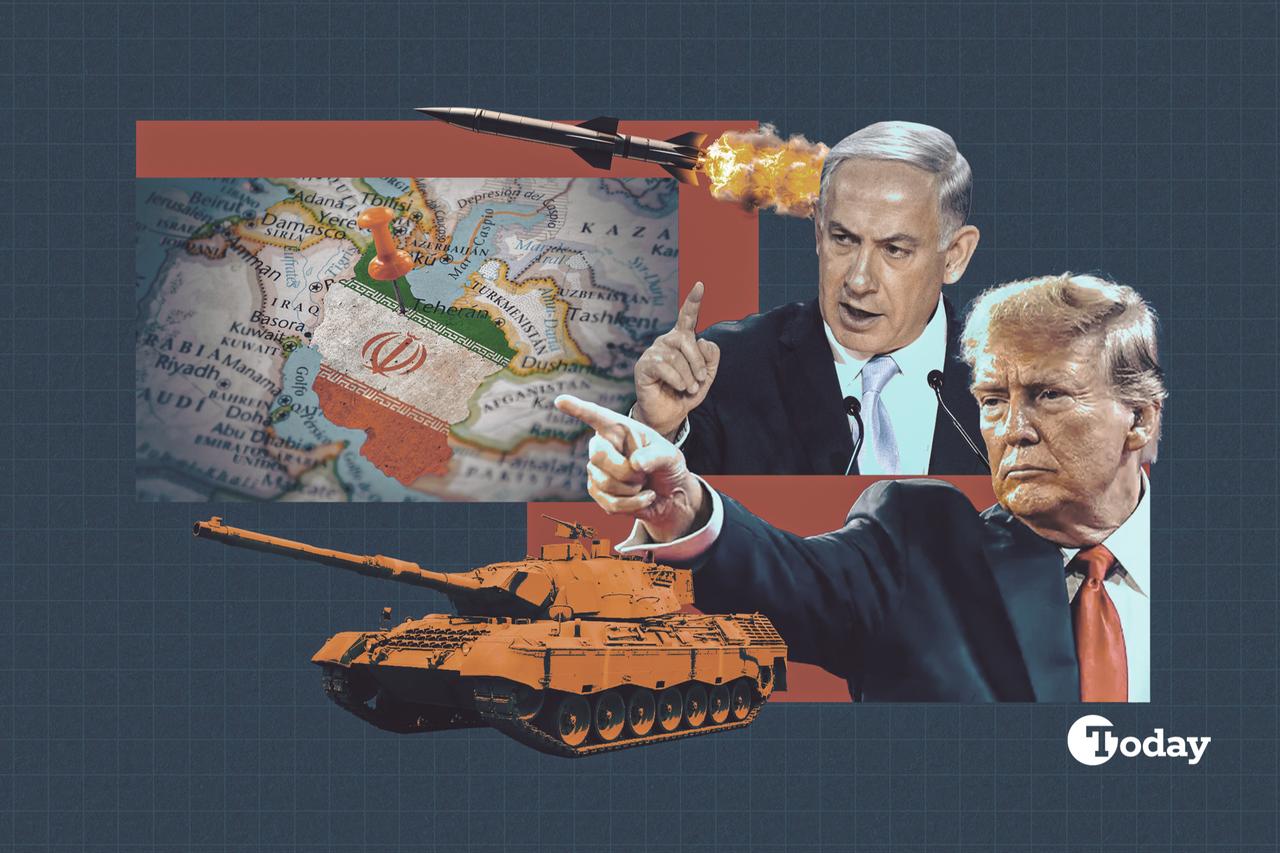


This article was originally written for Türkiye Today’s weekly newsletter, Saturday's Wrap-up, in its March 28, 2025, issue. Please make sure you subscribe to the newsletter by clicking here.
Türkiye's restraint in handling three Iranian missiles while avoiding invoking Article 4 gained some sort of respect among other NATO members, as they witnessed a panicking member just last year.
Poland quickly invoked Article 4 over a Russian drone incursion into its airspace in 2025, yet Türkiye, facing a far more volatile neighborhood, chose not to pull that trigger. No offense to Poland. More Iranian missiles or drones may have posed bigger challenges, and frankly, Türkiye did not face what the Gulf has been facing since Feb. 28. And nobody expects such a scenario. This is not a Turkic fight, and it will not escalate into one.
Foreign Minister Hakan Fidan was asked during a live interview on March 27: “Why are Iranian missiles no longer coming into Turkish airspace? What kind of diplomacy worked behind the scenes?”
Fidan offered only a smile. “Do I have to answer?”
Türkiye does not want the Iran war to turn into a multi-sided conflict involving multiple NATO and Gulf partners. The restraint was partly because of such positioning. Türkiye Today’s Levent Kemal reported this week on Türkiye-Pakistan’s joint effort to prevent Saudi Arabia from entering the war under intense Iranian attacks.
During the same live interview, Fidan sent a friendly yet chilling warning to Iran that the possibility of forming an international coalition increases if the Strait of Hormuz remains shut.
But the "Trump variable" looms large over the upcoming NATO summit in Ankara. There is a lot of curiosity about whether his stance will shift from the demagogic rhetoric we’ve seen, where he claims NATO has done "absolutely nothing" on Iran.
There is a deep irony here: the U.S. complains about a lack of action, yet it didn’t even bother to consult or seek advice before making its own major moves. Not a great NATO ally? Or simply the U.S. assuming that no other NATO member would be so willing to pursue Israel’s national interests. And, no need to remind: NATO is a defensive alliance, and Iran had not attacked its territory prior to the U.S.–Israeli operations. Two NATO defense ministers were in Dubai, apparently unaware of the situation, when Iran began launching waves of missiles and drones.
In Trump’s political lexicon, when he says "NATO," he usually refers to European countries. Maybe he just doesn’t want to get bored by naming them all. In the Iran war, he wants to treat the alliance like a one-way street where he provides the muscle and everyone else just follows. But as we’ve seen with Türkiye’s recent restraint, the allies on the ground are often the ones showing the most strategic depth.
So Türkiye’s take is this: Trump lashing out at the alliances is because he is pissed with European allies rather than with NATO as an institution.
Trump has been a huge NATO critic from the first day. His sudden messages in the first term made many Turkish left-wing nationalists think he would withdraw from the alliance. Such a possibility made Turkish Eurasianists “euphoric”—probably until 2026, when they figured there is nothing such as “Eurasia” as a political entity as they had imagined. Eurasian utopia looks as disorganized and confusing as the Western front under Trump’s leadership.
Now, the question is whether Washington will actually engage with its partners or continue its "go-it-alone" approach while blaming the alliance for its own lack of coordination.
If the goal is to actually handle regional threats like Iran, ignoring the stance of NATO allies while carrying out a massive operation with a non-NATO force seems like a losing strategy.
On a separate note, Türkiye revealed its initiative to establish a NATO corps headquarters in the country's south.
“In 2023, our ministry ordered the initiation of work to establish a Corps Headquarters within the framework of the NATO Southeast Regional Plan, and this intention was declared to NATO in 2024,” defense ministry officials said.
Work to transform the headquarters into a multinational structure is continuing in coordination with alliance authorities, and since NATO procedures have not yet been completed, the approval process is underway, per the ministry.
Ministry sources said the planned Corps Headquarters will support deterrence and defense by integrating forces within the scope of NATO regional plans.


 Set as preferred source
 Set as preferred source



 7 min read