Newsletters


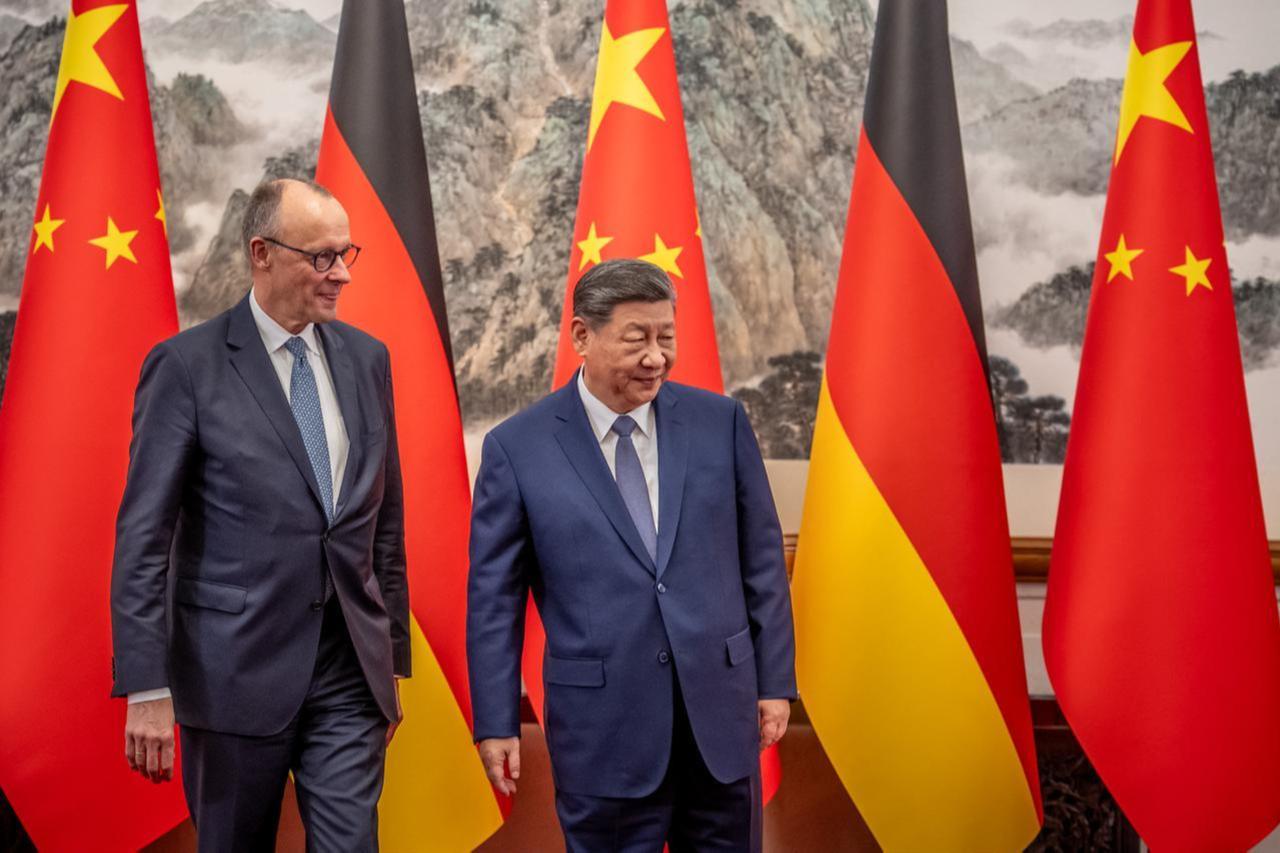


In 1896, Li Hongzhang, the statesman nicknamed the "Bismarck of the East," came to Germany to buy weapons and win economic ties. This week, a German president went to Li’s home city of Hefei to see what Volkswagen is learning from China.
On Tuesday, President Frank-Walter Steinmeier began his first state visit to China since 2018 in Hefei, the capital of Anhui province. He toured Li’s former residence, then went to the Volkswagen China Technology Company (VCTC), where he saw its electric-vehicle development and took part in an autonomous-driving demonstration on the test track. On Friday, he meets Xi Jinping in Beijing.
By midday, he was at the Volkswagen China Technology Company (VCTC), where he was shown its electric-vehicle development and took part in a demonstration of autonomous driving on the test track. It is the first state visit to China by a German president since 2018, and on Friday, he meets Xi Jinping in Beijing.
Li went to Friedrichsruh to call on the retired Otto von Bismarck on June 25, then to Essen to buy armaments from Friedrich Alfred Krupp. In electric cars, the traffic now runs the other way.
German boardrooms have adapted to this. Berlin's policymakers have not. Berlin should stop treating China as the apprentice and bargain with it as an equal source of technology, instead of only managing it as a risk.
Hefei's municipal government has long put public money into local industry, from the memory-chip maker ChangXin Memory Technologies to the electric-car maker NIO.
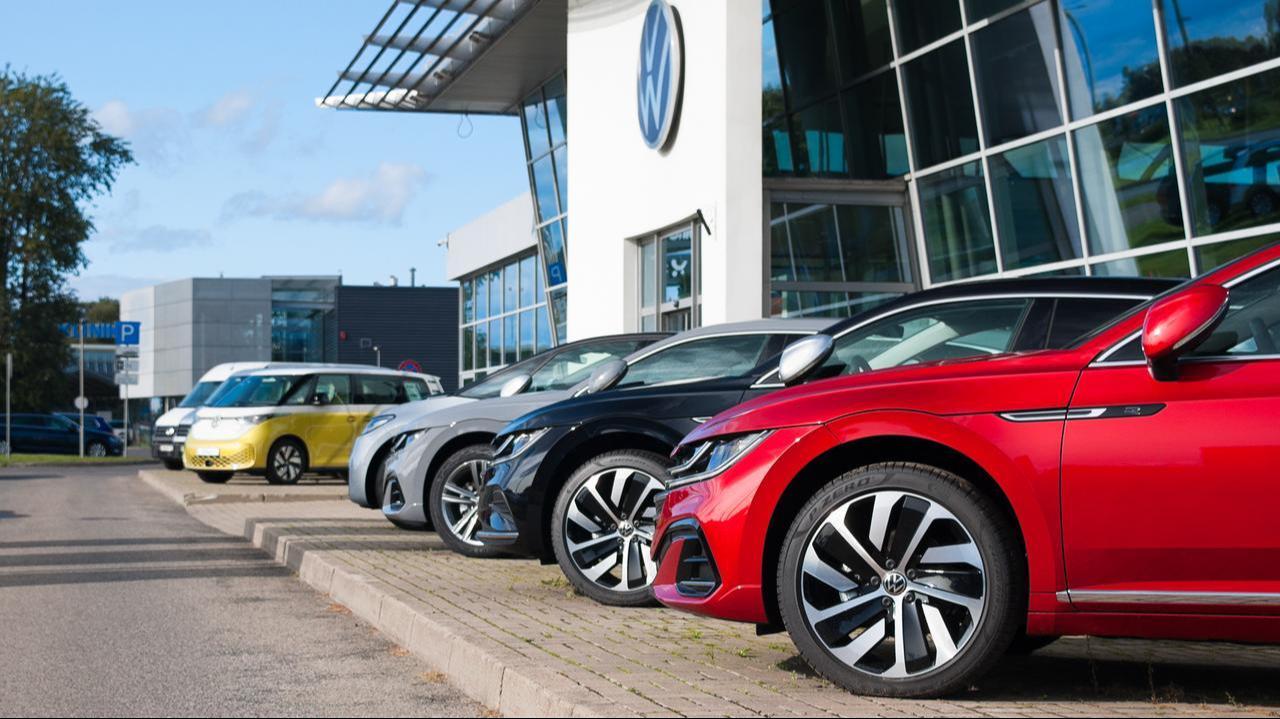
Volkswagen has invested more than €3.5 billion ($3.9 billion) there. Cost is one reason. Thomas Ulbrich, who heads the VCTC, puts production costs in China 50% below Germany's, partly because of wages and exchange rates.
Speed and software are the bigger draw. Volkswagen bought a stake in Xpeng, a Chinese electric-car maker, and, with Xpeng's engineers, built the China Electrical/Electronic Architecture (CEA), the network of computers and wiring that runs a car's functions, in 18 months.
The first car on that architecture, developed mostly by a Chinese team, went into production last December at Volkswagen Anhui, the group's majority-owned joint venture in Hefei.
The slogan has changed with it. In September Ralf Brandstatter, Volkswagen's China chief, described the strategy as moving from "from Europe, for China" to "in China, for China" and now "in China, beyond China."

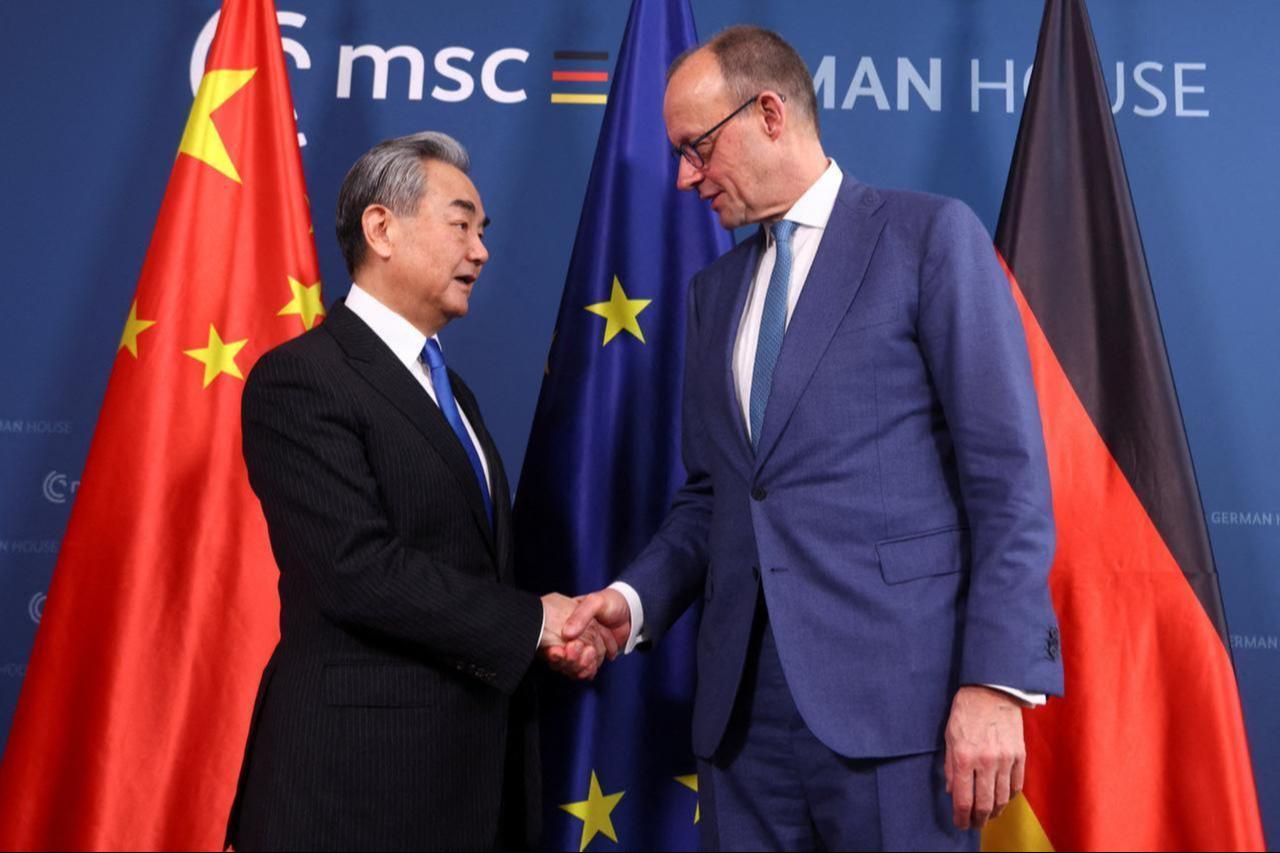
Berlin's government, however, still treats China chiefly as a risk. On Oct. 21, Chancellor Friedrich Merz said the European Union wanted no trade war with China but would defend itself.
"We are opening the toolbox. We are showing the toolbox. But we don't want to make use of our toolbox," he said.
Germany's 2023 China Strategy framed China as a partner, competitor and systemic rival, and warned that German dependence on Beijing had grown.
That concern is real where the subject is raw materials, supply chains and economic coercion. Annalena Baerbock, then foreign minister, presented the strategy by pointing to the EU's reliance on China for rare earths.
A paper for the Konrad Adenauer Foundation, which is close to Germany's center-right Christian Democratic Union, read the strategy as a guard against German knowledge flowing out to China.
Neither Baerbock's speech nor that paper deals with German carmakers adopting Chinese technology, although Volkswagen's ID.UNYX cars already depend on Xpeng's work. So, the decision left to Berlin is whether this dependence happens by default or on terms it has set.
The first step has a date. The European Commission is expected to present a trade-diversification package, meant to cut Europe's reliance on Chinese industry, by the end of 2026.
Before then, Berlin should take Beijing's old bargain and reverse it. It should name the battery and software technology German firms want to license or co-develop with Chinese partners, and press the Commission to offer access to the European market in return.
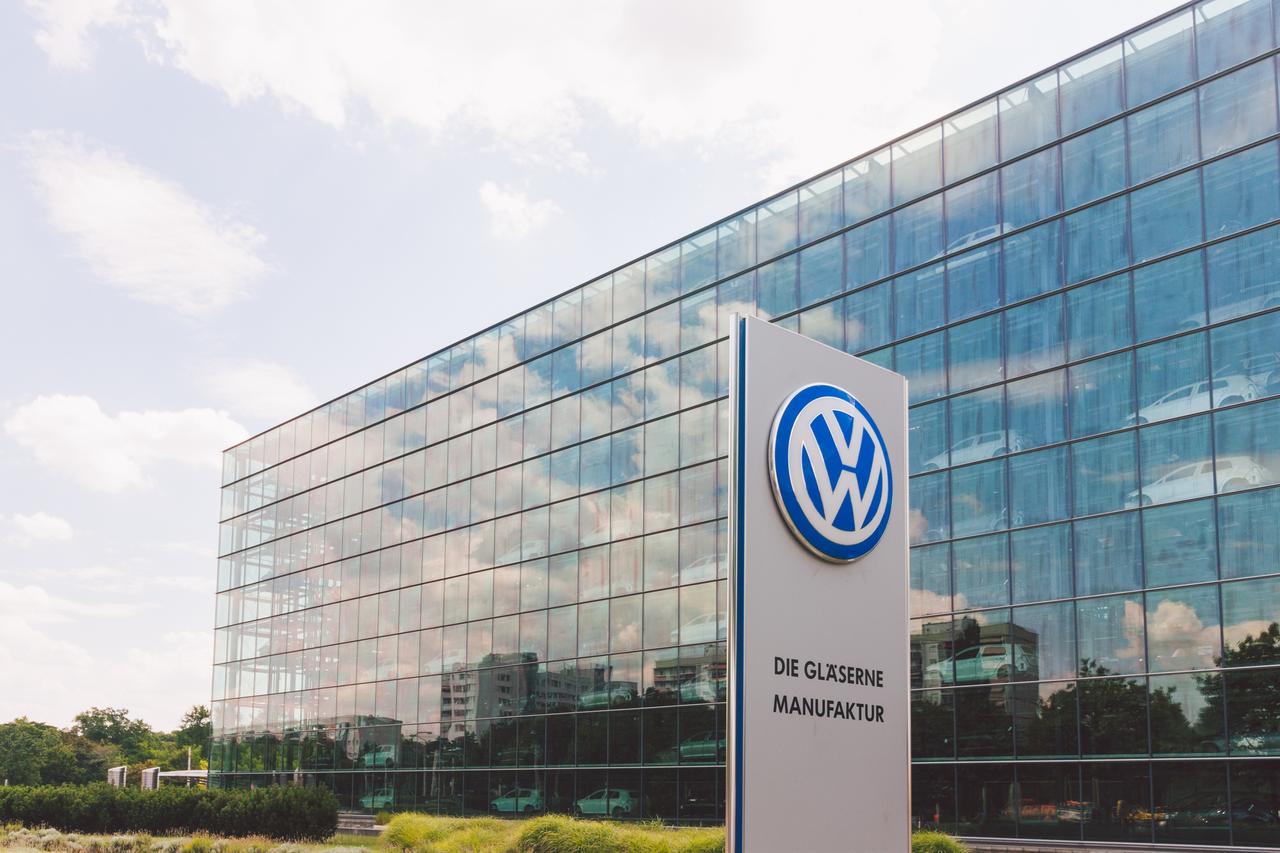
The second step is in Lower Saxony, which holds a fifth of Volkswagen's voting rights. Its Social Democratic premier, Olaf Lies, proposed in June that German plants build models developed with Chinese partners.
"If we produced vehicles here that we currently make in China we could stabilise capacity utilisation of our plants," he said. Carmakers should not have to guess whether such a move would meet political resistance.
Berlin should say plainly that it will not block a China-developed model built on assembly lines in Lower Saxony.
To be sure, the flow into Germany is still thin. The CEA is built for China, and no plan to use it elsewhere has been announced.
Outside China, the main examples on record are the Cupra Tavascan, Volkswagen Anhui's first model, made for export to Europe, and BMW's new iX3, which uses cells from the Chinese battery maker CATL. Advanced chipmaking equipment, where China still relies mostly on foreign suppliers, lies outside this shift.
Yet in a survey by the German Chamber of Commerce in China, the share of car-industry members whose Chinese research also serves global markets rose from 12% to 33% in two years.
In 1896, Li Hongzhang came to Germany with two clear aims: arms and economic ties. On Tuesday, a German president visited a city where Volkswagen now builds on Chinese engineering.
Until Merz's government decides which Chinese technology it wants, and what to ask the Commission to offer for it, the assembly lines in Lower Saxony will have no answer from Berlin.


 Set as preferred source
 Set as preferred source


 1 min read

 1 min read