Newsletters


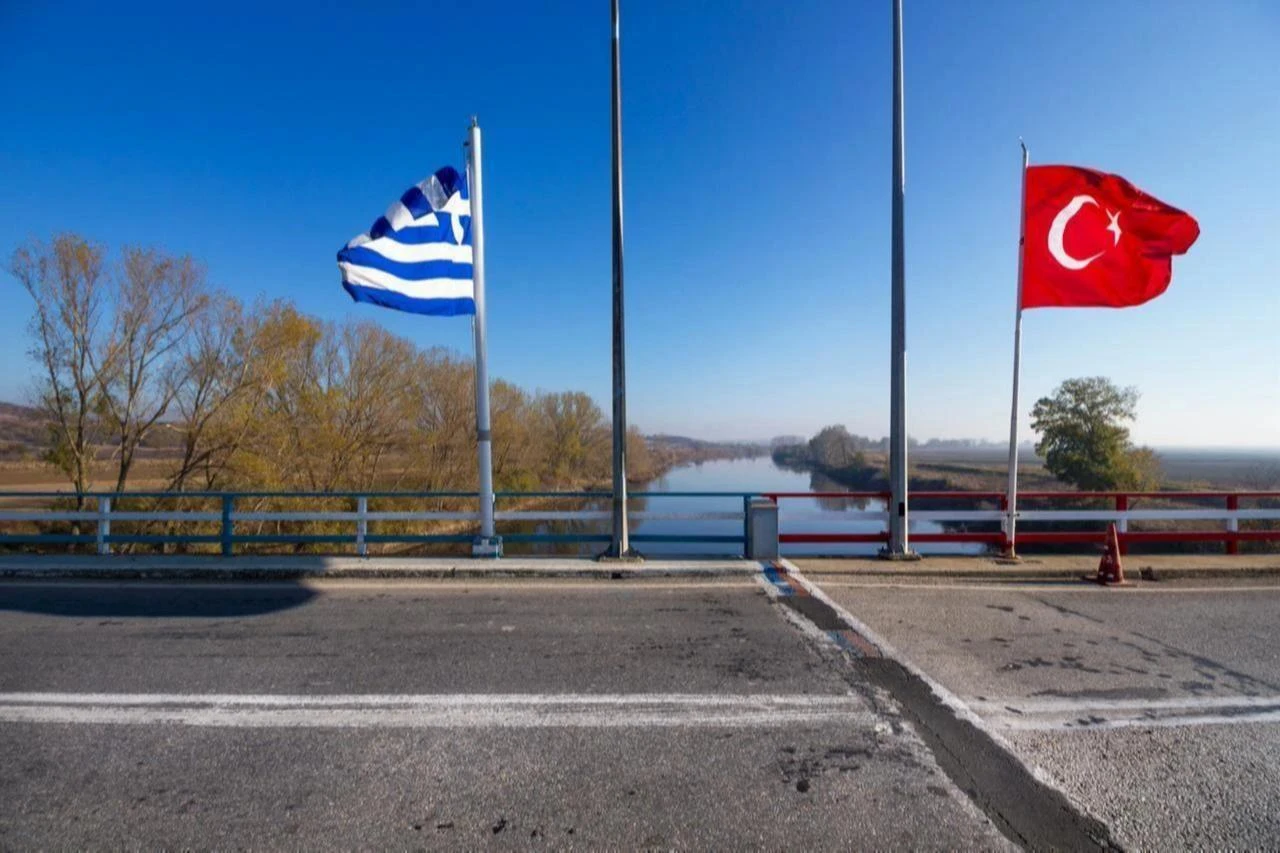


The Greek government's settlement incentive program, launched to reverse the population decline along the border region stretching across the Evros (Meric) line, collapsed in its first year of implementation. The swift collapse of the settlement incentive program revealed how weak the foundation of Athens' calculations regarding border demographics truly was.
Unveiled with great fanfare by Prime Minister Kyriakos Mitsotakis in October 2024 and covering the municipalities of Soufli (Sofulu), Didymoteicho (Dimetoco) and Orestiada (Kumciftligi), the pilot program aimed to draw new residents to towns along the Evros River by offering families grants of up to €10,000. Things did not turn out as expected, however, and the Athens government became a target of opposition criticism.
According to Konstantinos Chitas, parliamentary spokesman for the opposition Hellenic Solution party and Thessaloniki B' lawmaker, who spoke to eReportaz, only two of the roughly 600 applications submitted under the program were approved. He further claimed that even those intended beneficiaries did not remain in Evros.
Chitas noted that the Region of Eastern Macedonia and Thrace had lost 22,000 residents over the past four years, while the population of Edirne had reached 250,000.
He also said that President Erdogan had built 1,033 worker housing units and four industrial zones in recent years, while Greece had failed to pay even the grant owed to the two people who moved to Evros, leading them to return.


Behind the program's design lay the naive assumption that people would relocate their lives simply because of a single economic incentive.
Social Cohesion and Family Minister Domna Michailidou herself was forced to admit in parliament that the €10,000 was not a cure-all and that the program alone was not enough. This admission stands as a clear indication of how superficially the ministry assessed the situation on the ground when designing the project.
The fact that the overwhelming majority of applicants submitted false information makes the scale of the problem even worse.
According to the ministry, a significant portion of the rejected applications belonged to people who had already lived in the region for years and tried to benefit from the grant by creating the appearance of relocation.
Even Athens' own citizens chose to manipulate the system rather than trust it—a choice that sums up how discredited the initiative had become in the eyes of the public.
Structural conditions such as housing, employment, schooling, and access to healthcare, which are necessary for a family to make a genuine relocation decision, were almost entirely ignored by the program.
That a government trying to engineer a demographic balance with public money was unprepared to foresee its own citizens' bad-faith behavior is a detail that exemplifies how hastily and superficially the initiative was prepared.
Nearly two years after its flashy 2024 launch, this limited outcome has been described in the Greek press in harsh terms, such as "devastating" and even as the responsible minister's "Waterloo." Even circles close to the government struggled to defend the project.
The geographic framing introduces another distortion. While the pilot program specifically targeted the Evros district, which is directly adjacent to the Turkish border, the expansion plan announced after its failure covers northern Greek provinces such as Kastoria, Florina, Kilkis, Pella, and Drama.
These provinces present a similarly bleak picture in terms of population decline, but geographically they sit closer to the borders with North Macedonia, Bulgaria, and Albania.
There is a growing impression that, rather than acknowledging its failure at the border, Athens is trying to bury the issue by subsuming it into a general, rural demographic policy.
Such a posture on the part of the government shows that the initiative has been shaped by a reflex to salvage its political reputation.
 2 min read
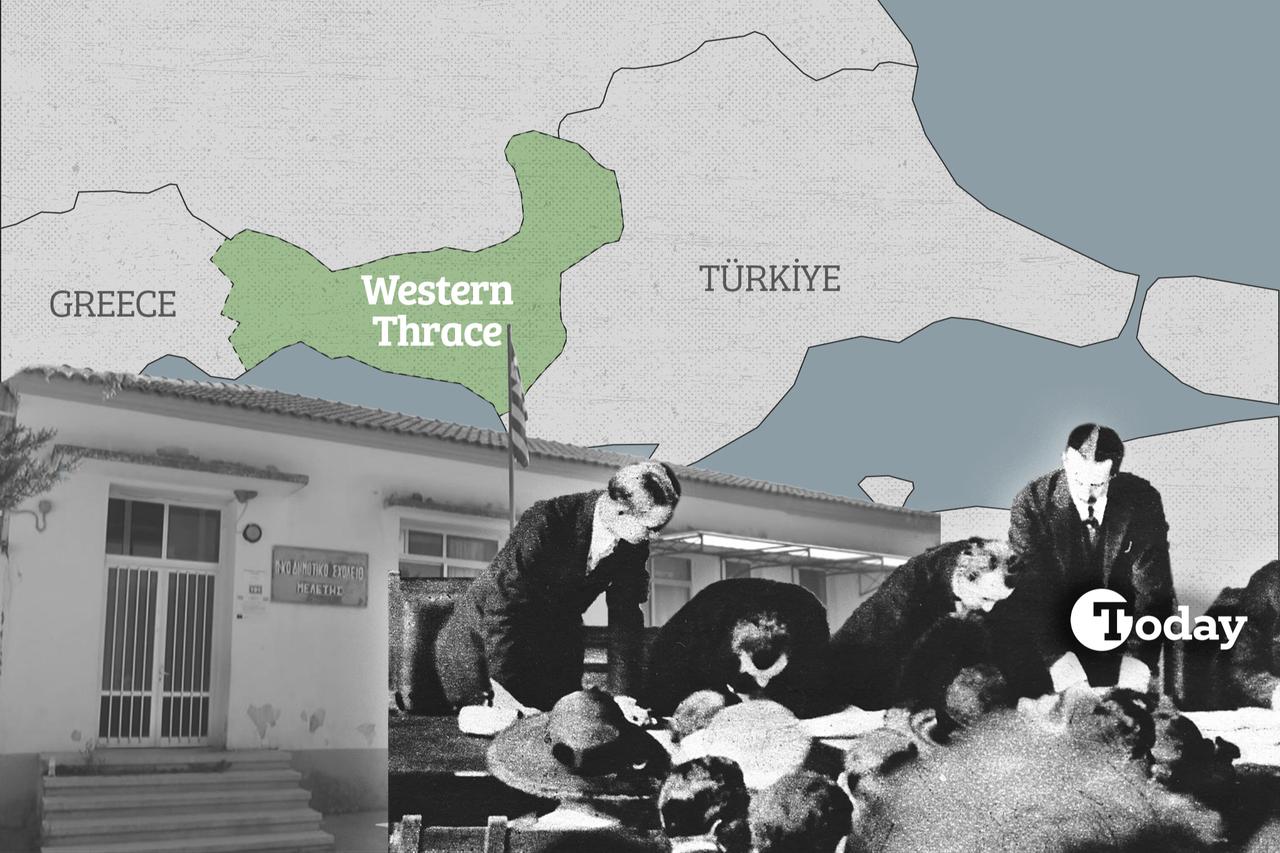
Viewing this settlement program as a plain demographic development project means ignoring the backdrop of the policy Athens has pursued against the Turkish presence in Western Thrace for decades.
Under Article 19 of the Citizenship Law, in force between 1955 and 1998, the Greek state stripped citizenship from more than 60,000 people—the majority of them Turks from Western Thrace—on the grounds that they had left the country.
This practice functioned as an administrative tool aimed directly at reducing the Turkish population in the region.
During the same period, Athens, citing the Lausanne Treaty's phrase "Muslim minority," refused to formally recognize the Turkish identity of the community in the region.
In the 1980s, associations with "Turkish" in their names were shut down, and starting in 1990, the community's right to elect its own mufti was taken away, with mufti appointments made by central government decision instead.
This policy was not confined to the legal and administrative spheres. Restrictions on acquiring real estate and using agricultural land in the region persisted until the 1990s, and schools providing Turkish-language education were shut down.
Today, the Turkish community, which makes up roughly 150,000 of Western Thrace's 350,000 residents, continues to exist within a framework where its identity goes unrecognized and its representation rights remain restricted.
Read against this backdrop, the settlement program along the Evros line stands as the latest iteration of this long-running tradition of demographic engineering. It aims to shift the population balance in the region against the Turkish community.
The fact that the program could approve only two applications shows that this goal found no traction on the ground, though it does not erase the intent itself.
Ultimately, the collapse of the settlement program along the Evros line stands as a concrete and embarrassing example of how far Athens' demographic calculations for the border region diverged from reality on the ground.
In the coming months, the expanded program will be attempted again across a broad geography stretching from Kastoria to Drama, but current data reinforces the likelihood that the same lack of preparation will repeat itself over a wider area.
Athens needs to understand that the social and cultural fabric of the region cannot be so easily altered by government decrees.


 Set as preferred source
 Set as preferred source


 1 min read