Sign in
 Newsletters





The Student List's landslide victory in Serbia's Oct. 25 parliamentary election dealt a major blow to Aleksandar Vucic's political dominance. Now comes the harder part: dismantling the machine he built.
This is where lustration comes in.
Lustration, from the Latin "lustratio," meaning purification, involves examining the past affiliations and conduct of public officials and, where appropriate, restricting individuals associated with previous governments from holding positions of public responsibility.
In its milder form, lustration can be based on disclosure, requiring candidates to declare past affiliations or collaboration. Such ties do not automatically disqualify them from public office but may affect their electoral prospects and future career progression.
A more stringent approach is exclusionary lustration, which bars former senior officials of the ruling party, judiciary or secret police from holding public office, typically for a specified period.
At its most far-reaching, lustration can form part of broader institutional reform, involving the removal and replacement of personnel within state structures, particularly the military, security and intelligence services.
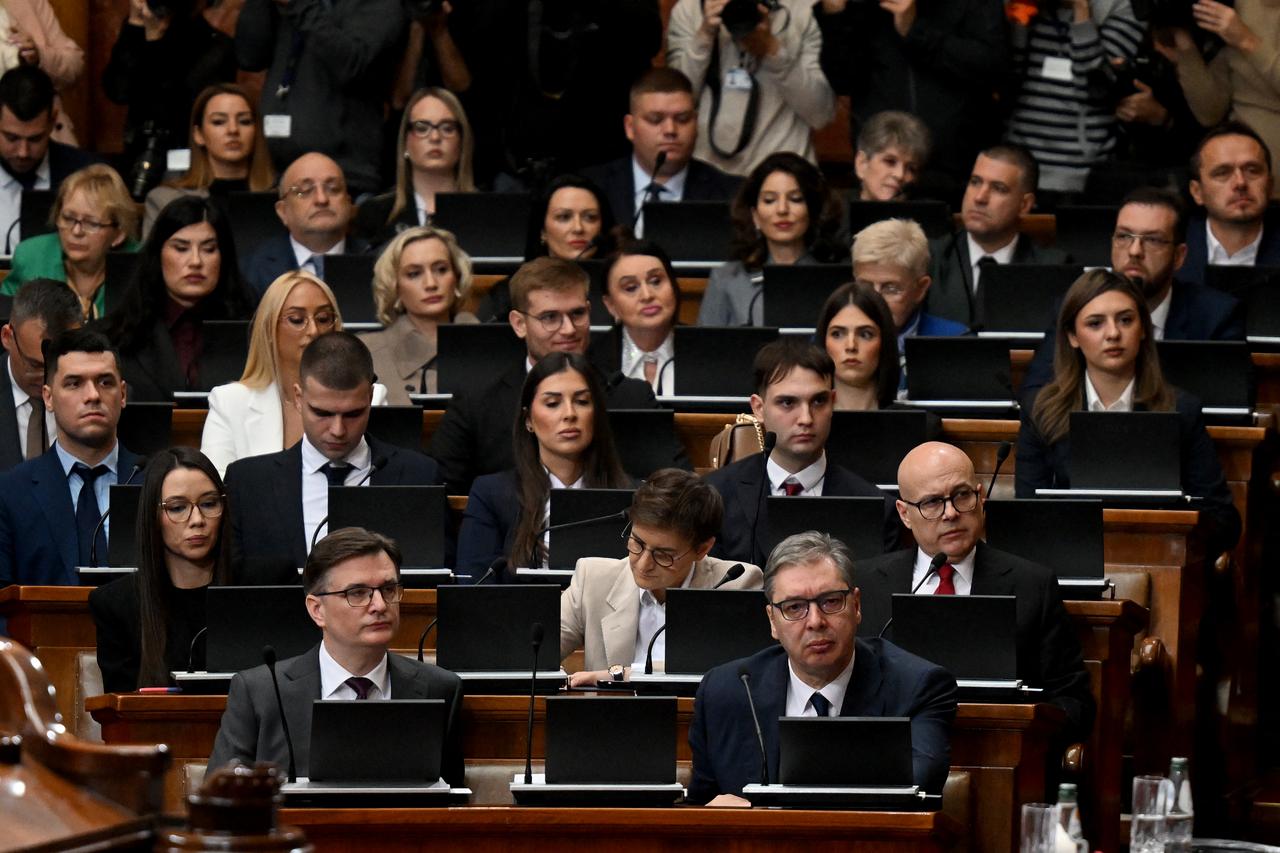

Vucic and his inner circle have turned Serbia into a mafia state. The close nexus between the state and organized crime has served the purposes of maximizing power and accumulating wealth.
Allegations of state abuse have also included the use of a sonic weapon against peaceful demonstrators in March 2025, the deployment of Pegasus spyware against activists and journalists, and the repeated resort to "lex specialis"—as in the cases of EXPO 2027, the Morava Corridor, Belgrade Waterfront and the former Yugoslav Army Headquarters—to advance projects serving powerful political and private interests, all at the expense of the public interest. Promises and agreements surrounding the Jadar mine, Rio Tinto's lithium project, remain largely hidden from the public despite widespread protests and the risk of environmental damage. The list is extensive.
Allowing corrupt individuals closely associated with state capture to continue wielding influence risks undermining public confidence in newly established institutions.
Consider the authorities' response to the November 2024 Novi Sad railway station tragedy, which claimed 16 lives.Rather than prioritizing a thorough investigation, the Vucic government resorted to intimidation and the securitization of public dissent. Students demanding accountability were demonized and portrayed as "Nazis," members of the "fascist Falanga" and "hate-filled monsters." Even the Serbian patriarch, during his visit to Moscow in April 2025, echoed the government's narrative by claiming that "a color revolution" was being attempted in Serbia.
Citizens who have experienced surveillance and persecution under Vucic's rule have every reason to question the legitimacy of police forces, judicial institutions and administrative bodies that retain personnel implicated in such practices.
Removing individuals responsible for abuses or, where necessary, fundamentally restructuring institutions that have shielded the ruling elite from accountability could therefore demonstrate a genuine institutional break with the past. The fact that Serbia's Security Intelligence Agency (BIA) subjected journalists, prosecutors and others to covert surveillance is highly pertinent in this regard.
In addition, lustration can serve as a form of democratic self-protection. Former government officials may retain considerable leverage, potentially obstructing political reforms or concealing evidence of previous abuses. In circumstances where prosecuting every individual involved in systemic repression would be impractical, administrative restrictions may also provide a form of accountability without requiring widespread criminal proceedings.
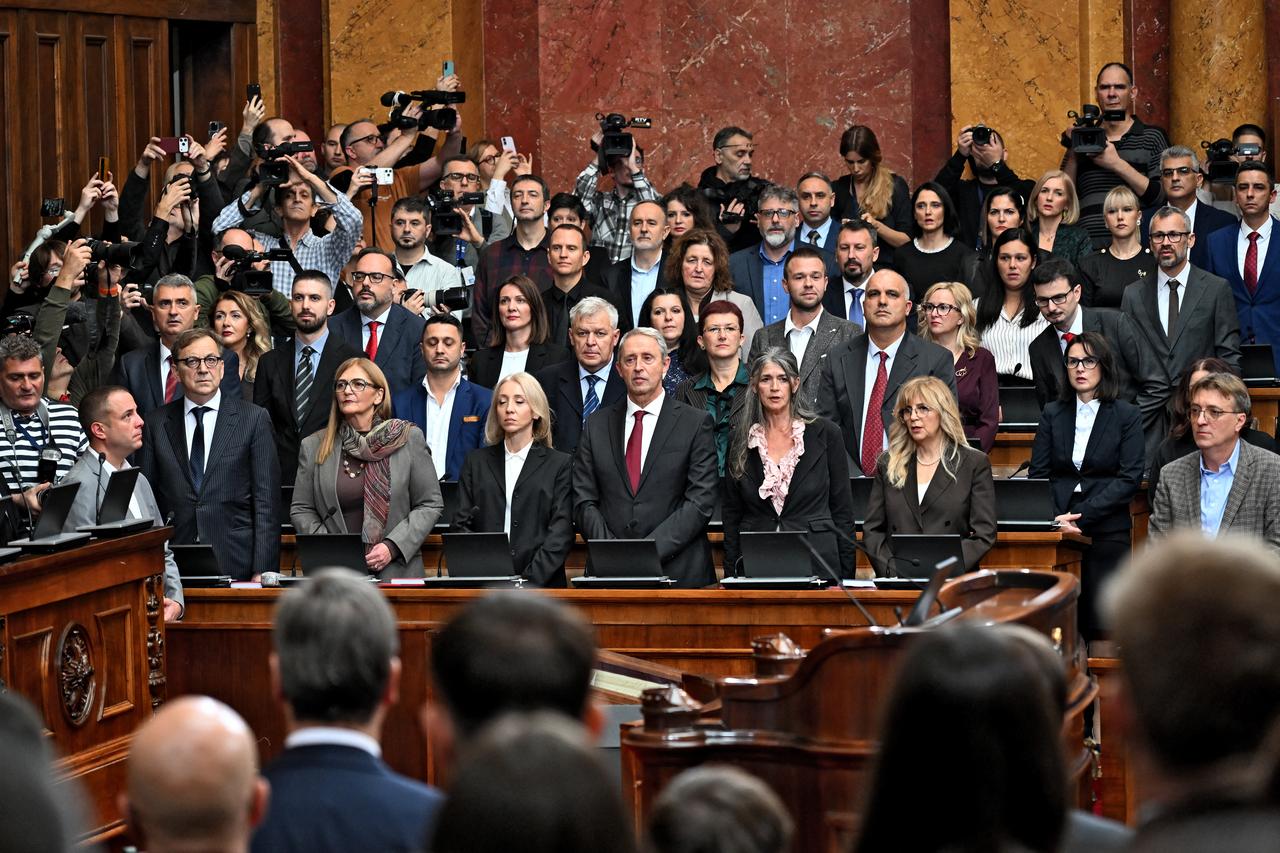
The transition from authoritarianism to democracy is rarely straightforward. New democratic governments must confront the legacy of political repression, institutional corruption and abuses of power while seeking to establish legitimacy and restore public confidence.
During his rule, Vucic engineered a system that largely mirrored Vladimir Putin's model of a vertical power structure. As one description of this model puts it: "On the top of the pyramid stands the president—who is also the commander in chief—and below, level by level, executive and dedicated officials, capable of carrying the will of the ‘supreme leader’ to each and every corner."
While lustration may be both timely and necessary, the new government must also recognize that removing large numbers of experienced public servants, military personnel and administrators could weaken essential state functions and complicate the task of rebuilding national institutions.
In pursuing this endeavor, the new government may find Michael Harmon's distinction among three forms of administrative responsibility useful. I explored these distinctions in greater detail in a previous op-ed.
 2 min read
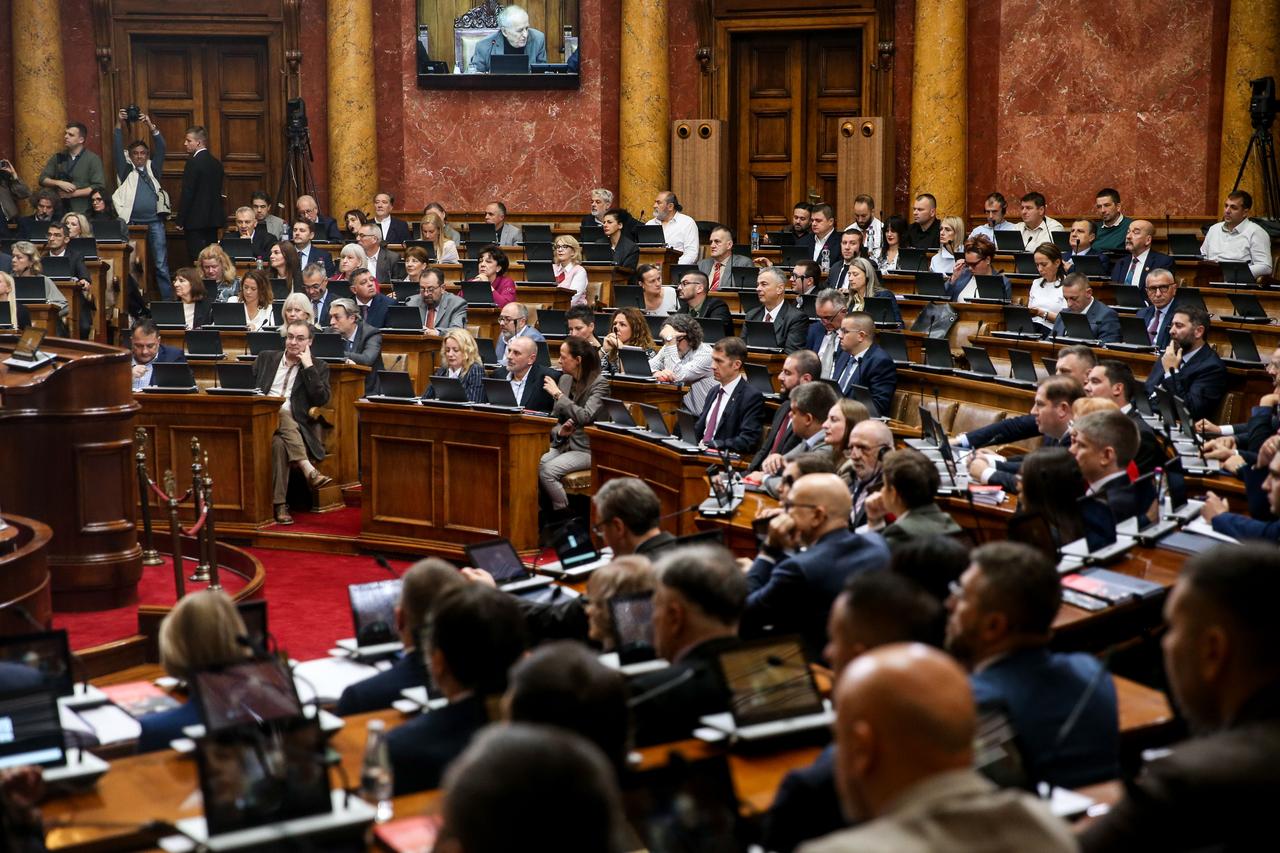
Applied to Serbia's prospective lustration process, political responsibility should extend to those in senior positions within the previous government who actively participated in undermining constitutional principles. Special scrutiny should be given to cases involving the abuse of public office, political interference in the judiciary, the instrumentalization of security services and the partisan misuse of state resources.
Second, while professional responsibility rests on expertise, ethical standards and the institutional knowledge necessary for the functioning of the state, lustration in this area should focus on active participation in unlawful or politically motivated practices.
Finally, personal responsibility, which entails the capacity for moral self-reflection and judgment, should inform the lustration of individuals who knowingly participated in abuses, facilitated political persecution, enabled unlawful surveillance or remained silent in the face of serious violations of fundamental rights.
Such an approach would allow lustration to move beyond a simple change of personnel. Rather than treating entire institutions or professional groups as collectively responsible, it would establish individual accountability based on documented conduct, the nature of the position held and the degree of involvement in abuses of power.
Serbia, unfortunately, did not learn its democratic lessons following the overthrow of Slobodan Milosevic in October 2000.
This is a new opportunity. To avoid the familiar "Fool me once, shame on you; fool me twice, shame on me" predicament, the new government should act swiftly.
Lustration, accompanied by measures proportionate to the gravity of individual conduct, offers an opportunity to transform not only institutions but also public attitudes.
It should reinforce the principle that blind political loyalty and personal patronage, when used to facilitate abuses of power and criminal wrongdoing, carry consequences—sooner or later.


 Set as preferred source
 Set as preferred source




 1 min read