Newsletters


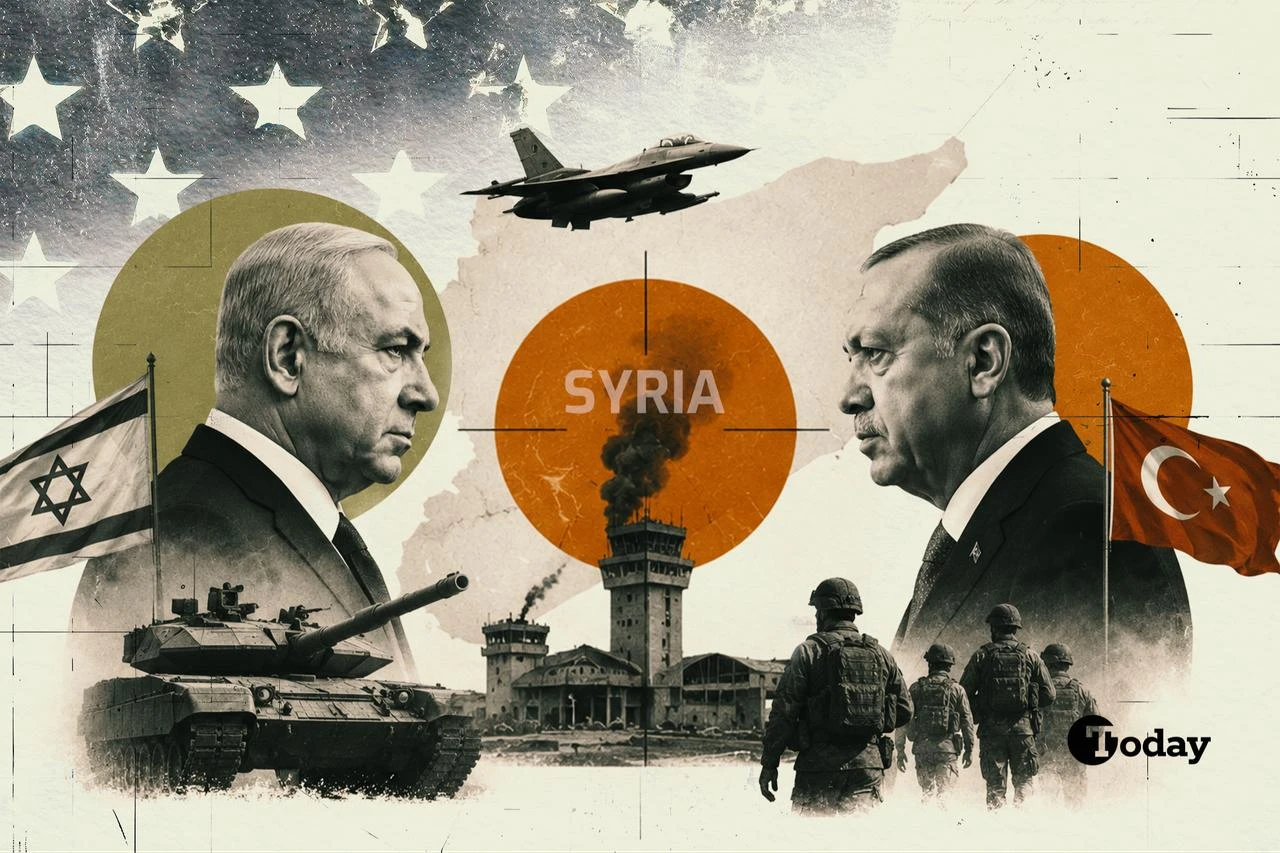


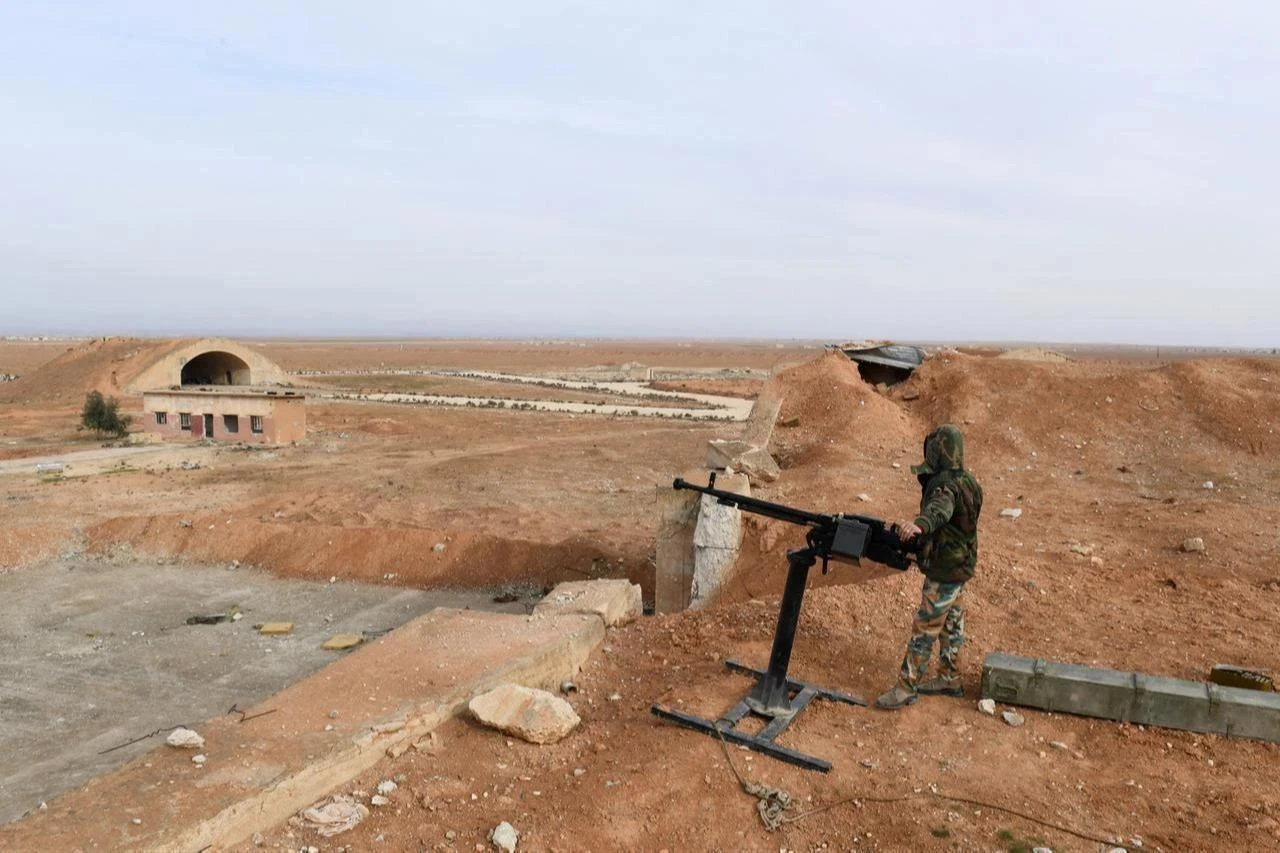
Israel's attack on Syria's Abu al-Duhur airbase was widely interpreted as the latest sign of a possible escalation between Israel and Türkiye. That reading is understandable but perhaps too simple.
Tel Aviv claimed the attack was intended to stop a Turkish military deployment that was approaching the base. Ankara rejected the claim and condemned the strike. Meanwhile, U.S. Special Representative Tom Barrack described it as an "unnecessary escalation," saying Washington was working to establish a mechanism to avoid a conflict between Israel, Türkiye, and Syria.
The strike, according to Netanyahu, appears to have been a message to Ankara.
But Türkiye did not respond as Israel might have expected.
Rather than escalating the incident into a bilateral conflict, Ankara shifted the issue to a different diplomatic footing, responding calmly to successive statements from Israeli officials.
This move merits more attention than the attack itself. Türkiye's response shows how closely it has monitored and analyzed reactions in Washington, from Netanyahu, and across the region.
Before Türkiye's response took center stage, Washington and Damascus issued the most significant reactions. The Syrian government, for its part, stated that it had previously informed Israel that there were no plans to establish a Turkish military presence at Abu al-Duhur and that Israel was informed of this before the attack.
The U.S. then began working to establish a formal de-escalation mechanism among Israel, Türkiye, and Syria. Washington's immediate intervention shows how far the issue has progressed beyond the question of what happened at a Syrian airbase.
This may be exactly what Ankara is looking for.

A Turkish official described Netanyahu's strategy as one that is becoming more transparent. "Netanyahu's tactical moves and strategic intentions are now crystal clear. It's no longer fun to play along with him," the official stated.
According to the official, who spoke on condition of anonymity given the sensitivity of the matter, Ankara chose not to respond immediately to Israel's successive statements, instead focusing on how Tel Aviv would behave in a different situation.
Another Turkish official was more direct, referring to Netanyahu's latest message: "He's putting the letter in the wrong post box."
The issue here isn't that Türkiye is ignoring the attack or demonstrating weakness. Ankara condemned the attack and made it clear that Israel's actions in Syria are unacceptable. But Ankara refused to allow Netanyahu to portray the conflict as a simple Israel-Türkiye conflict and took a clearer stance.
By acting with restraint in the early hours, Türkiye helped shift the crisis's center of gravity from Ankara to Tel Aviv and Washington. This was a sound strategic decision.
This situation also sheds light on a much less visible aspect of the story: Israel's internal concerns about a potential conflict with Türkiye.
An Israeli source familiar with the Israeli military's mindset described Netanyahu's approach in a different light than how it is commonly portrayed in the media. According to the source, "Netanyahu is now attempting to provoke the Turks with a trap that countries in the region are well aware of."
The bigger risk is not Türkiye retaliating, but the Israeli military opening a new front with Türkiye while already under significant strain.
Following the nearly three-year genocide in Gaza, the conflicts in Lebanon, and Israel's long-standing military occupation of Syria, the Israeli military is under enormous strain.
The prospect of a conflict with Türkiye differs fundamentally from the wars Israel is fighting elsewhere in the region. As an Israeli source puts it: "Türkiye is unlike the others." The source said that, unlike in Gaza, Lebanon, and even Syria, Israel would be dealing with Türkiye as a state—one of the region’s two most powerful. "We can only watch the madness unfold," he added.
This concern appears to go beyond Israel.
A Lebanese source, who has been advising Lebanese governments on Israel for many years and prefers not to be identified due to the nature of his work, described the Abu al-Duhur operation as a subtle trap.
"Fortunately, thanks to years of experience, the Turks did not fall into the trap that Iran has fallen into on numerous occasions, and they maintained their composure," he said, before issuing a warning: "They truly appear to have lost their minds. So much so that they fail to recognize how things have changed. As a result, I believe the provocation will continue."
If this assessment is correct, Abu al-Duhur may be significant not as a single military operation, but as the first step in a long-term political struggle. Only time will tell.
There is also a timing issue, which has made for sensational headlines.
Israel is preparing for an election, and Netanyahu is increasingly incorporating Türkiye into his security narrative. This does not imply that Netanyahu desires war with Türkiye. On the contrary, the situation could be the exact opposite. A controlled conflict that achieves political and diplomatic goals without devolving into a full-fledged war could be far more beneficial.
Washington, too, is at the heart of the situation. A retired Lebanese intelligence expert living in the United States claims that Netanyahu has already begun positioning himself for the political landscape that could emerge after the upcoming U.S. elections, a calculation that is widely understood.
According to a Lebanese expert living in the United States, Netanyahu is not afraid to incite minor crises with the U.S. because he is investing in the Democrats, and the American administration—particularly the Trump administration—is becoming increasingly willing to reject his proposals.
"Compare the rejections of preventive mechanisms regarding Gaza and Syria with the schedules of visits to Washington by lobbyists linked to Netanyahu, and you will see. The young socialist tendencies within the Democrats are unlikely to deter this, so Türkiye and Saudi Arabia must take precautions now," the expert noted.
Whether under a Democratic or a Trump administration, no U.S. administration is likely to want a direct conflict between Israel and Türkiye. But the real question is who will manage the crisis, on whose behalf, and for whose benefit. Ankara appears to have already made a move in this direction.
We must pay close attention: the United States has already acted quickly to prevent the Abu al-Duhur incident from escalating into a direct conflict between Türkiye and Israel. Israel's rejection of Washington's efforts to establish a formal de-escalation mechanism is the result of a process. Ankara sees this as an opportunity.
Rather than accepting Netanyahu's preferred framework, which is centered on a dispute over Turkish military intentions in Syria, Türkiye is bringing to the forefront broader issues that are also of great interest to the Trump administration.
Perhaps this explains why the most significant development following the Abu al-Duhur incident was neither a new Israeli statement nor a new Turkish condemnation.
The real significance was the shift in how the crisis was managed.
Netanyahu may have wanted to send a message to Ankara. However, by refusing to respond to this message on the terms he had established, Türkiye caused the crisis to spread to other areas of Washington. "Netanyahu's tactical moves and strategic goals are now clear," said a Turkish official.
"It's no longer worth playing along with him."
The attack was merely one incident. The more important question is whether Netanyahu's efforts to exert pressure on Türkiye will result in the conflict he seeks, and things are currently moving in the opposite direction.
If this trend continues, the Abu al-Duhur attack may be remembered not as the beginning of an Israel-Türkiye escalation but as the point at which Türkiye decided not to play by Tel Aviv's rules.


 Set as preferred source
 Set as preferred source


 2 min read
 1 min read