Sign in
 Newsletters




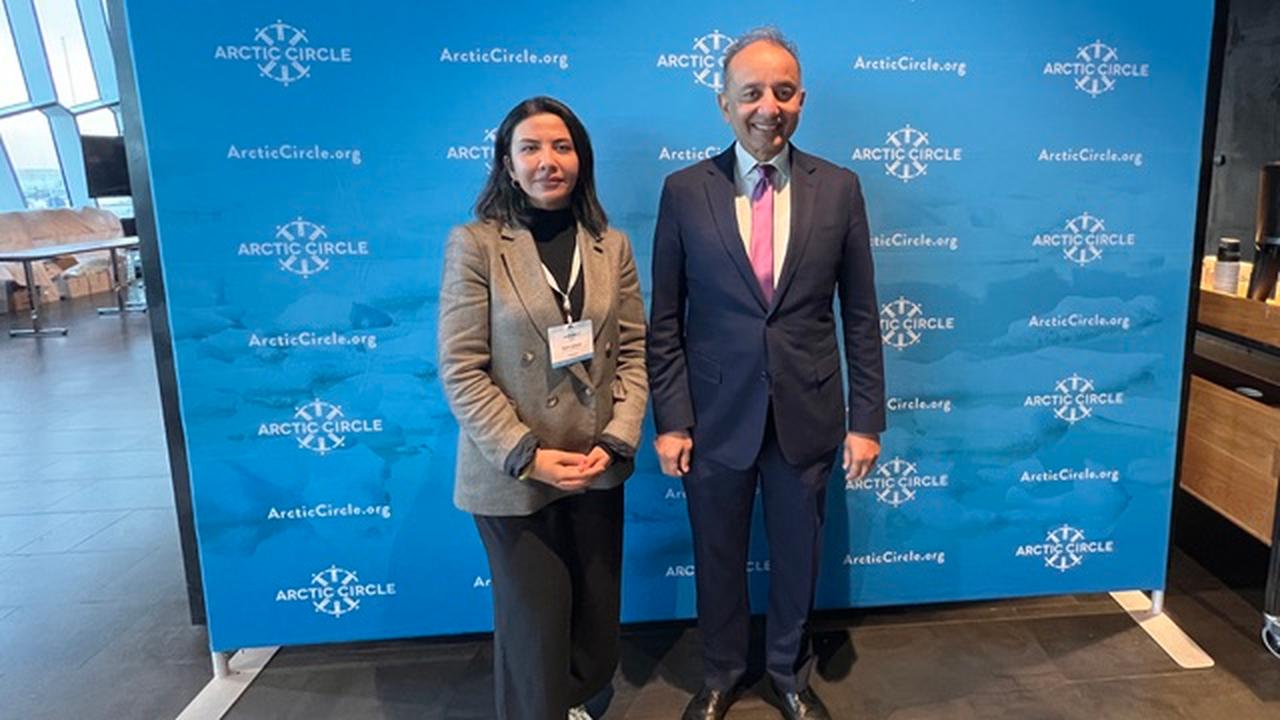
Pakistan’s climate minister had come to Iceland with an argument about geography: a country does not need an Arctic coastline to have a stake in the future of ice.
“We are the Arctic in the mountains,” Musadik Masood Malik told me on the sidelines of the Arctic Circle Assembly in Reykjavik on Oct. 9, 2026.
The phrase explained Pakistan’s presence at a gathering associated with the far north. Its glaciers, he argued, belong in an international conversation about water, livelihoods and the consequences of warming. By the end of our discussion, that argument had become a direct invitation to Turkish universities to work in Pakistan’s mountains.
As Türkiye hosts COP31 in Antalya from Nov. 9 to 20, the proposal connects two diplomatic settings: the Nordic and Arctic research community Malik was addressing in Iceland, and the climate negotiations where vulnerable countries seek support for adaptation. His concern was how research could help people living with environmental change before their losses become irreversible.
Malik, Pakistan’s federal minister for climate change and environmental coordination, began by explaining why mountain environments deserved closer attention. Changes in glaciers and water flows, he said, needed to be studied alongside their effects on human security, food supplies and displacement.
He described mountains as the first places to “take the hit” and warned that failing to understand their transformation could leave communities elsewhere responding too late. He feared an approaching “point of no return,” although he expressed hope that it could still be avoided.
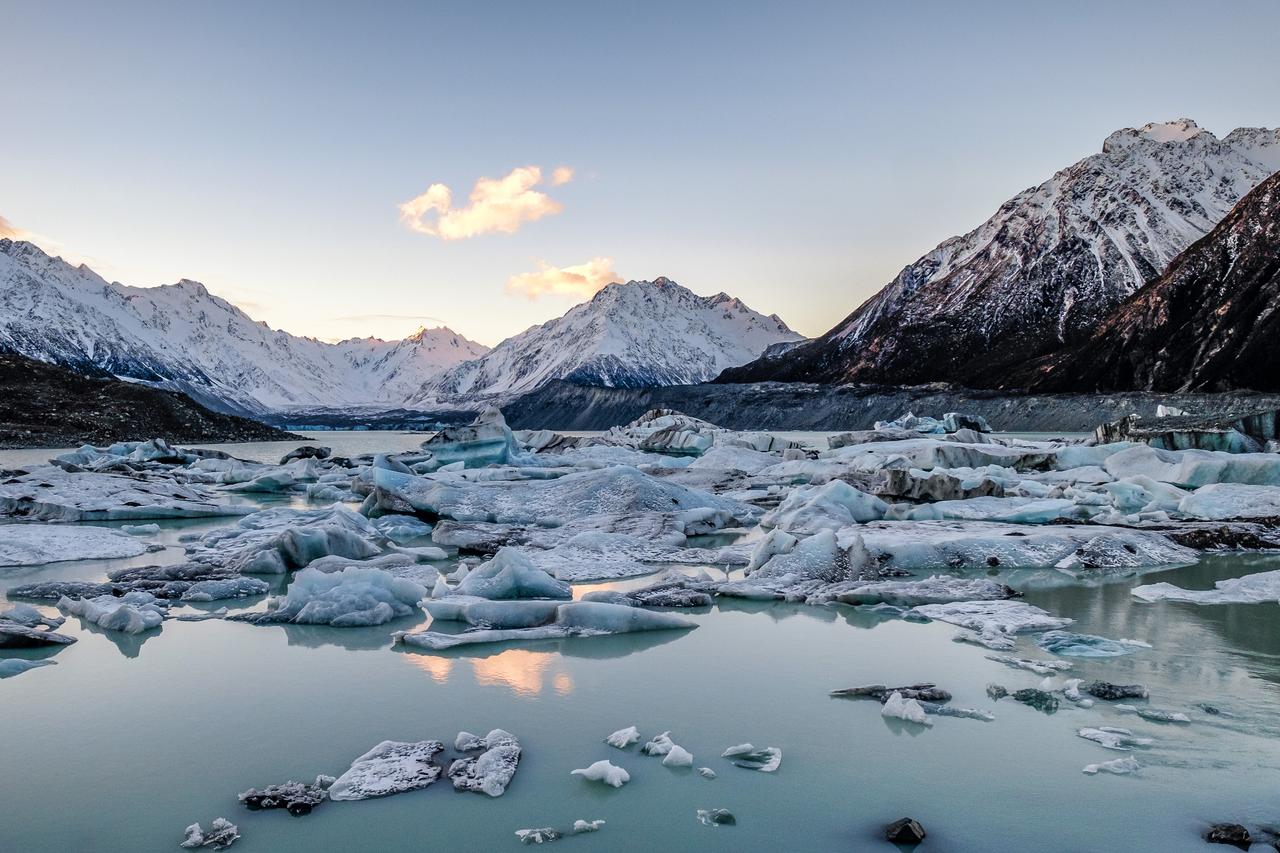
The warning requires scientific context. Arctic warming is already well underway, and mountain glaciers, polar ice sheets and sea ice respond through different processes. Their changes do not follow a single timetable. What connects them is the need to understand how shifts in frozen environments affect the societies around them.
In Pakistan’s wider region, evidence of change is substantial. A 2023 assessment by the International Center for Integrated Mountain Development (ICIMOD) found that glaciers across the Hindu Kush Himalaya lost ice 65% faster in 2011-2020 than in the preceding decade. The consequences extend beyond glacier margins to water availability, infrastructure and livelihoods downstream.
Malik wanted that wider reach reflected in research. Scientific measurements alone would not explain what happens when families lose land, move away or struggle to rebuild. He called for anthropological, sociological, psychological and economic perspectives alongside glacier science, paying particular attention to women and children.
Pakistan’s recent experience gives that emphasis urgency. The assessment following its 2022 floods found that 33 million people had been affected, with physical damages exceeding $14.9 billion and economic losses of approximately $15.2 billion. Those figures describe the broader disaster, whose causes and impacts cannot be reduced to glacier melt.
They also explain why adaptation is inseparable from development. A damaged road can cut off livelihoods; displacement can interrupt education and access to healthcare. Understanding ice and water becomes part of understanding how communities can remain secure.

When our conversation turned to what Pakistan could offer international researchers, Malik described a virtual green university framework.
“I’ve put together a framework for a green university, which is simply a virtual space,” he said.
The practical starting point was a limitation familiar to international research: overseas scholars cannot always travel to Pakistan or remain there for extended periods. Pakistani students and early-career academics, however, could undertake fieldwork while collaborating with supervisors and research teams abroad.
Malik envisaged linking graduate students, young professors and assistant professors with scholars in Europe, North America and elsewhere. Universities in northern Pakistan, close to the glaciers, would provide infrastructure and local access. Student and faculty exchanges would support those relationships.
The offer included primary and secondary data, from satellites and early-warning systems to information collected within communities. Researchers would study both glacier behavior and the lives of people nearby, with doctoral and master’s students forming the core of the proposed network.
“In return, what they would get is scholarship. They would get world-class academic leaders to supervise their work,” he said.
His proposal uses a term already familiar in higher education. Institutions in Bangladesh, Uzbekistan and Iraq carry green university in their names, while sustainability rankings assess environmental performance across many more campuses. Malik’s framework centers on connecting existing institutions through research, data and supervision.
The proposal resurfaced at COP31. At the Antalya conference, Malik said he had proposed a virtual green university where young researchers from Pakistan and other developing countries could work with universities worldwide. He also said a $10 million fund had been set up for clean-air startups.
“Our young people have the ideas. We have to give them the means,” he said.
The update gives the research framework a broader developing-country reach, alongside a separate initiative supporting clean-air innovation. For the university network, the next challenge is establishing partnerships that connect local fieldwork with international supervision and practical adaptation needs.
Malik’s interest in the Arctic Circle also reflected a search for a place where countries could talk about shared risks.
He recalled becoming acquainted with the organization in Italy the previous year. In Reykjavik, he said, he had met former Icelandic president Olafur Ragnar Grimsson and his team and was preparing to address a plenary the next day. His reception had been warm, and discussions had left him encouraged by the openness to new ideas.
One preliminary idea was to create a safe space for dialogue among countries around the region’s glaciers. As geopolitics became more polarized, he said, honest conversations were becoming harder to sustain.
“Because when the mountain falls, it doesn’t care which way it falls,” he said. “And on all sides of mountains are all of these countries.”
His point was that environmental hazards do not respect political boundaries. Countries with difficult relationships can still face connected problems involving floods, water systems and vulnerable populations.
Malik linked the proposed dialogue to a desire to resolve disputes peacefully and build resilience for poor communities on every side of the mountains. The Arctic Circle, in this account, offered a possible setting for exploring cooperation whose purpose extended beyond the Arctic itself.
When I asked what Türkiye and Pakistan might do together, Malik’s answer moved quickly from diplomacy to family.
“My daughter-in-law is Turkish,” he said. “For our family, for myself, Türkiye is our second home now.”
He described broad willingness to cooperate across defense, peace, economic growth and culture, and praised Türkiye’s regional leadership. Pakistan’s prime minister, he added, regarded the Turkish president as “a real brother.”
Malik also spoke warmly about Kasim Gonullu, Türkiye’s deputy minister of industry and technology, whom he had encountered at the gathering. He praised the vision of Türkiye’s intellectual leadership presented there.
“Had I known, I would have first gone to Türkiye and then come here jointly to the Arctic,” he said.
His interest in Turkish scholarship drew on earlier experience. During his years in the United States, he recalled, some of the leading graduate students he encountered had been Turkish. That memory supported his confidence in the contribution Turkish universities could make.
But goodwill needed a practical expression. When I pressed him for one, he returned to Pakistan’s glaciers.
“If Türkiye is interested in doing work in the Arctic Circle, their first home is Pakistan,” Malik said. “We’d like to have the scholars from Türkiye come to Pakistan.”
He connected the offer directly to his outreach to Iceland, saying he wanted to offer the same relationship “ten times over” to Türkiye and its universities.
The activities he envisaged were specific: student exchanges, visits by faculty members and supervision of research at universities around Pakistan’s mountain ranges. Karakoram International University in Gilgit illustrates the academic infrastructure available in the region, including a Department of Geology and Mountain Hazards.
Research could examine scientific and economic questions as well as disaster impacts, rehabilitation and the social experience of environmental change. Malik did not identify an existing joint Arctic research program during our discussion; his answer focused on what the countries could build together.
That leaves an agenda for universities and research institutions: identify shared questions, agree on data access, arrange supervision and connect fieldwork with the needs of communities. Türkiye’s links with Pakistan and its engagement in polar research could help bring those partners together.
For COP31, the relevance is practical. International climate commitments require people and institutions able to turn information into decisions. Research partnerships can contribute by improving knowledge of local hazards and helping authorities plan responses.
Malik’s invitation gives Turkish and Nordic researchers a place to begin. The next step is to turn the proposed exchanges into sustained work, with benefits reaching the communities whose mountains brought Pakistan into the Arctic conversation.


 Set as preferred source
 Set as preferred source


 1 min read
 1 min read