Sign in
 Newsletters


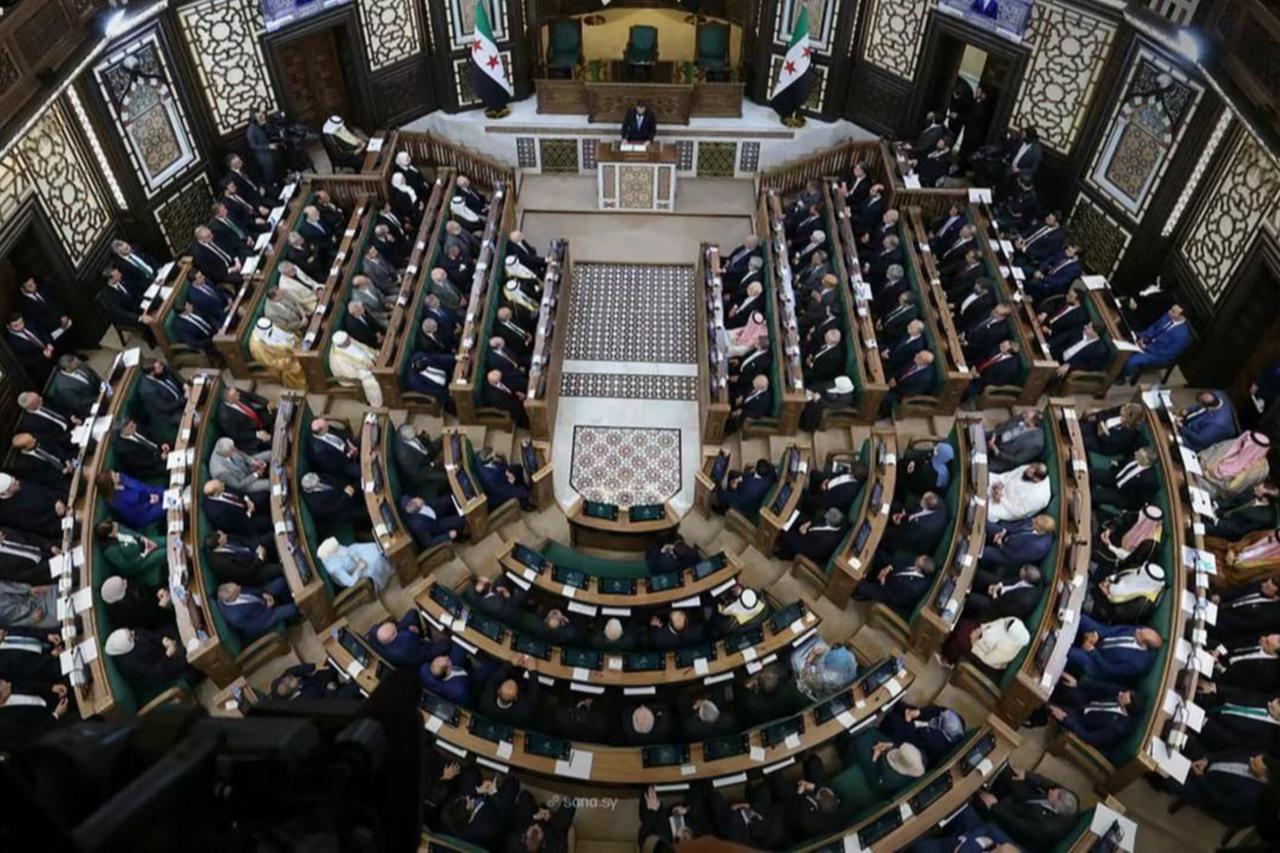


Nearly two years after the fall of the Assad regime on Dec. 8, 2024, Syria’s political transition has entered a new phase. So far, domestic priorities have largely focused on addressing the population’s everyday needs, while external priorities have centered on preserving the country’s political unity and securing international legitimacy. Establishing an interim administration has also been central to this initial phase.
Ahmad al-Sharaa assumed the presidency in January 2025. This was followed by the National Dialogue Conference on Feb. 25 and the adoption of the Constitutional Declaration on March 13.
These developments laid the political and legal foundations for the transitional period. With the Syrian People’s Assembly holding its first session in July 2026, the process has now entered a new institutional phase.
The country’s central challenge is not merely to secure domestic and international legitimacy for the new leadership, but to restore the functioning of state institutions.
Today, that objective must be translated into concrete legal reforms. Beginning work on a draft constitution, protecting property rights, establishing a legal framework for political parties, and addressing transitional justice will directly shape both the new administration’s success and Syria’s economic future.
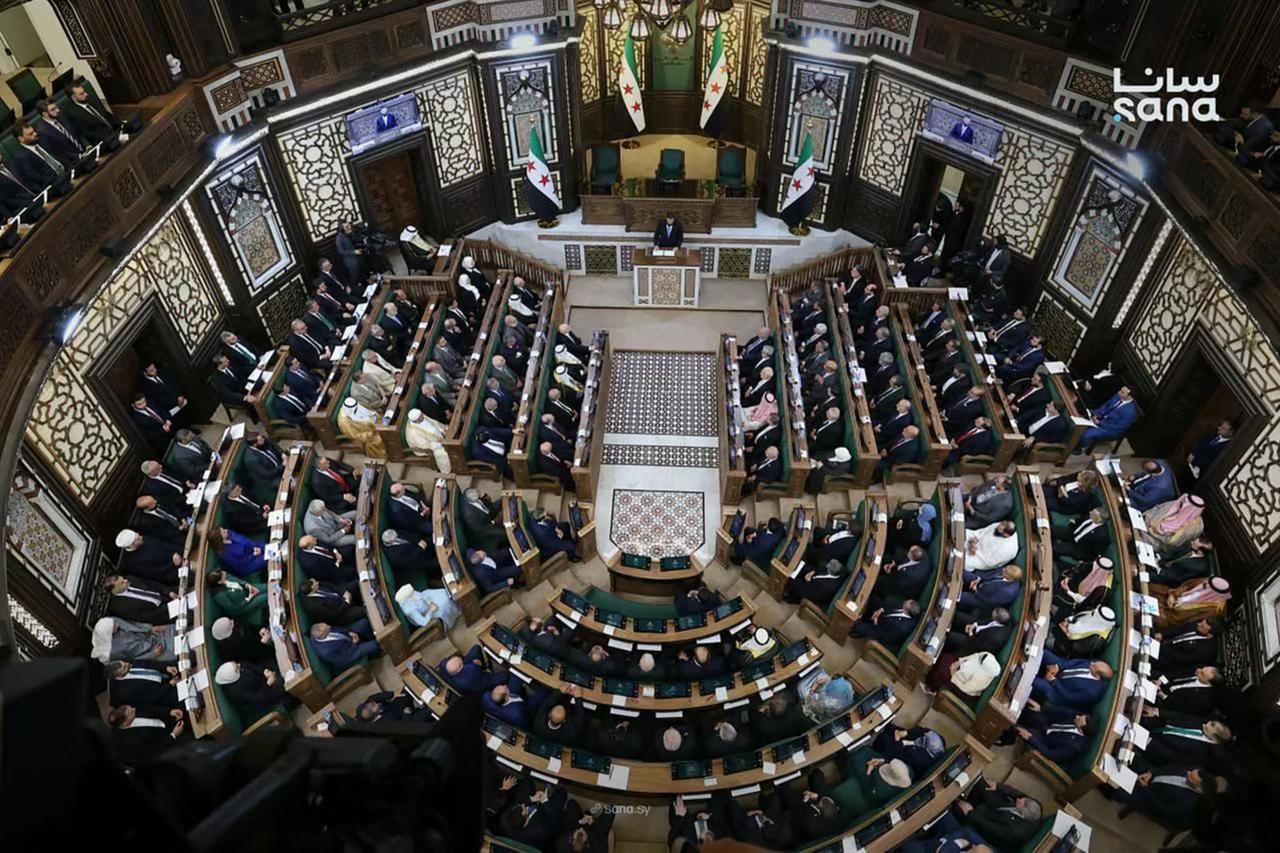
The Syrian People’s Assembly began its legislative work with its first session in Damascus on July 12, 2026. Under the framework for the 210-seat parliament, two-thirds of its members were selected through an indirect electoral mechanism in which the president also exercised significant influence. At the same time, the remaining third were appointed directly by the president.
Although this arrangement was justified by postwar conditions, it sparked debate over political representation, particularly concerning some communities.
On July 30, parliament adopted its 231 article rules of procedure. By late August, 26 standing committees had been established, covering areas including constitutional and legislative affairs, human rights, transitional justice, investment and reconstruction.
As regular legislative work began in October, parliamentary questions to ministers and committee reviews also came onto the agenda.
Two early legislative decisions deserve particular attention. On Oct. 20, parliament repealed Law No. 143 of 1958, which had granted the Ministry of Education the authority to seize property. On Nov. 9, lawmakers approved a bill aimed at removing provisions that allowed certain administrative decisions to remain beyond judicial review.
These measures are particularly significant in a country where administrative authority was often exercised without effective judicial oversight. However, removing legal barriers to judicial review is only the first step.
The real test will be whether Syrian courts can independently review government decisions, including those taken by the new administration itself.
The Transitional Justice and Social Peace Committee’s consideration of a relevant draft law on Nov. 10 also indicated that parliament is beginning to address legal problems inherited from the previous era.
However, the success of the new legislature should be measured not only by the laws it passes, but also by its ability to exercise oversight of the executive.
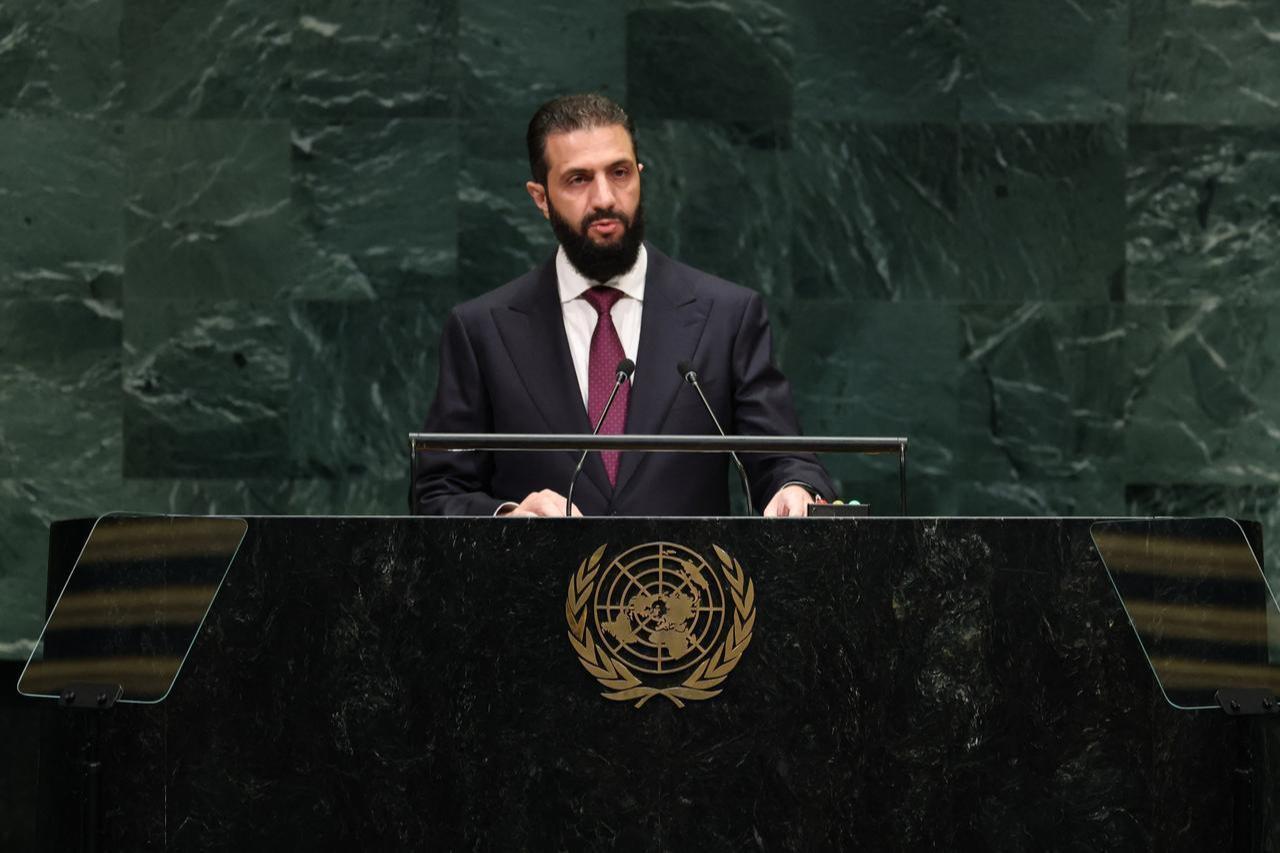

Following the fall of the Assad regime, Syria’s previous constitutional framework was abolished and the former parliament dissolved. Yet drafting a permanent constitution after such a profound political transformation requires time and broad social consensus, particularly in a country as ethnically, religiously and politically diverse as Syria.
In constitutional law, transitional periods of this kind are often governed by constitutional declarations. These temporary legal instruments define the basic institutions of the state, their powers and the legal principles of the transition until a permanent constitution is adopted.
Syria took this approach. Following the National Dialogue Conference, the Constitutional Declaration adopted on March 13, 2025, establishes the legal framework for a five-year transitional period.
Although the declaration sets out principles concerning fundamental rights, judicial independence and the separation of powers, the extensive authority granted to the president raises questions about how executive power will be constrained. Under Article 50 of the Constitutional Declaration, amendments require a presidential proposal and the approval of two-thirds of parliament.
This arrangement highlights both the legislature’s potential role in constitutional reform and the limits of its independence from the executive.
As the transitional period approaches its second year, and with parliament new operational, work toward a permanent constitution should begin. This process should not be treated merely as a technical exercise involving legal experts.
It should become an inclusive effort to build constitutional consensus among Syria’s different political and social communities. Within the limits of the existing Constitutional Declaration, parliament should also contribute to ensuring transparency and public participation in the process.
While work toward a permanent constitution moves forward, parliament must also pursue other essential legal reforms in parallel to address the country’s immediate challenges.
One of parliament’s first priorities should be the protection of property rights. Throughout the civil war, millions of Syrians were displaced, properties were confiscated and Access to ownership records became increasingly difficult, creating serious legal disputes. The consequences of Decree No. 66 of 2012 and Law No. 10 of 2018, in particular, should be reassessed.
However, repealing controversial legislation alone will not be enough. Legal safeguards allowing rightful owners to regain Access to their properties, reliable land registries and independent dispute resolution mechanisms must also be established.
Property rights are essential not only for the return of displaced Syrians, but also for reconstruction and foreign investment. Without legal certainty, sustainable economic recovery will be difficult to achieve.
The second priority should be a law governing political parties. The establishment of the new parliament has made the need for a clear legal framework for political organization more pressing.
The formation and financing of political parties, as well as their participation in elections, should be governed by transparent, equal and predictable rules.
Syria’s social diversity must also be taken into account. The political participation of different ethnic and religious communities should be guaranteed. However, this must not evolve into a system like Lebanon’s, where state offices are permanently distributed according to sectarian quotas.
Lebanon’s experience demonstrates how constitutional arrangements designed to accommodate communal diversity can, over time, institutionalize political divisions and weaken the functioning of state institutions.
Syria needs a pluralistic constitutional order that protects the rights of all citizens, rather than a political system built around the distribution of public offices among communities.
The third priority should be transitional justice. Investigating serious human rights violations committed under the Assad regime, providing remedies for victims and holding those responsible accountable are essential for social peace.
At the same time, the right to a fair trial, the presumption of innocence and the principle of individual criminal responsibility must be upheld. The new Syria’s approach to justice must clearly distinguish itself from the methods of the former regime.
The common objective of all these reforms should be to establish legal limits on state authority. Ending the practices of the Assad era is important, but the greater challenge is to build institutions capable of preventing similar abuses from occurring again.
Syria’s new parliament therefore faces a historic responsibility. The country’s future will depend not only on when a new constitution is drafted, but also on which laws are enacted in the meantime and how effectively they are implemented.
The success of the new Syria will depend not so much on strengthening the power of the state as on its ability to limit that power through the rule of law.


 Set as preferred source
 Set as preferred source


 1 min read


 1 min read