Newsletters


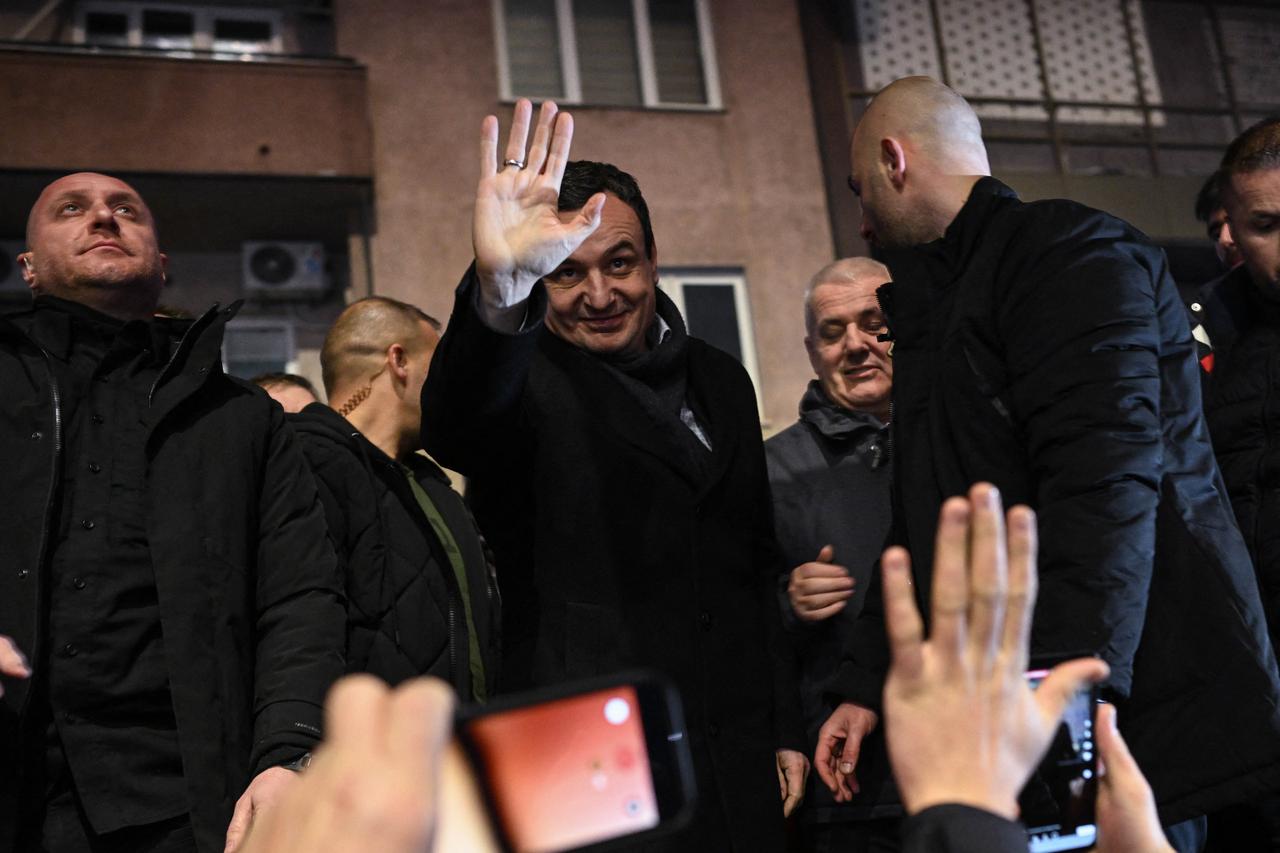


I first met Kosovo’s Prime Minister Albin Kurti when I interviewed him a couple of years ago in Istanbul. Long before that, he was known to many of us in the Balkans as a student protester, a political activist shaped by resistance during the years when Kosovo was still fighting for its very existence.
That background matters. Kurti is not a politician manufactured by power; he is a product of struggle, of a country that declared independence in 2008 but is still not recognized by Serbia and its allies, including Russia and China.
In that interview, Kurti came across as a disciplined and capable diplomat, but one with very clear red lines when it comes to Kosovo’s future. He was blunt about Serbia’s refusal to treat Kosovo as an equal. “Serbia still does not see us as an equal partner,” he said, a reality that continues to define relations across the region.
On the question of the future of Serbian municipalities in northern Kosovo, an issue for which he came under the most fire, Kurti was equally direct. He argued that Kosovo cannot accept arrangements that privilege one ethnic group over others or undermine the constitutional order.
“When it comes to the Association of Serb Municipalities in the north,” Kurti said, “I will not allow only one ethnic group to have special rights. That is not in line with Kosovo’s constitution. If Serbia wants to provide such support to minorities, it should do so in its own country, where many minorities also live.”
For Kurti, this is not merely a legal argument but a regional one. He has warned that this approach is part of a broader strategy by Belgrade: “This is how Serbia creates entities across the Balkans to form the so-called ‘Serbian world.’ It is, in practice, the hegemony of one center, Belgrade, over neighboring states through the instrumentalization of minorities living there.”
That worldview explains both Kurti’s appeal at home and the unease he triggers abroad. To his supporters, he is a leader willing to defend sovereignty at a time when borders and statehood in the Balkans still feel fragile. To some in Brussels and Washington, he has been unnecessarily confrontational.
Yet despite that criticism, or perhaps because of it, Kosovar voters have once again backed him decisively.
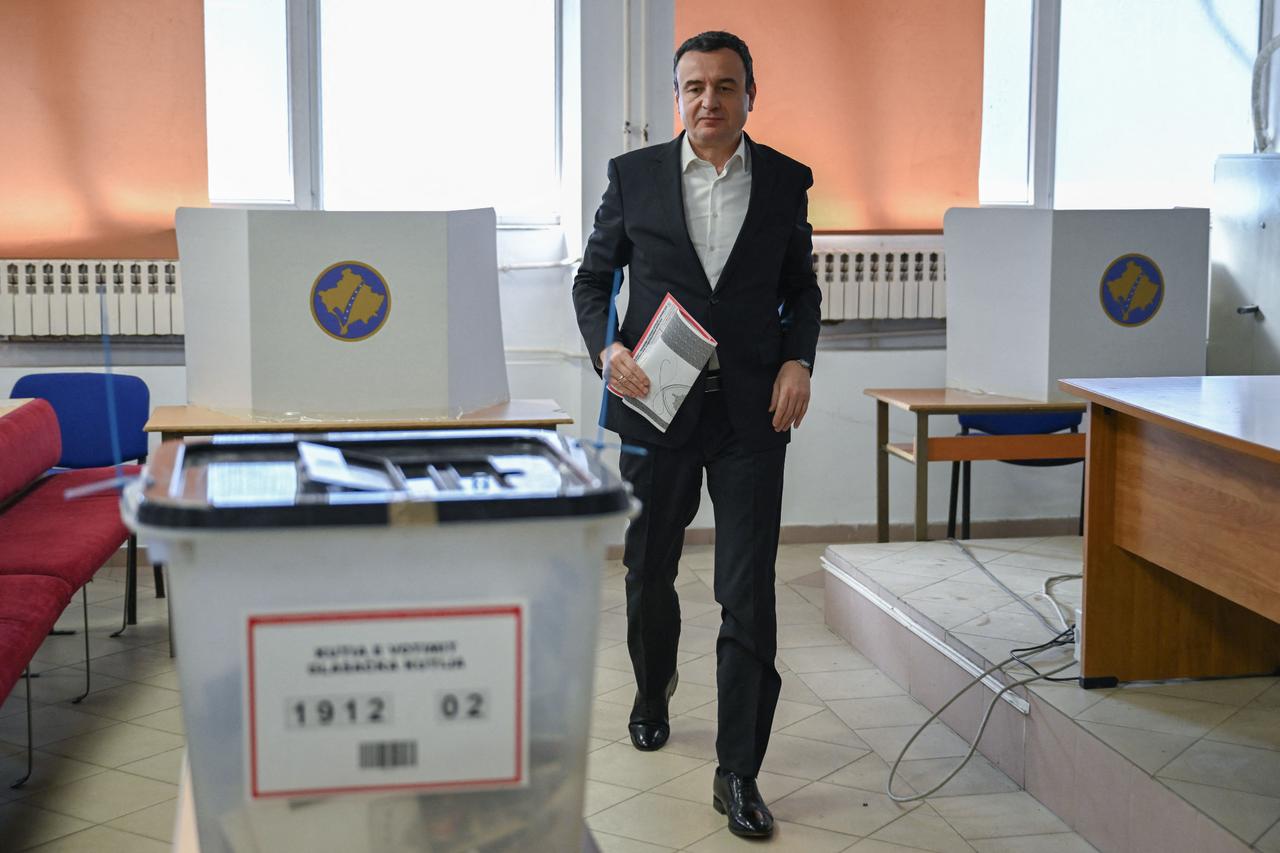

According to preliminary and unofficial results from Kosovo’s snap election on Dec. 28, Kurti’s party, Vetevendosje, won around 49-50% of the vote, far ahead of its rivals.
This means he has secured one of the strongest mandates any leader has received in Kosovo since independence. Turnout was high at roughly 44-45%, given widespread voter fatigue after months of political paralysis.
The vote ends nearly a year of institutional deadlock. After the elections earlier this year, the opposition blocked the formation of a new government, leaving parliament unable to pass legislation, ratify international agreements, or approve key funding packages. Kosovo quite literally lost time, and in the Balkans, lost time often means lost leverage.
That paralysis came at a high price. Because of the stalemate, Kosovo delayed access to hundreds of millions of euros in EU and international financial support, including loans and grants tied to infrastructure, energy, healthcare, and education.
Even more critically, Kosovo risked missing out on money linked to the EU’s Growth Plan for the Western Balkans, designed to accelerate economic convergence, strengthen governance, and prepare the region for eventual EU membership.
Kosovo’s own EU membership application remains stuck in Brussels, a casualty of enlargement fatigue, internal EU divisions, and unresolved tensions with Serbia.
Full accession may be far away, but funding is not. Access to EU money, markets, and reform instruments is essential for Kosovo to grow, reform, and stabilize now, not in some distant accession horizon. In that sense, Kurti’s renewed mandate could not have come at a more urgent moment. This is where Kurti must now prove that strength and compromise are not mutually exclusive.
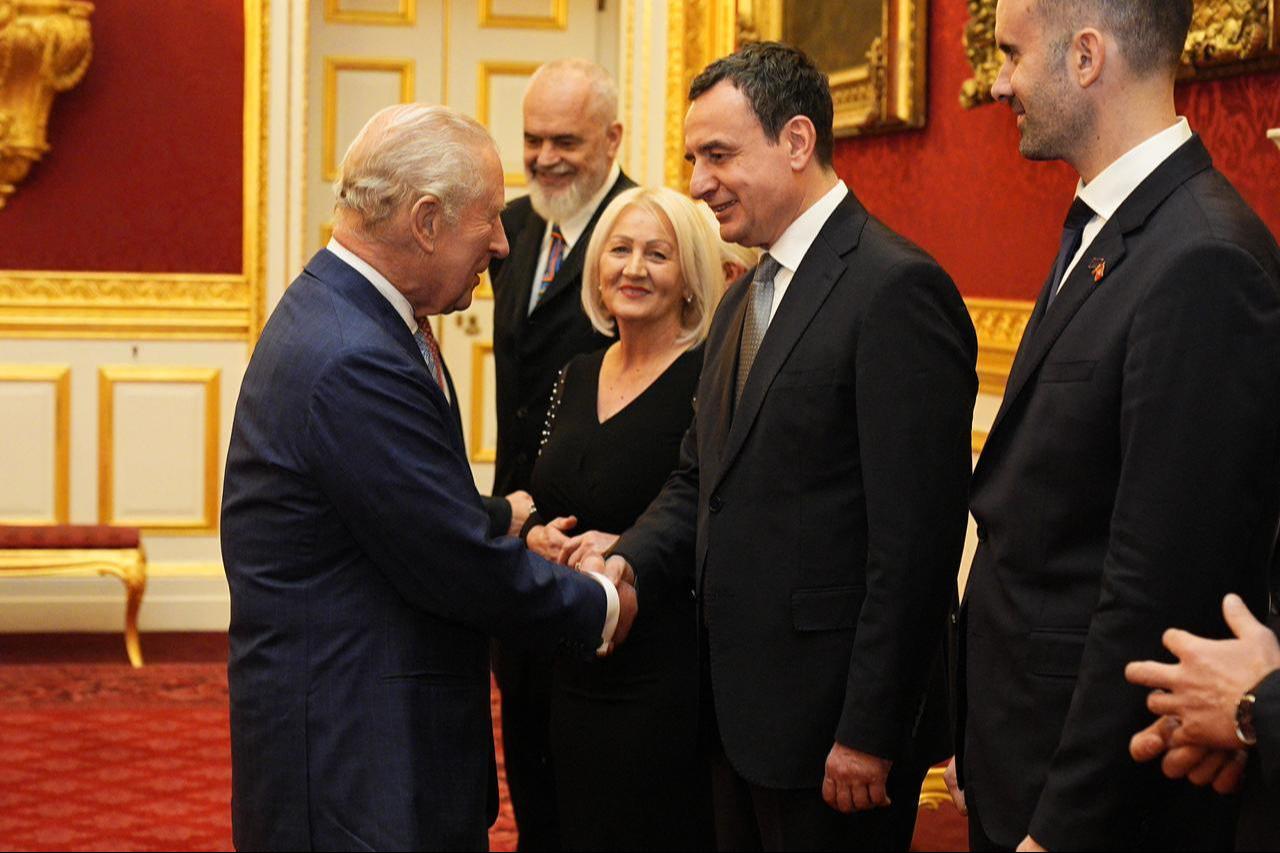
His tough stance on dialogue with Serbia has won him votes at home, but it has also led to consequences.
The EU imposed measures on Kosovo after escalations in the north, while the United States paused plans for a strategic dialogue, signaling deep frustration with Pristina’s approach.
Repairing those relationships will not be easy, and it will require Kurti to show flexibility, particularly on issues related to the Serbian community in Kosovo.
Compromise, however, does not have to mean capitulation. Finding a workable formula that reassures Kosovo Serbs, satisfies Western partners, and avoids creating a de facto state within a state will be one of his hardest tasks.
This time, governing should be easier. Vetevendosje is expected to secure a stable majority, potentially with the support of smaller minority parties, avoiding the obstruction that crippled the previous parliament. That stability matters not just for Kosovo but for the entire region.
The last time I saw Kurti was when I introduced him as a keynote speaker at a panel on the Balkans and the EU. Just before we went on stage, a friend leaned over and asked his Kosovar friend, "Do you think he'll manage to stay in power?"
Smiling, he replied, “Kurti is a rebel, a fighter. And he always finds a way.” He paused, then added something telling: "He may have fewer friends in Washington now, but at least he made it clear from the start that Kosovo is an ally with red lines, no matter who is in the White House."
Kurti has been given another chance and a stronger mandate to learn from past mistakes, to stabilize Kosovo internally, and to anchor it more firmly on the path toward the EU and NATO.
A stable, democratic Kosovo is not just good news for Kosovars. In a region still haunted by unresolved bloody conflicts and competing hegemonies, having someone who has been involved in the fight for democracy is good news for the Balkans as a whole.


 Set as preferred source
 Set as preferred source


 1 min read
 1 min read