Newsletters




This article was originally written for Türkiye Today’s weekly economy newsletter, Turkish Economy in Brief, in its Dec. 29 issue. Please make sure you are subscribed to the newsletter by clicking here.
The uncertainty surrounding Türkiye’s minimum wage, an issue that directly affects millions of workers, all businesses, and macroeconomic balances, was finally resolved last week.
The new net minimum wage in Türkiye has been set at ₺28,075 ($655.61) for 2026. This marks a 27% increase from this year’s level of ₺22,105.
Many institutions, including global banks such as JP Morgan, HSBC, Morgan Stanley, and Deutsche Bank, had projected a hike of around 20–25% for 2026. The actual increase of 27% came in above those expectations.
However, the new rate was not enough to prevent public debate, especially over whether it meets basic living standards.
The Turkish Confederation of Labor Unions had previously calculated the “hunger threshold” (monthly food expenses for a family of four) at ₺29,828 for November 2025.
The fact that the new minimum wage falls below this figure has drawn criticism, especially from labor groups.
Meanwhile, the 2026 minimum wage translates to around $655 in dollar terms. Employers argue that they are already competing intensely with labor markets in North Africa, Asia and the Far East, and now face higher minimum wage costs compared to those regions.
Another notable point is that this year’s minimum wage increase falls short of the estimated 31% inflation rate for 2025. However, it exceeds inflation expectations for the year ahead.
In its December Market Participants Survey, the Central Bank of the Republic of Turkiye (CBRT) projected 12-month-ahead annual inflation at around 23.35%. In its final inflation report of the year, the CBRT maintained its year-end 2026 CPI forecast range at 13–19%.
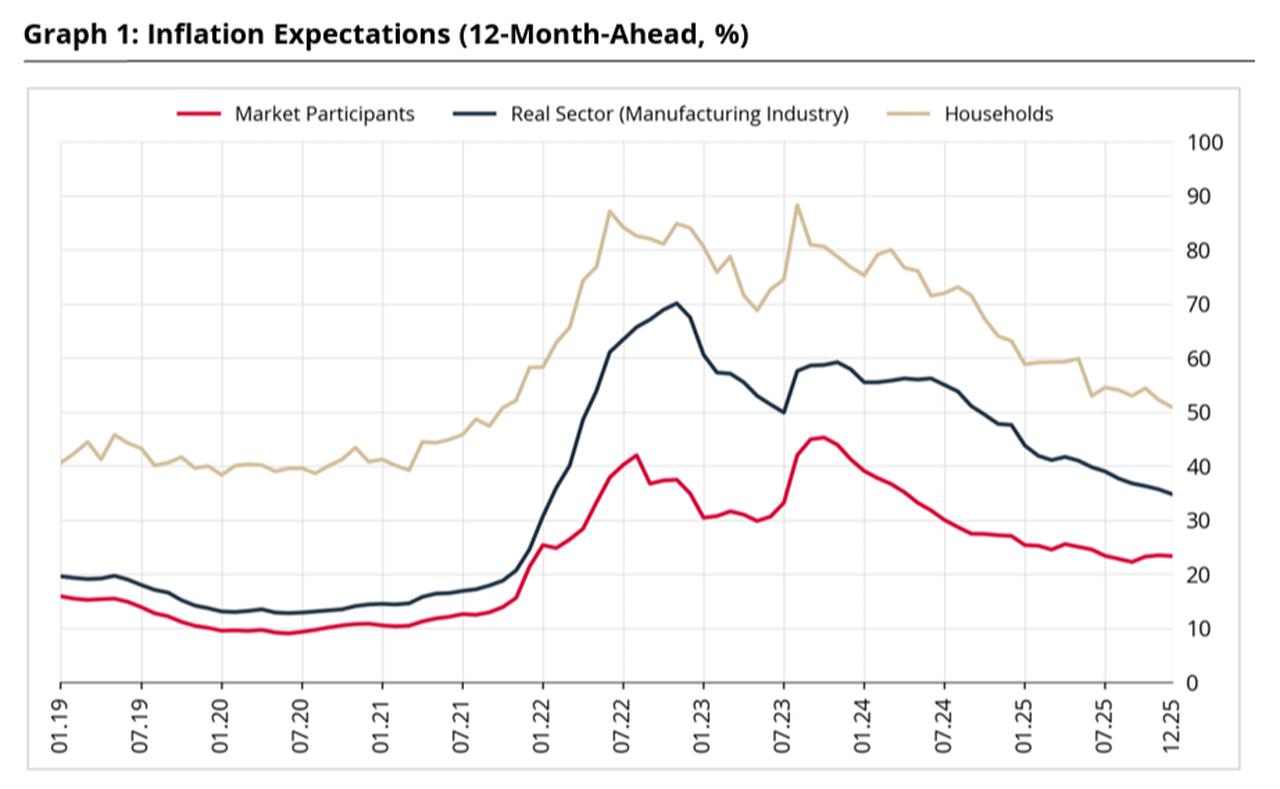

In a client note, local lender Akbank’s chief economist Cagri Sarikaya noted that the wage hike would raise employer costs by nearly 30% across the economy. He said this supported their own inflation forecast of 25% for the end of 2026.
Meanwhile, Is Yatirim economist Daglar Ozkan projected that consumer inflation next year could fall in the 20–26% range, assuming a 27% minimum wage increase, a 19% rise in the exchange rate basket, monthly average real interest rates of 0.7%, zero output gap (3.7% growth), an average Brent oil price of $61 per barrel, and a -3.1% general government balance.
Wages in Türkiye are likely to remain a key point of discussion in the coming weeks, as January typically brings decisions on broader salary adjustments. Attention is now turning to those earning above the minimum wage.


 Set as preferred source
 Set as preferred source



 7 min read