Newsletters




Bishkek is about to become the most consequential piece of diplomatic real estate in Eurasia.
Over three days, Kyrgyzstan's capital will host Chinese President Xi Jinping, Russian President Vladimir Putin, Indian Prime Minister Narendra Modi, Turkish President Recep Tayyip Erdogan and, notably, only a U.S. special envoy.
The imbalance is hard to miss. Xi Jinping arrives on Aug. 30 for a state visit, during which he will also play a leading role in the Shanghai Cooperation Organization's (SCO) annual summit, while Washington sends a senior envoy to watch folk games.
On Aug. 31, SCO members and guests will pour into the city, including Putin, Erdogan, Modi, Iranian President Masood Pezeshkian and Pakistan’s Prime Minister Shehbaz Sharif. The main SCO summit and a parallel SCO-Plus gathering will be held on Sept. 1.
Meanwhile, Aug. 31 is Kyrgyzstan’s Independence Day, marked by the opening of Bishkek Arena and the World Nomadic Games.
It is this event that Gor, President Donald Trump’s highly active envoy, is set to attend. Gor's presence will ensure that Washington is not entirely absent from the diplomatic spotlight. He is also expected to hold separate meetings with Kazakhstan’s President Kassym-Jomart Tokayev, Uzbekistan’s President Shavkat Mirziyoyev and host President Sadyr Japarov, according to a diplomatic source.
Central Asia is emerging as a new battleground in great-power competition, because both the United States and China need the region to reduce their vulnerabilities to each other.
China needs Eurasian energy and transport corridors to reduce its exposure to maritime chokepoints which could be blocked by the U.S. Navy in a contingency over Taiwan. The United States needs the region’s critical minerals to reduce its dependence on China.
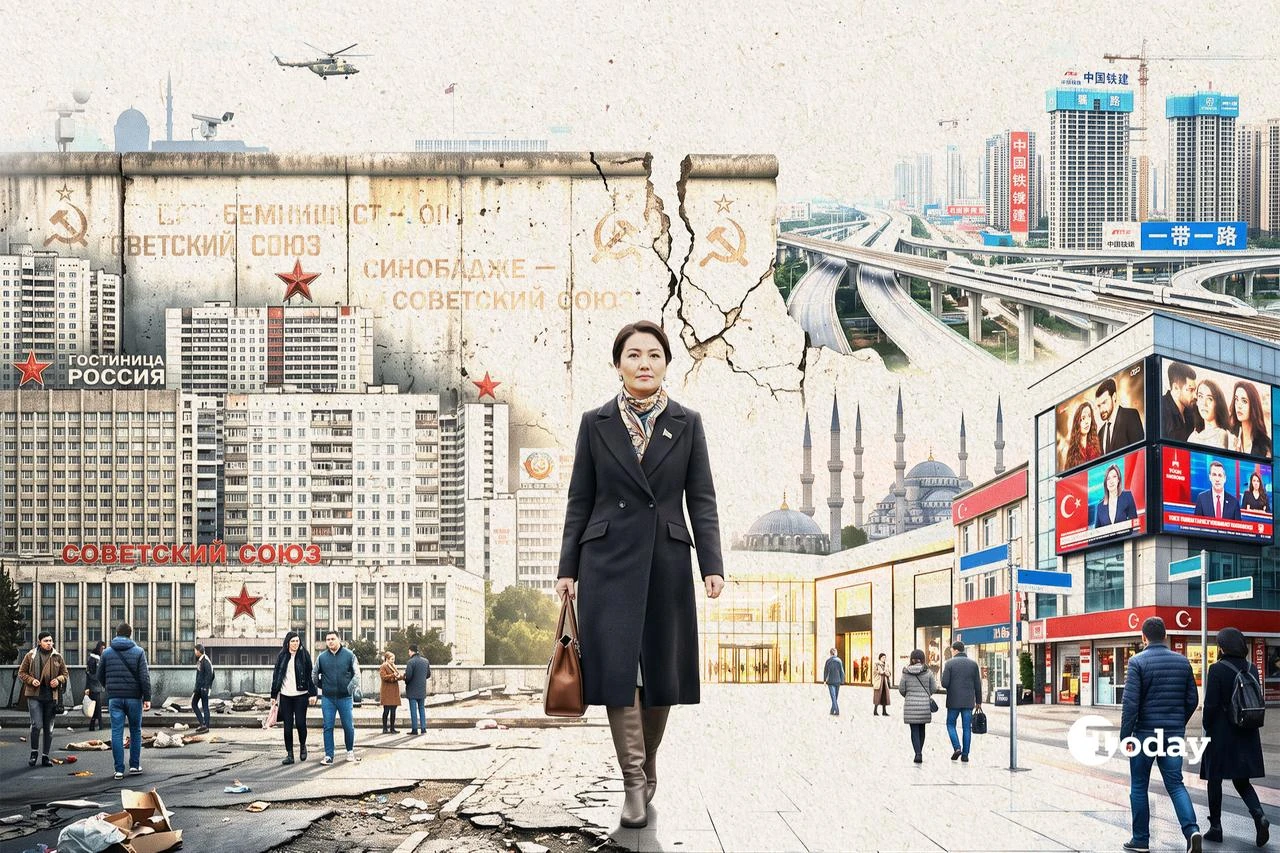
Amid the newly found focus on the region, Central Asian governments are doubling down on multi-vector foreign policy: relationships in every direction.
Kazakhstan, which borders both Russia and China, has just held a fresh round of elections, following constitutional reform, to strengthen political stability at home. The goal is to make decision-making more agile in a less predictable global environment.
The memory of January 2022, when political unrest forced Tokayev to call in the Russia-led CSTO, remains a stark reminder of how domestic instability can quickly create foreign dependence.
While Russia is consumed by the war in Ukraine, China sees an opportunity to expand its influence in Central Asia. The United States cannot afford to be absent as Beijing deepens its position in the heart of Eurasia.
This week in Bishkek, China will have the upper hand: Xi will attend as head of state, while Washington sends only an envoy. Trump should change that next year.
He has a chance to become the first sitting U.S. president to visit Central Asia.
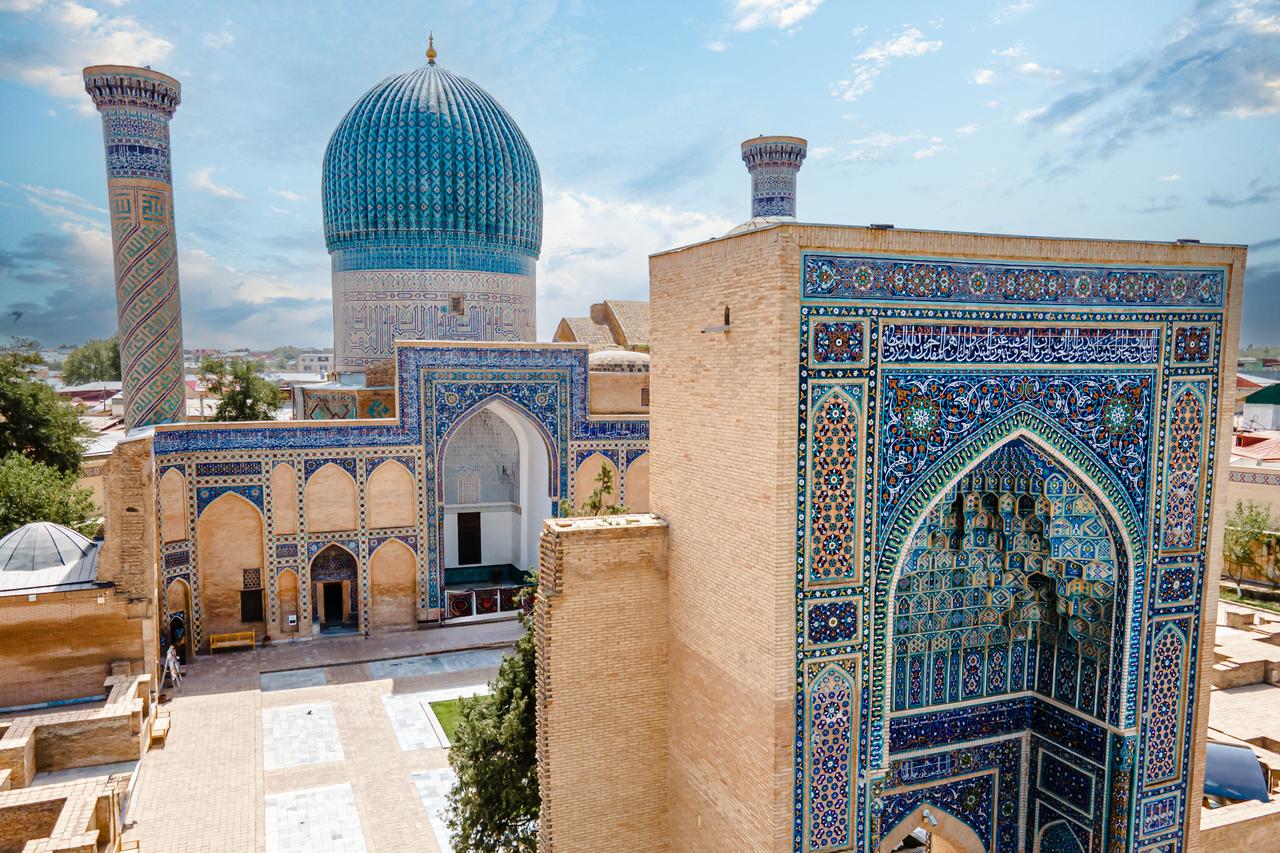
The groundwork is already being laid. Secretary of State Marco Rubio is scheduled to travel to Samarkand, Uzbekistan, on Oct. 18 and 19 to meet Central Asian counterparts for a C5+1 meeting, according to Central Asian sources.
Astana, Kazakhstan's capital, and Tashkent, Uzbekistan's capital, would be logical destinations for Trump, paying tribute to Central Asia's largest economy and most populous nation, respectively.
But Samarkand, the ancient Silk Road crossroads, could offer the ideal photo op. The turquoise domes of Registan Square belong to madrassas, or Islamic schools, not mosques. Standing before them would signal an American president paying respect to the Islamic world's contributions to human knowledge, such as algebra, algorithms, astronomy and celestial mapping.
For centuries, merchants traded with whoever arrived. Trump would feel right at home.
None of the five Central Asian countries is rated “Free” by Freedom House. But they sit atop enormous reserves of oil, gas, uranium and critical minerals.
Trump in Samarkand would show an American president arriving not to lecture, wage war or demand allegiance, but to do business.
The United States does not need to dominate Central Asia. It just needs to make sure no other power does.
As Beijing seeks to reduce its dependence on maritime chokepoints, the old Silk Road is again becoming strategically important.
More than a century ago, British poet James Elroy Flecker wrote:
"For lust of knowing what should not be known, we take the Golden Road to Samarkand."
Next year, the president of the United States should take that road.
Beijing will be watching.
 1 min read
1 min read
1 min read


 Set as preferred source
 Set as preferred source


 2 min read