Newsletters




There was a time when NATO summits were predictable, bureaucratic affairs—for entire decades, in fact. This week’s Ankara summit combined dramatic tension with substantive questions of strategic direction in an environment not describable as routine. While NATO emerges from two days in the Turkish capital with some ruffled feathers and undertones of discord, it also leaves on a firm path to significantly build up its warfighting sinews.
Several elements combined to heighten the intrigue.
The first was the intentional political theater orchestrated by the host nation, alliance leadership, and the most prominent guest. The second was the frenetic pace of defense industrial deal-seeking and deal-making within and on the margins of the summit. The third was the persistence of questions about the alliance’s coherence and direction, highlighting the sharp gaps between NATO's heavy lifters and its free riders at a time of ongoing conflict on both the eastern and southern flanks.
One key purpose of the summit—issuance of a strong declaration indicating unity and commitment on key geopolitical issues—was clearly achieved. For some, simply getting President Trump there without a major blowup was a sufficient condition for success.
However, the true measure of the Ankara summit lies in the follow-up; if the talks and tentative defense deals translate into concrete contracts and scaled-up industrial production in the coming years, the alliance will have passed a milestone on the road to deterrent credibility and defensive capabilities.
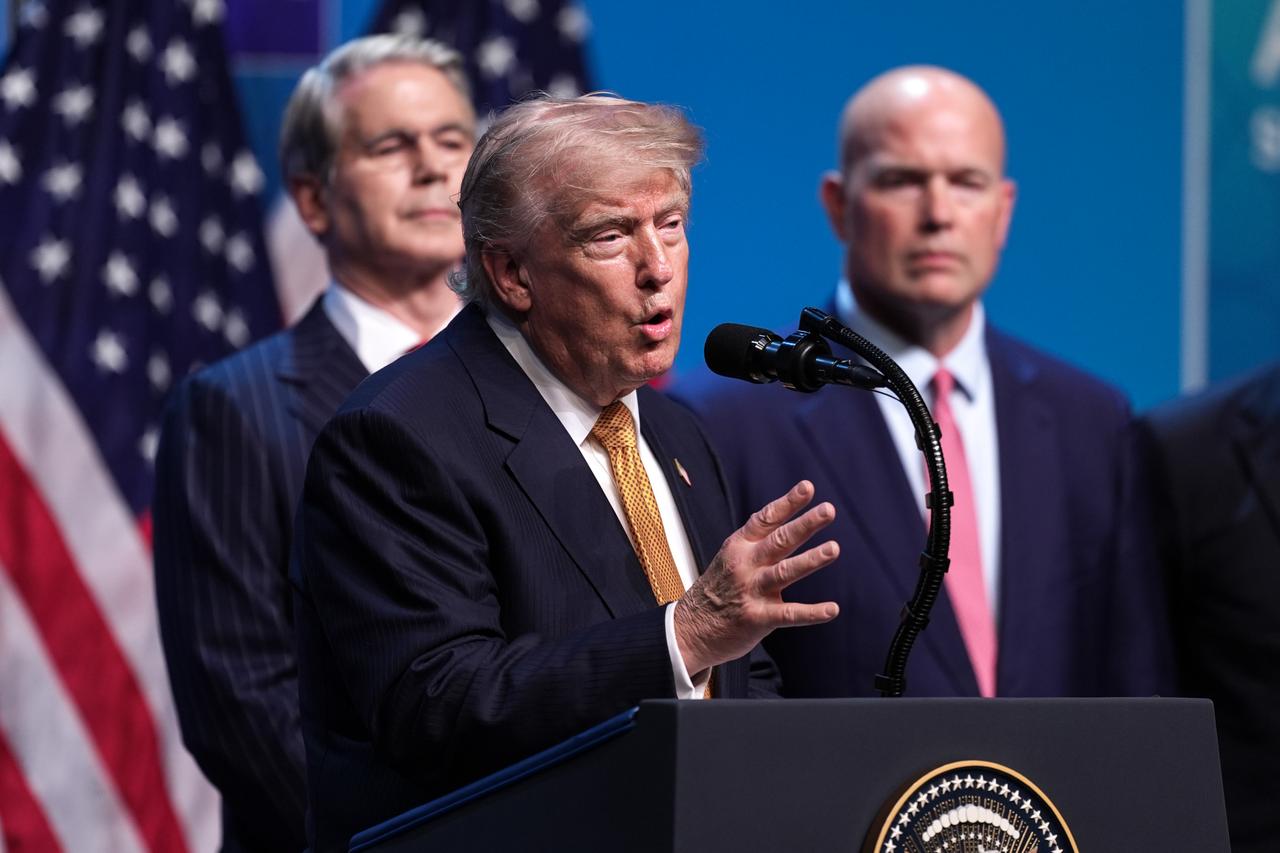
Donald J. Trump is, among other things, a savvy showman, and he found ways to make himself the center of attention from the time he landed at an airport specifically expanded to fit his airplane.
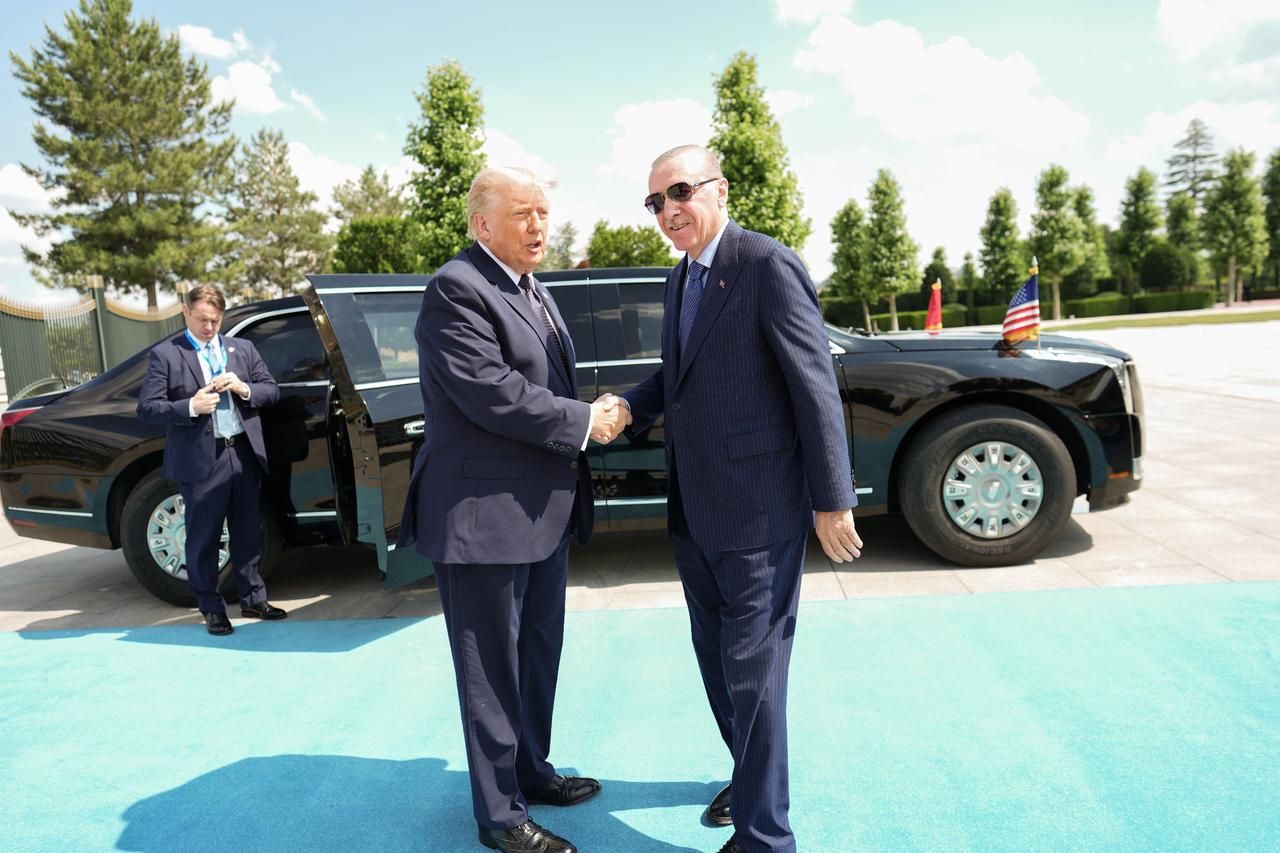
He appeared to genuinely enjoy greeting the Turkish honor guard with the traditional “merhaba asker” salutation and strolling with arms linked alongside his friend Recep Tayyip Erdogan. He made a big splash with positive announcements on efforts to return Türkiye to the F-35 program, and was generally effusive about the Turkish leader and U.S.-Turkish relations. Yet he also sent the press and diplomatic corps into gyrations with controversial statements about Greenland, Spain, and NATO as a “poor investment.”
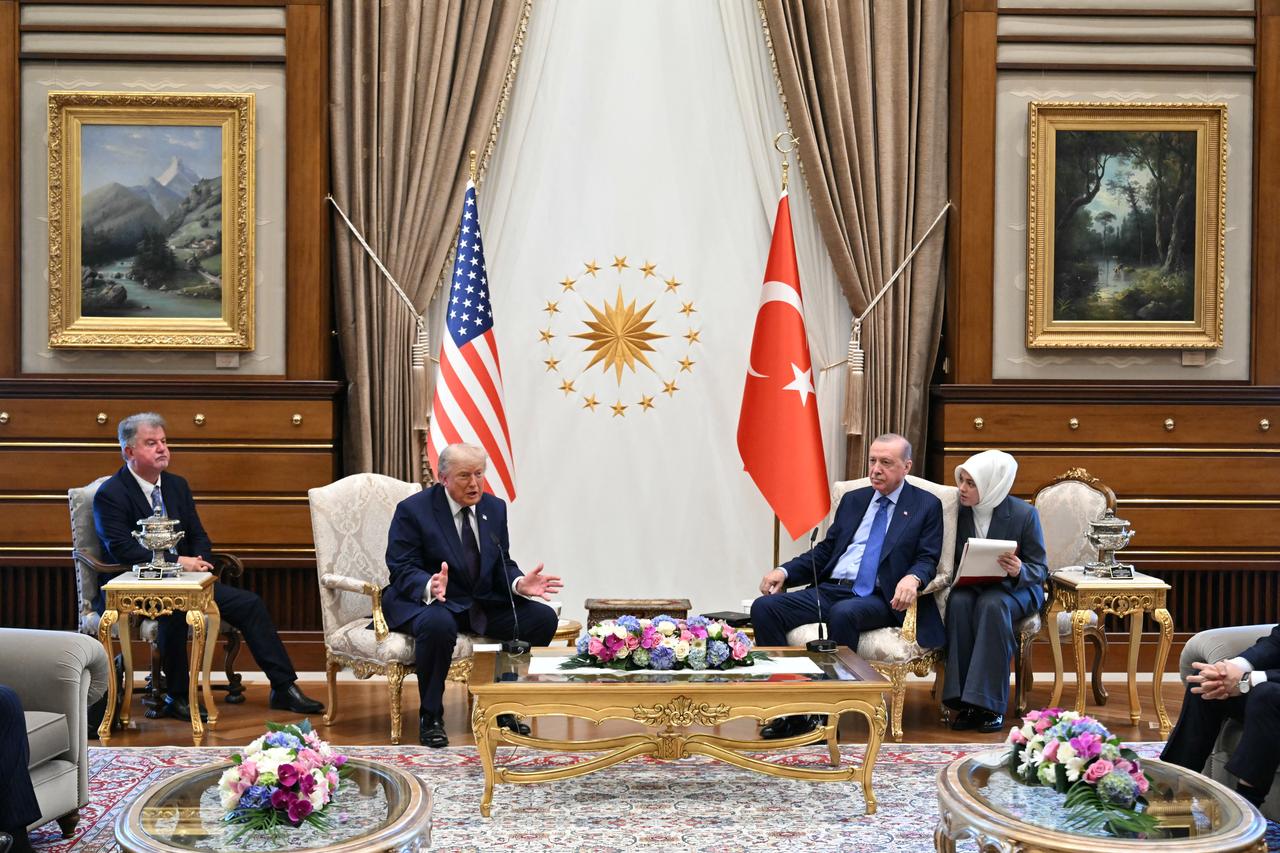
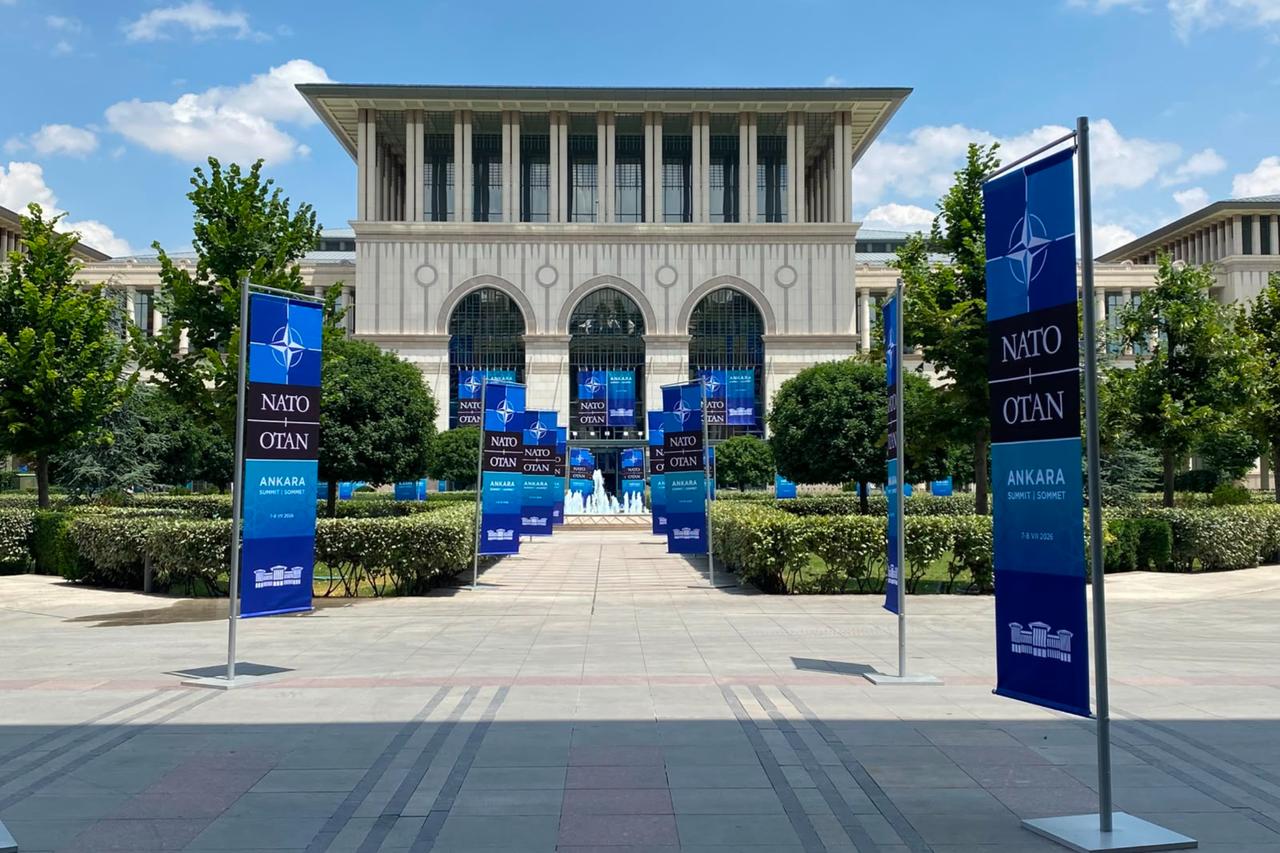
Erdogan showed dramatic flair as well, mostly in terms of summit settings and choreography. His Presidential Compound (referred to as the Külliye) has long seemed overbuilt, but seemed just right for the reception of 32 heads of state. The mehter (traditional Ottoman-style band) that greeted arriving leaders was a nice touch, with tunes reflecting nuances of the relationship with each guest. The capital city was half-emptied and half-shut down for the sake of security and ease of delegation movement, with police and other officials sporting prominent NATO badges and nametags alongside their normal insignia. Apparently, it is possible to make a city of six million stand practically still for two days.
Mark Rutte and his staff had to blend these performances with the also-complicated process of synthesizing a year’s worth of work into a few hours of discussion and approving a unanimous consent statement of the alliance’s direction. Rutte handled Trump deftly while working hard to place a positive spin on the atmospherics around the summit. When the cameras were off, Rutte orchestrated a respectful and coherent political plenary that produced constructive dialogue and finished with a sense of unity.
The key tangible output of the Ankara summit was its declaration, a relatively short document passed with unanimous support. Key points of the declaration included:
Expanding the operational capabilities of the alliance is equally important to the expression of strategic unity. In that sense, it was noteworthy that in a two-day summit, a full day was devoted to multilateral talks on defense industrial cooperation and only around three hours to the political discussions. The NATO Summit Defense Industrial Forum (NISDIF) was a series of six sessions focusing on identifying needs and initiatives in critical defense technology areas, as well as announcing deals already done.
Perhaps even more important was the less-public dance of delegation visits to Turkish industrial firms in and around Ankara, as well as discreet meetings around the town to shape upcoming and potential deals involving dozens of countries. The proverbial dance card for U.S., Turkish, and European prime defense contractors was quite full, according to corporate representatives speaking off the record, indicating increasing collaboration across national lines within the alliance. If the message from the public sessions and statements was that NATO needs to speed up and multiply collaborative efforts and build cross-cutting industrial ties, important groundwork was laid beyond the cameras this week.

Distractions abounded during the two days of the summit, indicating that some regional actors weren’t buying or embracing the aspirational unity of the moment. Iran launched new attacks on shipping in the Strait of Hormuz as the Khamenei burial procession continued, leading President Trump to declare an end to the ceasefire and order a new wave of attacks on military targets.
Israeli Prime Minister Benjamin Netanyahu publicly pressured Trump not to approve the Turkish F-35 acquisition, while Greek Prime Minister Kyriakos Mitsotakis claimed his country is under an open threat of war from Ankara. Rumors circulated that some European leaders would press to postpone next year’s NATO summit to avoid the possibility of more frictions deriving from Trump’s style.
Scholars have debunked the story that Zhou En-Lai told Henry Kissinger in 1972 that it was too early to assess the effects of the French Revolution (he was talking about the 1968 student uprisings rather than the events of 1789). It may not even take four years to judge the outcome of this week’s summit, but it will at least take a few months.
If European governments continue to curve the arc of defense spending towards the target of 5% of gross domestic product—the Hague summit pledge—the haranguing and bombast (and serious talks behind closed doors) will have yielded success. If they also increase the speed and breadth of inter-alliance defense-industrial partnerships and production, following up on the negotiations of the past several days, it will have been a major success. And if European contributions to operational missions and capabilities grow substantially, it will have been a historic success.
Time will tell. If nothing else, it was an interesting and even entertaining week—and in our age, that has a value all its own.


 Set as preferred source
 Set as preferred source


 2 min read
 1 min read