Newsletters




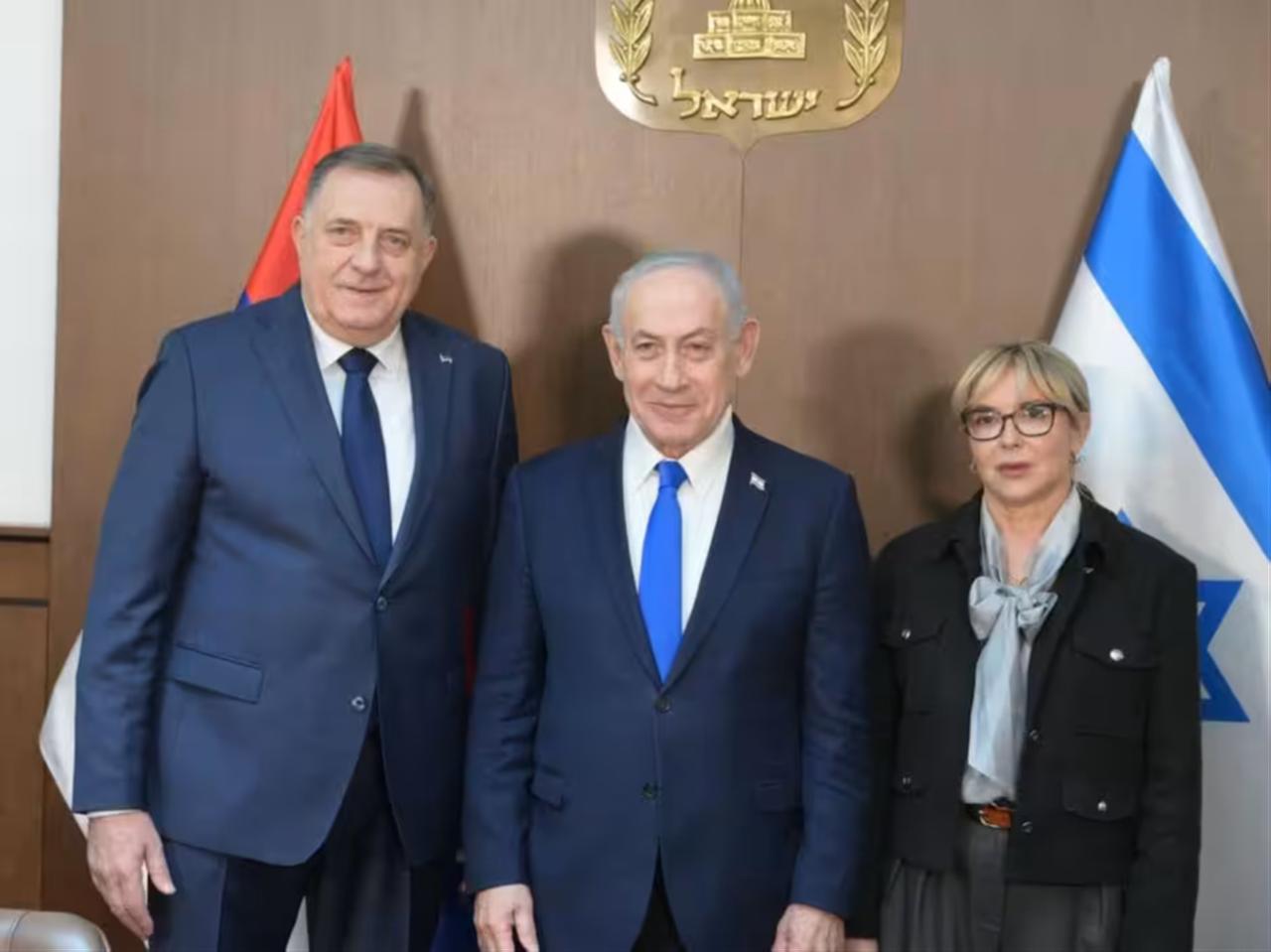
The absence of Bosnia and Herzegovina’s flag was not a protocol oversight; it was the entire point.
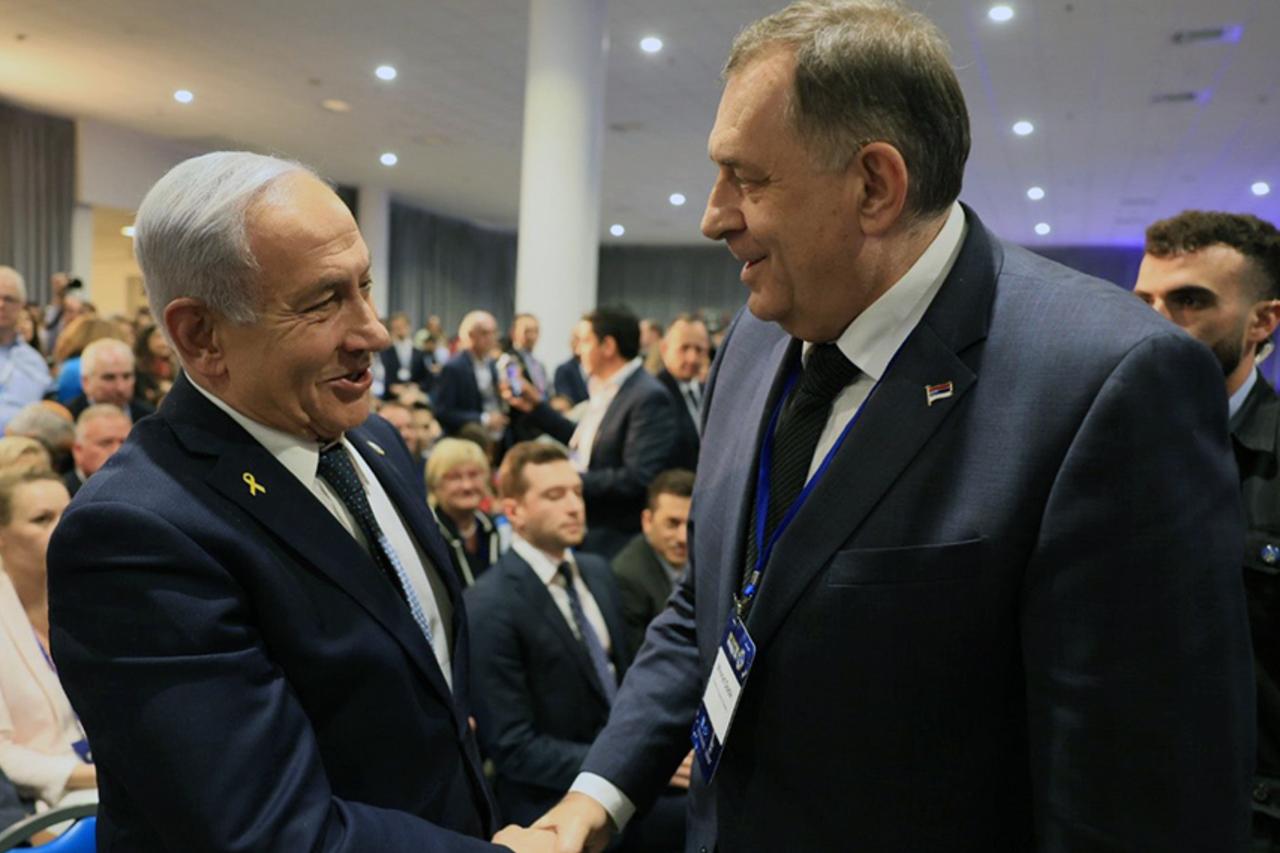
When Israeli Prime Minister Benjamin Netanyahu received Milorad Dodik in Israel, without state symbols, without constitutional authority, and without any mandate from Sarajevo, it amounted to a quiet but consequential act of disrespect toward Bosnia and Herzegovina as a sovereign state.
Dodik was in Israel this month, accompanied by a delegation from Republika Srpska, even though he no longer holds public office. He was removed after a criminal conviction and barred from political functions, yet was nonetheless welcomed for high-level talks.
The meetings focused on what Dodik described as a shared fight against antisemitism and “common enemies,” language that dovetailed neatly with Netanyahu’s own framing of global politics as a struggle against “radical Islam.”
Netanyahu has repeatedly used this rhetoric to justify Israel’s genocide in Gaza and to deflect mounting international criticism.
For Netanyahu, Dodik served a useful purpose. At a moment of deep diplomatic isolation, he offered a European voice willing to echo a narrative increasingly rejected across the EU, but still useful for domestic political consumption in Israel.

While in Israel, Dodik also suggested that the Sarajevo Haggadah, a priceless Jewish manuscript preserved in Bosnia for centuries and saved during the Holocaust by Bosnian Muslims and Christians, should be “returned to Israel.”
The proposal was politically loaded. It implicitly casts Bosnia as unworthy of safeguarding Jewish heritage, despite its documented record of interfaith solidarity and Holocaust remembrance.
Dodik, of course, has no authority to conduct foreign policy. Bosnia’s institutions have repeatedly rejected his right to act on behalf of the state. What unfolded in Israel was parallel diplomacy by a politician legally sidelined at home but enabled abroad.
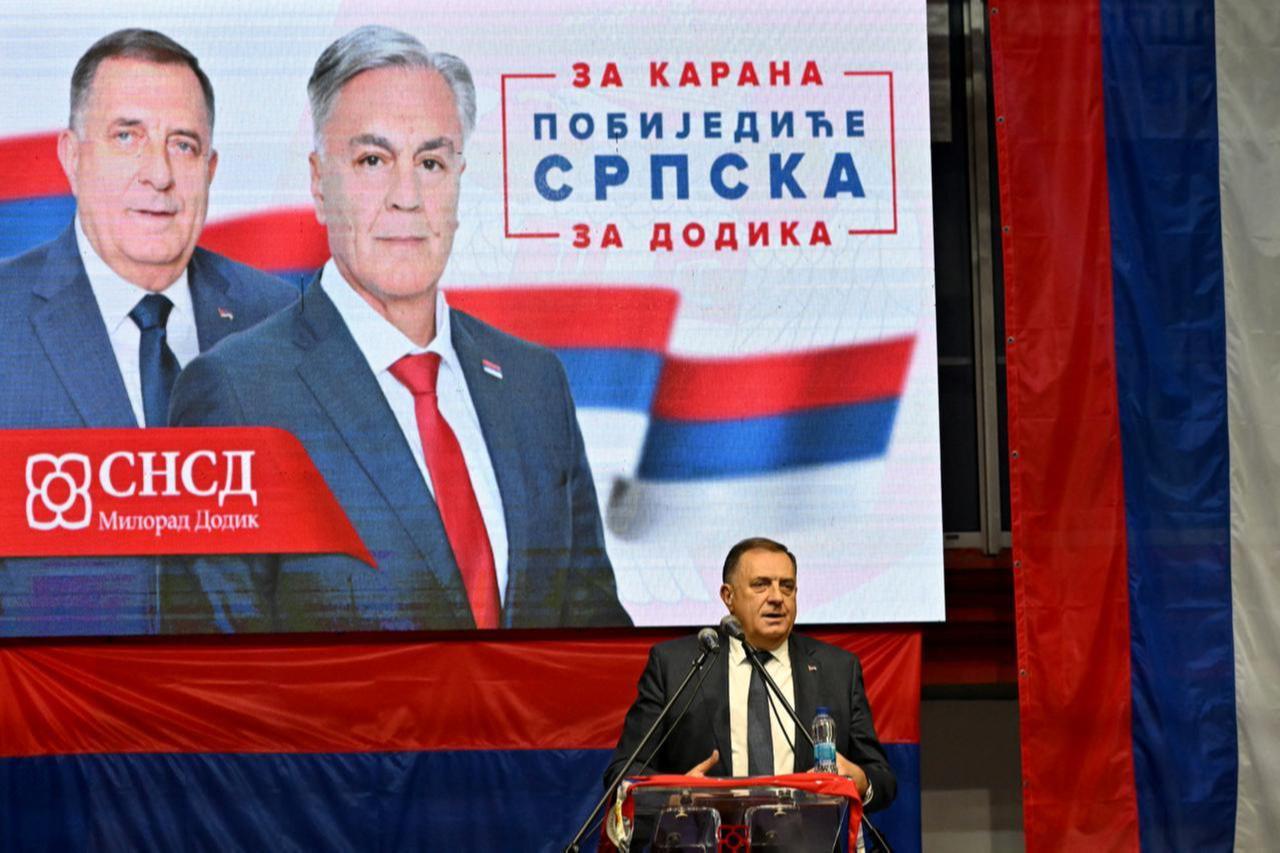
That sidelining came last year, when Bosnia’s courts convicted Dodik for defying the international High Representative and undermining the constitutional order established by the Dayton Peace Agreement. He was sentenced, fined, and banned from public office for six years. His mandate was revoked, and an interim president was appointed in Republika Srpska ahead of early elections.
Yet Dodik’s influence endured. As leader of the SNSD party, he ensured a close ally won those elections, preserving his grip on power without formal office. That resilience has been reinforced by inconsistent international responses.
In late 2025, the United States lifted sanctions on Dodik and dozens of his associates, despite years of secessionist rhetoric and constitutional obstruction. The move, framed as part of a broader recalibration of U.S. policy, was widely interpreted in Bosnia as tacit tolerance. Rather than moderating Dodik’s behaviour, it emboldened him.
The Israel visit is a direct result of that permissiveness.
In Jerusalem, Dodik once again warned of “radical Islam,” despite offering no evidence of Islamist extremism in Bosnia and Herzegovina. Such claims are difficult to sustain in a country whose Islamic institutions are mainstream, European and historically intertwined with Jewish and Christian communities. Sarajevo officially marks Holocaust Remembrance Day and continues to honour those who saved Jewish lives during the Second World War.
Bosnia’s history matters here. It is a country shaped by ethnic cleansing and genocide. That legacy informs the overwhelming public solidarity with Palestinians and the widespread condemnation of the genocide unfolding in Gaza under Netanyahu’s far-right government.
Dodik’s positioning is therefore not about representing Bosnia abroad. It is about repositioning himself. With his domestic legitimacy eroded, Israel offered a platform from which he could signal ideological alignment and perhaps test whether that alignment might reopen doors in Washington to get him what he wants - independent entity of Republika Srpska.
For Netanyahu, the benefit is symbolic reinforcement at a moment of unprecedented legal and diplomatic pressure.
For Bosnia and Herzegovina, the cost is clear.
By engaging a barred politician in place of the state, Netanyahu helped undermine Bosnia’s sovereignty. By conducting parallel diplomacy, Dodik further weakens the country’s foreign policy coherence. And by exploiting a genocide and global instability for personal rehabilitation, he once again places political survival above constitutional order.
This was not diplomacy. It was mutual convenience, at Bosnia’s expense.


 Set as preferred source
 Set as preferred source


 1 min read

 1 min read