Newsletters




Washington has a way of making the improbable feel inevitable.
The polls tighten, the pundits sharpen their knives, and before long everyone is talking about the 60 days that will decide everything—as though 60 days were a long time, and as though anyone ever really knows what a country decides until it has already decided it.
For two years now, Turkish diplomats have watched Washington the way sailors watch weather that hasn't arrived yet, not with alarm, but with the specific patience of people who have crossed this water before.
They have built pipelines to every faction that might eventually matter: Republicans who prize a NATO partner willing to fight, Democrats who might yet warm to a government skeptical of Netanyahu, and a Congress that, whatever its composition come January, will still need someone in the region who picks up the phone.
That patience is about to be tested.
The war in the Gulf drags on with the particular exhaustion of conflicts that were supposed to be short. Inflation refuses to fully retreat. And within the Democratic Party, an insurgent socialist wing is unsettling an establishment that thought it understood its own coalition.
None of this is about Türkiye. All of it will matter enormously to Türkiye.
Despite Epic Fury and its economic fallout—with attendant public skepticism in Türkiye—Ankara has managed to pursue an independent foreign policy line while retaining close ties with the Trump Administration.
Public approval of America has actually been on the mend. Should the Republicans lose one or both houses of Congress, however, that balancing act grows considerably harder, especially with the end of Trump's presidency no longer a distant abstraction but a near-horizon reality.
Certain aspects of Turkish foreign policy might appeal to Democrats, even—or especially—the American hard left: opposition to Israeli Prime Minister Benjamin Netanyahu, developmental projects in Africa and the Muslim world, and a push for a less Euro-centric international system. Ankara's sound footing on clean energy may win points too, as has its longstanding support for Ukraine.
Yet perceived democratic deficits and militarism may have the opposite effect, and the reality is that when a president must work with a divided or opposition Congress, relations with “difficult allies” like Türkiye usually suffer.
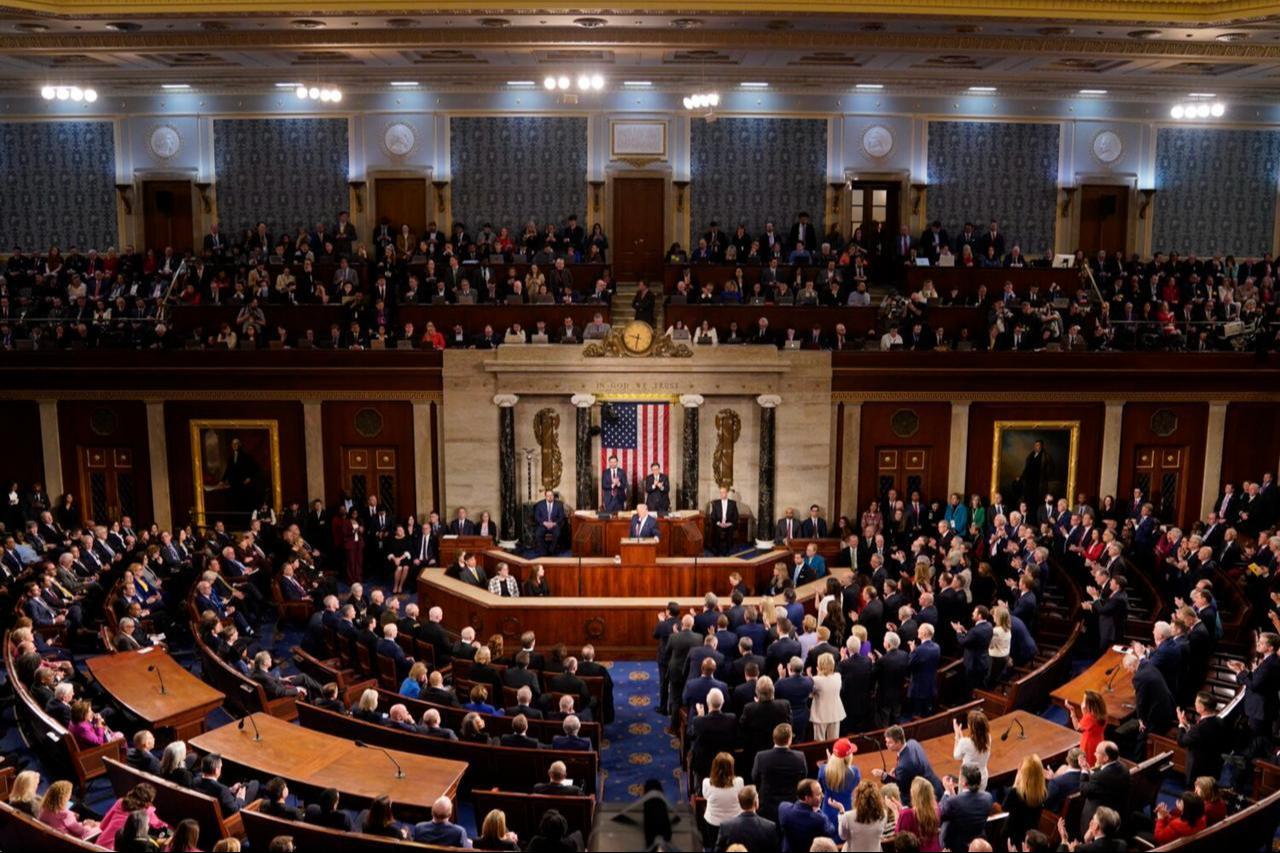
For those closely following U.S.-Turkish relations, there are three main scenarios for the 120th Congress set to convene next January.

The first scenario for November is bad for Trump and potentially difficult for Ankara. Especially if the war and mixed economic news continue through late October, there is a possibility that Republicans lose majorities in both the House of Representatives and the Senate.
In that case, we can expect Democrats to launch a flurry of investigations and likely impeachment proceedings against the president and his administration, as well as take charge of key Congressional committees related to foreign policy and defense.
Grover Cleveland, the only president before Trump to serve non-consecutive terms in office, lost both houses badly in the midterms of 1894 and essentially lost control of Washington’s agenda. Ditto for Lyndon B. Johnson in 1966, who went from a dominant political position in 1964 to deep unpopularity halfway through his only term in office.
While the Turkish government has had very strong relations with the Trump administration, progress with the U.S. Congress has been slower and more conditional. Defense and diplomatic coordination on regional crises remain the backbone of bilateral ties, and these are not always top priorities for Democrats in Congress.
If the U.S. is distracted by a fully divided government, hearings and possible impeachment proceedings, progress regarding issues like S400/F35 and expanding trade may slow significantly.
Congressional Democrats have a long-standing reputation for being harder on Türkiye than Republicans (though both have their skeptics), so this may be the toughest scenario for Ankara.
 2 min read

There is a second scenario under which Trump's headlines improve somewhat between now and election day on Nov. 3. A compromise ceasefire may emerge in the Gulf, third-quarter economic news due out Oct. 29 may land positively, or infighting between moderate and progressive Democrats may sap their voter turnout.
It also appears Republicans produced a slightly more favorable House electoral map through state-level redistricting, which may help cushion losses in that chamber.
The precedent here would be Ronald Reagan in 1982, who lost control of the House but maintained a slim margin in the Senate. He was able to reverse headwinds from the first two years of his term and implement most of his agenda in 1983-1984, positioning his party (and himself) for a strong showing in the next Presidential cycle.
Maintaining control of the Senate would be critical to bilateral ties for two reasons.
First, the Senate has a stronger voice in foreign policy matters than the House, so President Trump’s generally positive trajectory with Türkiye would likely continue.
Second, the House may impeach a president, but only the Senate can remove one—so while there would be distraction and tumult, the president would not face an existential crisis for his term. In fact, contentious relations with the House on his domestic agenda might lead to greater late-term focus on foreign affairs and international legacy, from which Ankara might benefit incrementally.
History offers a few instancesof a sitting president's party defying the usual midterm gravity and actually gaining congressional seats—George W. Bush in 2002 and Bill Clinton in 1998 among them.
Such reversals typically reflect some combinationof personal sympathy for the president and public perception that the opposition has overreached—one of which may plausibly apply to this election, and the other of which almost certainly does not.
A majority of Democrats say they find socialist candidates acceptable, but most independents and nearly all Republicans do not. If Republicans use the remaining 60 days to convince swing-state voters that the Democratic Socialists of America have effectively seized the Democratic Party, the combination of favorable redistricting and ideological backlash could allow Republicans to hold both chambers.
This remains the lower-probability outcome, but Trump’s personal commitment and campaigning for congressional Republicans would improve its odds.
Should Republicans retain both houses, Trump would gain real room to shape legacy projects and succession planning over his final two years—momentum that would carry directly into Turkish-American cooperation, particularly on trade and the defense industry.
President Erdogan's December G20 trip to the U.S. would likely take on a notably more optimistic tone under this outcome.

According to the non-partisan Cook Political Report, as of late August the House race remains too close to call. Democrats have a clear path to 209 seats, Republicans to 205, with 21 races still classified as toss-ups. Whoever controls the chamber's fate rests on how those close races break over the next two months, with 218 seats needed for a majority.
Betting markets give the Democrats an 86% chance of taking control of the House. The Senate has 47 likely wins for each party, with six truly being contested. The outcome of those six will bear greatly on the foreign policy focus and agenda of the next two years, and bettors believe by a small margin that Republicans will retain control.
Political polling can be misleading and certainly reflects biases in how a pollster models the electorate and seeks respondents. Questions and their phrasing matter, too. Should we believe that a 5% difference in favorability between generic Republicans and generic Democrats will translate to a 5% difference in voter turnout and actual votes? There is reason for skepticism.
Given the increasing prominence of socialists in the Democratic Party’s electoral slate, moderate U.S. voters may well pinch their nose and vote for a president they are disappointed in.
Türkiye has, over the past two decades, lessened its vulnerability to the outcome of U.S. elections through a calculated combination of diplomatic hedging, multiaxial diplomacy, hard-power investments, and canny use of geographic advantage.
The upside for Ankara in divided government or Republican overperformance is higher than it would be with an outright Democratic victory, but the latter comes with opportunities as well.
These would require more significant shifts in messaging and agenda, but undoubtedly Ankara is preparing for all three scenarios.


 Set as preferred source
 Set as preferred source



 1 min read