Newsletters


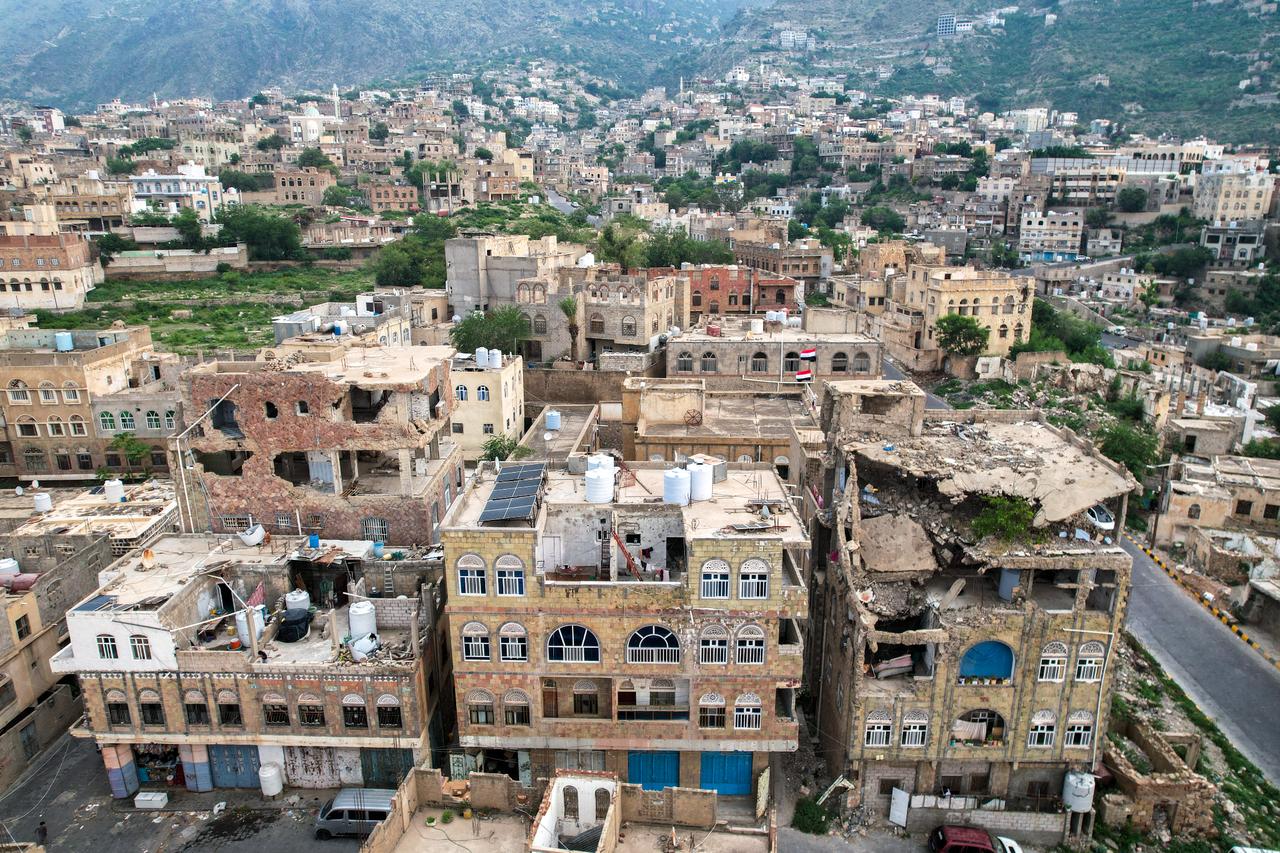


Long before modern conflicts ravaged the region, devastating everyone involved, Yemen was known in the Ottoman Empire as a graveyard for imperial troops.
Following its designation as a province in 1872, the empire spent decades deploying thousands of soldiers to suppress local rebellions across the Arabian Peninsula.
The staggering casualties gave birth to an immortalized song, warning that those who leave for Yemen never return. The empire was eventually severed from the region after World War I. But in recent years, Yemen has tragically lived up to its century-old image in Turkish memory as an inescapable death trap.
The civil war that began in 2014 between the Iran-aligned Houthis and Yemeni forces backed by a Saudi Arabia-led coalition resulted in an estimated 321,000 deaths by the end of 2021.
More than half resulted from armed conflict, while most of the remainder were civilians who died from hunger and disease caused by the war. At one point, Yemen was described as the world's worst humanitarian crisis. Large numbers of civilians were also killed in airstrikes conducted by the Saudi-led coalition. Although a ceasefire in 2022 halted the fighting between the Houthis and government forces, the parties failed to reach a peace agreement.
Four years of relative peace were shattered this summer.
As an extension of the war between Iran and the United States and Israel, fighting resumed in Yemen between the Iran-backed Houthis and Yemeni forces backed by Saudi Arabia. According to United Nations data, 674 people were killed and 2,998 were injured between Aug. 6 and Sept. 18. As the fighting intensified this week and Saudi airstrikes increased, Yemeni military sources reported that 2,316 Houthi fighters were killed or wounded between Sept. 24 and 27.
If the United States or other countries supporting Saudi Arabia become directly involved, a new front could open in the war with Iran. Despite Saudi Arabia's repeated requests for support, the United States has not yet decided to strike the Houthis and has sent mixed signals on the issue. However, if the fighting spreads and develops into a protracted crisis, it is not difficult to foresee that the Yemeni people will once again pay the price.
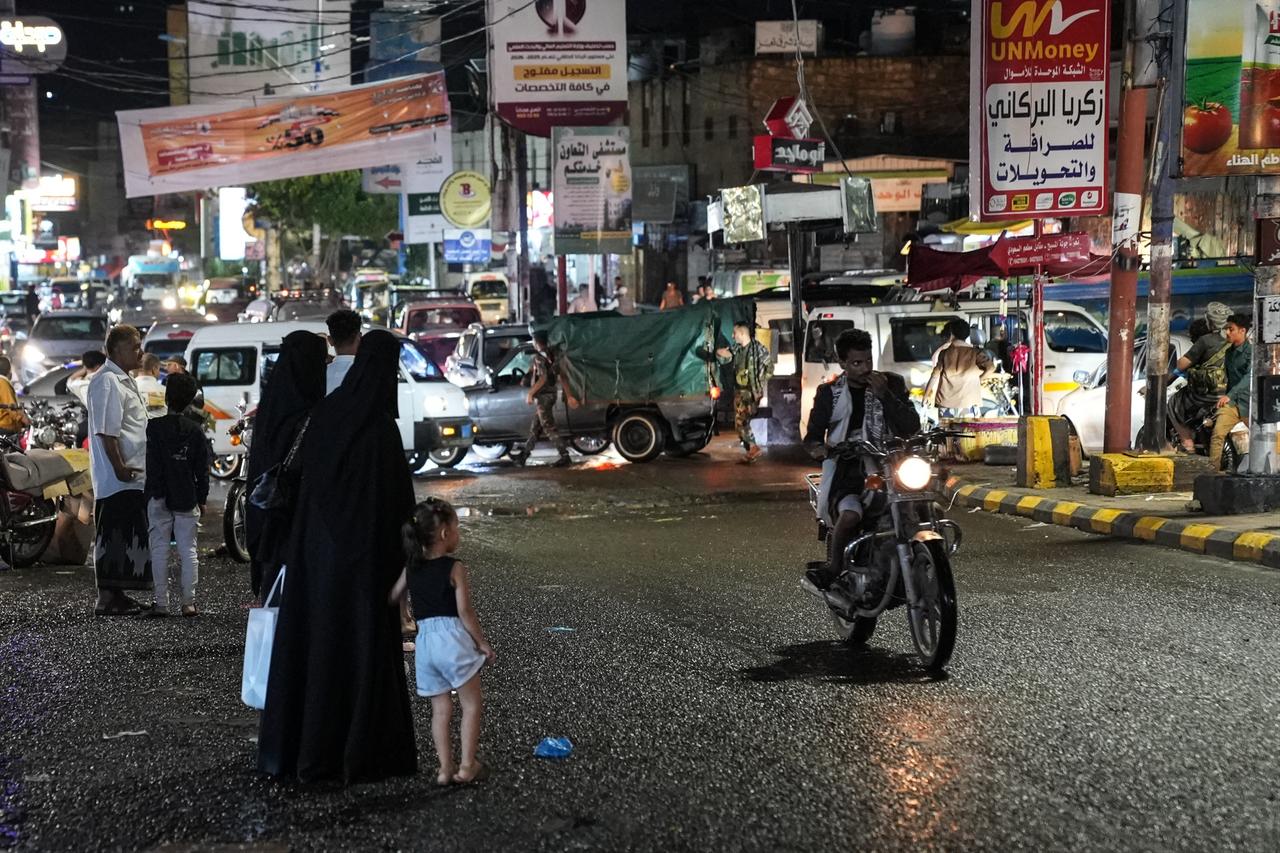

Iran's strategy of broadening the regional conflict, pressuring U.S. allies, and exploiting maritime chokepoints appears to be a key driver of the Houthis' renewed attacks and their efforts to gain greater control over the Bab el-Mandeb Strait.
Iran has provided the Houthis with ballistic and cruise missiles, attack drones, training, military advisers, and intelligence. This summer, it also began operating a direct air link to Sanaa, transporting Iranian Revolutionary Guard Corps (IRGC) personnel and missile and drone components. Iran has reportedly stationed hundreds of IRGC officers in Yemen, supporting the Houthis' effort to close the Bab el-Mandeb Strait.
Although the Houthis are part of Iran's "Axis of Resistance," they can also act independently and use the war to advance their own political and territorial ambitions in Yemen. They do not rely entirely on Iran, but Tehran appears to be an important strategic driver of the escalating violence in the Red Sea.
This summer, the Houthis announced a blockade on Saudi shipping and recently strengthened their positions around the Bab el-Mandeb Strait and along the Red Sea coast, increasing their ability to monitor and threaten maritime traffic.
The Houthis' attacks on Saudi airports, military bases, oil tankers, and oil infrastructure in Jizan and Yanbu, the Red Sea terminus of Saudi Arabia's East-West Pipeline, inflicted economic and strategic costs on Saudi Arabia and put its alternative oil-export route at risk.
The Houthis want Saudi Arabia to end its presence in Yemen, stop supporting the Yemeni government, and pay war reparations, which they view as compensation for the economic hardships they attribute to Saudi Arabia.
The attacks also fit Iran's broader effort to coordinate the Axis of Resistance and synchronize pressure across multiple fronts.
Riyadh is seeking international support to protect navigation in the Red Sea and contain the Houthis, holding talks with Egypt, China, Turkey, Pakistan, and European countries.
So far, the most concrete support has come from France, which has agreed to deploy troops and defense systems to protect the Red Sea port city of Yanbu, while the U.K. has agreed to provide an RAF Voyager air-to-air refueling aircraft to support Saudi defensive operations.
For Riyadh, however, U.S. support remains the key question. Saudi Arabia has asked President Trump for military action, but Washington has so far limited its support to intelligence sharing and military advisers, while engaging directly with the Houthis and securing assurances that they would not attack the United States.
The United States has confronted the Houthis before. During the Gaza war, Washington established coalitions to protect shipping, intercept Houthi drones and missiles, and conduct strikes against Houthi military targets.
In spring 2025, the United States conducted more than 50 days of airstrikes against the Houthis before reaching an Oman-brokered ceasefire with the group in May.
The United States' reluctance may also reflect its recognition, based on last year's experience, that the Houthis cannot be neutralized through limited airstrikes. Given the risks to global trade and oil prices, opening a new front while Washington is fighting Iran would be a difficult risk for the Trump administration to take. Yet Saudi Arabia, a U.S. ally with which Washington has a defense agreement, continues to press for American support.
Therefore, the Houthis are unlikely to abandon their fight against Saudi Arabia or Yemeni government forces in the near term, particularly as they remain an important part of Iran's broader regional strategy.
The Houthi response to the recent increase in Saudi attacks has been to escalate their own attacks rather than exercise restraint. How much longer the United States can stay out of this front while Iran continues to support the Houthis so openly remains uncertain. If the violence continues to escalate, the United States could face increasing pressure to join Saudi Arabia in direct strikes against the Houthis.
At present, fighting between the Houthis and Saudi-backed Yemeni forces has already intensified. Yemen risks becoming more than a secondary theater in the Iran-U.S. confrontation. The Houthis' position along the Red Sea gives both the group and Tehran a means of pressuring Saudi Arabia, threatening a critical maritime chokepoint and raising the costs of the wider war.
Even if Washington stays out, and even if the wider confrontation with Iran eventually ends, the Saudi-Houthi conflict could continue on its own trajectory, leaving Yemen once again headed toward a protracted and bloody conflict that could become a deadly trap for all sides.


 Set as preferred source
 Set as preferred source


 7 min read