Newsletters




No sirens sounded. No summit was called. The deadline simply arrived.
The New START treaty, the last legally binding nuclear arms control agreement between the United States and Russia, expired, leaving the two largest nuclear arsenals on Earth unconstrained by treaty for the first time in decades.
Signed in 2010 and extended in 2021, the pact capped strategic warheads and delivery systems and imposed inspections meant to prevent catastrophic miscalculation.
That structure is now gone.
The U.S. approach to the treaty’s end has been deliberately strategic and at times, ambiguous.
President Donald Trump has been clear that if New START expired, “it expires,” and that Washington would pursue a “better agreement,” one that ideally includes China and addresses broader nuclear realities beyond the Cold War paradigm.
Behind the scenes, U.S. officials have also raised concerns about China’s nuclear trajectory. In Geneva this week, Assistant Secretary of State Christopher Yeaw went as far as accusing Beijing of conducting a secret nuclear test in 2020; a charge China vehemently rejected as “baseless and politically motivated.”
That accusation underscores a broader U.S. narrative: the nuclear competition shaping up isn’t just Washington versus Moscow anymore.
Russia’s response has been nuanced.
Moscow initially expressed regret at the treaty’s lapse and vowed to act “responsibly” as a nuclear power. In statements following the expiration, Russian Foreign Minister Sergey Lavrov said Russia would continue observing the treaty’s limits, as long as the United States does the same.
This conditional commitment appears aimed at preserving strategic stability without a formal treaty, but it’s fragile: Russia suspended its participation in New START back in 2023, and distrust runs deep on both sides.
China has publicly said it regrets the expiration of New START and urged Washington to resume talks with Moscow on strategic stability.
However, Beijing has also made clear it will not join U.S.–Russia nuclear reduction negotiations at this stage and insists its nuclear strategy remains defensive, adhering to a “no first use” pledge.
That stance sets the stage for a very different kind of nuclear diplomacy than the treaty era.
One of the most striking analyses comes from Tong Zhao, senior fellow with the Nuclear Policy Program at Carnegie China. His argument reframes the treaty’s expiration as not just a bilateral U.S.–Russia issue but part of a broader strategic shift in global nuclear politics.
Zhao says Washington’s decision to let New START lapse is driven not primarily by Russia, whose economy and military are increasingly strained after years of war in Ukraine, but by China’s rapid nuclear buildup and the potential flashpoint of Taiwan. In Washington’s calculations, Beijing represents both greater capability and greater intent to challenge U.S. military dominance.
“China’s ongoing nuclear buildup is a primary driver of the U.S. decision to allow New START to expire and regain the option to expand its capabilities,” Zhao notes, specifically highlighting Washington’s interest in uploading warheads onto existing systems and preparing for a new strategic context.
He adds that U.S. focus on China could inadvertently draw Russia back into a broader arms race, raising new security concerns in Europe; a pressure point Washington might prefer to avoid but cannot ignore as global nuclear dynamics evolve.
Zhao also points to secondary effects: with China and North Korea expanding their nuclear capabilities, countries such as South Korea and Japan are increasingly considering indigenous strategic options to hedge against uncertainty. In Europe, doubts about the reliability of U.S. security guarantees could also encourage proliferation.
Beyond that, Zhao paints a picture of Beijing’s approach to arms control negotiations as skeptical at best:
Chinese analysts, he says, are wary that arms control agreements are tools used by powerful states to lock in their advantage. China’s leadership is hesitant to engage in talks without confidence in fairness, and concerns about inspection and intelligence leakage further dampen enthusiasm.
Finally, China’s continued emphasis on unification with Taiwan, which keeps alive the prospect of a direct U.S.–China military clash, means Beijing is currently “in no mood to slow its military buildup,” Zhao warns.
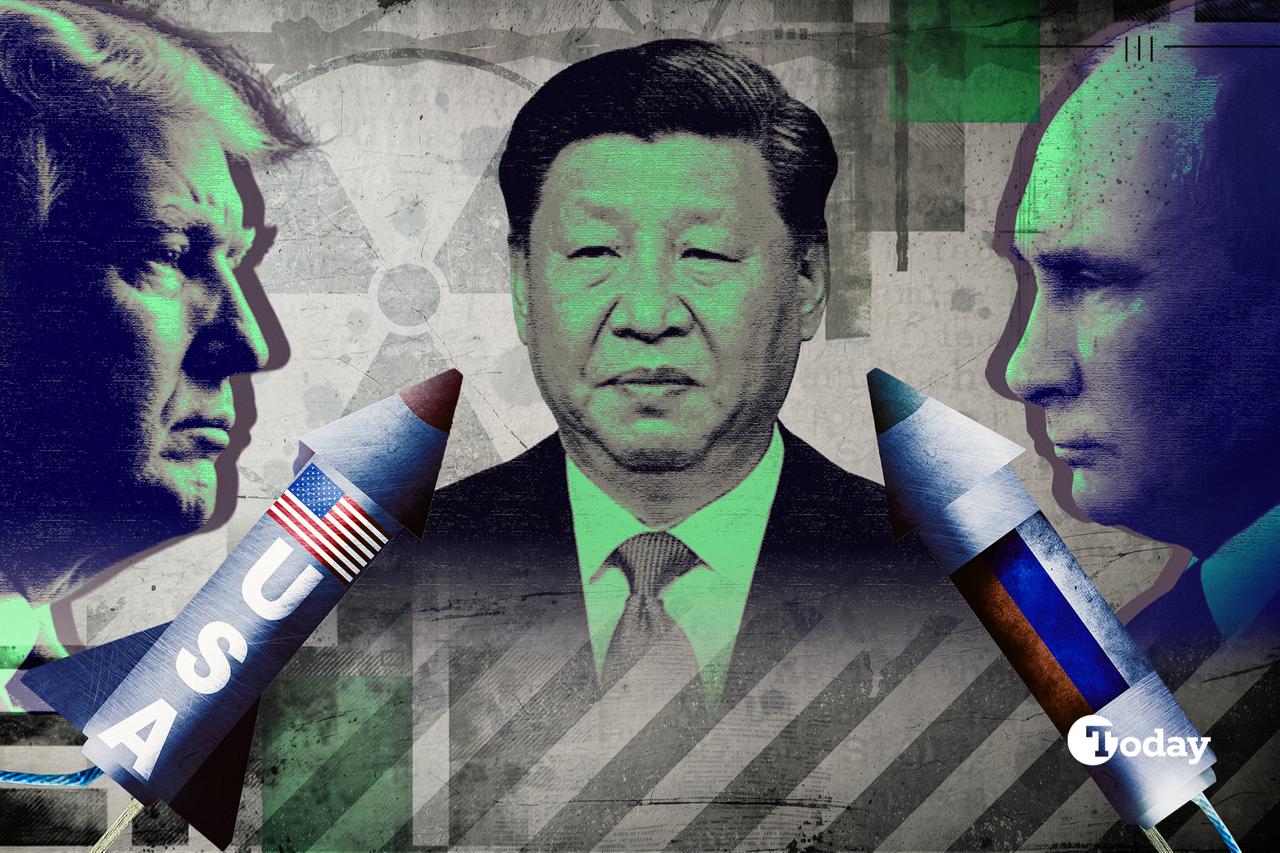
With New START gone, the nuclear order is no longer a bilateral dialogue between Washington and Moscow. Instead, it resembles a three-way chess match where:
The result: a world where unrestricted nuclear expansion is possible, and where transparency and verification, once core to strategic stability, are increasingly piecemeal or symbolic.
There’s no single answer.
Diplomatic backchannels between Washington and Moscow remain open, with some analysts hopeful that informal agreements might limit harm in the short term. Washington insists it wants a “better” treaty, potentially one that brings China in.
Skeptics say without mutual trust and a clear framework for verification and enforcement, the risks of miscalculation, proliferation, and even arms racing are already rising.
In the end, New START’s expiration didn’t start a nuclear arms race; it simply acknowledged the one that was already underway.


 Set as preferred source
 Set as preferred source


 7 min read