Newsletters


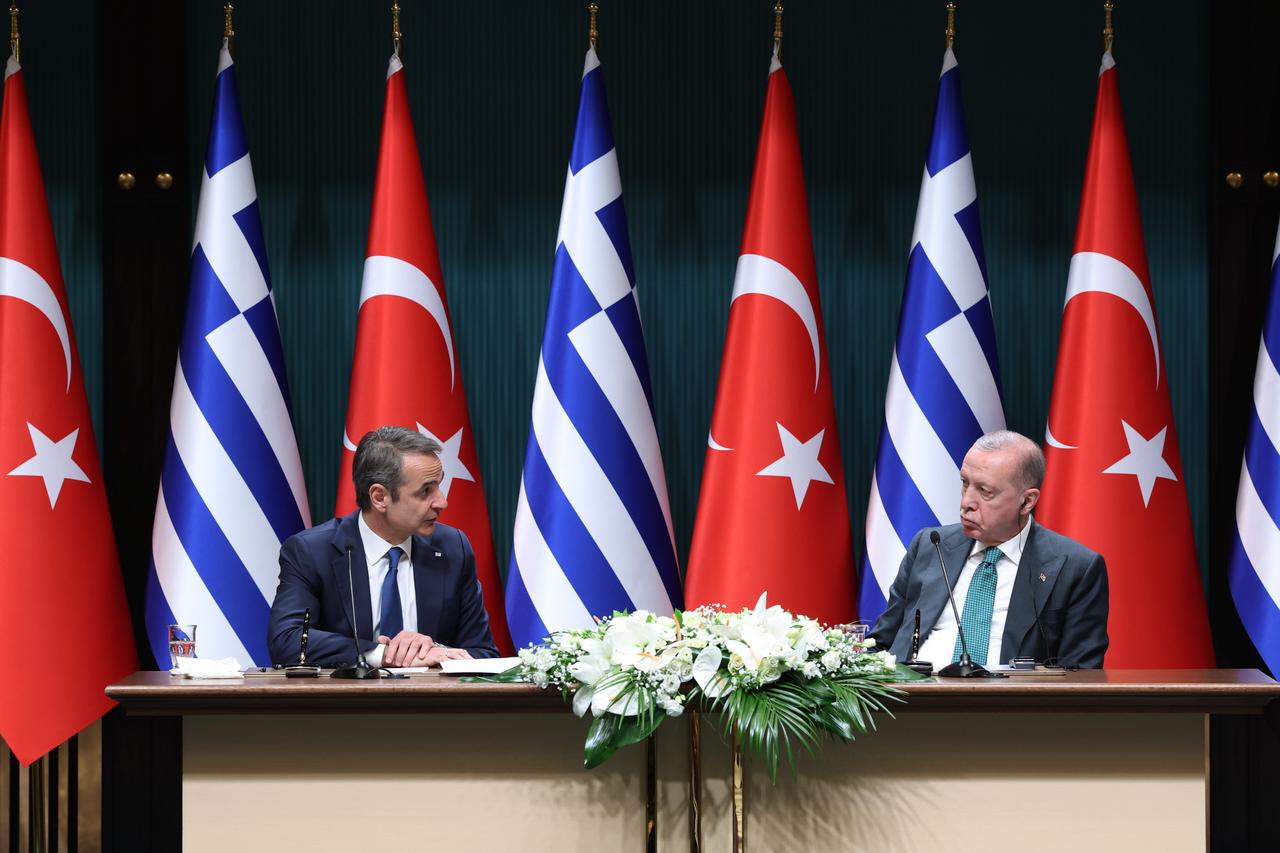


After a formal ceremony at the Presidential Complex last week, Turkish President Recep Tayyip Erdogan and Greek Prime Minister Kyriakos Mitsotakis held what looked like a very ordinary meeting.
They held bilateral talks before co-chairing the sixth meeting of the Türkiye-Greece High-Level Cooperation Council.
They oversaw the signing of agreements. And a joint press conference followed, projecting calm and controlled optimism.
On the surface, this all looks fairly pedestrian.
And yet it wasn’t. Last week was a significant moment in Turkish-Greek relations, not because of what was achieved, but because of what was left unsaid.
Turkish-Greek relations are never ordinary bilateral ties. They are historically dense, shaped by conflicts, population exchanges, the Cyprus conflict, Aegean crises and NATO tensions.
For decades, brief, polite dialogue exchanges have often been overshadowed by cycles of confrontation.
Against that backdrop, prioritizing economic cooperation signals a meaningful shift in emphasis.
At a roundtable organized last month by the Cambridge Middle East and North Africa Forum and City, St. George’s, University of London, the Greek Ambassador to the United Kingdom, Yannis Tsaousis, expressed cautious optimism about the trajectory of relations.
Tsaousis emphasized that roughly 95% of the current engagement between Athens and Ankara is grounded in economic coordination and practical cooperation.
Trade, tourism, transport links, and energy connectivity now form the backbone of bilateral interaction. While structural disputes remain unresolved, economic interdependence has injected a more pragmatic tone into discussions.
Rather than attempting a grand political settlement, both governments are building incremental confidence through economic channels. Given the history between Türkiye and Greece, that shift matters. And in Ankara, there was a clear public commitment to keep going in that direction.
Every public political meeting has a subtext, and this was no different. Emre Gonen, an academic specializing in European political history and European public administration at Istanbul Bilgi University, argues that Mitsotakis’s visit was also a carefully calculated domestic move.
According to Gonen, Greek media and public opinion have, in recent years, magnified Türkiye’s defense industry advances to an extraordinary degree, producing what he describes as a climate bordering on paranoia.
Türkiye’s engagements in the Middle East and East Africa, and the cooperation frameworks it has built there, are often framed in Greece as evidence of revived Ottoman ambitions, with alarmist narratives suggesting that Ankara is positioning itself to threaten the Aegean.
Simultaneously, domestic criticism in Greece has accused the government of failing to take sufficient countermeasures, fostering a perception of vulnerability.
To ease that tension, Mitsotakis traveled to Ankara, accompanied by senior ministers, effectively transforming the visit into a cabinet-level summit.
With the notable exception of Defense Minister Nikos Dendias, known for his hardline stance toward Türkiye, key members of the Greek government were present.
The optics were deliberate: this was not an isolated diplomatic courtesy call but a state-level reaffirmation of engagement.
Erdogan, for his part, adopted a diplomatic and reassuring tone. Gonen notes that with an already crowded foreign policy agenda, Ankara had little interest in adding another flashpoint.
Rather than highlighting persistent underperformance in bilateral trade, Erdogan pointed to a $10 billion target and emphasized constructive developments.
He also invoked “international law” language designed to reassure Athens. Mitsotakis, who places particular importance on legal frameworks, conveyed to Greek media that Türkiye also seeks solutions grounded in law, suggesting that such common ground should dispel exaggerated fears.
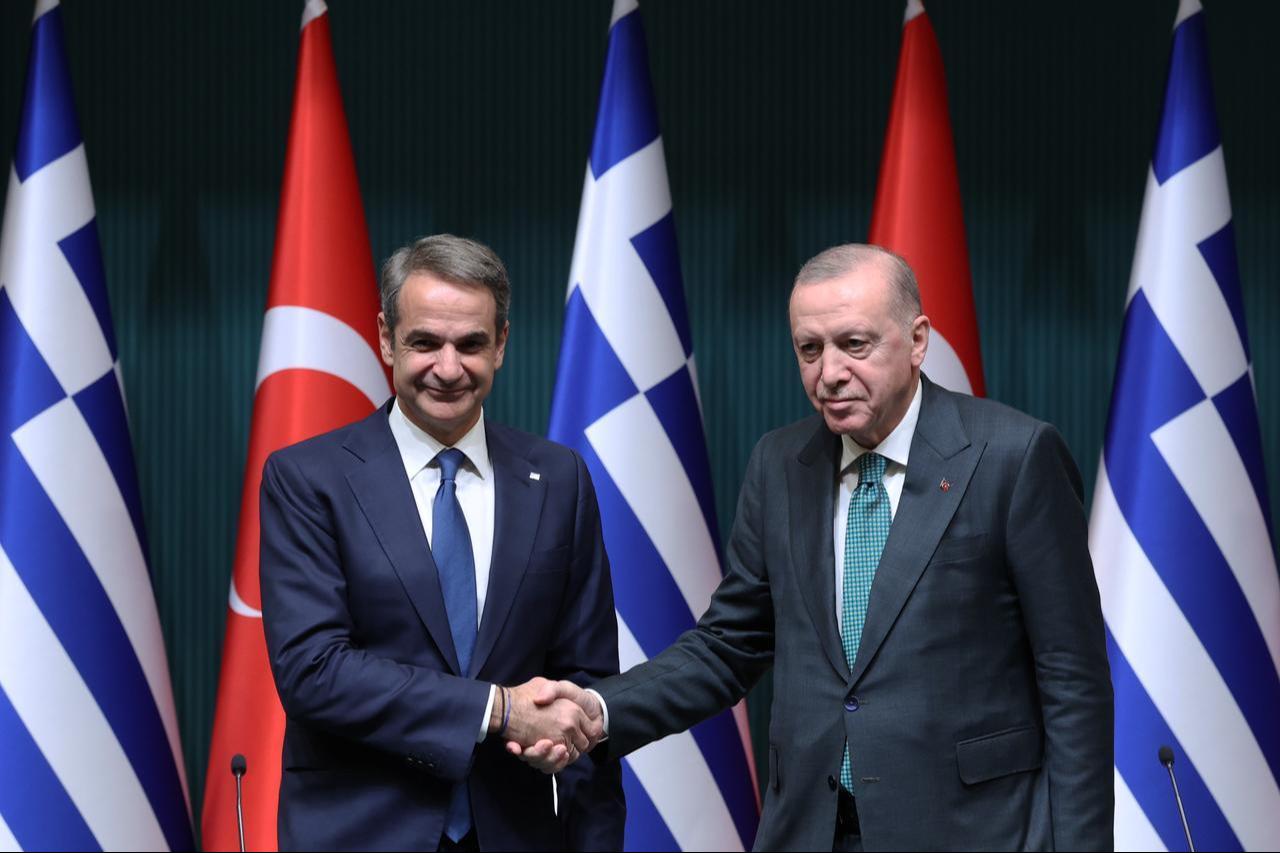

Strikingly, contentious issues were left unspoken. Greece’s parliamentary decision to retain the option of extending territorial waters to 12 nautical miles and Türkiye’s long-standing declaration that such a move would constitute a casus belli remained implicit rather than explicit.
Gonen underscores a practical dimension rarely reflected in international media. If Greece were to extend territorial waters in the Aegean to 12 miles, vessels departing from Istanbul would be unable to reach Mersin without entering Greek waters.
The logistical implications would be profound and arguably unworkable.
Historically, such meetings would have seen both leaders argue their case, at the very least to please their respective domestic audiences.
But in this instance, the public was left with a deliberate strategic ambiguity.
They acknowledged that disagreements exist. They acknowledged that those disagreements are significant. And they reaffirmed dialogue.
In the historical arc of Turkish-Greek relations, that alone carries weight.
As political scientist Gokhan Cinkara argues, the rapprochement may also reflect dynamics beyond bilateral calculation. U.S. diplomacy likely plays a role in encouraging stability between two NATO allies at a time of regional volatility.
A calmer Aegean reduces friction within NATO’s southeastern flank and diminishes the prospects of a hardened Greece–Israel–Greek Cypriot alignment that could marginalize Ankara.
Thus, the meeting fits into a wider geopolitical balancing act.
 2 min read

The emphasis on economic channels, highlighted by Ambassador Tsaousis in London, suggests a conscious strategy of depoliticizing cooperation.
Trade, investment, and connectivity provide incentives against escalation. They create habits of coordination even when strategic disputes persist.
This does not resolve Cyprus. It does not redraw maritime boundaries. It does not eliminate mistrust. But it reframes the relationship around manageability rather than confrontation.
For two states with such a turbulent shared history, that recalibration is far from trivial.
The visit did not deliver sweeping breakthroughs. It was not designed to. Its importance lies in tone, structure, and prioritization. In Greece, the trip may help temper alarmist domestic narratives.
In Türkiye, it barely registered, perhaps precisely because no crisis erupted. What was avoided, namely rhetorical escalation, nationalist theatrics, and performative brinkmanship, may ultimately matter more than any agreement signed.
In the long and volatile history of Turkish-Greek relations, moments of restraint may lack spectacle, but they often shape the trajectory of the relationship more than grand declarations ever do.


 Set as preferred source
 Set as preferred source


 1 min read