Close
newsletters Newsletters
X Instagram Youtube

Oreshnik missile strike signals Putin’s discontent with Europe’s Ukraine peace plan

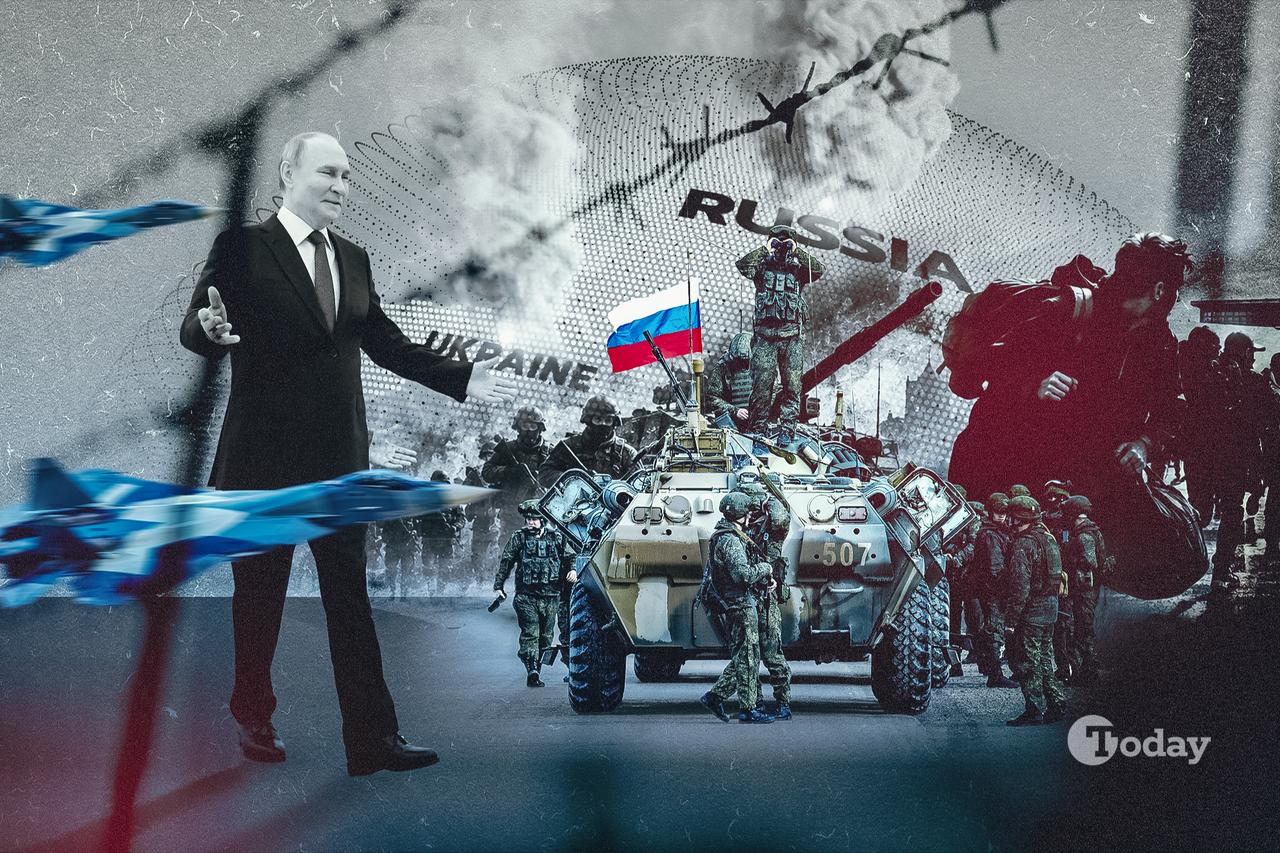
Russias President Vladimir Putin (Collage prepared by Türkiye Today)
Photo
BigPhoto
Russias President Vladimir Putin (Collage prepared by Türkiye Today)
January 09, 2026 05:07 PM GMT+03:00

Russia launched a high-cost Oreshnik intercontinental ballistic missile (ICBM) overnight at a target in Lviv. While the Oreshnik is highly capable, its extreme cost makes its use in Ukraine difficult to justify from a cost-benefit perspective. Indeed, battle damage reports suggest the impact was relatively limited. The deployment of the Oreshnik, therefore, seemed more of a PR exercise, perhaps aimed at the Trump administration, signalling Russia's broader unhappiness about the state of play in the world, including Trump’s moves in Venezuela, the seizure of a Russian-flagged vessel in the North Atlantic and the new round of demonstrations in Iran.

Russia will no doubt see a U.S. hand active in Iran—an assumption reinforced by last year’s U.S. airstrikes against Iran and Trump’s warnings to the regime in Tehran against using excessive force against demonstrators.

From Moscow's viewpoint, U.S. actions, even under Trump, would appear to be following a very familiar Western script of engineered regime change targeted at Vladimir Putin’s authoritarian friends and allies. Therein, the fall of Nicolas Maduro looks to be just the latest in a series of Western interventions against Moscow-friendly regimes, going back to Gadhafi, Saddam Hussein, Assad, Yanukovych, and even Nasrullah in Lebanon. I’ve often said that Putin wakes up every morning thinking about how to undermine Ukraine and pull it back into Russia’s orbit. It’s the number one issue for Putin. But another thing that would make Putin wake up in a cold sweat is the prospect of another autocrat being deposed, especially if that autocrat could be him. The irony is that Putin himself is now far advanced in regime change operations across the West, be that funding Brexit, Trump 16’, Georgescu, Orban, Fico, Le Pen, the AfD, et al. But Trump’s actions against Maduro just appear to be too close to the bone for Putin, especially knowing that Iran and Cuba are now firmly in the line of fire.

I doubt any of this will make Putin more willing to negotiate peace in Ukraine. While he’s eager to save his own skin, Ukraine remains far too personal and emotional an issue for him to back down. Sure, with Trump’s $50 a barrel oil price target hurting the Russian economy’s bottom line, things are getting tight in terms of nickel and cents for Putin’s war machine, but at the same time, I think Trump offers Putin just enough to make him think total victory against Ukraine is just around the corner.

There are three key issues: first, Trump’s unserious approach to negotiating on Ukraine, which seems to be aimed at offering concessions to Putin while simultaneously berating and pressuring Zelenskyy to concede ground; second, there is a shortfall in military support for Ukraine—U.S.-supplied interceptor missiles, for example, are reportedly in critically short supply. Putin is well aware of the latter, so he thinks one last winter campaign against Ukraine’s critical infrastructure will finally break the back of the administration in Kyiv. Third, Trump’s latest push on Denmark over Greenland looks set to drive a knife straight into the heart of NATO. Trump’s latest Truth (or lack thereof) post further angers Europe, dismissing U.S. allies’ long-standing failure to come to America’s defense. This was, quite literally, spitting on the graves of the thousands of Europeans who died responding to the U.S. post-9/11 call under NATO’s Article 5 defense clause. They died supporting U.S. misadventures in Iraq and Afghanistan. Most European allies would not say it publicly, but now doubt whether, if European NATO allies were attacked, the U.S., under Trump, would come to their defense.

Trump says his push to get European NATO to spend more on defense has breathed new life into the bloc, but where I am sitting, it looks more like a kiss of death from Trump. Most European allies realise they need to spend more on defense, but primarily now because they can no longer rely on the US. They are planning with a post-NATO world in mind—or at least a NATO without the U.S. The demise of NATO is like a twisted fantasy for Putin—a vision straight out of hell—and he will likely continue the war in Ukraine a bit longer, betting that a fractured NATO will weaken support for Kyiv, creating an opening for a Russian total victory. Now that might not be the reality, but what’s important is what Putin thinks and as someone who has followed his 25 years plus in office now, and predicted the full-scale invasion of Ukraine as far back as 2015, I can assure you, this is how he thinks. I get Putin.

(From L) Germany's Chancellor Friedrich Merz, Ukraine's President Volodymyr Zelensky, France's President Emmanuel Macron, US Special Envoy Steve Witkoff, Britain's Prime Minister Keir Starmer and US businessman Jared Kushner speak after a press conference at the Elysee Palace in Paris on January 6, 2026. (AFP Photo)

So what about the peace process?

For me, it is not serious—managed by unserious characters like Witkoff and Dimitiriev.

Both Russia and Ukraine are going through the motions, mostly trying to keep Trump content—or at least prevent him from doing something that could seriously harm them if they appear to be the unwilling side.

For Ukraine, if it is going to concede territory, it needs ironclad security guarantees. The U.K. and France's offer to provide boots on the ground is not serious—first, they cannot provide enough troops, and second, would they really go to war with Russia for Ukraine? No one thinks so, that’s the harsh reality. The only state that can provide a credible security guarantee is the U.S. But even then, with NATO allies in Europe doubting Washington’s resolve under Trump to uphold Article V, why would Ukraine trust it? Amid all the smiles now in Trump-Zelenskyy meetings in Mar-a-Lago, the Ukrainians absolutely don’t trust the U.S. Just look at the opinion polls there. So the Ukrainian, and actually European, strategy is to play along with Trump in talks, drag them out, try never to directly say no, and try and push any blame for the failure of talks to Russia. Ukraine wants to keep the U.S. onside as long as possible to draw down weapons supplies and Intel as long as possible before likely Trump eventually cuts all support. The hope then is that by that time, Europe and Ukraine will be self-sufficient enough to still be able to hold the line against Russia.

To an extent, the Russian negotiating position is the same, albeit Russia seems to be in a stronger position as Trump seems to have an unhealthy affinity with Russia, and authoritarian regimes more generally. Trump’s natural inclination is to fawn to the strong and bully the weak. Putin is great at playing to Trump’s ego - playing that like an absolute fiddle.

Russia sent two signals this week showing its discontent with the latest Ukrainian/European 19-point peace plan, compared with Russia’s 28-point proposal. First came the Oreshnik missile strike; second were remarks by Russian Foreign Ministry spokesperson Maria Zakharova.

Zakharova is a female version of Saddam Hussein’s Comical Ali rolled into Hitler’s Goebbels. She came out with the line that the deployment of any NATO troops (aka Brits and French) to Ukraine would be unacceptable, and they would be legitimate targets. This was a key aspect of the 19-point peace plan and underlines that Russia is set against any plan that provides any credible security guarantee for Ukraine, as its ultimate mission is to keep Ukraine insecure and open to further Russian invasion. Russia will oppose anything that stands in the way of its agenda to secure the eventual subjugation of Ukraine.

To cut a long story short, Trump brokered peace talks in Ukraine that are going nowhere and will continue to go nowhere unless Trump wakes up to the reality that he has to increase the costs to Putin of continuing the war, which means more and better arms supplies to Ukraine and more sanctions on Russia.

Timothy Ash is a regular contributor to Türkiye Today. In addition to his contributions, our outlet has been granted permission to republish his personal Substack articles.

January 09, 2026 05:08 PM GMT+03:00
More From Türkiye Today