Newsletters


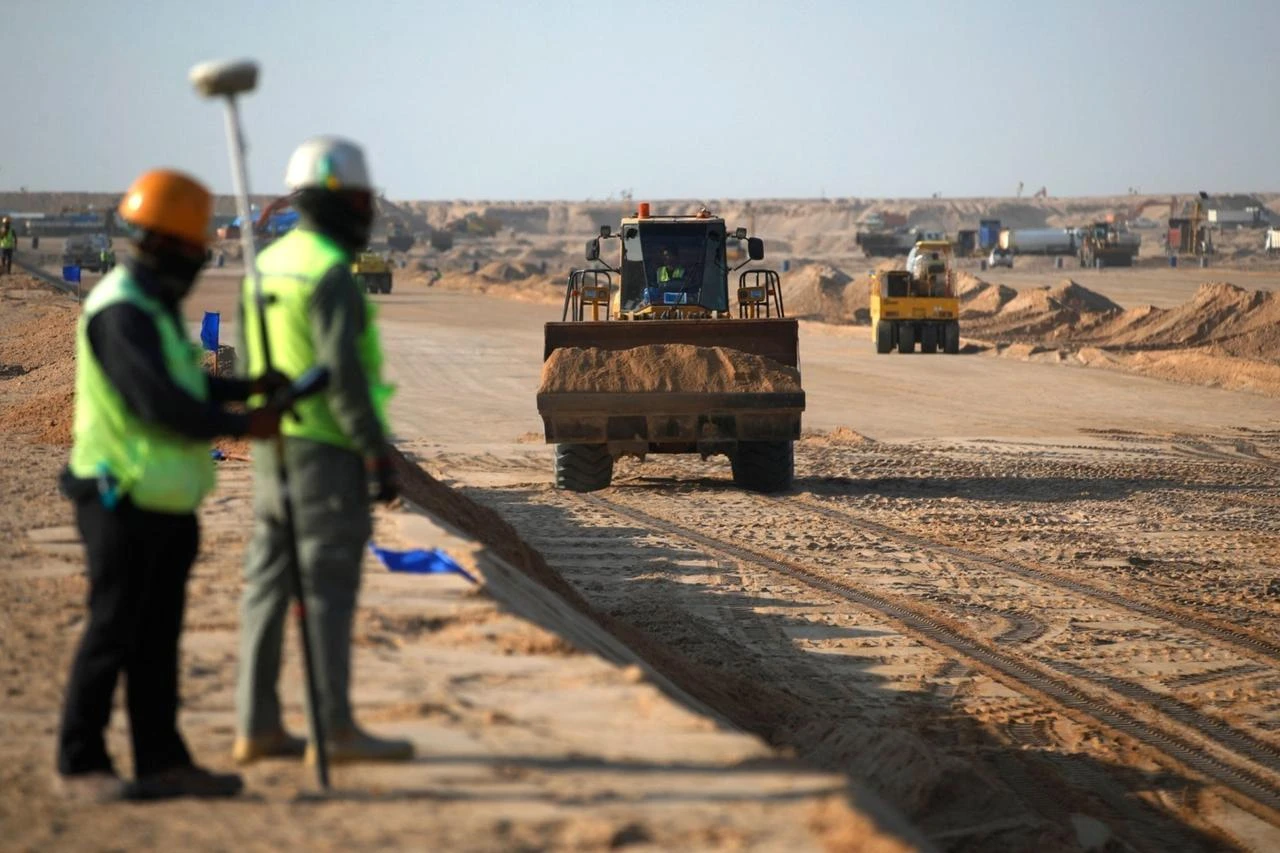


On July 29, 2026, Iraqi Prime Minister Ali al-Zaidi flew to Ankara and signed a stack of contracts covering energy, transport, education, and water—the practical skeleton of the Development Road, the Iraq-Türkiye project meant to move goods from the Gulf to the Mediterranean without touching a contested strait.
Three years earlier, a rival vision had been unveiled with considerably more fanfare. The India-Middle East-Europe Economic Corridor (IMEC), signed in September 2023, promised to link India to Europe through a single continuous line: United Arab Emirates ports, Saudi and Jordanian territory, Israeli rail, and onward across the Mediterranean.
The original IMEC was less a logistics plan than a diplomatic love letter, and love letters do not survive contact with maritime chokepoints. In February 2026, war with Iran shut the Strait of Hormuz. Jebel Ali, the UAE port that anchored the corridor's Gulf entry, was cut off from its Indian counterparts overnight.
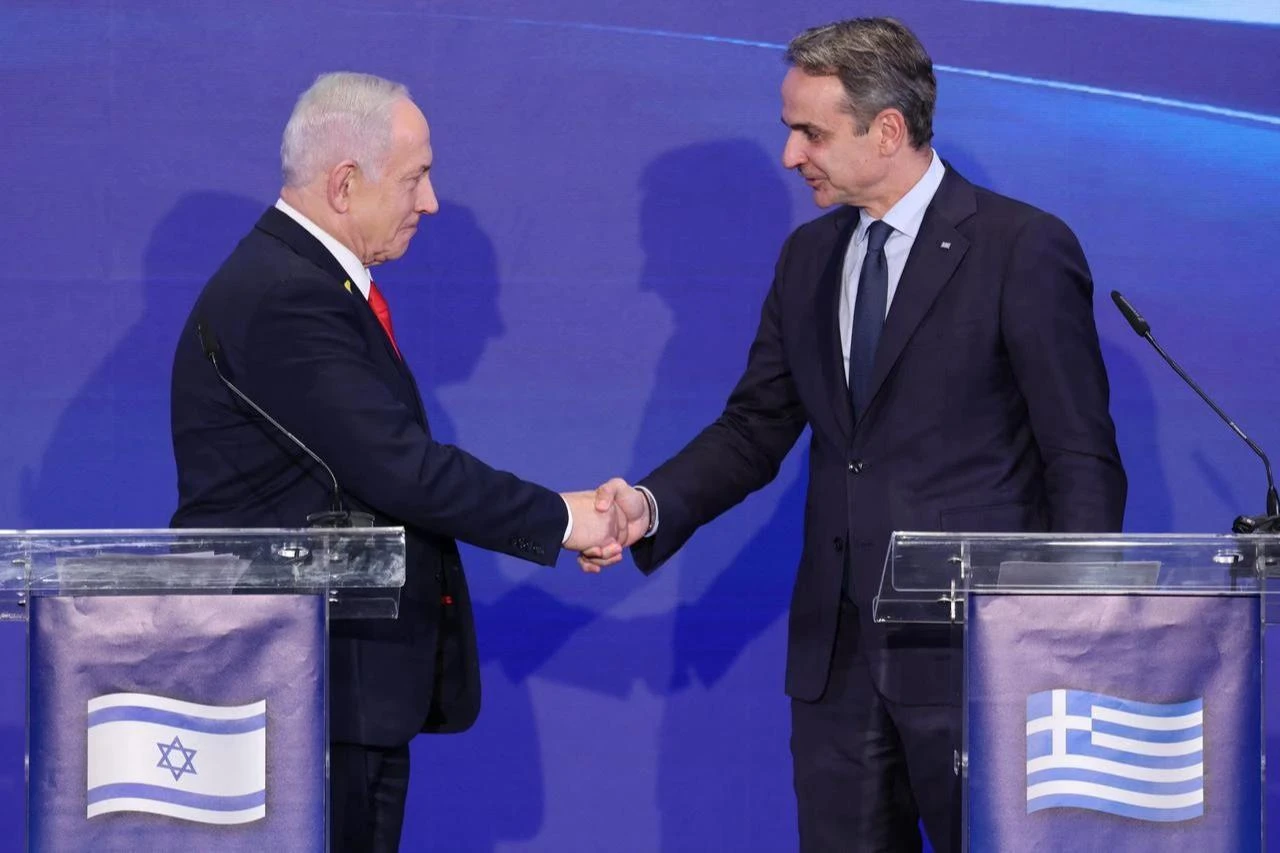
Benjamin Netanyahu had his own name for the wider ambition around that time: a "hexagon alliance" built around Israel. Stretching toward India, Greece, Cyprus, and an array of Arab, African, and Asian partners, it was designed to counterweigh a rival axis.
What emerged from the closure of the Strait of Hormuz was not IMEC's obituary—at least not yet. It was IMEC 2.0, built on a premise its original architects had never seriously entertained: that a single corridor is a liability, but a network is a hedge.

A single line only works if nothing along it breaks.
IMEC's 2023 blueprint assumed a friendly, uninterrupted run from the Gulf to Haifa, taking for granted that this stability would hold. Yet the political atmosphere around it did not survive October 7, after which rhetoric from Israeli ministers toward Riyadh made Saudi participation politically untenable for well over a year.
Ambassador Francesco Talo, Italy's special envoy for IMEC, called it a turning point that froze the entire initiative. "We can never forget this date," he said of October 7, describing the following months as a period when movement on the corridor essentially stopped.
The deeper flaw, however, was structural rather than diplomatic. By mapping every transit point onto one origin, one route, and one destination, the 2023 design turned neighboring hubs into rivals by default. Riyadh, Amman, and Haifa were never going to cooperate happily while competing for the same single terminus. The Hormuz closure simply exposed the arithmetic error underneath the entire concept.
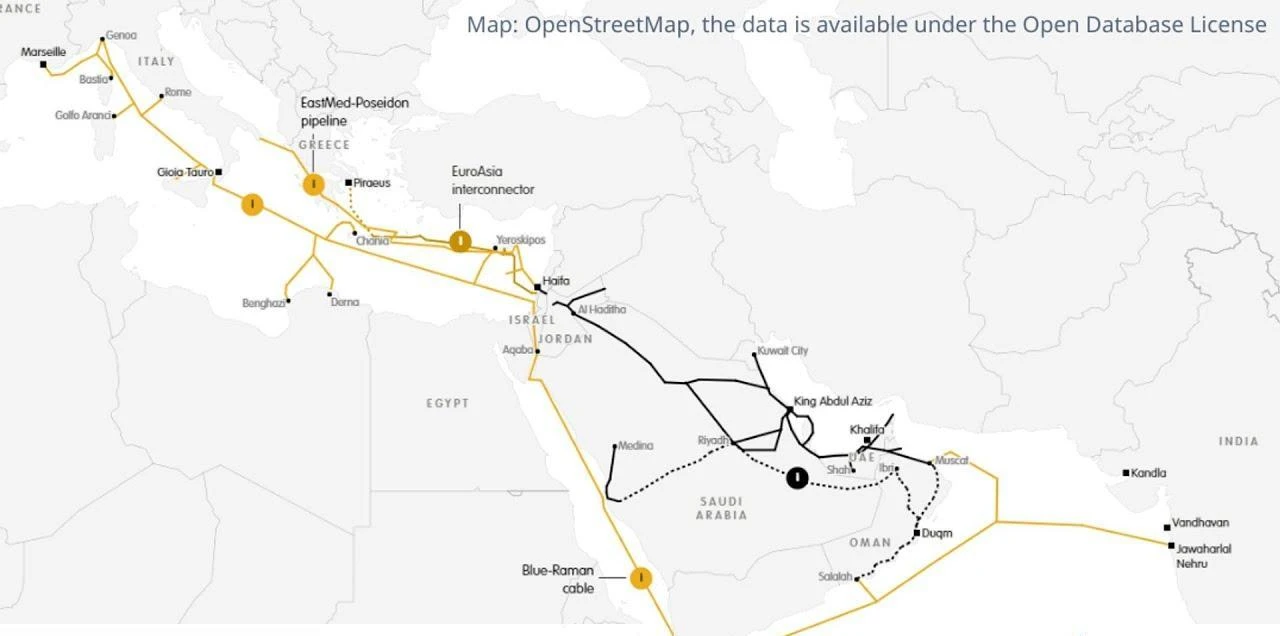
Supporters of the corridor now argue that a shift from corridor thinking to network thinking is already going on. Instead of one route with one point of failure, the redesign activates several nodes simultaneously, each with a defined function rather than a shared claim on the same cargo.
Oman is the node that needs no new infrastructure to matter today. Its ports at Salalah, Duqm, and Sohar sit outside both Hormuz and Bab al-Mandeb, and the numbers already show the shift: Omani ports handled roughly 140 million tons of cargo in 2025, a portion of it deliberately rerouted away from Jebel Ali.
Saudi Arabia, the structural backbone of the trade in the region, is anchored at the Red Sea port of Jeddah. Neom's stalled ambitions have only reinforced the pivot toward Jeddah as the more credible near-term asset. Egypt, meanwhile, is folded in not as a bypass of the Suez Canal but as the network's exit point into the Mediterranean, with investment already expanding capacity at Alexandria and Port Said.
None of the strategic reframing matters if a container still sits in a Jordanian port because of a missing form. Saudi Arabia still blocks cargo bound for or originating in Israel. Israel does not admit non-Israeli trucks. These are bilateral vetoes, not regional ones, and no network redesign dissolves them on its own.
Yet the disruptions of the past two years did not reduce regional trade volume; they orphaned it. Around 60% of container traffic that normally transits Hormuz is now hunting for an alternative route, representing roughly $220 billion in intra-regional Gulf trade still moving somewhere, just not where it used to. And into that same gap, with Washington's blessing, Türkiye and Iraq signed their own answer this week.
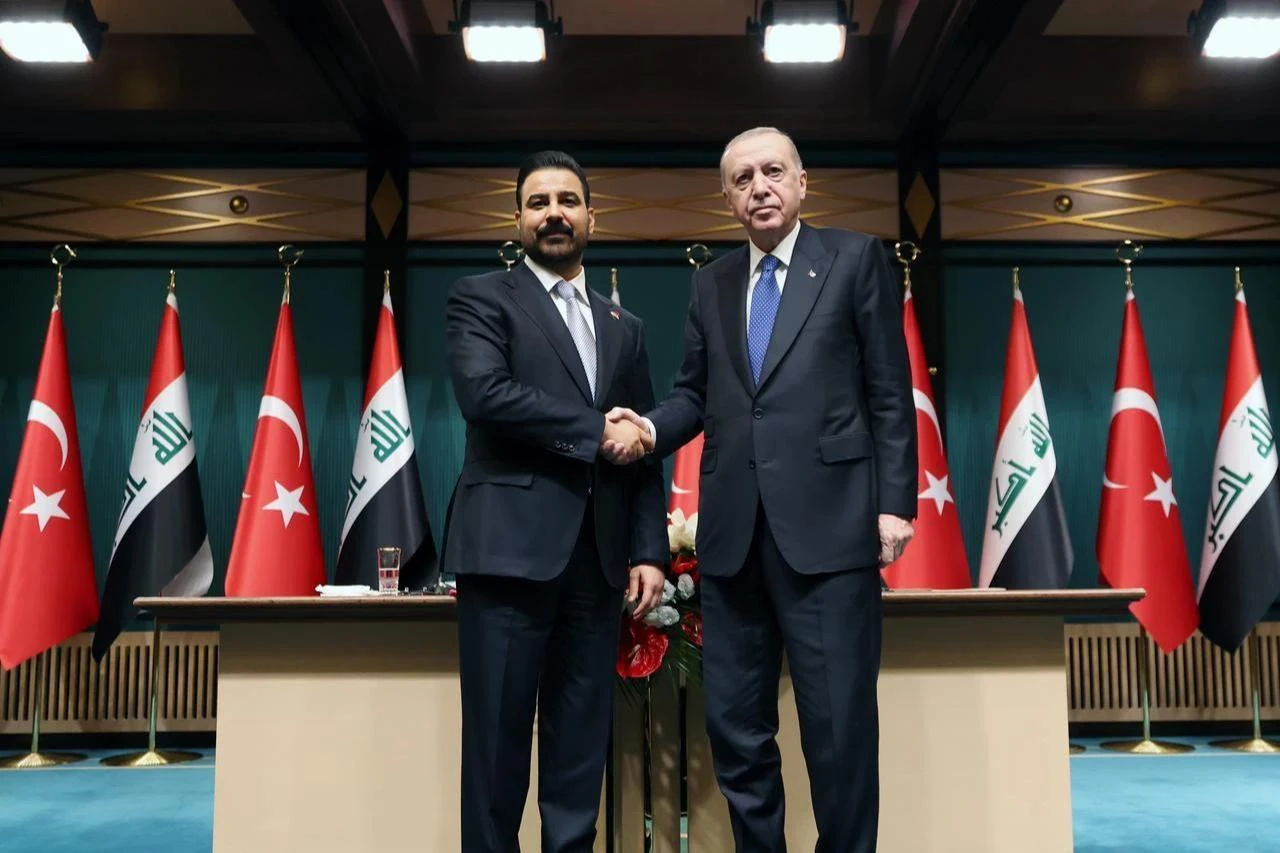
Behind the ceremonial contract signings in Ankara, Türkiye and Iraq face institutional traps that crippled the initial launch of IMEC, meaning a grand logistics corridor cannot survive on ministerial handshakes alone. To turn the Development Road from a political statement into a functioning trade artery, Ankara must build a durable operational framework designed to endure regional shocks, starting with the unglamorous institutional plumbing beneath the political layer.
This might require establishing a robust three-tier governance architecture: a ministerial council to handle sovereign disputes, a sherpa layer of special envoys meeting regularly to maintain momentum, and five permanent technical working groups covering goods and infrastructure, energy corridors, digital transit connectivity, cross-border financing, and customs coordination, much like the early IMEC model.
Furthermore, Türkiye must avoid waiting for the Development Road to degenerate into a rigid, closed bilateral loop between Ankara and Baghdad, opting instead for a concentric-circle expansion model that offers observer status to Gulf countries. The strategic value of this concentric framework lies in what it communicates to incoming partners: participation demands no political alignment, only commercial interest.
Deliberately framing the initiative—not as a hub-and-spoke system radiating unilaterally from Ankara, but as a collaborative network of peer trade nodes—allows Türkiye to offer genuine structural redundancy for Eurasian trade, rather than substituting one single point of failure for another.
An Atlantic Council report, "Beyond the Corridor: IMEC as a Network of Routes," targets a headline figure of $330 billion in potential trade across India, the Middle East, and Europe, representing the absolute ceiling of what a fully integrated network could move.
As Washington backs efforts to diversify regional trade, the reality remains that modern commerce involves far too many variables for any single corridor—or any single power—to fully control. Redundancy, not romance, is what survives a closed strait.
Viewed through this lens, the Development Road Project is a welcome expansion for the region. To maximize its positive impact, it should be structured in a way that gives Türkiye the flexibility to construct, combine, and adapt different route configurations as geopolitical realities evolve.


 Set as preferred source
 Set as preferred source



 4 min read