Newsletters


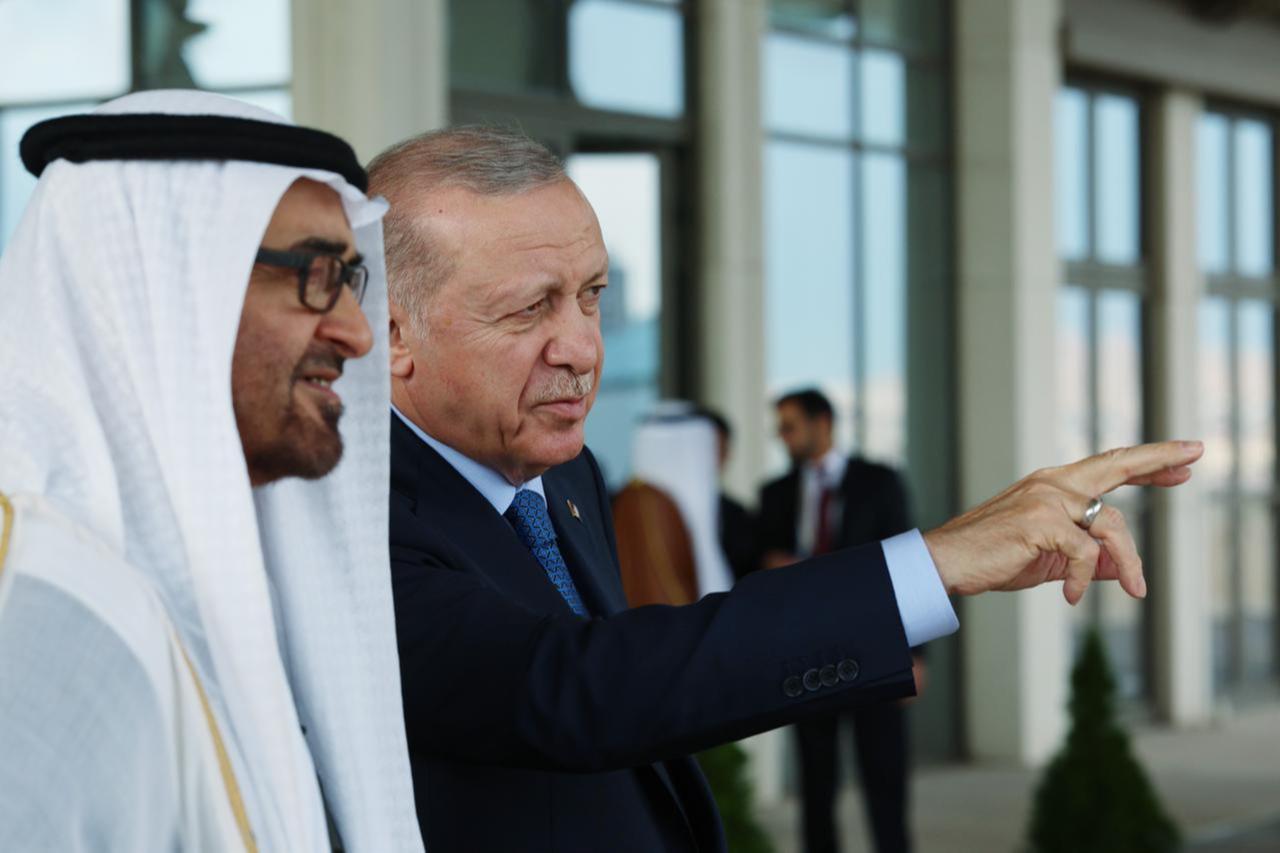


In the shifting sands of the Middle East, the partnership between Türkiye and the United Arab Emirates (UAE) has emerged as a cornerstone of regional stability. Once characterized by intense friction and competition, the relationship has undergone a profound transformation toward functional risk containment.
As both countries pursue increasingly autonomous foreign policies in a multipolar world, they have come to recognize that coordination, rather than outright competition, is the most sustainable path for navigating an era of global uncertainty.
This evolution is driven by shared vulnerability to spillover risks, including irregular migration, energy shocks, and maritime insecurity, rather than a formalized alliance logic. While the two nations have institutionalized economic and defense links through the High-Level Strategic Council, their security coordination remains a quiet, informal, and issue-specific practice. This deliberate flexibility allows both Abu Dhabi and Ankara to manage regional grey zones such as Somalia, Sudan, and Libya, while preserving diplomatic maneuverability and avoiding unnecessary confrontation with global powers.


Despite deepening strategic cooperation, the relationship operates within clear limits defined by managed divergence. Nowhere is this more evident than in the Horn of Africa, Sudan, and Libya, where Türkiye and the UAE maintain overlapping but often contrasting interests. Türkiye and the UAE have maintained engagement with a range of local authorities and stakeholders across Africa, reflecting pragmatic efforts to promote stability, facilitate humanitarian assistance, and contribute to long-term development in fragile transitional environments.
Rather than allowing these friction points to derail the broader partnership, both nations have adopted a sophisticated model of compartmentalization and transitioned from ideological rivalry toward a cold-eyed pragmatism. In Sudan, for instance, despite divergent footprints, both have signaled a willingness to coordinate on humanitarian relief and reconstruction. Türkiye's dual-track engagement with both Tripoli and Benghazi in Libya reflects a strategic decision to keep channels of communication open across all factions, positioning itself as a potential mediator rather than a partisan actor.
Likewise, both nations have increasingly supported reconstruction and humanitarian relief efforts in Syria, reflecting a broader regional shift toward stabilization, humanitarian recovery, and pragmatic engagement following years of civil conflict. This spirit of coordination extends to Gaza, where Türkiye and the UAE have jointly called for durable ceasefires and emphasized humanitarian access over political confrontation.
Furthermore, the UAE's role as a convening power has complemented Türkiye's strategic interests in the South Caucasus. The July 2025 trilateral summit in Abu Dhabi, which facilitated peace talks between Azerbaijan and Armenia, underscores how Emirati diplomacy can act as a force multiplier for Turkish regional objectives.
Unlike a strictly transactional model that prioritizes short-term, zero-sum gains, Türkiye’s current posture is one of strategic pragmatism. By compartmentalizing differences and focusing on areas of mutual concern in these African, Mediterranean, and Caucasian theaters of conflict, Ankara ensures its options remain diverse while reinforcing its image as an indispensable regional power.
This approach allows the UAE and Türkiye to navigate their differences as managed divergences, ensuring that localized competition does not disrupt the strategic equilibrium required for their shared regional vision—risk containment, trade connectivity, and economic prosperity.
Economic collaboration remains the heartbeat of this renewed partnership. Since 2021, the two countries have signed more than 50 bilateral agreements covering strategic sectors, including defense, energy, trade, health, technology, and culture.
This illustrates a distinct order of priorities in which the importance of long-term strategic integration outweighs that of immediate short-term conflicts. It also speaks to the resilience and maturity of both Türkiye-UAE leaders, Presidents Recep Tayyip Erdogan and Sheikh Mohammed bin Zayed Al Nahyan, who have embraced a nuanced approach to their relationship, carefully separating regional conflicts from the economic fundamentals of their partnership.
The 2023 Comprehensive Economic Partnership Agreement (CEPA) has provided the legal and institutional framework necessary to skyrocket bilateral trade, along with 13 agreements valued at $50.7 billion.
Bilateral trade has exceeded the medium-term target of $40 billion in 2025, reflecting a deep-seated commitment to long-term interdependence.
The Emirati capital is now a critical anchor for Türkiye’s energy, finance, and technology sectors. Recent landmark investments include the $4.9 billion bilateral currency swap between central banks to promote local-currency trade, a $300 million tech fund established between ADQ and the Türkiye Wealth Fund to support innovation-driven startups, and the 1.1 GW Masdar solar project in Nigde, aligning Gulf capital with Türkiye’s net-zero ambitions for 2035.
Turkish firms, in turn, are increasingly drawn to the UAE’s ease of doing business and its role as a neutral logistics hub for the Global South.
The combined value of Turkish projects in the UAE now exceeds US$17.8 billion, a figure that makes the UAE the 10th-largest recipient of Turkish investment globally. From the record of 203 Turkish companies participating in Dubai’s healthcare fairs to the growing number of investors seeking real estate in the Emirates, the economic synergy is undeniable.
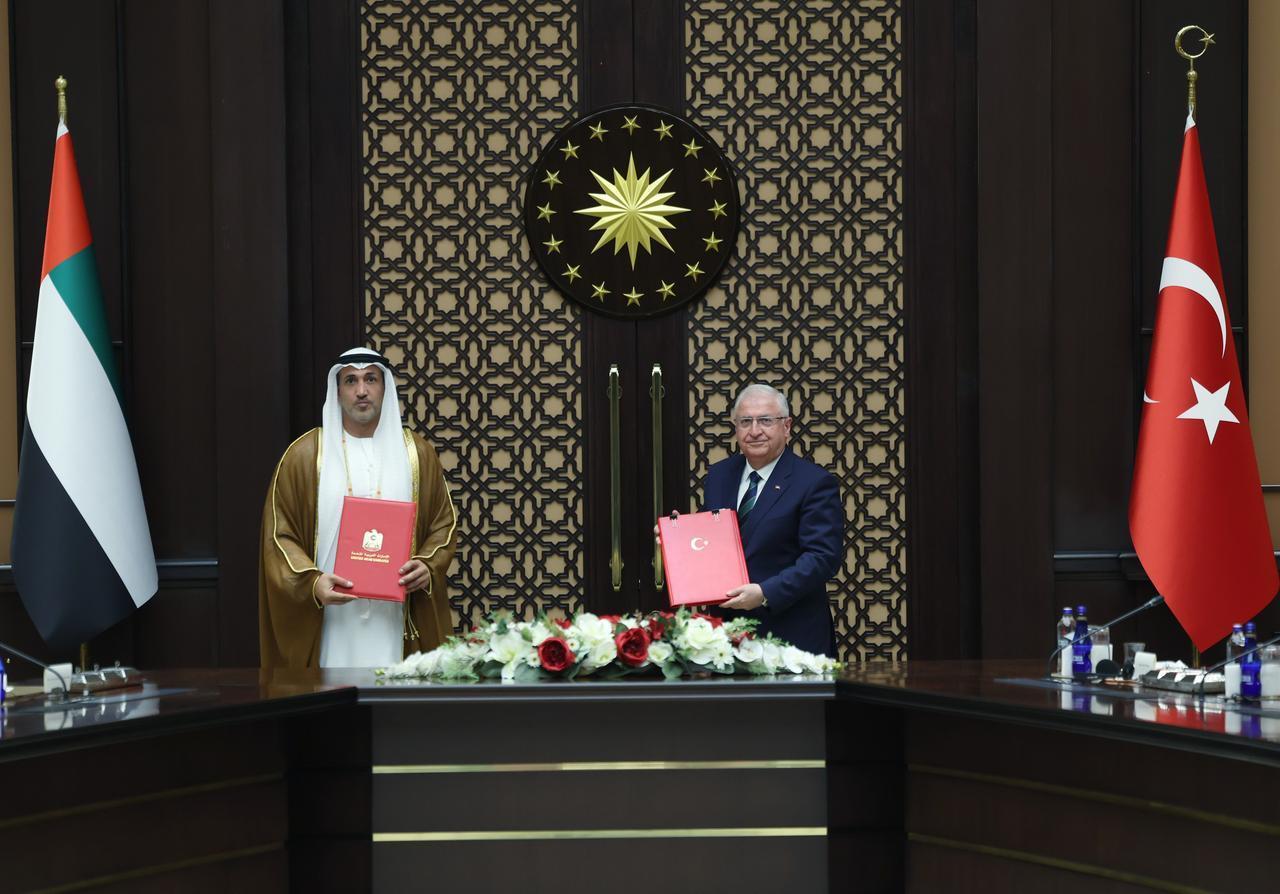
A maturing security relationship has added a new layer of strategic depth to the partnership. No longer merely transactional, defense ties now focus on co-production, technology transfer, and integrated supply chains. Türkiye’s robust defense industry, famed for its UAVs and land and naval platforms, complements the UAE’s capital endowments and ambitions in AI and robotics.
Türkiye actively participated in the IDEX 2025 exhibition in Abu Dhabi, where FNSS signed an MoU with AL TAIF, an EDGE Group company, to modernize infantry vehicles for the UAE army. At the 2025 Dubai Airshow, deals between Türkiye’s ASELSAN and Emirati firms like EDGE and HALCON highlighted this technological convergence. Turkish Aerospace (TA) and CALIDUS signed an agreement to jointly develop the training aircraft HURKUS, to modernize the training capabilities of the UAE Air Force, and to integrate advanced technical upgrades.
This collaboration also fosters a symbiotic relationship where the UAE acquires cutting-edge capabilities and Türkiye benefits from the access to financial resources, clients, and a strategic partner in the Gulf.
A key demonstration is in the UAE’s purchase of 20 Turkish TB-2 Bayraktar UAVs under a potential $2 billion program for up to 120 units, while Türkiye benefits from capital inflows, expanded export volumes, and access to a key Gulf market.
The addition of the UAE’s Desert Sting 16 missiles on the Bayraktar aircraft reflects a practical model of integration between the defense industries, as it enhances the capabilities of air platforms in changing local conditions. Abu Dhabi remains increasingly interested in TA’s KAAN fifth-gen fighter jet and ANKA-3 collaborative combat aircraft for sixth-gen warfare.
The UAE now represents around 18% of Ankara’s total arms sales worldwide. This deepening integration was further institutionalized in July 2025, when the two countries signed the “Mutual Protection Agreement for Classified Information in the field of Defense Industries,” paving the way for closer, highly sensitive joint defense projects and technological cooperation with greater confidence.
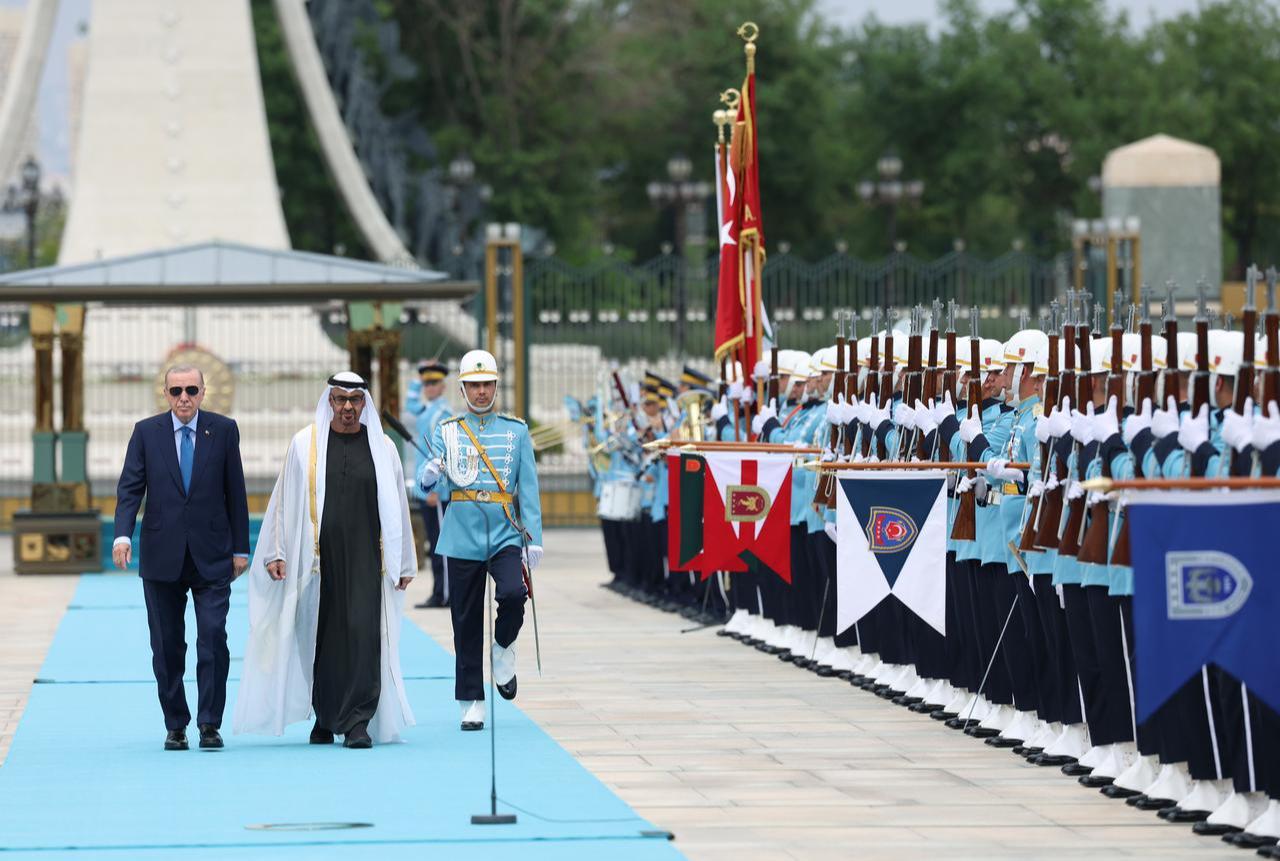
Ultimately, the Türkiye–UAE partnership reflects a broader transformation in the Middle East, where pragmatic coordination increasingly replaces ideological rivalry.
By institutionalizing economic interdependence, advancing defense-industrial integration, and managing geopolitical divergences through compartmentalization, Ankara and Abu Dhabi have crafted a flexible model of cooperation suited to an era of multipolar uncertainty.
This relationship is not defined by formal commitments or alliance structures but by a shared recognition that strategic coordination and pragmatic realignment enhance resilience, expand economic opportunity, and strengthen both their ability to shape regional outcomes.
As global and regional volatility persists, the Türkiye–UAE partnership is likely to remain a key stabilizing axis, demonstrating yet another example of how middle powers can exercise agency, mitigate risks, and contribute to a more balanced and cooperative regional order.
Authors: Dr. Suha Cubukcuoglu is the director of the Türkiye Program and a member of the advisory council at TRENDS Research & Advisory in Abu Dhabi, UAE.
Shamma Al Qutbah, Researcher at Trends Research & Advisory, UAE.


 Set as preferred source
 Set as preferred source


 7 min read