Newsletters


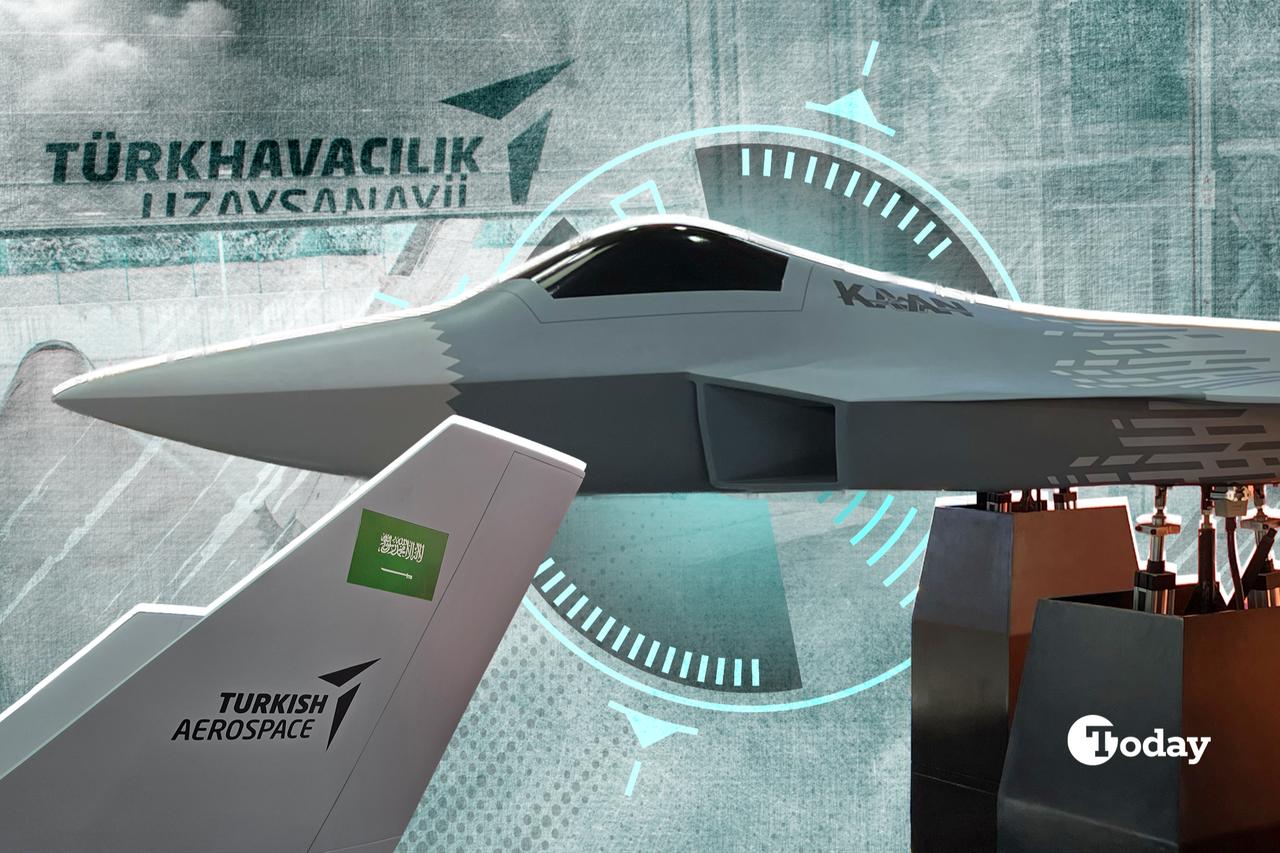


Negotiations between Türkiye and the Kingdom of Saudi Arabia (KSA) over KAAN, Türkiye’s fifth-generation stealth fighter program, have recently gained momentum.
President Recep Tayyip Erdogan’s early-February visit to Riyadh, coupled with the display of a KAAN mock-up adorned with a Saudi flag motif at the World Defense Show 2026, sent clear signals about the course of the talks.
On Türkiye’s side, official statements suggest that negotiations have entered their final stages, with a framework potentially set to be announced later in 2026.
Turkish Aerospace’s general manager, Mehmet Demiroglu, emphasized that the decision ultimately rests with “Saudi friends,” who will choose among various cooperation models. Options discussed include a direct purchase of roughly 20 jets (“a small squadron”), licensed production, and—depending on the order size—the establishment of a final assembly line in the KSA.
The Saudi side’s main motivation seems to be structural: In line with KSA's Vision 2030’s localization push, which is often cited publicly as a 50% localization ambition, Riyadh prefers deals that come with industrial activity onshore, not merely deliveries. That logic already shows up in parallel Turkish–Saudi aviation cooperation: At World Defense Show 2026, Turkish Aerospace signed an MoU with Saudi Arabia’s General Authority for Military Industries (GAMI) for co-production of the T625 Gokbey utility helicopter in the KSA with a local partner, with export potential emphasized.
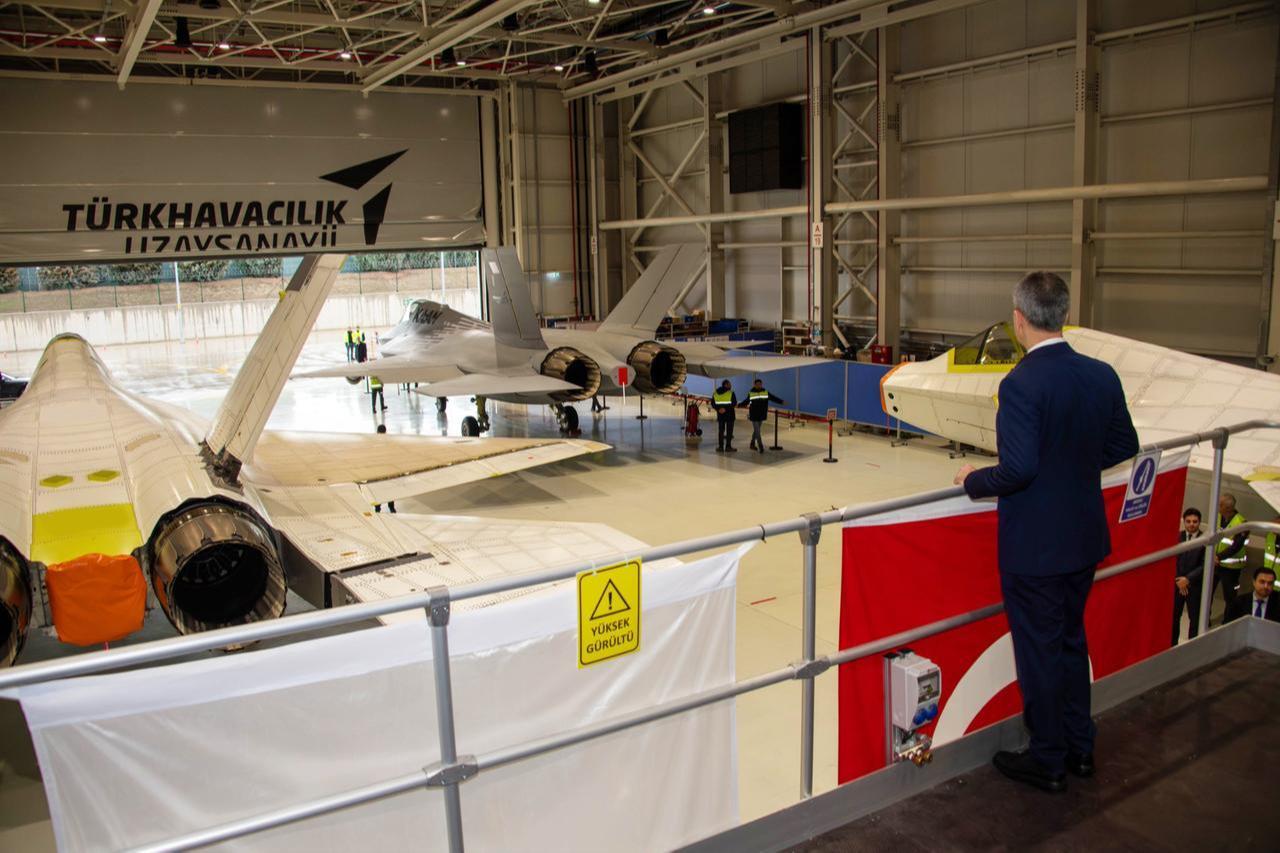
Meanwhile, KAAN is also moving through its own domestic program milestones. Based on the results of two test flights of the P0 prototype, the design has been refined and the true test flight prototype, the P1, is expected to make its maiden flight in the summer of this year. Concurrently, test and validation efforts are underway on both the "digital twin" of the KAAN and the "Iron Bird", a platform and systems-level surrogate of the jet.
Meanwhile, KAAN is advancing through its domestic program milestones. Following two test flights of the P0 prototype, the design has been refined, and the P1 prototype—the true test-flight model—is expected to take its maiden flight this summer.
In addition, during a recent visit to Turkish Aerospace's KAAN facilities, head of Presidency of Defense Industries Haluk Gorgun stated that the contractual process for KAAN deliveries to the Turkish Air Force is being initiated, which is an administrative but meaningful step toward production planning.

The public menu described by Turkish Aerospace on the KAAN program for the KSA is broad, but the feasibility embedded in these models is telling.
First of all, the acquisition of around 20 aircraft, worth a single squadron, is consistent with a conventional procurement pathway. The user may first want to acquire jets as quickly as possible to initiate training and conversion progress. Additionally, such a purchase would signal the trust given to the KAAN program by the KSA.
For licensed or joint production, any activity approaching final assembly or significant localization typically requires a minimum economic scale of around 50 aircraft. Establishing the necessary facilities and infrastructure, along with training and preparing technical and administrative personnel, takes time. This does not even account for the “learning curve” needed for the Saudi aviation industry to align effectively with the Turkish aerospace ecosystem.
Therefore, the most plausible “first phase” is a tiered approach: initially, direct procurement combined with selective local workshare—covering structures, wiring harnesses, maintenance, repair, and overhaul (MRO) tasks, as well as component assembly—followed by deeper involvement, contingent on program maturity and political alignment.
Co-production rhetoric travels faster than the institutions that make co-production real: Export controls, IP governance, design authority, configuration control, and trust. In other words, the process to prepare the fertile ground of a multi-phase long-term industrial cooperation of such a sophisticated platform will require rigorous effort.
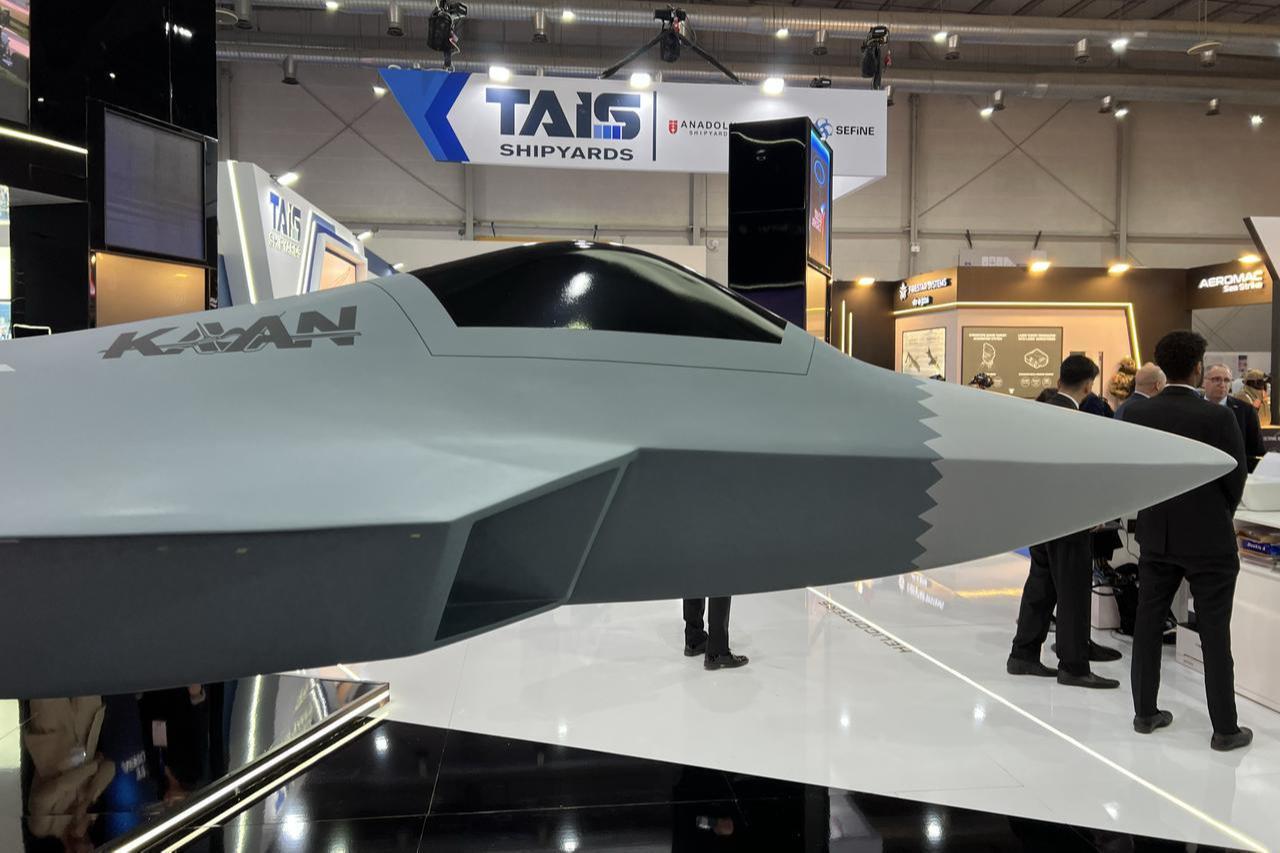
There is another major element that may (or may not) shape KSA's interest in the KAAN: The F-35.
The Saudi Air Force’s interest in the F-35 creates an unavoidable strategic overlay. Riyadh’s F-35 effort has cleared some steps but still faces further approvals, while Washington's position regarding coexistence between sensitive U.S. systems and an alternative fifth-generation jet, the KAAN, will be crucial.
On the other hand, Israel's lobbying in Washington D.C. against Türkiye and possibly KSA should be taken into account. To preserve Qualitative Military Edge, Israel has consistently increased its efforts to prevent Türkiye's access to advanced technology, as seen in Netanyahu's latest remarks on Ankara's possible return to the F-35 program.
KSA operating both F-35 and participating in KAAN is theoretically feasible, though. Mixed fleets are common, but the United States tends to treat fifth-generation tech security as a special category. In practice, both KAAN and the F-35 would require strict compartmentalization and carefully bounded industrial participation. Not impossible, but definitely a matter of balancing on a ledge.
In terms of capability timing and fleet planning, KSA’s fighter roadmap is at an inflection point: The F-15SA program is in progress, while the acquisition of a second batch of 48 Eurofighter Typhoons stalled. Against this backdrop, a KAAN pathway, whether in the form of direct procurement or production partnership, can create an additional lever as Riyadh considers long-term survivability in contested air defense environments.
"Operational independence" is the key word here, and as a regional actor with an expanding sphere of influence, KSA has many common military, as well as strategic interests with Türkiye.
It should also be mentioned that KAAN may provide a hedge against procurement uncertainty. If U.S. approvals slow or restrict the F‑35 sale, KAAN could emerge as a credible alternative—particularly as additional prototypes take flight and the program gains momentum.
Through such a cooperation, Ankara may gain not only capital but also regional strategic depth; Riyadh, on the other hand, gets an additional high-end partner beyond its traditional U.S.–U.K. supply chain, consistent with a broader pattern of diversifying suppliers.
Furthermore, since sophisticated defense systems such as combat jets have a life span of several decades, even a first step toward a long partnership on KAAN signals that both regional powers are planning to and, more importantly, willing to sustain bilateral relations at a strategic level.
Turkish–Saudi cooperation on KAAN has the potential to act as a catalyst in the strategic alignment of two ambitious middle powers. A limited procurement is relatively straightforward; a genuine industrial partnership in a fifth-generation program is not. It demands scale, patience, institutional trust and political resilience against external pressure, particularly where the F-35 is both an opportunity and a constraint.
If Ankara and Riyadh can structure a phased, realistic model, beginning with procurement and selective workshare, and deepening only as the program matures, they may transform KAAN from a symbol of strategic cooperation.
Once the TF35000 indigenous engine is ready, KAAN will become the one and only ITAR-free fifth-generation combat aircraft of the Western hemisphere. This fact alone makes it an ideal solution for countries that seek hedging or source diversification.
Through KAAN, Türkiye may be able to offer next-generation airpower capabilities to regional powers that seek operational independence. The first interests on the KAAN coming from two such countries (Indonesia and KSA) is therefore no surprise.


 Set as preferred source
 Set as preferred source



 7 min read