Newsletters




After almost two days of driving, with barely any food and constant vomiting from exhaustion, fear and motion, my mother carried us across borders that did not yet feel real. I was 5. My twin brothers were 3. A stranger was behind the wheel. My father stayed behind in Sarajevo, a city that would soon be besieged by the Bosnian Serb Army.
That is how I first entered Slovenia, the country that would become my home for the next four years, where I would start school and form my earliest childhood memories.
In the 1990s, Slovenia opened its doors to thousands fleeing war, persecution, and later genocide in Bosnia and Herzegovina. We were among the fortunate ones. My uncle, who had lived there for years, found us a small flat on the outskirts of Ljubljana. My mother began working in a refugee center, helping families arriving with nothing. The centers grew more crowded by the day. We wore the same UNICEF shoes and wrote in small blue notebooks stamped with the same logo. They didn’t bring much joy but we didn't have anything else.
Slovenia’s own path to independence had been markedly different. When it broke away from Yugoslavia in 1991, the conflict was brief and contained. Unlike Bosnia and Herzegovina, it was far more ethnically homogeneous, spared the violent fragmentation and hatred that defined Bosnia’s war, where identity and religion themselves became targets.
That difference allowed Slovenia to build a state without descending into one of the bloodiest conflicts in modern European history. For years, it stood as the most stable country in the Balkans, a quiet success story of transition. In 2004, it joined the European Union as part of its largest enlargement, consolidating its place within the European project.
Three decades later, I find myself watching election results from that same country, listening closely to the rhetoric that shaped them, and recognizing how easily the language of fear returns.
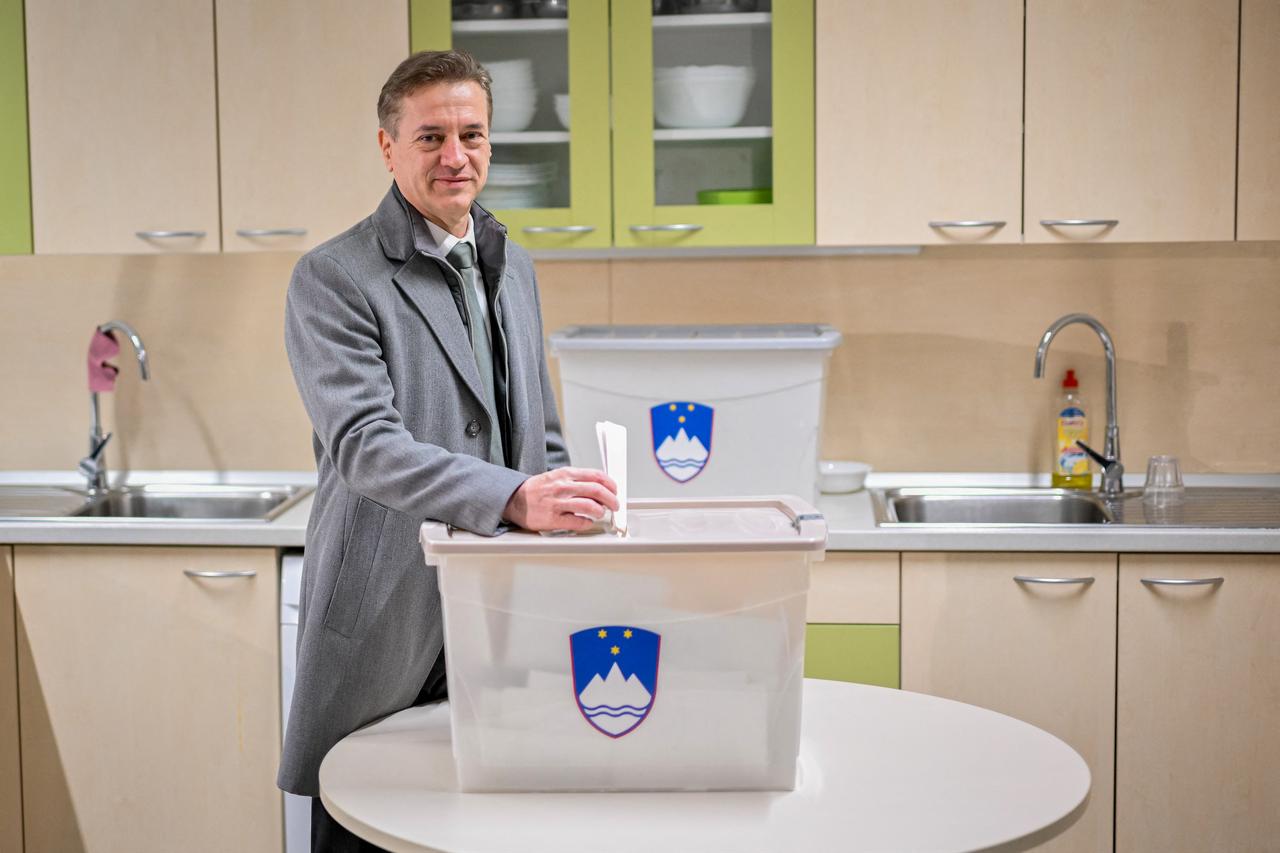

This has been a tight race, almost evenly split, reflecting a deeply polarized society. Early results suggest that Robert Golob’s Freedom Movement (Gibanje Svoboda), a relatively new political force built on an anti-corruption and pro-European platform, will once again play a central role in forming the government.
Yet the campaign has exposed something more troubling. Anti-refugee and anti-Roma rhetoric has resurfaced with familiar intensity. Figures aligned with Janez Jansa’s political camp have revived narratives portraying migrants as security threats, warning of “illegal crossings,” and amplifying fears of demographic and cultural change. Roma communities, long marginalized across the region, have once again been framed through the language of criminality and social burden.
This rhetoric is not new. Jansa, who last held power until 2022, aligned himself with leaders such as Viktor Orban and adopted some of the harshest anti-migrant messaging in Central Europe. Migrants were cast as threats, Muslims as incompatible with European values, and exclusion as a form of protection. It normalized a politics in which fear was not incidental, but instrumental.
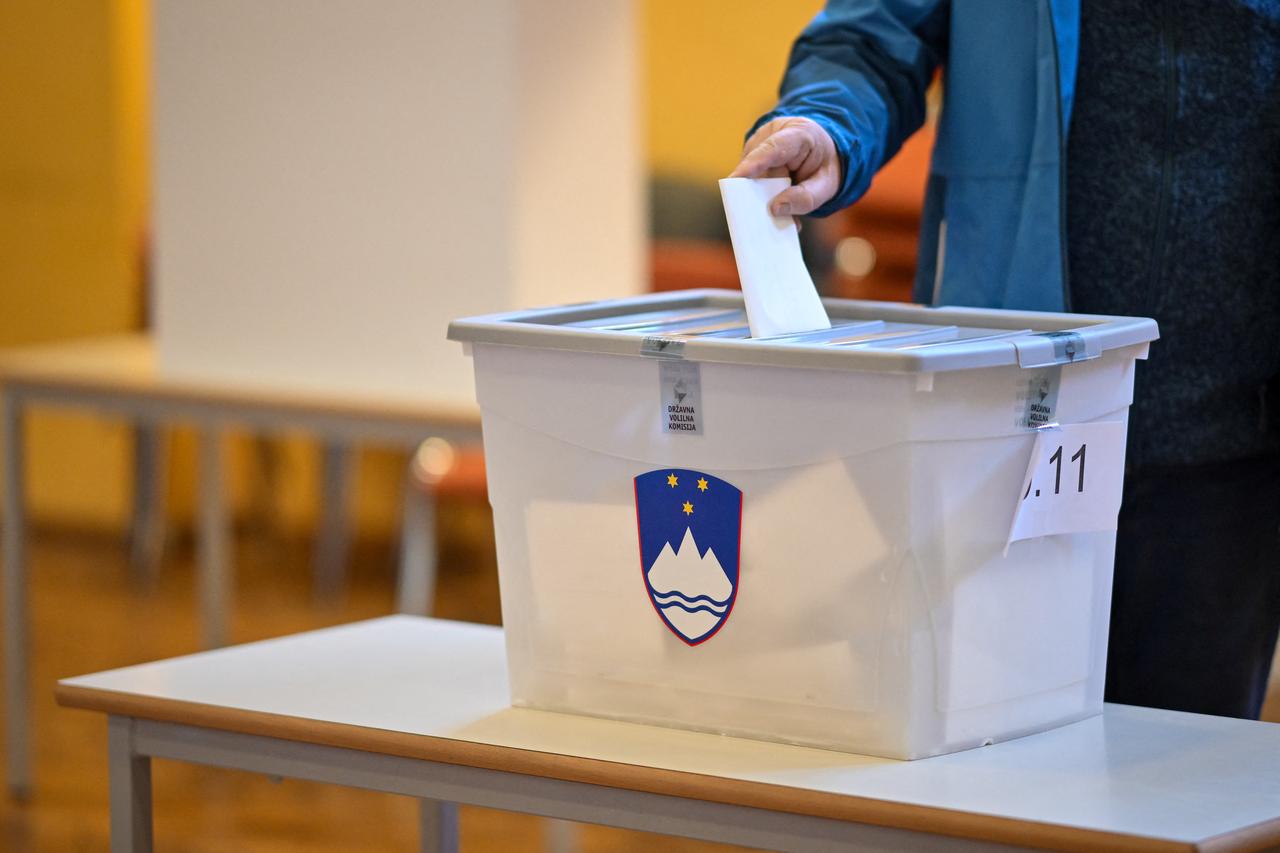
That such language is once again gaining ground in Slovenia, a country that once sheltered people like me and witnessed the consequences of hatred, carries a particular weight.
At the same time, Slovenia under Golob has sought to maintain an independent voice within an increasingly divided Europe, particularly since the war in Gaza. It was among the first countries to move toward recognizing Palestine, positioning itself on an issue that has exposed deep moral and political fault lines across the continent. That choice has not come without pressure.
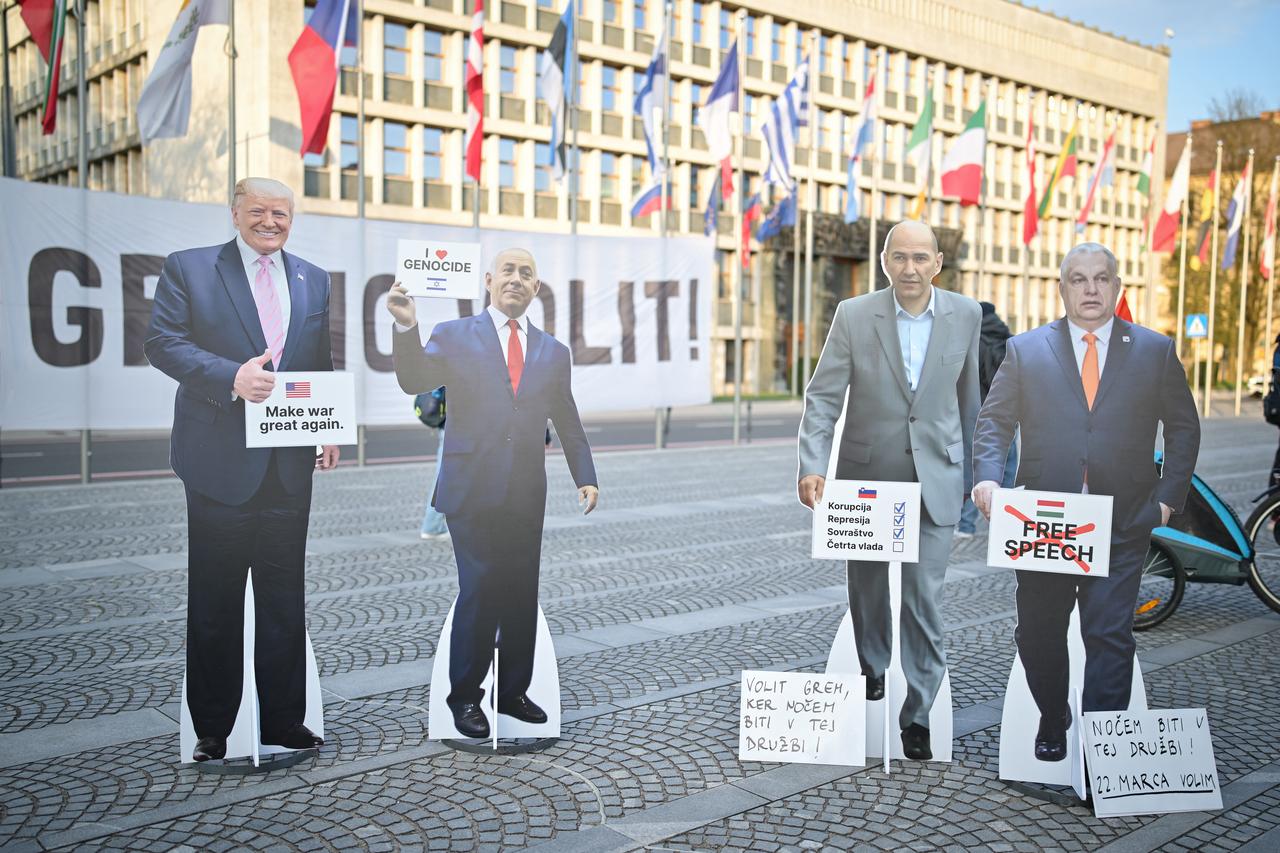
In recent weeks, allegations of foreign interference have added another layer of concern. Media reports described the presence of individuals linked to Black Cube, an Israeli-founded private intelligence firm established by former members of Israeli intelligence services, known for covert operations, undercover investigations and political influence campaigns across multiple countries.
According to these reports, individuals associated with the firm were seen operating in Slovenia ahead of the election, raising fears of efforts to shape narratives, plant stories, and influence public perception in ways that could disadvantage the government. The timing is difficult to ignore. Secret recordings targeting figures connected to the government surfaced just weeks before the vote, echoing tactics seen elsewhere, where covertly obtained material is deployed to erode trust and destabilize political opponents.
Prime Minister Golob responded by raising the issue with the European Commission and warning that Slovenia must not become a testing ground for external political operations. He stated clearly that Slovenia “will not be run by foreign powers.”
Whether every aspect of these allegations is ultimately confirmed matters less than what they represent. This is how modern interference operates, not through overt force, but through narratives, disruption and the strategic amplification of division. It does not create fractures; it exploits those already present.
I fear that forces aligned with Jansa, combined with the involvement of actors linked to firms like Black Cube, could continue to cast a long shadow over Slovenia’s political future. In a moment of global instability, shaped by shifting power dynamics and an increasingly unpredictable international order, small countries are particularly exposed. External actors thrive in such environments, turning domestic political contests into arenas of influence. Slovenia cannot confront this alone. Nor can the wider region.
If the European Union is serious about defending democratic processes, then cases like Slovenia must be treated as warnings, not anomalies. Protecting electoral integrity in smaller member states requires coordinated, credible action at the European level.
Slovenia today stands at a crossroads between its past and its future, between the memory of being a place of refuge and the temptation to retreat into fear.
As someone who once crossed its borders in desperation, I cannot observe this moment from a distance. I fear what these elections have revealed. A divided society that will be difficult to govern and a political landscape shaped by both internal fractures and external pressures will leave little room for stability.
Slovenia may once again choose leaders who speak the language of freedom.
The question now is whether that will be enough to hold that freedom together.


 Set as preferred source
 Set as preferred source


 2 min read
 1 min read