Newsletters


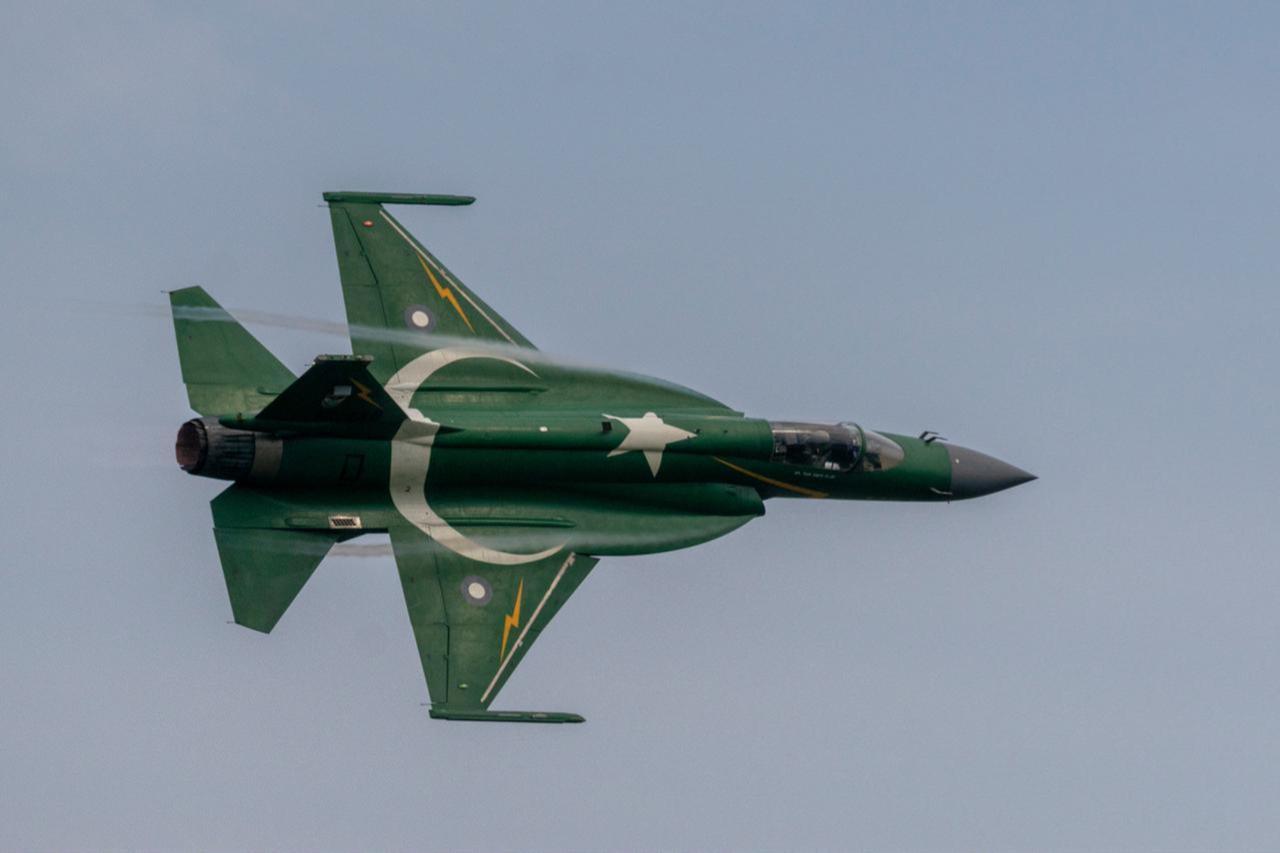


In the early hours of May 7, 2025, the skies along the Pakistan-India border witnessed one of the largest and most intense beyond-visual-range (BVR) air battles in recent history.
Facing an Indian strike package of around 72 fighters, 42 aircraft from the Pakistan Air Force (PAF) executed an ambush that trapped advancing Indian formations, including Dassault Rafale fighters, within a lethal "kill chain," resulting in the downing of six Indian Air Force (IAF) jets and the swift conclusion of hostilities.
“We could have shot down more Rafales than we did, but we held back,” a senior PAF officer later revealed, emphasizing the disciplined restraint exercised to prevent escalation between two nuclear-armed nations.
The long-range BVR missile exchanges took place without either side crossing the other’s border.
In the weeks that followed, elements of the engagement were gradually acknowledged.
India’s Chief of Defence Staff Anil Chauhan accepted in a Bloomberg TV interview that IAF jets had indeed been shot down during the night of May 7. Rejecting claims on the higher side, he maintained that, “what is important is not the jet being downed, but why they were downed,” pointing toward deeper operational issues.
But in any case, the IAF would not have been able to provide post-May 7 images of the jets that were hit with the serial numbers and close-ups of their manufacturers’ serial numbers.
At the core of the PAF’s operational success was its ability to construct and maintain a seamless detect-track-engage "kill chain," compressing decision time while denying the adversary situational awareness.
After a visit to the PAF Headquarters in July 2025, aviation expert Alan Warnes wrote: "From being primarily fighter-centric when I last visited (in 2020), the PAF has now emerged as a full-spectrum, multi-domain force operating seamlessly across space, cyber, artificial intelligence, drone warfare and integrated kinetic air power."
In “Understanding the Rafale Kills”, Warnes detailed how the PAF effectively trapped the IAF pilots in their ‘kill chain’ by controlling three of the IAF satellites, severing downlinks and neutralizing GPS signals, before PAF cyber warriors crippled 96% of India’s social networks and penetrated critical systems, disrupting banks, energy grids, railways, and airlines.
Warnes observed that the PAF’s Space Command has "redefined the battlespace. Using indigenous satellites, it delivers round-the-clock intelligence, surveillance, and reconnaissance (ISR) support. The Global Navigation Satellite System (GNSS), links real-time information to PAF aircraft, bypassing the limitations of the line-of-sight communication.
Through secure SATCOM connectivity, pilots not only gain unmatched situational awareness but also offensive capabilities like electronic attack. It’s a central piece of the PAF’s Link 17 (and the enhanced Skyguard system), fed to the JF-17s, J-10Cs, and Erieye to provide pilots with the situational awareness needed to win a war."
He noted that this meant every cockpit received a ‘Recognized Air Picture’ through encrypted data-links, to ensure that PAF aircrew possessed the tactical clarity needed to dominate the skies.
The foundations of this capability were laid several years beforehand.
Discussing the air battle with Türkiye Today, Air Marshal Asim Suleiman (retd) said that the conceptual shift toward multi-domain warfare began under Air Chief Marshal Zaheer Ahmed Baber Sidhu following his appointment in 2021.
While elements of these capabilities existed “in the fledgling stages” before 2021, a command-level restructuring formalized their role. Dedicated commands were established across cyber, EW [electronic warfare], space, ground-based air defence, manned and unmanned aircraft.
Sidhu utilized indigenous efforts to integrate this network with operational fighters and convert it into a ‘multi-domain warfare’, a unified operational architecture. This proved “pivotal in redefining the force’s operational philosophy and strategic outlook” and the PAF “transitioned toward a truly modern war-fighting model."
“Thinking big and beyond conventional boundaries,” the air chief’s forward-looking vision, “stood validated during the events of May 2025,” Suleiman said.
At the operational level, integration was achieved through the National ISR and Integrated Air Operation Centre, which linked fighters, airborne early warning platforms, and ground-based defense systems through secure data networks, enabling the “detect-track–engage kill chain.”
The result was a “net-specific environment” in which sensors, shooters, and decision-makers, were integrated on a secure communications grid. The air marshal noted that this “net-centricity enabled enhanced vigilance and prompt decision-making.”
Allowing diverse assets on a single cloud talking to each other, this was what led to the PAF’s clear edge early into the war.

If multi-domain integration provided the framework, cyber capabilities delivered the decisive blow.
Revealing exclusive details to Turkiye Today, Air Marshal Suleiman described cyber as “the first bullet to be fired in the air” in modern-day warfare, and highlighted the establishment of an all-encompassing cyber-command designed to operate across the full spectrum of digital conflict.
Meeting the challenges of the fifth dimension of warfare, a highly spectrum-effective cyber force was created along with a technology ecosystem.
Equipped with advanced malware and remote access tools, Pakistani cyber units targeted Indian systems, and coordinated electronic cyber-measures were used to confuse Indian pilots and interfere with decision-making loops during aerial engagements.
Extending beyond the immediate battle-space, the PAF’s cyber forces handled full-spectrum cyber operations that can “effectively target the adversary’s air-gapped networks with ISR and EW capabilities.” This allowed them not only to secure critical domestic infrastructure but also to gain a foothold in adversary cyberspace for future exploitation.
The digital domain proved decisive in transforming the May 7 BVR air battle from a simple fighter-versus-fighter clash into a networked contest of systems and data. In parallel, defensive cyber measures proved equally critical.
Stringent security controls disrupted Indian attempts to exploit the PAF’s internet phishing, while the PAF’s Red Team used defensive skills to unleash cyber-attacks successfully targeting 100 Indian organizations, 4,400 ICT elements in multiple sectors, and 96% of India’s critical systems and social networks got crippled through coordinated cyber operations.
The scale of disruption was significant.
Cyber operations were initiated across key regions, impacting 70% of Indian power grid structures, including in the occupied Jammu and Kashmir region, destabilizing the grid infrastructure even up to Maharashtra, with effects reaching Indian central Punjab.
Not only that, but petroleum infrastructure, government and public sector servers, and national communication networks were affected, and the adversary could not recover these critical services for many days.
According to the air marshal, this is how “a decisive 7-0 destruction ratio was achieved, despite India’s so-called superior IT resources and partnerships.”
Therefore, he said, the modern PAF doctrine is structured around indigenous integration of networks and shooters rather than just aircraft numbers.
Capability is no longer defined solely by its fleet, but its ability to shape the battle-space across both physical and digital fronts, and this was “amply demonstrated” when the PAF defeated a “numerically superior adversary.”
Independent observations reinforced aspects of this transformation.
Reflecting on his visit to the PAF HQ, Alan Warnes remarked that every Indian base could be monitored, every aircraft from the moment of lift-off in Western Command was tracked. "There are Pakistani eyes everywhere. During my time with the PAF, it was obvious there was nothing the PAF didn’t know about the IAF,” he noted.
Complementing his view, Gareth Jennings, air power editor of Janes, the defense intelligence company, stressed on the necessity of electronic warfare in contemporary conflict environments, “Operating in high-threat environments, electronic warfare (EW) is a must-have, it’s not an optional extra anymore if you’re going to survive contested airspace.”
Beyond the tactical aspect, this episode positioned Pakistan as a technologically competent, strategically sharp military actor. Over the last year, Islamabad has shaped deterrence, helped clinch defense partnerships, and enhanced diplomatic leverage.
Public appreciation by figures such as U.S. President Donald Trump referencing the scale of aircraft losses also backed up Pakistan’s narrative on the world stage, adding to its influence.
Crucially, the PAF’s evolution did not remain confined to the kinetic domain.
It was Pakistan’s Cyber-Integrated-Air-Power that became the decisive factor, as it disrupted the adversary networks and degraded their operational coordination, showcasing the growing role of digital warfare.
One year on, the significance of this air battle lies not in the outcome of a single night, but what it revealed about the future of air warfare in the region.


 Set as preferred source
 Set as preferred source




 3 min read