Newsletters




Why are we so quick to applaud officials who resign?
When South Korea's National Museum director stepped down following a controversy involving an artwork from his private collection, many in Türkiye treated the decision as proof of admirable political and institutional ethics.
But the timeline tells a less flattering story, one in which independent investigations, public criticism and parliamentary scrutiny played a far greater role than personal virtue.
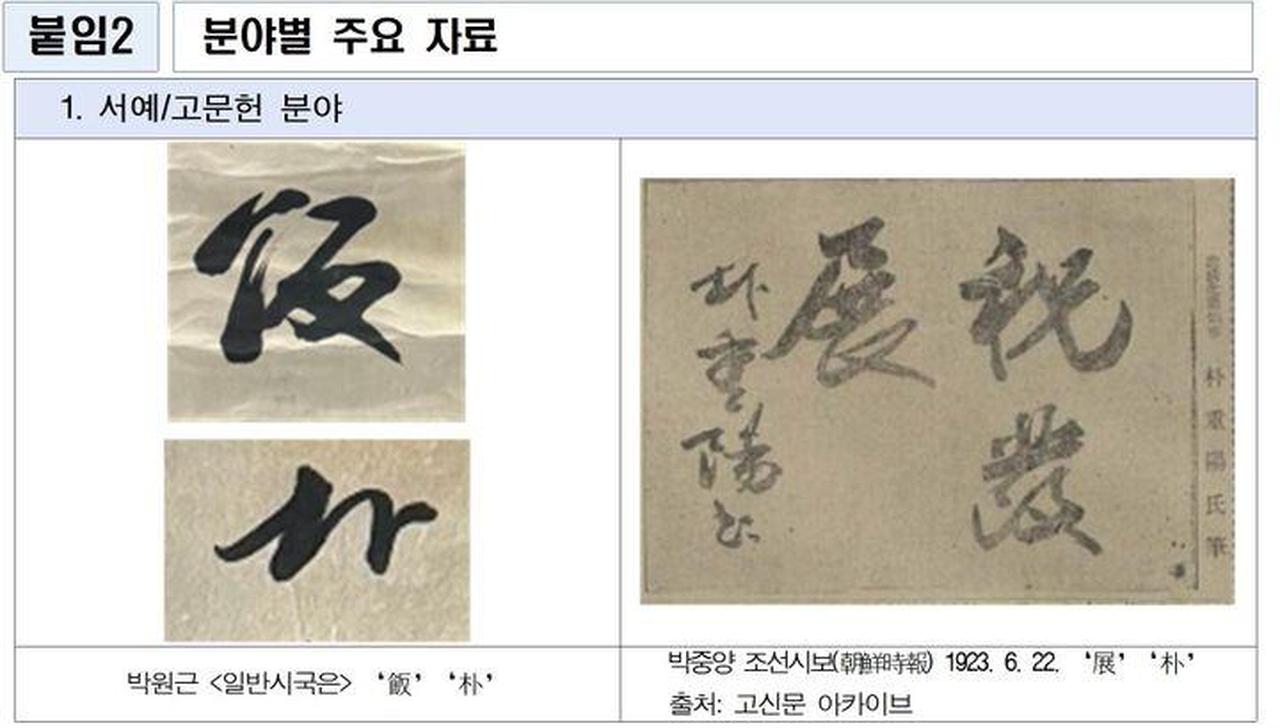
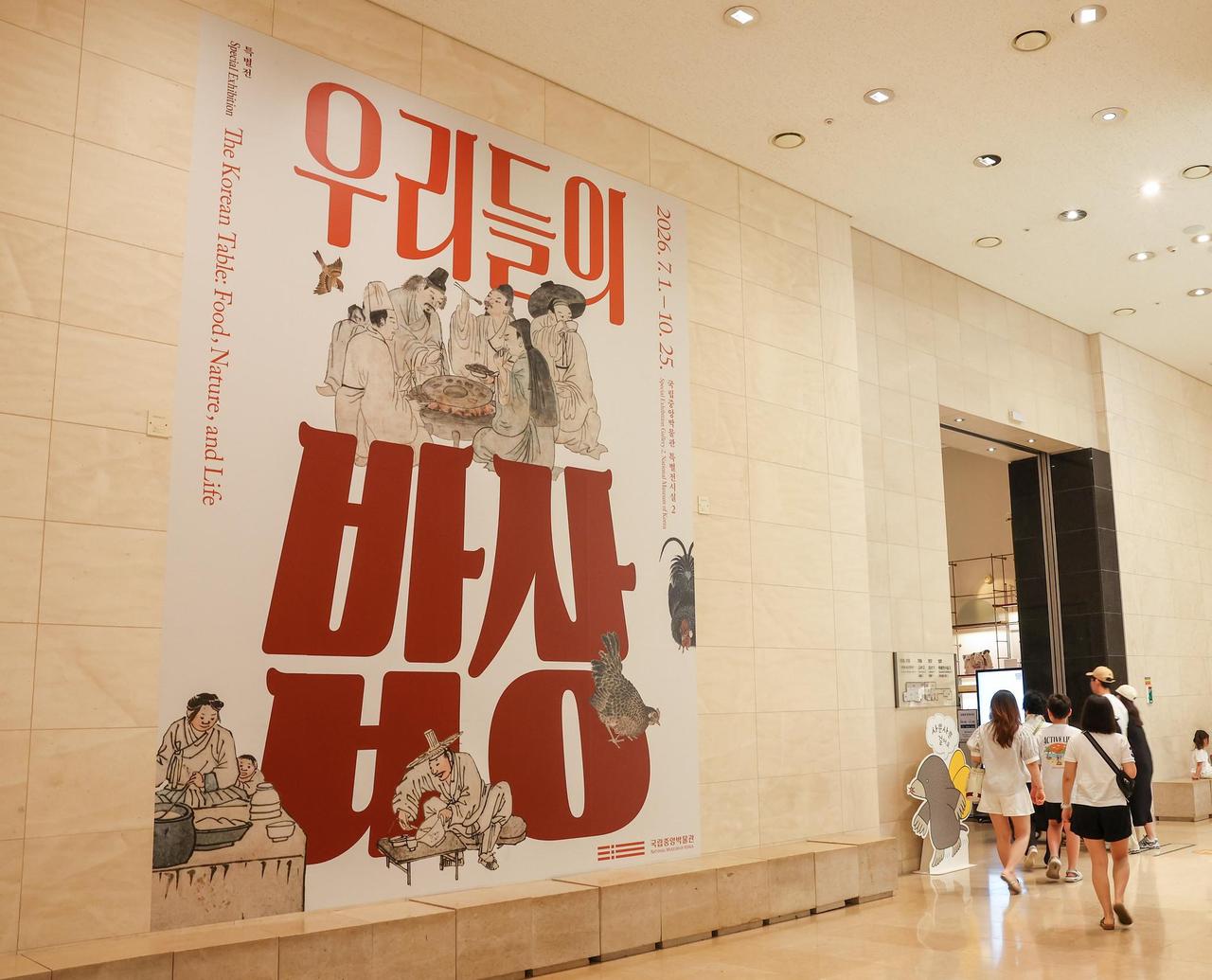
A calligraphy work from the private collection of Yu Hong-jun (You Hong-june), director of the National Museum of Korea and an art historian, was put on display in the museum's special exhibition, "The Korean Table: Food, Nature, and Life," which opened on July 1, 2026. The work, titled "Ilban Sigugeun" ("Even a Bowl of Rice Is a Gift from the Nation"), was presented as having been created by Park Won-geun (1912–1950), an independence activist who had fought against Japanese colonial rule.
However, in August, evidence emerged suggesting that the work had actually been written by Park Jung-yang (1874–1959), a collaborator with the Japanese colonial administration. An important detail complicated the attribution further: Park Jung-yang had also used the name Park Won-geun in the past.
The museum removed the work from the exhibition on August 10 and issued a public apology on August 12. It subsequently launched an investigation involving seven independent experts specializing in calligraphy, modern history, historical documents, and conservation science.
In an official statement released on Sept. 7, the museum confirmed that the work belonged not to the independence activist but to Park Jung-yang, who had collaborated with Japanese colonial authorities.
This was far more than a simple art historical error. Japan's colonial rule over Korea between 1910 and 1945 remains an extraordinarily sensitive chapter in the country's collective historical memory. Confusing someone who took part in the struggle for independence with someone who collaborated with the colonial administration cannot, therefore, be dismissed as a purely academic mistake.

What makes the case particularly troubling is that the misattributed work belonged to the museum director himself.
Yu Hong-jun had purchased it at an online auction in 2019 for 50,000 South Korean won. As a calligraphy expert, he had personally concluded that the work belonged to the independence activist. He had also proposed displaying the piece from his own collection at the national museum.
Yet the fact that the director owned the work was not disclosed to the public in the museum's initial statements about the misattribution. That information came to light only after the controversy escalated and reached parliament.
Several serious, interconnected problems emerge here: the director of a public institution arranging for his own artwork to be displayed at that institution, insufficient transparency surrounding the ownership of the work, and the failure of scholarly verification procedures to prevent inaccurate information from being presented to the public.
Moreover, exhibiting a work at a national museum does more than bring it visibility. It also lends the work institutional prestige, which can potentially increase its market value.
There is no evidence that the director intended to benefit financially from this arrangement. Nevertheless, the intersection of private ownership and public authority in such circumstances creates an inherent risk of a conflict of interest.
So what did the museum director do when all of this came to light?
He did not resign immediately.
The controversy, which began in August, took on a new dimension following the expert findings in September. Journalistic investigations and public criticism continued. The director and museum administration issued various statements apologizing for the incident, while questions surrounding his personal collection continued to mount.
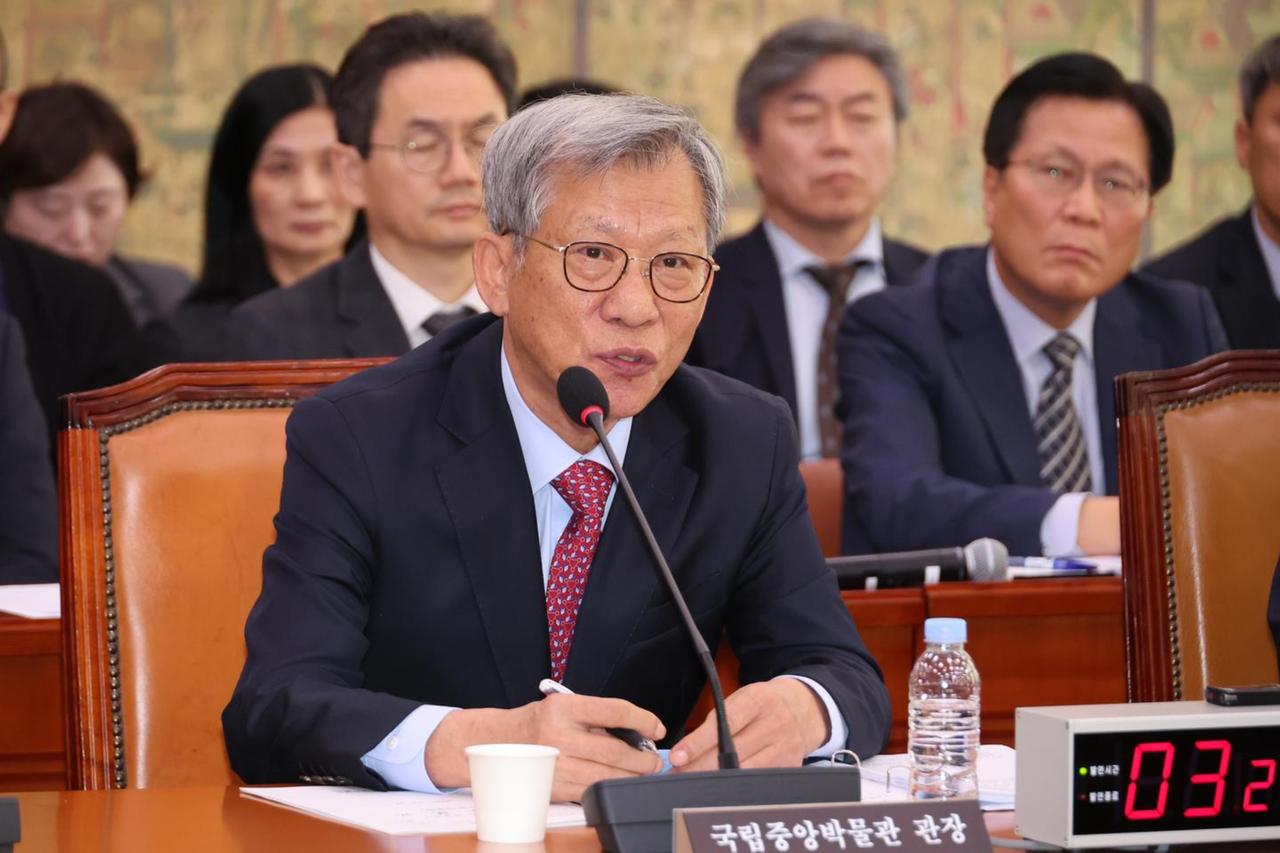
On October 19, 2026, the matter reached an oversight hearing of South Korea's National Assembly Committee on Culture, Sports and Tourism.
Yu Hong-jun appeared before lawmakers and twice stood up to bow in apology. He described what had happened as a serious mistake and an act of negligence, acknowledging that his actions had damaged public trust in the museum.
But his apologies were not considered sufficient.
Calls for his resignation continued to come from cultural circles and opposition politicians. Furthermore, when asked during the parliamentary hearing whether he intended to step down, the director did not give a clear answer.
Two days later, on October 21, he announced his resignation, explaining that he had concluded his departure was necessary for the museum to restore its damaged reputation. South Korean President Lee Jae-myung accepted his resignation the same day.
This, then, is not the story of an administrator who recognized his mistake and immediately acted upon a sense of personal moral responsibility.
Instead, it is the story of a serious institutional and ethical problem becoming increasingly visible, while the director's room to defend his position gradually narrowed under mounting public scrutiny and institutional oversight.
This distinction matters because interpreting resignation solely as an expression of an individual's moral maturity risks overlooking the mechanisms that make stepping down possible and, at times, unavoidable.
In the South Korean case, the most important issue is not that the museum director eventually resigned. It is that the incident did not remain hidden, the inaccurate attribution was challenged, independent experts examined the evidence, journalists investigated the matter, and the controversy could be openly debated.
Of course, none of this suggests that the system's oversight mechanisms worked perfectly at every stage.
The lack of adequate scrutiny that initially allowed the work to be exhibited was itself one of the central problems. What proved decisive, however, was that the mistake was not covered up once it came to light and that the institution's responsibility could be called into question.
It is precisely at this point that resignation takes on a different meaning.
In systems where accountability mechanisms function effectively, an official's departure cannot always be understood as a personal ethical decision.
Wrongdoing can be uncovered, decisions can be challenged, potential conflicts of interest can be investigated, and officials can be compelled to answer publicly for their actions.
Under such circumstances, resignation may have less to do with an individual's virtue than with the disappearance of the conditions that once made remaining in office possible.
The resignation of the National Museum of Korea's director should be understood in this context.
Rather than a story of personal sacrifice worthy of celebration, this case illustrates a process of public oversight that gradually left an official with fewer ways to defend his position.
We are, therefore, looking in the wrong direction.
Instead of assuming that an official resigns because of personal virtue, we should examine the conditions that prevent that official from concealing wrongdoing, evading responsibility, and ultimately remaining in office.
Because in a system where accountability works, resignation is not nearly as personal a choice as we might think.
Sometimes, it is the last option the system leaves an individual.


 Set as preferred source
 Set as preferred source


 1 min read


 1 min read