Newsletters


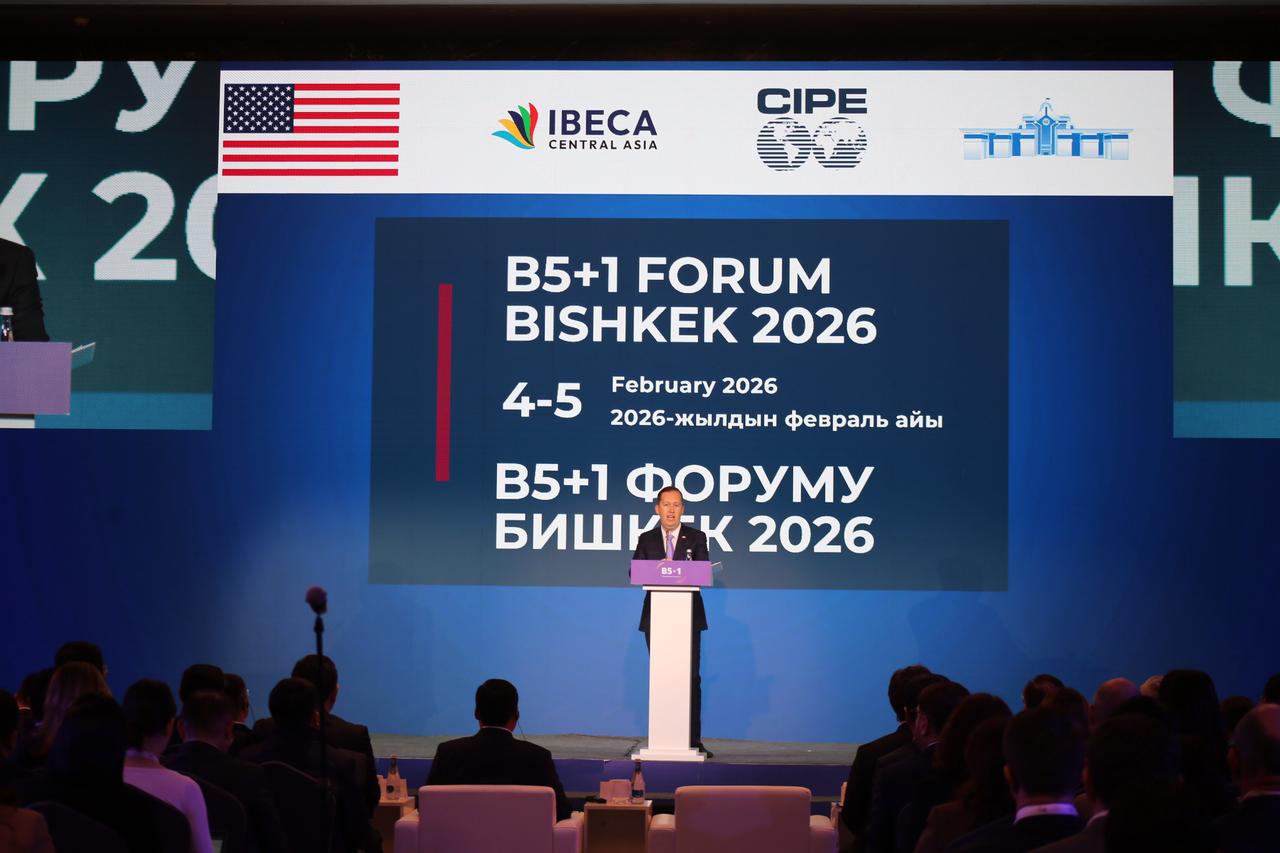


The recent United States-Central Asia Business Forum (B5+1) held in Bishkek demonstrates that Washington's interest in Central Asia should be viewed not as a temporary diplomatic gesture, but as part of a broader geo-economic repositioning strategy.
The forum's focus on resilient supply chains, private sector-led regional integration and connectivity indicates that the U.S. approach to the region has moved beyond traditional security-centered interpretations. In this context, Central Asia is positioned as an intermediate hub that needs to be redefined within global production and trade networks.
The B5+1 format represents a hybrid structure that complements intergovernmental diplomatic contacts with a private sector and investment agenda. The forum helps Central Asian countries diversify their relations while helping the U.S. build economic networks outside of China and Russia. The strong participation, particularly from Uzbekistan, Kyrgyzstan and Turkmenistan, demonstrates that the countries in the region see themselves as actors shaping this new framework.
In my opinion, the B5+1 process represents a threshold that reopens the debate on Central Asia's place in the global system. However, the success of this process is directly linked to the extent to which the vision expressed at the forums can be translated into concrete projects, lasting investments and regional coordination mechanisms.
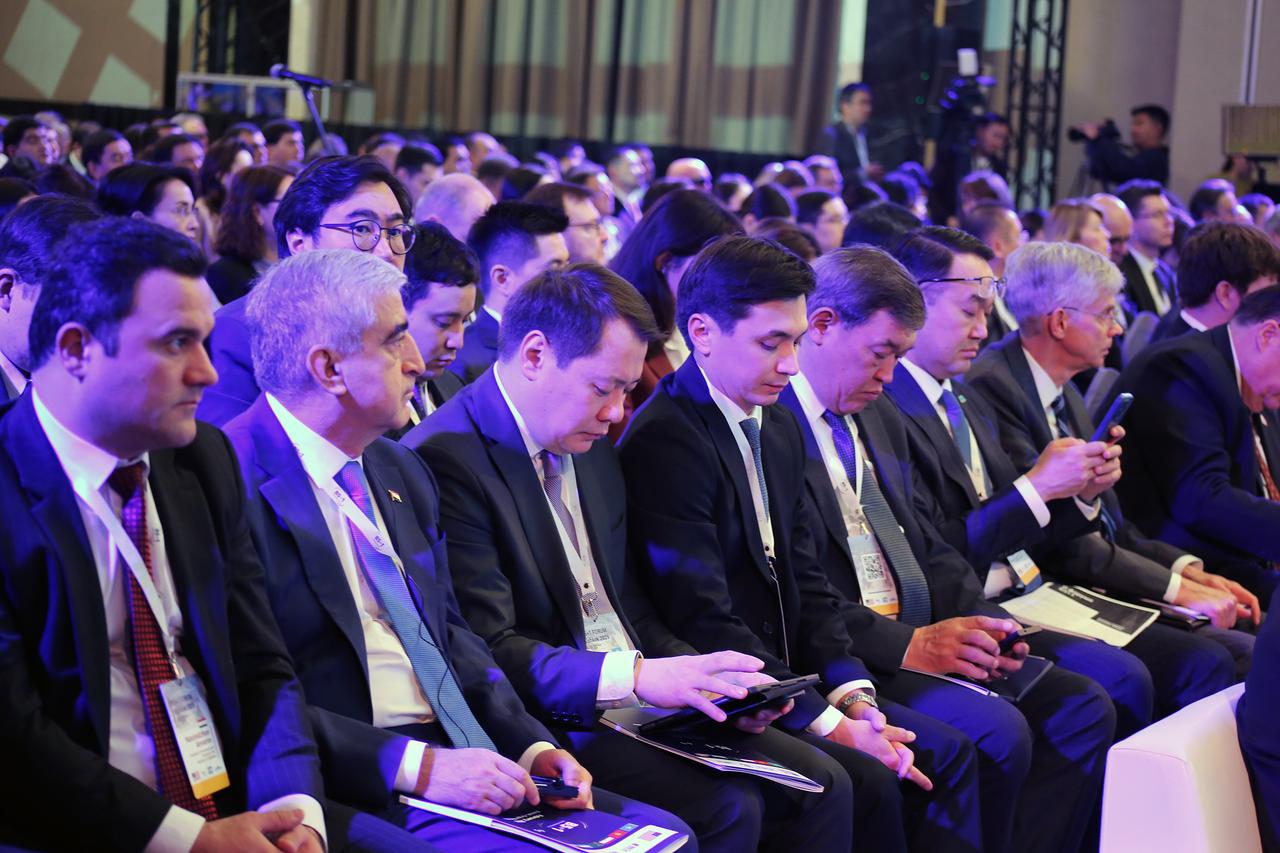

The emphasis on “resilient supply chains,” which forms the conceptual backbone of the U.S.-Central Asia Business Forum, is a direct reflection of the disruptions experienced in the global economy in recent years. Supply shocks in the post-pandemic period, energy and logistics crises exacerbated by the Russia-Ukraine war, and the geo-economic division created by U.S.-China competition have made the geographical diversification of supply chains a strategic priority. In this context, Central Asia is emerging as an alternative and complementary region at a time when production and logistics networks are being redistributed.
Discussions at the forum showed that the U.S. does not view Central Asia as merely a source of raw materials; rather, it aims to integrate the region into global supply chains through processed goods, intermediate goods and regional logistics hubs.
The emphasis placed on Uzbekistan's industrial and investment policies in particular reveals that Washington is attempting to develop a language consistent with the economic transformation agendas of the countries in the region.
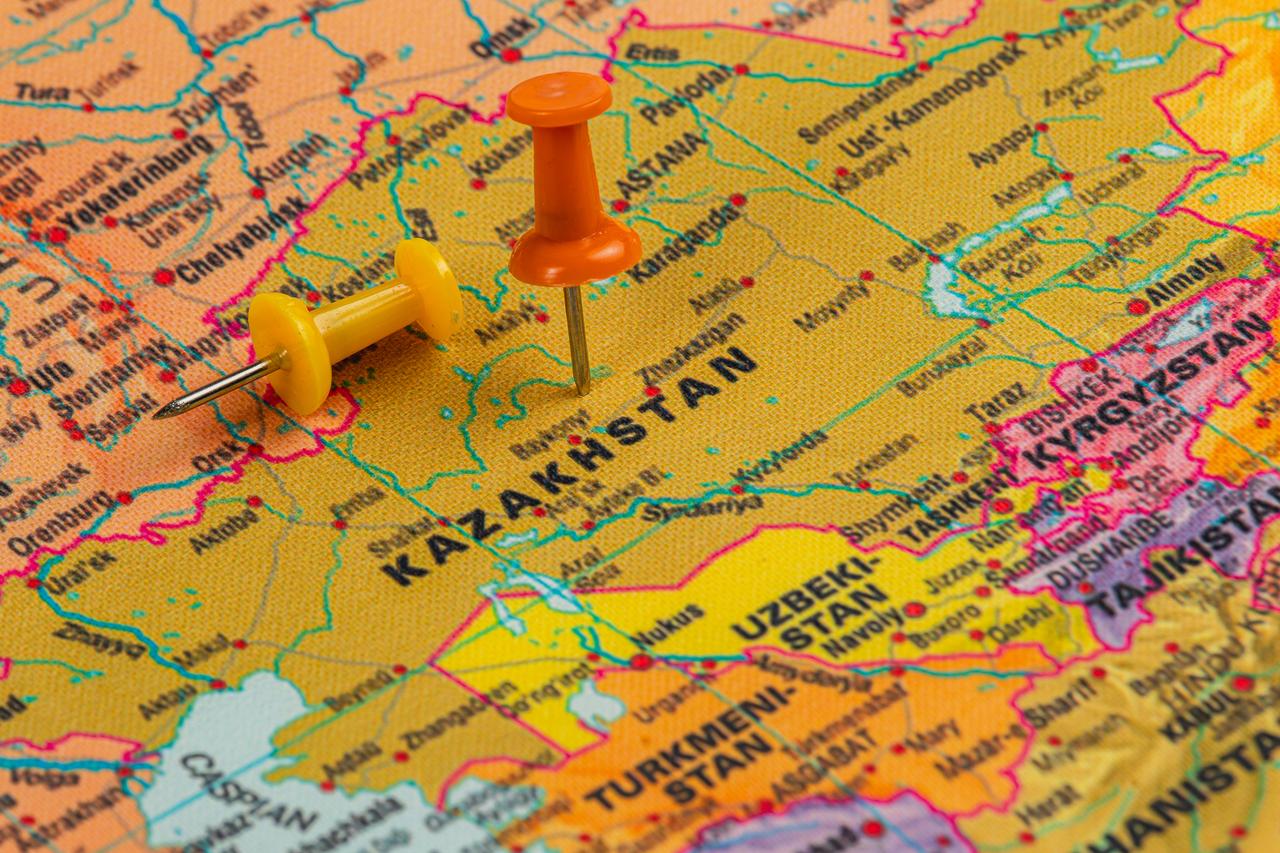
However, the practical implementation of the resilient supply chains narrative depends on steps taken in areas such as infrastructure investments, financing mechanisms and regulatory compliance. Differences in the logistics capacity, customs processes, legal frameworks and investment environments of Central Asian countries persist as structural barriers to regional integration. In this context, it is critically important that the B5+1 process be designed in a way that goes beyond contacts between the U.S. and individual countries and promotes economic coordination within Central Asia.
The vision presented by the U.S. in this context offers a “diversification opportunity” for countries in the region. However, this opportunity will only be sustainable to the extent that it complements Central Asia's existing economic partnerships.
The forum’s most strategic impact lies in the competition over connectivity and transport routes. Being landlocked has historically limited Central Asia's transit options, leaving the region's trade, energy and logistics policies vulnerable.
Today, this dependency deepens economic costs while also making the impact of geopolitical tensions on trade and supply chains more fragile. The emphasis on logistics, infrastructure and transport at the Forum should be seen as part of a more systematic search for ways to reduce this fragility.
In this context, the Middle Corridor, even if not directly named, constitutes a decisive reference area in the geo-economic background of the forum. Routes extending to European markets via the Caspian transit lines and South Caucasus and Türkiye play a strategic role in diversifying Central Asia's relationship with global trade networks.
In particular, it opens up new manoeuvring space for Central Asian countries, reducing their transit dependency and increasing their bargaining power. The U.S. interest in these routes points to a more flexible geo-economic framework that prioritises offering alternative connectivity opportunities to countries in the region, rather than seeking direct competition with China's Belt and Road Initiative.

The statements of participating countries reveal that Central Asian countries are increasingly questioning their role as passive transit areas in connectivity projects. The emphasis on logistics chains not being limited to physical infrastructure, but encompassing elements such as financing, governance, regulatory compliance and value-added production, indicates that perceptions of the region's geo-economic role are undergoing a transformation. This approach reflects Central Asia's claim to be an influential actor in shaping logistics and trade networks.
However, the connectivity vision yielding concrete results is directly linked to the depth of regional cooperation. The economic, technical and institutional support offered by the U.S. can provide a facilitating framework for this process; however, the decisive factor for lasting and sustainable transformation is the capacity of Central Asian countries to coordinate, standardise and act collectively among themselves. Otherwise, connectivity projects risk producing a fragmented and fragile structure between competing routes, rather than serving as tools that strengthen regional integration.
The fundamental feature that distinguishes the B5+1 format from other initiatives is that it is designed with an approach that places the private sector directly at the heart of the structure. The business-centred structure of the forum aims to strengthen Central Asia's ties with the global economy on a foundation that goes beyond intergovernmental agreements and political declarations, deepening through companies, investment funds and commercial networks. This demonstrates that economic tools are becoming increasingly systematic and institutionalised in the U.S. strategy for the region.
The energy, mining, agriculture and logistics sectors stand out as the pillars of U.S.-Central Asia cooperation. Turkmenistan's hydrocarbon resources, Uzbekistan's reform agenda to transform its industrial infrastructure and Kyrgyzstan's position on regional logistics routes are among the areas frequently highlighted in this context.
Projects developed in these sectors have the potential to transform the way regional countries integrate into global value chains and shift towards higher value-added production models, creating an impact that goes beyond short-term economic returns.
The prominence of the private sector to this extent also reveals that investment diplomacy has taken on a new function in the Central Asian context. Companies and investors have become elements that indirectly carry out regional interaction and relationship-building processes, in addition to being actors engaged in economic activity. This situation enables the consolidation of Washington's economic presence in the region on a foundation that is not limited to financial investments but is strengthened through corporate networks and long-term commercial relations. Thus, economic engagement takes on a structure that is more enduring than temporary projects.
Finally, this approach, shaped by the private sector, presents both opportunities and risks that must be carefully managed for Central Asian countries. Increased opportunities for investment and technology transfer offer significant gains that could strengthen production capacity and competitiveness.
However, this process must not produce a one-sided economic dependency relationship; it is directly linked to the effectiveness of local regulatory frameworks, negotiation capacity, and institutional oversight mechanisms. Otherwise, investment diplomacy risks becoming a platform for reproducing asymmetric economic relations rather than a tool supporting regional development.


 Set as preferred source
 Set as preferred source


 2 min read
 1 min read