Newsletters


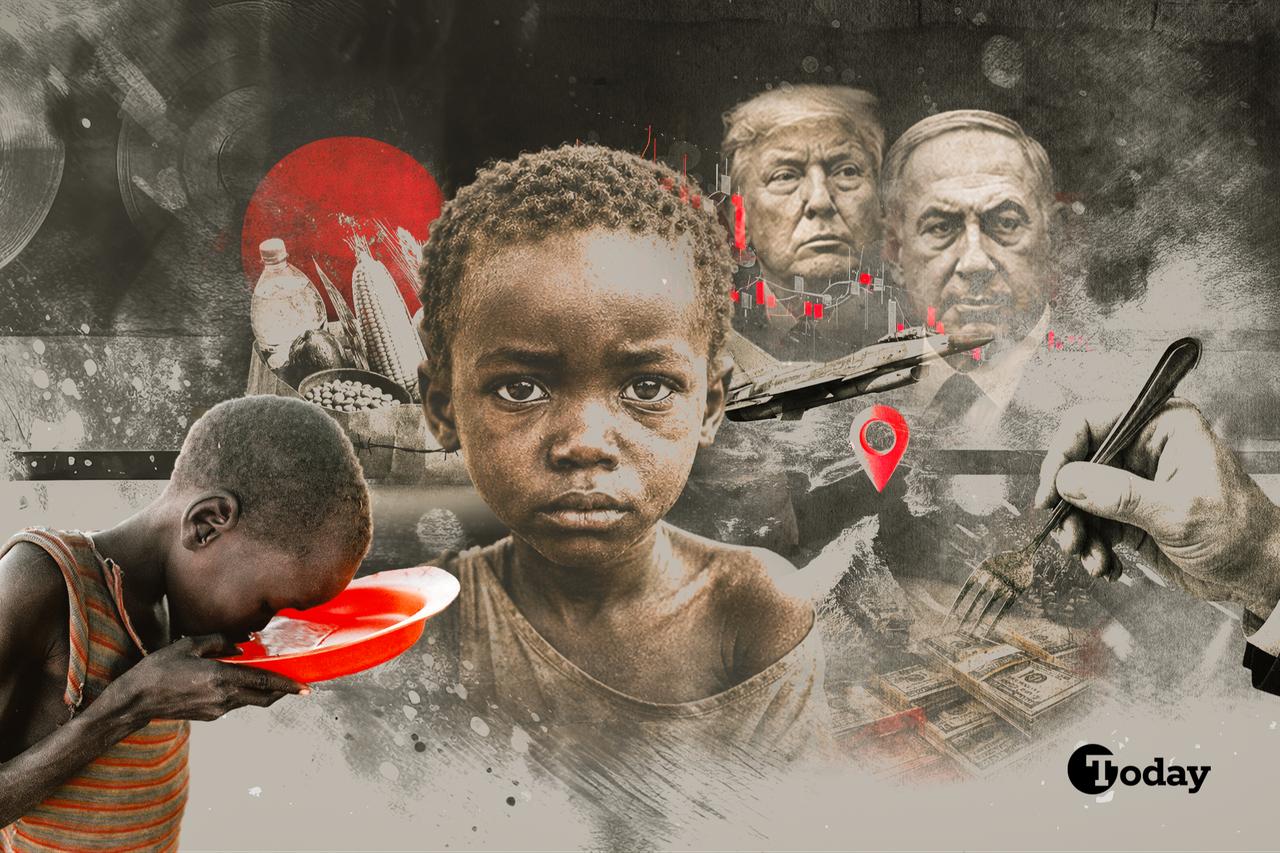


The modern world can deliver a package across an ocean overnight, vaporize a city from several thousand miles away, and alert a billion people to Taylor Swift’s new shoes before breakfast.
Yet it stands paralyzed by the modest challenge of feeding hungry children.
The latest crisis arrives courtesy of the Trump-Netanyahu war against the Iranian mullatory, slamming shut the Strait of Hormuz—the narrow maritime bottleneck through which so much of the global economy squeezes itself each day.
The consequences were entirely predictable, which is why they came as such a surprise.
Fuel prices surged. Food prices followed. Fertilizer shipments stalled. Supply chains snarled. Somewhere in the comfortable capitals of the developed world, economists updated spreadsheets. Somewhere else, millions of poor families began skipping meals.
Carl Skau, acting executive director of the World Food Program (WFP), describes the situation with a bluntness rarely encountered in public life. “In many places, we’re already taking from the hungry to give to the starving.”
Lordy! Frame and hang that sentence in every parliament, congress, and presidential palace on Earth. It’s the perfect Hallmark greeting card catchphrase in celebration of contemporary humanitarianism: not abundance distributed imperfectly, but scarcity rationed desperately.
The WFP was already sinking under enormous burdens before a single missile flew over Iran. Sudan alone has roughly 20 million food-insecure people. Ukraine remains a dangerous operating environment, with repeated attacks affecting aid infrastructure. Lebanon struggles with displacement. Afghanistan presents a catalog of human misery so extensive that aid workers are now forced to conduct moral triage with the precision of battlefield surgeons.
One hesitates to call this policymaking. It resembles something closer to an auction of human suffering.
According to Skau, when food prices rise 20 or 30% in the poorest countries, people do not simply spend more. They eat less. The affluent discuss inflation as an annoyance. The poor experience it like a militarily enforced Weight Watchers plan.
This is one of the more remarkable facts about modern civilization: every economic abstraction eventually becomes a physical reality for somebody else.
A spike in oil prices in one part of the world becomes an empty dinner plate in another. A disrupted fertilizer shipment becomes a failed harvest months later. A strategic military calculation made in a government office ends as malnutrition in a village whose inhabitants could not locate the relevant country on a map.
The WFP warned earlier this year that 45 million additional people could face acute hunger if oil prices remained elevated. Those consequences are no longer theoretical. Reports from places such as Somalia, Afghanistan, and Sri Lanka suggest the damage is already arriving.
Surely the most astonishing detail is not the crisis itself. Humanity has always displayed a talent for manufacturing catastrophes. The remarkable feature is the timing.
Historically, wars and disasters often produced surges of charitable giving. Governments discovered hidden reserves of generosity. Political leaders made speeches about common humanity. Citizens opened wallets. Such rituals did not solve every problem, but they at least acknowledged one.
This time, the emergency coincides with a collapse in funding.
The WFP experienced a 40% drop in funding last year. The U.S. remains its largest donor, but American contributions have fallen sharply from recent levels. Other wealthy nations, meanwhile, appear to be treating global hunger with the urgency of pothole repair.
A decade of Donald Trump has triggered a curious trend among the affluent and prosperous. They’re increasingly convinced that unpleasant realities can be ignored into submission. Climate problems? Postponed. Refugee crises? Wished away. Hunger? Let’s talk about it over lunch at Mar-a-Lago.
Skau makes the practical argument that a hungry world is an unstable world. He is correct. Chronic hunger fuels migration, conflict, extremism and political upheaval. It transforms desperation into a social force.
But lead us not into the temptation of bleeding-heart sociology, because there’s an embarrassingly palpable apolitical argument in hand.
Children should not go to bed hungry.
That proposition requires neither geopolitical expertise nor economic theory. It does not depend upon ideology. It survives every election and every change of government. It remains true whether oil sells for $50 a barrel or $150.
Yet the modern world, drunk on its own machinery, seems increasingly unwilling to meet even that modest standard. We have mountains of wealth, industrial power beyond the dreams of emperors, satellites peering into every crack of the planet, algorithms that can price risk to the sixth decimal place, and machines performing feats once reserved for prophets and carnival mystics.
And yet, when a pack of armed zealots and geopolitical gamblers in Jerusalem, Washington, and Tehran decide to squeeze a strategic chokepoint, the high priests of the global economy stand around blinking in the smoke, apparently powerless to stop millions of vulnerable people from being steamrolled toward hunger.
Which raises the same ugly question that haunted Polish poet Stanisław Jerzy Lec decades ago: is it really progress if a cannibal learns to use a fork?


 Set as preferred source
 Set as preferred source


 7 min read