Newsletters


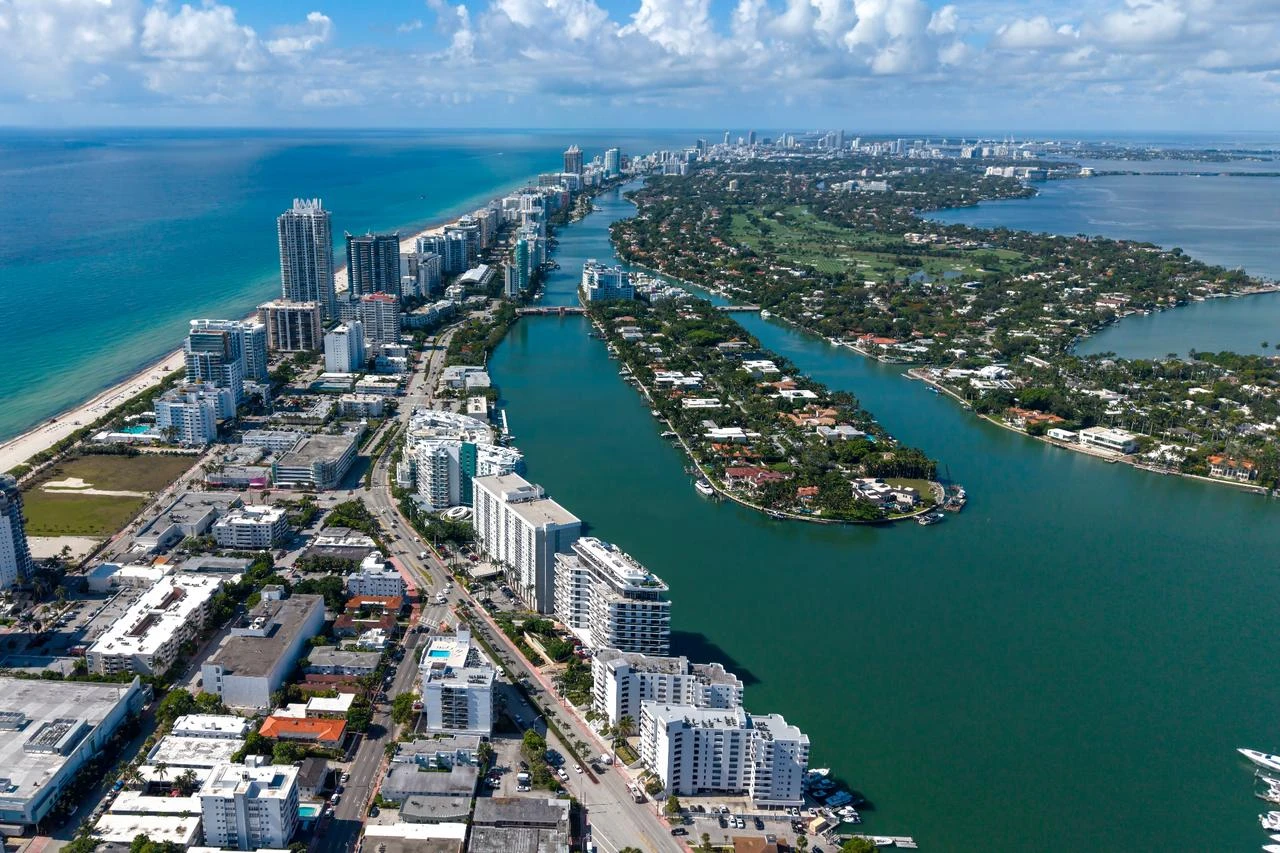


The first thing that caught my eye was the superyacht—a floating tax bracket complete with a helipad cruising across Biscayne Bay. At the same time, a few miles away, pensioners at a supermarket counted coins with the concentration of a bomb-disposal unit deciding which wire not to cut.
History has been remarkably consistent: capitalism is the only economic system that has demonstrated an ability to create widespread prosperity. Its genius lies in producing wealth. Its mediocrity, in deciding what that wealth is ultimately for.
That's modern microeconomics in one panoramic snapshot: one man sipping cocktails aboard a yacht while another wonders whether bread and toothpaste can peacefully coexist in the same week's budget.
If that isn't a fiscal indicator, perhaps we've been measuring the wrong things.
Over the past month, my travels have led to off-the-record conversations with some of the world's wealthiest. Each meeting felt like an expedition into one of the last unexplored corners of the human landscape, where an elusive tribe emerged from behind its own myths.
Most were thoughtful; a few seemed faintly embarrassed by the scale of their success. Nearly all insisted with straight faces that money solves far fewer problems than outsiders believe.
Statistics explain where the money is. Field notes explain what the money does to the people who have it—and, by extension, to the society organized around acquiring it. They tell us much less about why societies hold together—or come apart.
Yet the deeper I ventured, the clearer one conclusion became: somewhere along the way, prosperity stopped being the means and quietly became the destination.
Markets—magnificent at allocating capital—were gradually promoted to answering questions they were never designed to answer. Quarterly earnings began replacing character references. Somewhere between the balance sheet and the earnings call, civilization misplaced the page marked judgment.
That is not capitalism's fault.
Expecting markets to supply moral direction makes about as much sense as expecting a GPS to explain why you're making the journey. Markets allocate resources. They do not teach courage, restraint, generosity, or honesty.
Markets make excellent servants and terrible clergy. That’s where tragedy begins.
Capitalism has produced astonishing innovation, longer lives, cleaner technologies, and enough breakfast cereal to convince an alien civilization that bran flakes are our dominant religion. It has lifted billions from poverty. Every serious rival has eventually demonstrated an extraordinary talent for producing shortages, stagnation, or both.
Stanford University economist Jonathan Berk studies markets for a living. What really interests him is human nature, the micro and the granular. Read the spreadsheets carefully enough, he reckons, and they begin revealing the hopes, fears, and incentives that drive the species.
"The world we live in is fragile," Berk says. "Capitalism is very unfair, but less unfair than all the other systems."
Markets require customers. Democracies require trust. Prosperity requires legitimacy. When enough people conclude the game is permanently rigged, they stop admiring the scoreboard and begin questioning the rules.
Economists have elegant models for utility, productivity, comparative advantage and opportunity cost. They have become extraordinarily good at measuring almost everything that can be counted.
Yet one searches those models in vain for integrity.
Where is the variable for conscience? How do you calculate honor? Can trust compound faster than interest?
Virtue has always resisted spreadsheets, although welfare, institutional and behavioral economists increasingly argue that trust, fairness and the rule of law are productive assets rather than sentimental luxuries. Nobel laureate Amartya Sen goes further, suggesting development should be judged by what people are genuinely free to become—not merely by what they earn.
The greatest assets on a national balance sheet never appear in the annual accounts. Trust. Integrity. Conscience. Honor. The willingness to sacrifice a little of today's profit for tomorrow's stability.
Suppose, just for amusement, we invented a broader equation:
Prosperity = Wealth × (Trust + Integrity + Opportunity) ÷ Corruption
No finance minister would survive presenting it to Parliament. No central banker would include it in an inflation report. It would fail every econometrics examination before surviving remarkably well at dinner.
Berk smiles at the temptation.
"You can always write down a model with whatever assumptions you like," Berk explains. "If those assumptions don't match human behavior, neither will the predictions."
That may be the quiet limitation of economics. The mathematics is rarely the problem. The assumptions sometimes are.
Perhaps some things should never fit comfortably inside an economic model. Conscience may be one of them. Markets can price almost everything except the consequences of believing everything has a price.
The day morality can be perfectly priced is the day virtue is mistaken for another financial instrument.


 Set as preferred source
 Set as preferred source



 4 min read