Newsletters




This article was originally written for Türkiye Today’s weekly newsletter, Saturday's Wrap-up, in its June 6, 2026, issue. Please make sure you subscribe to the newsletter by clicking here.
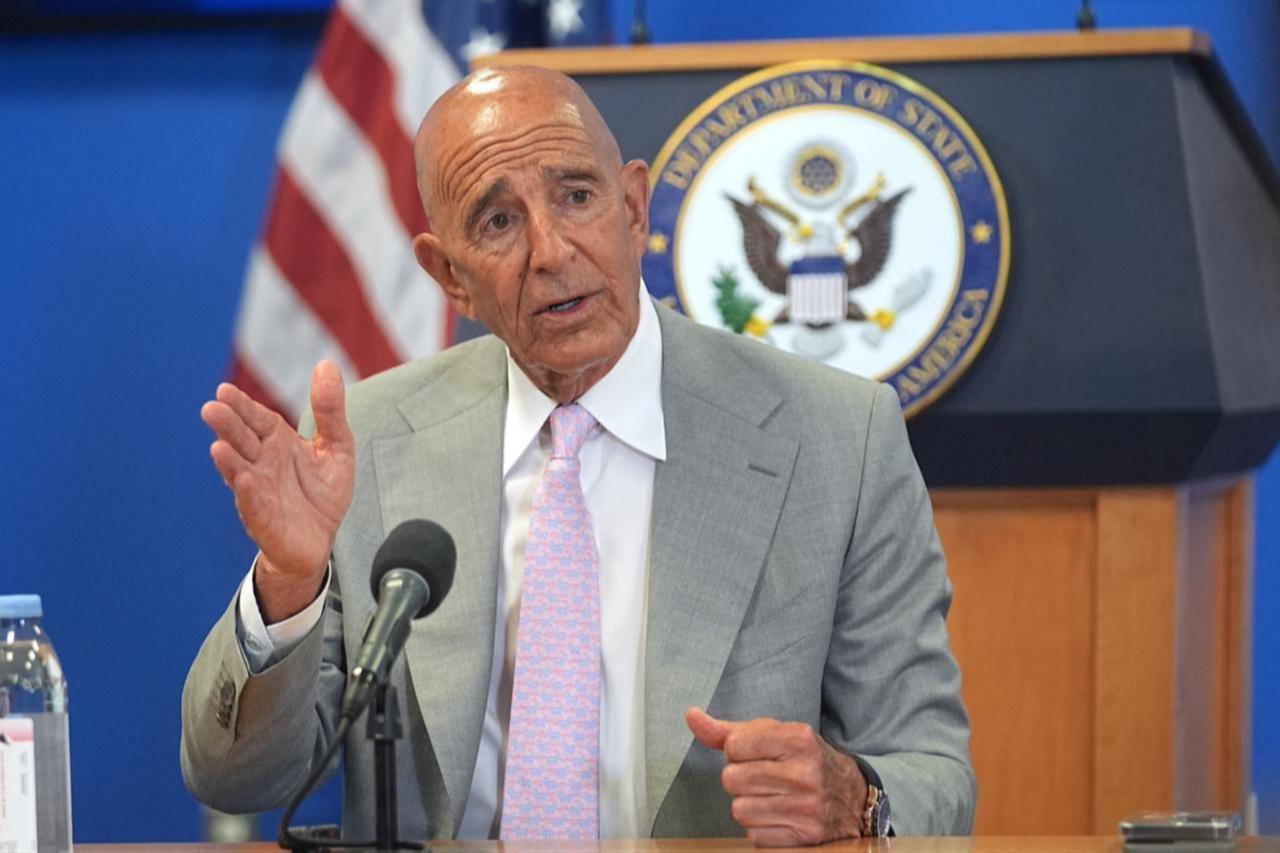
Tom Barrack’s June 1 tweet, in which he tried to provide a rationale for expanding his portfolio to include Iraq alongside Syria, coincided with the current political turmoil in Türkiye following the reinstatement of former CHP leader Kemal Kilicdaroglu as chairman.
This coincidence kicked a hornet’s nest among the Turkish opposition. His remarks drew a negative reaction, specifically the comment: "Balancing these three nations requires a single, consistent point of American contact and leverage—transcending tribal, religious, or sectarian differences.”
To me, this was simply his justification that a single person should ideally manage U.S. relations across these three countries since, in his view, they are deeply intertwined.
Any sentence that groups modern-day Türkiye with its Middle Eastern neighbors slightly irks the average Turk, and even more so if that Turk is secular.
The reason lies in the foundation of the republic, where the West was declared the ultimate role model for Turkish enlightenment, while Eastern neighbors were often labeled as backward, unprogressive nations defined entirely by religious identity.
Turks lost their spiritual connection with the lands they had governed for centuries, fostering a mix of hatred, fear, and resentment toward something that is geographically close yet culturally estranged.
As one Turkish social media user wrote in response to Barrack’s post: “Türkiye fought for and defined its own borders, while many post-Ottoman states were created by external powers with artificial borders in the desert.”
You can sense the anger directed at Türkiye being coupled with Iraq and Syria in the same tweet.
Mehmet Ali Guller, a Eurasianist and Cumhuriyet daily columnist, claimed that Trump’s goal in appointing Barrack is to convince Türkiye to accept Israel's hegemony in the Middle East. He asserts that Barrack’s frequent messages praising benevolent monarchies and his support for the Ottoman millet (nation) system are part of this grand design.
Former Turkish ambassador to Washington, Namik Tan, who is also an MP for the CHP, invited Barrack to learn more about the country’s history, arguing that it is impossible to "balance the three nations" Barrack mentions.
Having spent a year handling the Syria portfolio, Barrack has pleased hardly anyone. Türkiye complained that the SDF issue was moving too slowly, Israel accused him of being "Türkiye’s man," and the Kurds felt he disregarded their interests—the list goes on. A year in, real stability in Syria has hardly been achieved.
However, his role is not to single-handedly mandate stability, as he is an envoy, not a governor. Still, Ahmad al-Sharaa might be pleased with the extension.
As Türkiye Today’s Omer Ozkizilcik wrote, "The appointment of Barrack is basically signaling that Sharaa does not have to worry about international legitimacy. At least for the next year and a half."
Ultimately, his job is to execute the Trump administration’s policies. Those policies focus on laying the groundwork for a scenario where U.S. national interests remain protected even if the U.S. withdraws from the region militarily.
This involves neutralizing Israel’s national security threats while accepting the strategic autonomy of mid-power states in the Middle East to handle their own affairs.
Adding Iraq to Barrack’s plate fundamentally shifts the weight of his mandate and accelerates his withdrawal strategy. In Baghdad and Erbil, his primary directive will likely center on managing the anticipated drawdown of U.S. coalition forces while ensuring that an Iranian power vacuum doesn't immediately swallow the country.
By tethering Iraq to Syria and Türkiye, Washington is betting that Barrack can leverage Ankara's economic and security footprint in northern Iraq to check both Iranian proxy militias and PKK elements, essentially outsourcing regional stabilization to a mid-power ally as the U.S. footprint shrinks.
Türkiye Today contributor Barin Kayaoglu offers a different look at the issue. He sarcastically writes that the "Yankee" should not forget about the primary issues between Türkiye and the U.S., as Ambassador Barrack finds himself juggling an ever-expanding stack of complex dossiers.
Consequently, even as Barrack attempts to consolidate Washington's regional strategy from the Turkish capital, the foundational "open files" of U.S.-Turkish relations remain dangerously unresolved.
The fallout over Türkiye’s purchase of the Russian S-400 system—which keeps Ankara locked out of the F-35 fighter jet program—remains the chief problem. Though recent diplomatic channels have hinted at more flexible language regarding CAATSA (Countering America's Adversaries Through Sanctions Act) penalties, Türkiye remains firmly frozen out of the F-35 program, leaving a massive gap in bilateral defense procurement.
With Iraq included in his official portfolio, many crucial issues between Türkiye and the U.S. remain, and Barrack’s journey will be tougher than ever, especially if Trump keeps on targeting NATO as an institution.


 Set as preferred source
 Set as preferred source


 7 min read