Newsletters


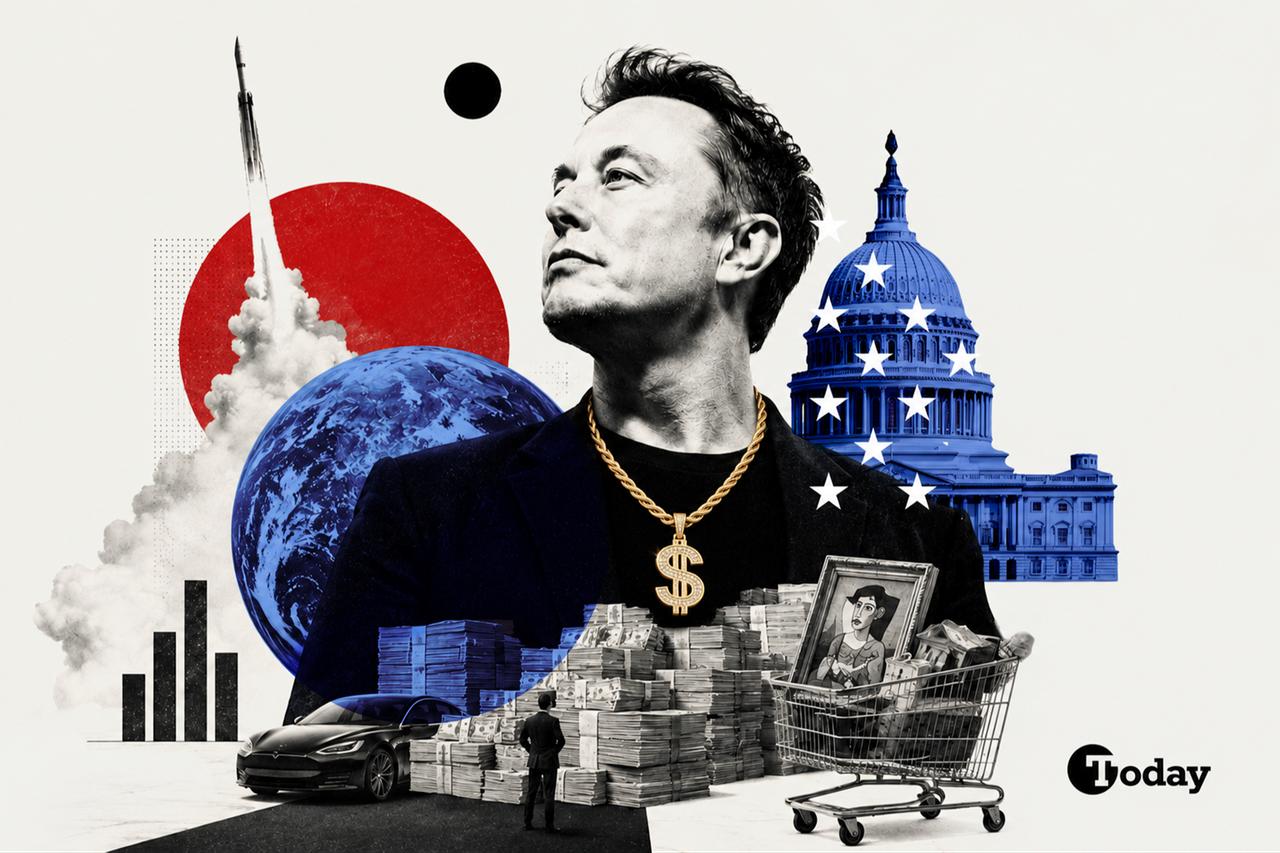


Elon Musk is a trillionaire.
That may be the most flabbergasting economic headline of the century, not because it happened but because the public reaction has been roughly equivalent to learning that Netflix has raised its monthly subscription by another $2.
So yes, Musk is a trillionaire. But social media has become so accustomed to extremes that the greatest concentration of private wealth in human history now competes for global attention with celebrity divorces and videos explaining why air fryers make lousy kofta kebabs.
There was a time when someone becoming the richest person in history would have prompted church bells to ring, restaurants to issue commemorative sandwiches, and cable news to devote weeks of woe to whether Western civilization remains a good idea.
Instead, America shrugged, glanced briefly at the headline, and returned to watching videos of Donald Trump chomping down on Big Macs in the Oval Office.
Perhaps all of us have simply exhausted our capacity for numerical amazement.
A million dollars stopped sounding impressive when suburban American houses began costing that much, and a billion became ordinary after Silicon Valley started manufacturing billionaires with the regularity of Starbucks introducing syrupy seasonal beverages.
Now we've reached the trillion-dollar milestone, and America’s response appears to be, "Is that before or after taxes?" Somewhere, a math teacher is quietly weeping because society has become desensitized to 12 zeros.
The trouble is that a trillion isn't really a number human beings are equipped to understand. It occupies the same mental category as the distance to Alpha Centauri (4.159×10¹³ kilometers) or the average number of beans (465) in a can of Heinz Baked Beans.
That's why comparisons become necessary.
If you laid one trillion one-dollar bills end to end, they would stretch nearly 68 million miles, or about 109 million kilometers, enough to wrap around the Earth over 2,700 times or travel most of the way toward the orbit of Venus before you reached the final George Washington.
Suppose, instead, that Musk insisted on holding his fortune in pennies. The pile would weigh roughly 2.75 million metric tons, creating the first financial portfolio visible from low Earth orbit and ensuring that every Coinstar machine in America immediately resigned.
Then consider the challenge of actually spending the money. To exhaust one trillion dollars in a single year, Musk would have to spend approximately $2.74 billion every day.
That means breakfast could be Greenland, lunch could be Fenerbahce, and dinner could be the Picasso Museum in Paris, with enough left over for dessert in the form of a mid-sized pharmaceutical company. The following morning, he'd wake up needing to spend another $2.74 billion before bedtime just to stay on schedule.
Even compound interest begins behaving irrationally at this altitude. Deposit one trillion dollars into a Turkish account paying the kind of eye-popping interest rates periodically advertised by Halkbank for lira-denominated deposits, and the annual return would be measured in hundreds of billions of dollars before inflation, taxes, and exchange-rate realities began taking their revenge.
In other words, your yearly interest income would exceed the entire economic output of many nations while you were still deciding whether to buy the Turkish multinational Koc Holdings. Financial advisers would describe this as "healthy passive income," while everyone else would describe it as "a software glitch in capitalism."
Naturally, the obvious question becomes, what could one person possibly do with a trillion dollars? America, always eager to innovate, already has an answer.
Politics has become America’s preferred luxury purchase. Even though federal law still limits direct contributions to candidates, unlimited independent spending by wealthy individuals and Super PACs has transformed elections into the closest thing democracy has to Formula One racing, except with fewer safety regulations and more television commercials.
Imagine Musk deciding to underwrite every Republican campaign in the 2026 midterm elections through legally permissible outside spending. Based on the overall scale of Republican spending during the 2024 election cycle, the bill would likely amount to only several billion dollars, an amount so small relative to a trillion-dollar fortune that accountants would record it under "miscellaneous expenses."
He could finance every Senate race, every competitive House contest, every television advertisement featuring a farmer standing in front of a suspiciously clean tractor, every campaign consultant charging six figures to recommend the color blue, and every focus group assembled to determine whether the phrase "common sense" polls better than "real common sense." After all that, he'd still possess well over 99% of his fortune.
Wall Street analysts would praise the investment as strategically diversified. Historians, on the other hand, might simply title the chapter, "Huh?"
The remarkable thing isn't merely that someone accumulated this much wealth. It's that we've collectively accepted the existence of fortunes so immense that they require astronomical metaphors before breakfast.
The old robber barons, at least, dined on lobster and dressed like monopolists in political cartoons. Modern plutocrats wear black T-shirts, post memes at three in the morning, launch rockets on Tuesday, reshape artificial intelligence on Wednesday, drink kale yogurt shakes on Thursday, and spend Friday arguing with anonymous accounts named things like PatriotEagle1776.
Their defenders argue that fortunes of this size are earned through extraordinary vision, relentless work, and an unmatched willingness to take risks.
Their critics counter that no society should permit wealth so concentrated that it begins behaving like a force of nature rather than a bank account.
Perhaps that's the only honest thing a trillion dollars ever tells us. Beyond that point, money isn't money anymore. It's a force of nature that drags governments, markets, media, and the collective attention span of the species into an upset stomach.
Musk is simply another roadside attraction. And should you be in Istanbul this summer, it's best to wait for him to show up at Adana Ocakbasi to blow his trillion on 125 billion of the most delectable kebabs the city has to offer.
Pending that, $8 a skewer. Pass the ezme, please.


 Set as preferred source
 Set as preferred source



 4 min read