Newsletters


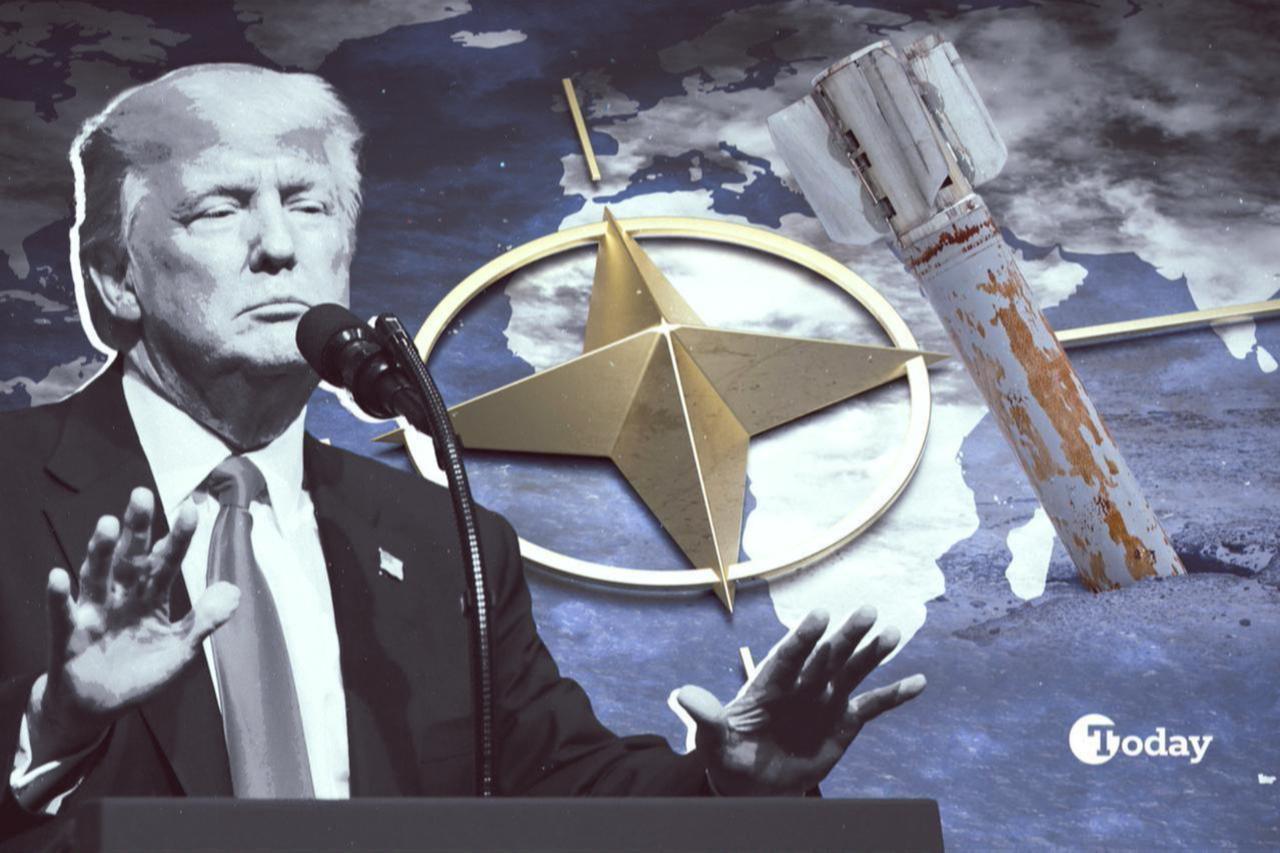


For years, Donald Trump has hammered away at the same point: many NATO members aren't paying their fair share. But what started as a blunt demand for "fair play" has turned into a full-blown identity crisis for the alliance. It has fueled a growing fear that Trump's rhetoric is “hollowing out” the alliance from the inside.
Some observers argue that his real goal isn't just a U.S. exit, but a total dismantling of the alliance. These fears have hit a breaking point with the war in Iran. The conflict has exposed a "triple threat" of NATO’s biggest weaknesses: poor intra-NATO consultation, stark capability gaps among members, and policy divergence between those members most vulnerable to Iranian economic blackmail and those most willing to act to end it.
Does Trump really want to end NATO? Whether the alliance ends up functional, dysfunctional, or just plain defunct, the stakes for both Europe and the U.S. couldn't be higher. We are now staring down a "CRINK" axis—China, Russia, Iran, and North Korea—a group of adversaries working together to rewrite the global rules, backed by a network of smaller client states. Between rapid-fire tech advances, shifting politics inside member nations, and the brutal reality of 21st-century "hardball" geopolitics, the need to overhaul NATO’s capabilities isn't just a talking point anymore—it’s an emergency.
Those who understand Trump’s logic argue that his scorched-earth rhetoric isn't just venting—it’s the strategy itself. By appointing U.S. Air Force General Alexus “Grinch” Grynkewich as NATO's supreme allied commander Europe (SACEUR), and leaning on his solid working relationship with Secretary General Mark Rutte (the "Trump whisperer"), he’s signaling a very specific mission. Trump isn't looking to lead a polite, subsidized debating society; he wants to wrench NATO back to its factory settings. His goal is to turn it from a genteel political club into a lean, aggressive machine built for one thing: winning wars.
Trump has been remarkably consistent in applying the principles found in a book he wrote 40 years ago in "The Art of the Deal." To understand his current posture toward the alliance, there are three key principles to keep in mind. First, Trump isn’t driven by a desire to build or destroy for its own sake—he is a deal-maker at heart, and the negotiation is his art form. Second, he believes that leverage is everything; you don’t get the best terms by being polite, you get them by making the other side feel the heat. Finally, he uses sensationalism, bravado and information advantage to control the clock and set the tempo. He’ll shake the table to get the leverage he needs, but once the deal is signed, he’s focused on delivering the results.
Applied to NATO, this means using threats of American reductions and withdrawal to build leverage. It involves ramping up the rhetoric and pulling back resources to force serious concessions—specifically, hard commitments—from other member states. The end goal isn't abandonment; it’s the affirmation and fulfillment of the treaty once the "foot-draggers" finally provide their fair share of the burden. This is the strategy, and Trump has applied it consistently throughout both his business and political careers.
A source familiar with Grynkewich, Rutte and their interactions with Trump on NATO characterizes their views as similar to Robert O’Brien’s 2024 assessment of “tough love.”
After a wave of unsettling threats and insults, European leaders are finally opening their checkbooks and taking the idea of European-led defense seriously. In a way, this echoes NATO's original raison d’etre. If Trump is forcing this shift now—even if the process is defined by angst and anger—many would argue it is a cost worth paying.
If we accept the premise that Trump threatens NATO members to strengthen practical capabilities, what of his most influential aides?
Secretary of State Marco Rubio, a longtime NATO supporter, has recently pivoted, arguing that "free-rider" behavior is now a potentially lethal threat to the alliance's survival. Vice President J.D. Vance remains one of NATO’s sharpest critics, yet he has consistently endorsed this "tough-love" logic as the only way to save it. Even Secretary of War Pete Hegseth, who calls NATO the most successful alliance in history, warns that shared values won’t win wars or deter enemies—only hard power capabilities do.
While the president sets the tone, the other branches of government have built-in safeguards to block the dismantling of the alliance. Support for a robust NATO remains a rare point of bipartisan policy in Washington. In 2023, Congress passed a law to protect NATO, making it clear that any attempt to withdraw or defund would face a massive legal wall. The language is so explicit that if the issue reached the Supreme Court, the president’s attempt to walk away unilaterally would almost certainly be struck down.
The president may speak of reduced commitments and closed bases, but these steps are reversible and clearly part of the pressure tactic to force greater contributions. Germany seems to have taken the hint and is discussing ways Europeans can use the existing infrastructure even if U.S. troops are reduced, precisely the effect Trump has espoused.
Does Trump have a domestic constituency that loves his NATO-bashing? Yes, but this is hardly a new phenomenon. While slightly more of his "MAGA" loyalist base views NATO negatively than positively, a strong majority of traditional conservatives still hold positive views—and even the MAGA crowd has shown signs of growing appreciation for the alliance lately.
In any case, NATO-scepticism has had vocal proponents in the U.S., dating back to the founding of the alliance itself. In that sense, Trump is putting a long-standing American impulse to practical use rather than forcing a personal whim on the system.
Trump plays hardball with NATO because he has correctly understood the incentive structure that evolved regarding European security after the end of the Cold War.
From 1991 to 2020 or so, the U.S. enjoyed unparalleled strength with the acquiescence but not equal contribution of key allies. Europeans could pursue divergent regional policies and challenge U.S. economic interests while granting generous social benefits at home. As long as the certainty of U.S. protection of Europe and global trade routes pertained, European countries had no real reason to shoulder more responsibility for protecting the alliance. Trump understood that previous presidents failed to get Europe to do more because “power concedes nothing without a demand” (Frederick Douglass) and “no one can negotiate without the power to compel negotiation” (Saul Alinsky).
European complacency on defense since the end of the Cold War was long recognized and decried but not remedied—though the 2022 Russian invasion of Ukraine set off the loudest possible alarm bells.
Trump has sought and succeeded in being the forceful hand that rendered further delay impossible. Now, amidst a mixture of anger, anxiety, and clarity, the Europeans are making the hard decisions to assure their own defense—not a divorce from the U.S. or NATO in security terms, but an energized and independent look at how to leverage the latter as part of an invigorated and organic defense of Europe within NATO.
None of this might seem shocking or scandalous in Istanbul or Ankara. NATO and the U.S. have been valuable but never 100% assured security partners in the particular geography and political space occupied by the Turks. Work with NATO and the U.S. to the greatest degree possible and do all in your power to avoid conflict with them or align with their adversaries—but ensure that you can produce your own defense articles and field forces sufficient to deter your enemies and rivals.
Trump is effectively pushing other NATO partners into the same space Türkiye has occupied since the Cold War. To many, this shift feels like a crisis, but it isn’t necessarily a scandal or a calamity. Instead, it’s a move toward prudence—a way to ensure that American participation in the alliance remains sustainable.


 Set as preferred source
 Set as preferred source


 4 min read