Newsletters


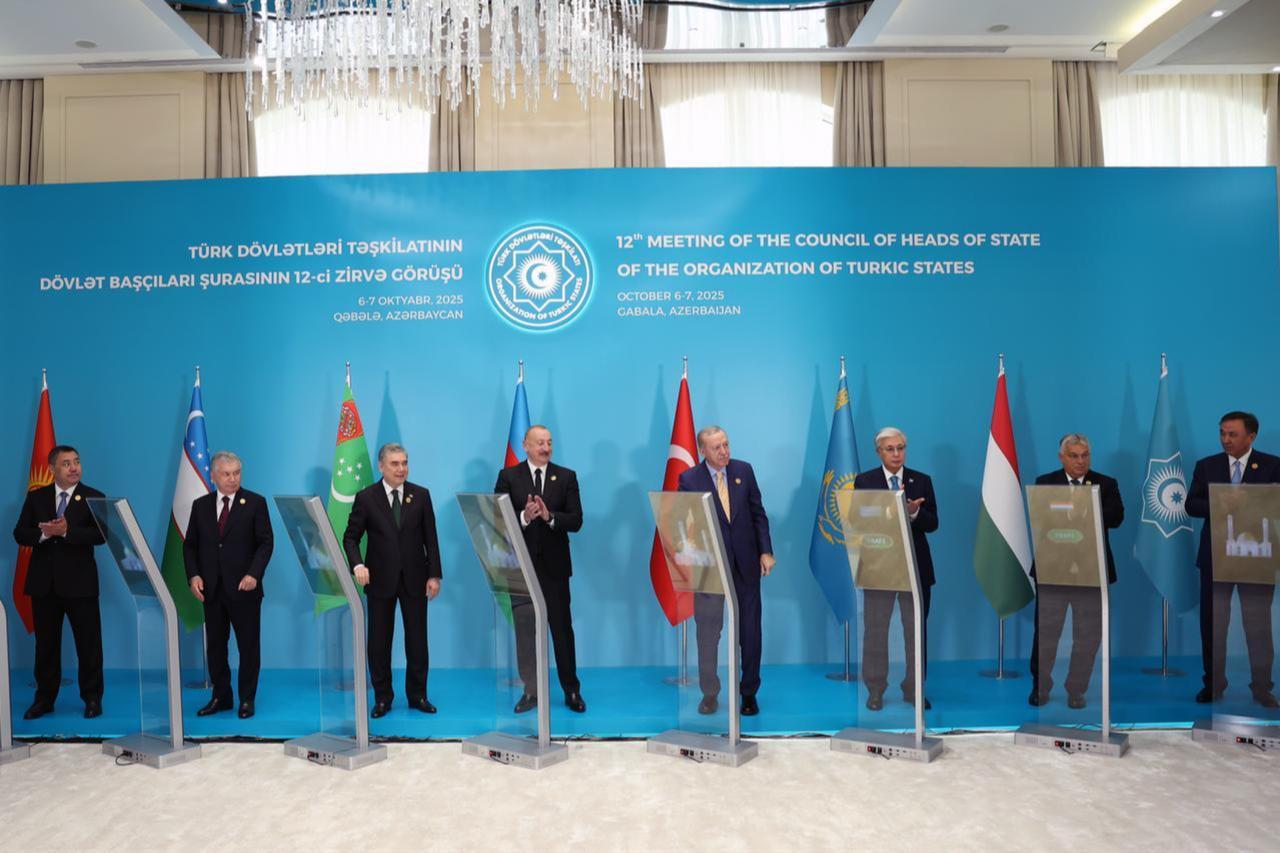


The Eurasian Heartland is undergoing a silent but profound transformation, challenging the long-standing dominance of the regional hegemon, Russia.
For decades, the "Turkic World" was a concept relegated to linguistic abstraction and cultural nostalgia; today, that abstraction has morphed into a geopolitical reality.
Through the Organization of Turkic States (OTS), a new pole of power is emerging—one that seeks to navigate the pressures of Russia, China, and Iran by forging a path of collective autonomy.
The member states of the OTS—Türkiye, Azerbaijan, Kazakhstan, Kyrgyzstan, and Uzbekistan—have moved past the "talking shop" phase of their development. They are now taking practical, sovereign steps to reduce their reliance on Moscow and Beijing.
This is evidenced by the implementation of shared projects: the creation of a joint investment fund, the adoption of a common Latin-based alphabet, the development of a simplified customs corridor, and, most crucially, deepening military cooperation.
This shift signals the birth of a middle-power bloc that no longer feels compelled to act as Russia’s "little brother" or a pawn in a Great Power game.
The strategic vacuum created by Russia’s invasion of Ukraine and the subsequent weakening of its regional influence has accelerated this trend.
Simultaneously, as China’s economic footprint expands aggressively, Central Asian nations are seeking a "third way."
The OTS provides exactly that—a framework for collective sovereignty that allows these nations to leverage their position between East and West without surrendering to a single neighboring hegemon.
This new reality is most visible in the burgeoning security dimension of the bloc. The 2020 war between Azerbaijan and Armenia and the subsequent liberation of Azerbaijani territories after over three decades of Armenian occupation served as a turning point.
It proved that Turkic military cooperation—specifically the synergy between Turkish defense technology and Azerbaijani tactical execution—could fundamentally change the facts on the ground.
Today, the proliferation of Turkish defense systems across Central Asia is not merely a matter of procurement; it is a strategic diversification of security dependencies.
By deepening defense ties with Ankara, Central Asian states are effectively hedging against a distracted Russia and an increasingly assertive China.
The OTS is transitioning into a security actor capable of addressing regional threats, fundamentally altering the security architecture of the Eurasian landmass.
Parallel to this military alignment is a massive transport and economic project: the "Middle Corridor." As the "Northern Corridor" through Russia remains fraught with sanctions and political risk, the Trans-Caspian International Transport Route (Middle Corridor) has gained strategic value.
Since gaining independence from Soviet rule, the Central Asian and Caucasian OTS member states have sought to revitalize the ancient network of trade routes known as the "Silk Road."
By investing in the ports, railways and digital infrastructure necessary to connect China to Europe via the Caspian Sea and the South Caucasus, these states are positioning themselves as indispensable gatekeepers of Eurasian trade.
This integrated energy and transport network—often called the Middle Corridor—offers a strategic alternative to dependence on Moscow’s rail networks or Beijing’s "debt-trap diplomacy" within the Belt and Road Initiative.
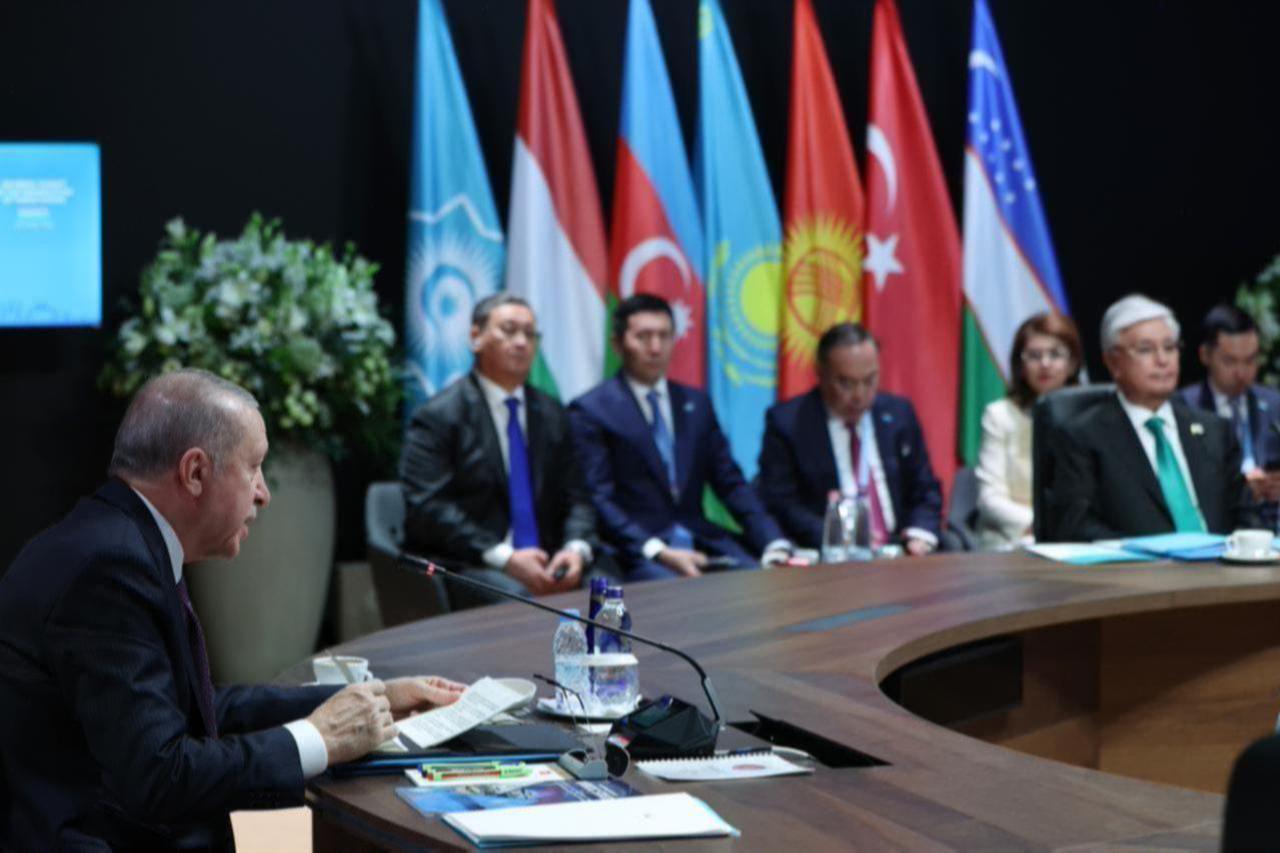

At the heart of this movement sits Türkiye. Under President Erdogan, Ankara has skillfully played its "Turkic card," presenting itself as a partner that offers technological sophistication and security cooperation without the imperial baggage associated with Russia, China, or even Iran.
However, it would be a mistake to view the OTS as a unilateral tool of Turkish foreign policy. Leaders in Baku, Astana, and Tashkent are active architects of this union. For them, the organization is a tool of "multi-vector diplomacy."
It allows them to balance the giants on their borders—Russia to the north, China to the east, and Iran to the south—by anchoring themselves to a broader Turkic identity. This collective diplomatic weight allows them to wield an influence that no single South Caucasus or Central Asian nation could achieve alone.
The rise of this bloc has not gone unnoticed. Russia and China view the formation of a Turkic union within their traditional spheres of influence with growing wariness.
The Islamic Republic of Iran, meanwhile, considers Turkic integration an existential threat, given that ethnic Azerbaijanis comprise more than one-third of Iran’s population.
The West remains ambivalent. While some strategists in Washington and Brussels see the OTS as a useful counterweight to expansionism from Moscow, Beijing, and Tehran, others are wary of the independent, assertive foreign policy paths these nations might take.
Nevertheless, the OTS is no longer a peripheral cultural club; it is a central pillar of the new Eurasian order.
Strategists such as Zbigniew Brzezinski, Alfred Thayer Mahan, and Halford Mackinder paid close attention to the Eurasian landmass, viewing its control as the key to global dominance. Likewise, today’s statesmen cannot afford complacency.
As a rising geopolitical force, the Organization of Turkic States (OTS) offers the U.S. a vital platform for counterbalancing near-peer rivals in Eurasia. Central Asia is a landlocked region bordered by Russia to the north, China to the east, and Iran and Afghanistan to the south.
Integrating Central Asia and the broader Eurasian region into a powerhouse requires robust land connectivity.
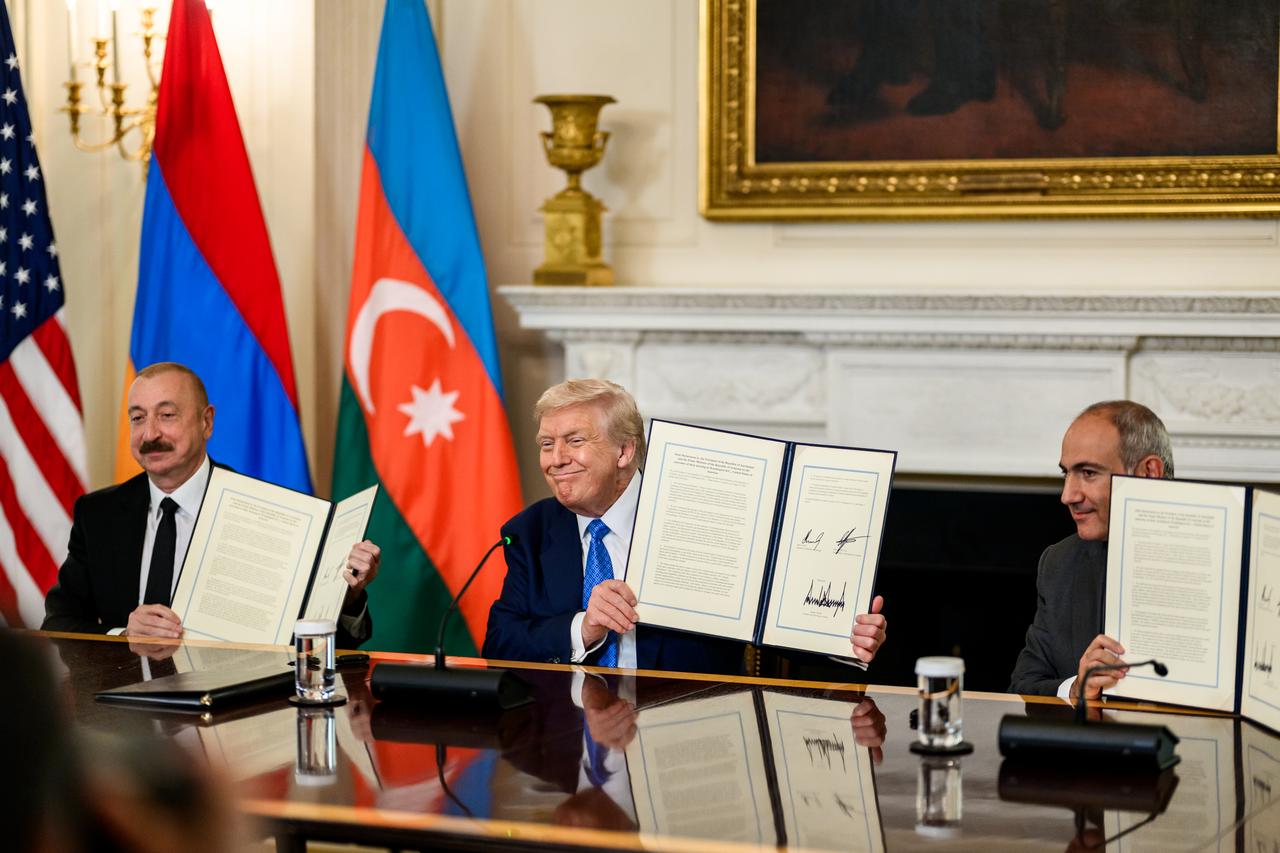
A major proposed step in this direction is the "Trump Route for International Peace and Prosperity" (TRIPP), a revised conceptualization of the Zangezur Corridor. This transportation corridor seeks to enhance regional stability and economic integration by establishing a trade link from Central Asia, through the South Caucasus, to Europe.
The success of such an initiative is contingent upon the reopening of the Zangezur Corridor—a project to which President Trump seeks to attach his name: the TRIPP.
His administration's approach to foreign policy, often characterized by coercive diplomacy and strategic unpredictability, has yielded results in negotiations between hostile parties in the past. This same approach could be applied to the Zangezur Corridor.
If materialized, the TRIPP would establish more than just a lasting peace between Armenia and Azerbaijan; it would create a seamless trade link from Central Asia to Europe, significantly reducing the Turkic states’ dependence on Russia and China.
The strategic imperative for the U.S. centers on critical minerals, a primary theater of competition with China.
Central Asia’s vast deposits—most notably Kazakhstan’s status as the global leader in uranium production and its significant rare earth reserves—offer a vital opportunity to decouple global supply chains from Chinese dominance.
To this end, President Trump has leveraged personal diplomacy with Presidents Erdogan of Türkiye and Aliyev of Azerbaijan as a cornerstone of U.S. strategy to gain a competitive advantage over Moscow, Beijing, and Tehran.
While shifting U.S. priorities leave the future of the TRIPP initiative uncertain, the Turkic world has already cemented its status as an indispensable actor in a multipolar order.
Its ascent demonstrates that a shared identity, reinforced by pragmatic security and economic ties, serves as a bulwark against the expansionist designs of revisionist powers.


 Set as preferred source
 Set as preferred source



 4 min read