Newsletters




This article was originally written for Türkiye Today’s weekly newsletter, Saturday's Wrap-up, in its September 26, 2026 issue. Please make sure you subscribe to the newsletter by clicking here.
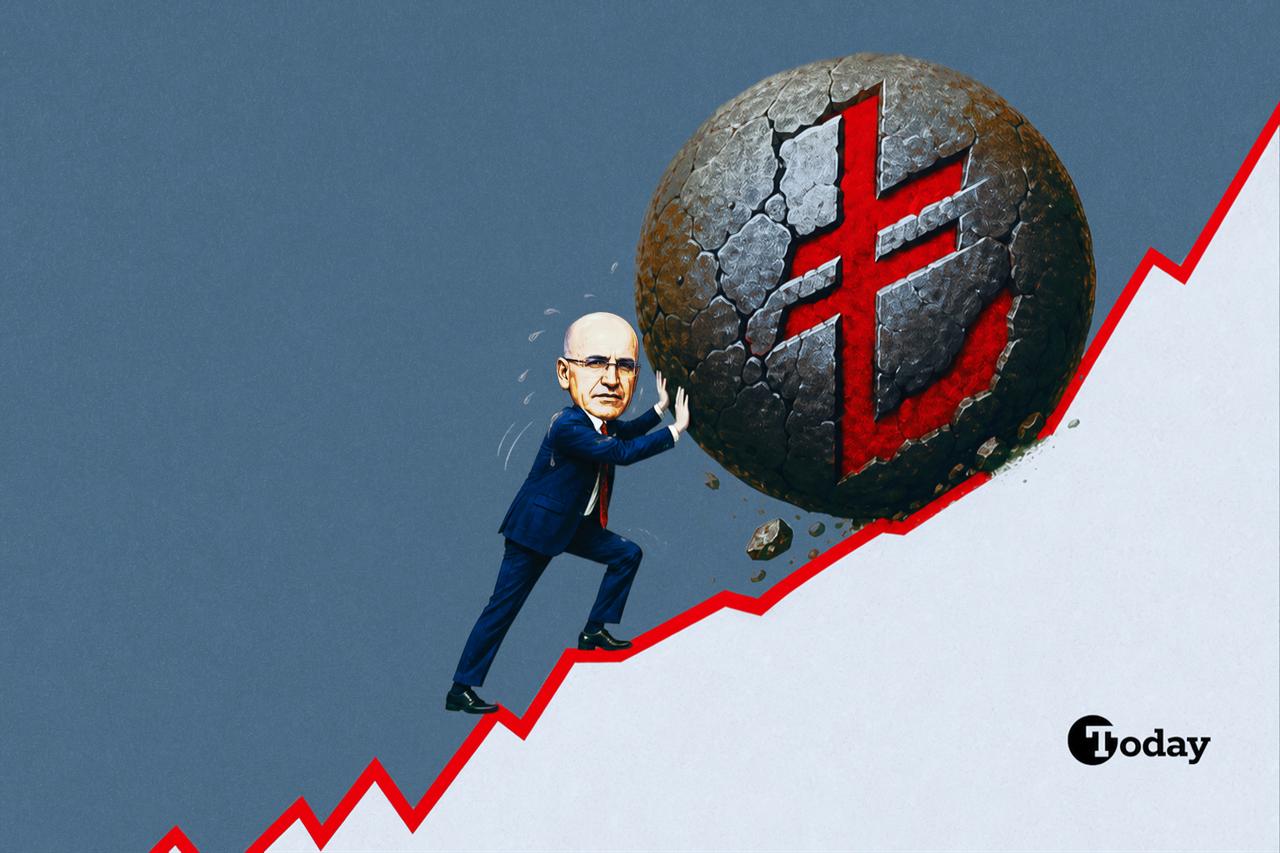
In Greek mythology, Sisyphus was condemned for eternity to roll a massive boulder up a steep hill, only to watch it roll back down again. Türkiye has its own Sisyphus—Finance Minister Mehmet Simsek, except this one willingly took on the challenge. His task is to push the Turkish lira uphill, against a region primed to send it tumbling down.
For Simsek, the hill is survival in the post. Despite relentless rumors swirling through Turkish markets that he was ready to drop the boulder and walk away, Simsek has flatly ruled out an exit, signaling he is staying put for the grueling climb ahead.
“The resignation rumors circulated about me are baseless,” Simsek stated on X on Sept. 24, the day he returned from the U.S. He was forced to address the speculation, as his initial silence did not stop the rumors from spiraling out of control.
Like a Swiss Army knife, Simsek has always been a great political asset for President Recep Tayyip Erdogan. Fluent in Kurdish, he resonates with the Kurdish public when needed, looks relatable as a person, maintains strong international connections, delivers results, and crucially, harbors no ambition to build his own political legacy like many others.
To understand why Simsek is likely to stay—and why Erdogan needs him to—one must remember how he got here. He did not run a behind-the-scenes campaign for this grueling task. Following the May 2023 elections, with foreign reserves depleted and the economy teetering on the edge of a crisis after years of low-interest-rate policies, his return was requested. The president effectively pleaded with Simsek to take the helm and restore rationality to Türkiye’s macroeconomic framework. And he was also tasked with building Türkiye's reputation globally, a gruesome job if you look at the current figures.
Today, for some, Simsek remains the absolute anchor for investor confidence. No other figure commands the same trust from Western institutional investors, credit rating agencies, and global financial capitals. If Simsek were to actually drop the boulder and resign, the hard-fought gains in stabilizing the lira and attracting foreign portfolio inflows would not evaporate overnight, yet Türkiye may have to suffer a shock that is not well-prepared for.
Yet, the rumors of his departure do not exist in a vacuum. To cure runaway inflation, Simsek is doing exactly what he promised: hitting the brakes on the economy. He is implementing painful fiscal discipline, tightening credit, and suppressing domestic demand. This orthodox "bitter pill" stands in stark contrast to the growth-at-all-costs, credit-fueled economic model that the government championed for years.
Consequently, powerful pro-government circles and local business elites are increasingly unhappy with him. These factions are feeling the pinch of high borrowing costs and slowing consumption. We are already seeing this friction spill over into the public sphere.
Recently, coverage from pro-government media outlets has quietly—and sometimes loudly—begun to target his policies. A few pro-government commentators have painted his tight monetary stance as a threat to domestic businesses, tradesmen, and overall economic growth, subtly laying the groundwork to scapegoat him for the impending economic slowdown.
Despite this friendly fire, Simsek’s position remains secure for now. The timing for the resignation rumors stemmed from the hopes that he might be sacrificed due to the recent Tera Investment Fund scandal, an alleged $18 billion Ponzi scheme. There are almost 500,000 investors who lost money in the scandal, and they are furious.
The general understanding in the markets now is that the government cannot afford the market panic his exit would trigger. The boulder is heavy enough as it is, and pro-government circles may be hurling pebbles at him as he climbs, but Türkiye’s Sisyphus is bound to the hill—at least until the inflation beast is tamed into something manageable.


 Set as preferred source
 Set as preferred source


 1 min read
 1 min read