Newsletters


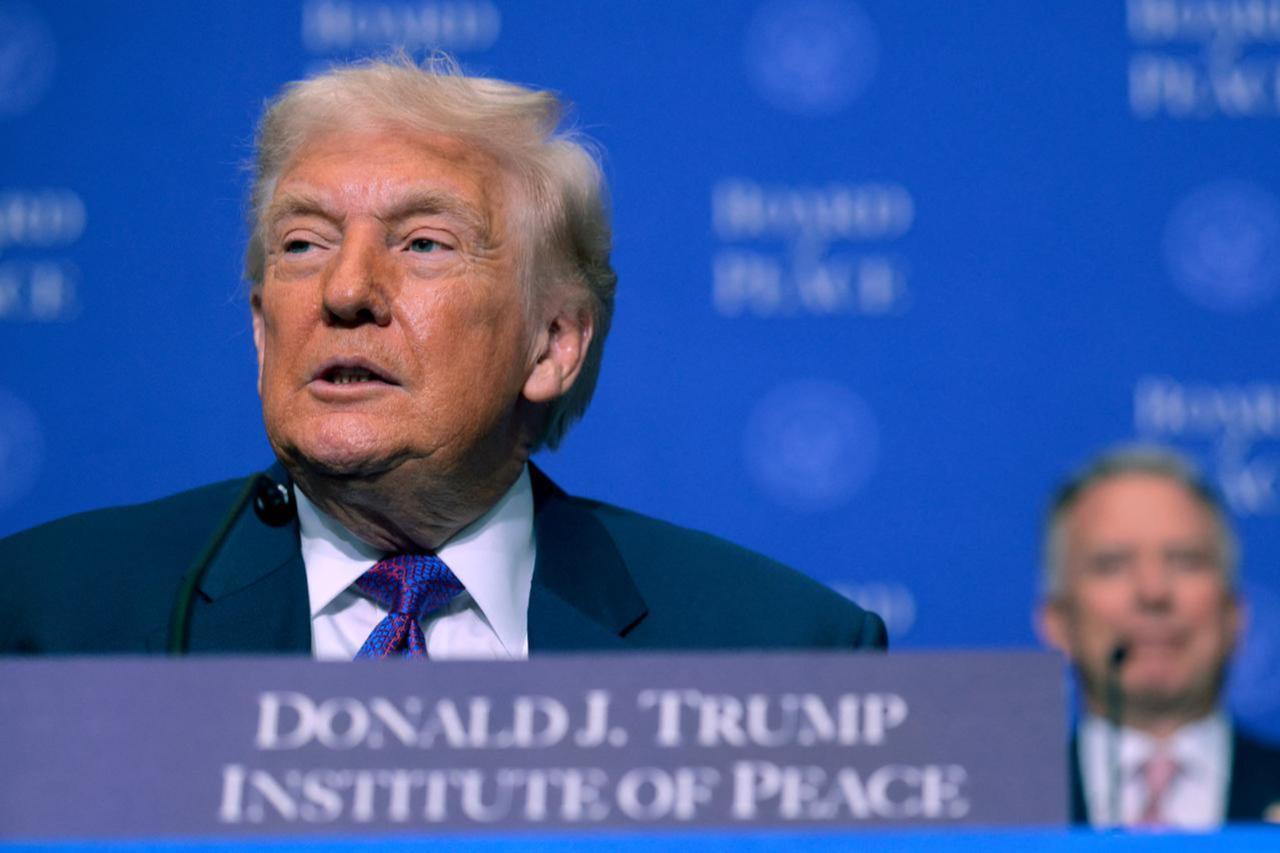


"I'm not going to start wars, I'm going to stop wars," Donald Trump declared on election night to a roaring crowd.
Just over a year later, he had founded a "Board of Peace," authorized military force in several countries, and presided over strikes that left Iran's supreme leader dead and much of the country in ruins.
This is not a case of broken promises. It is a case of strategic framing. "Peace" was systematically used to legitimize military escalation. It did not invite scrutiny of the administration's stated values. It eliminated it.
Trump's "peacemaker" narrative succeeded as a domestic communication strategy: it resonated with conflict-fatigued voters, secured his electoral return, and displaced a foreign policy reality defined by military escalation.
What this episode ultimately demonstrates is that language, when deployed with sufficient discipline, need not reflect reality. It needs only to precede it.
Yet, this is not a permanent condition. History suggests that narratives disconnected from facts eventually collapse under their own weight. The more precise claim, then, is this: language can outrun the facts, but it cannot replace them indefinitely.
Trump did not accidentally become the "peace candidate." It was a deliberate strategy built on three pillars: contrast, repetition, and emotional resonance. Trump relentlessly positioned himself against the interventionist establishment, the wars in Iraq and Afghanistan that cost thousands of American lives and trillions of dollars. As Chief House research director Andrew Payne noted, Trump emphasized that he had been the first president since Jimmy Carter not to get the United States involved in a new armed conflict. Washington's decades of military overreach made his restraint look like wisdom.
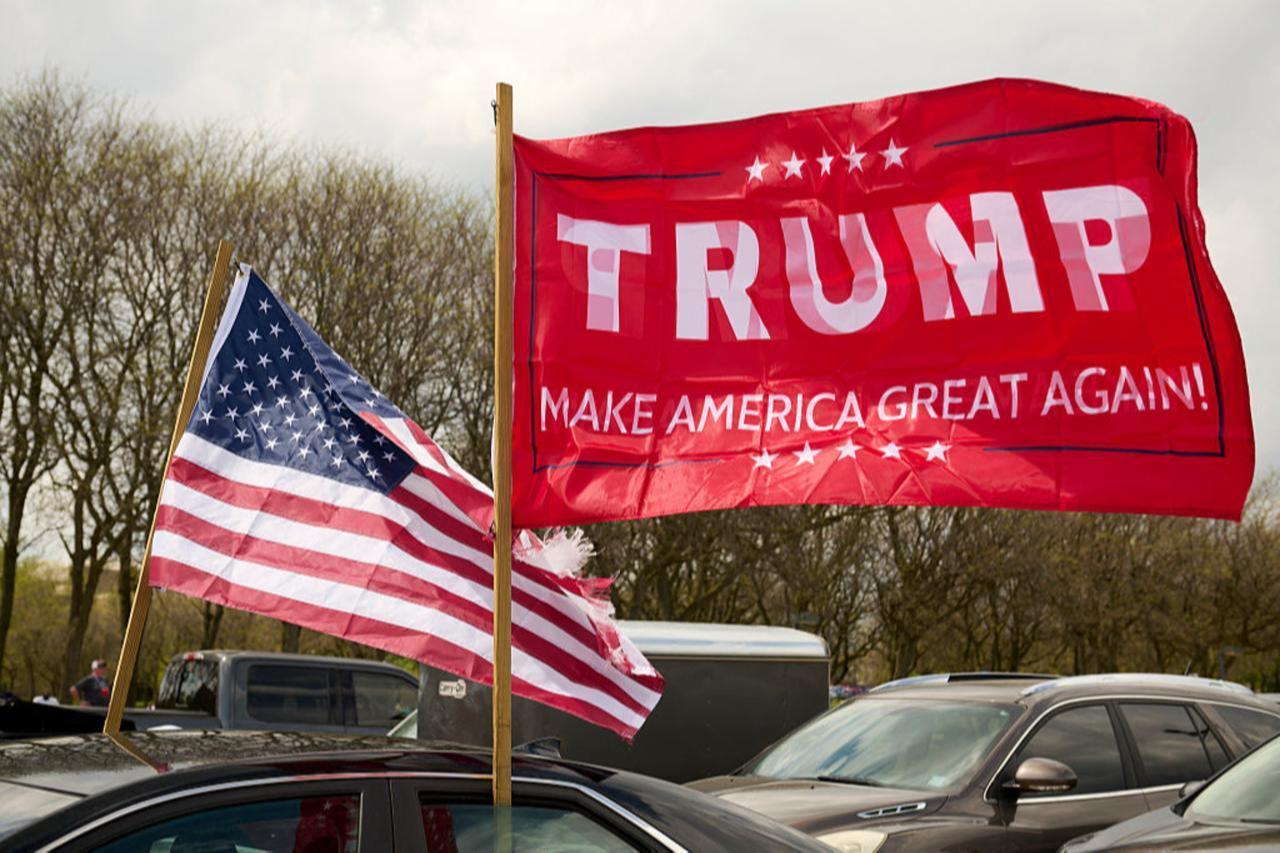
On repetition: phrases like "endless wars" and "I'm the only one who can fix it" served as Trump's rhetorical anchors, repeated at rallies, in interviews, and across social media until they ceased to feel like claims and began to feel like facts. This is agenda-setting in its most disciplined form, not persuading audiences what to think, but determining what they think about.
On emotional resonance: Trump understood that for most American voters, foreign policy is not an abstract calculation. He spoke directly to Gold Star families, veterans, and a country that had watched coffins come home for two decades. This was sympathy politics at its most effective: the invocation of grief, sacrifice, and betrayal to construct a political identity around the promise of an end. "Peace" was not a policy platform. It was a promise, one designed to be felt, not examined.
The architecture held until the gap between the brand and the record grew too wide to ignore. While Trump cast himself as a peacemaker, his administration was authorizing military action in multiple countries. At some point, the narrative stops working.

To understand why millions accepted this narrative, one must first reckon with what they were rejecting. The foreign policy establishment Trump ran against had presided over two decades of catastrophic miscalculation: a war in Iraq built on fabricated intelligence, an Afghan reconstruction that collapsed after 20 years and $2 trillion and a bipartisan consensus that kept sending soldiers into conflicts with no defined objective and no plausible exit. These were not rhetorical failures. They were real ones, paid for in real lives. Voting for the peace brand was not naive, yet it was the most logical option available. Trump did not merely exploit that exhaustion. He filled the void the establishment had left behind.
But filling a void and sustaining a credible alternative are two different things. As strikes escalated and the Board of Peace authorized the very conflicts it claimed to prevent, the peace brand had no empirical record to fall back on. Voters who had rejected the old establishment for the credibility were now confronted with a credibility problem of their own making.
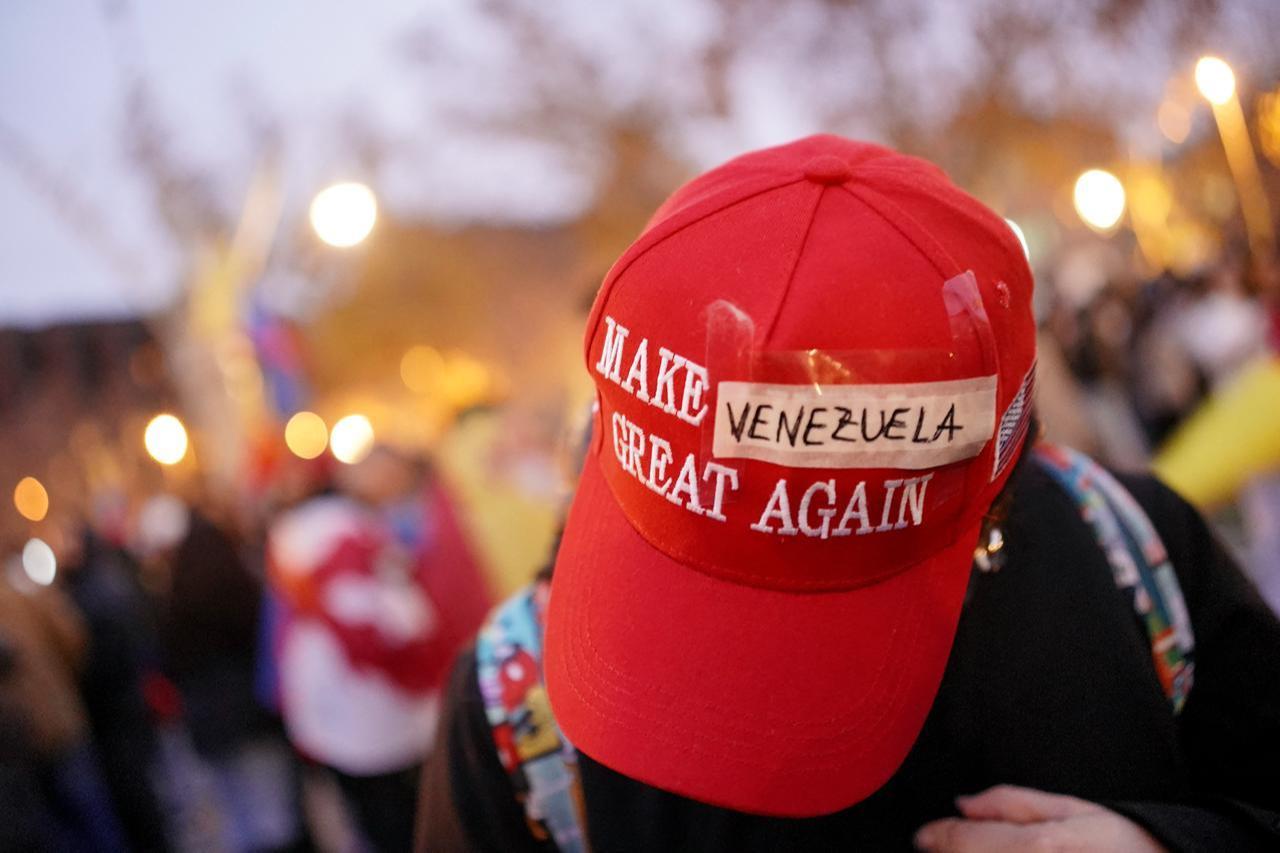
The Trump administration's most effective defense was not denial. It was a definition. The administration did not hide its military actions. It reclassified them. The death of Iran's supreme leader was not an assassination but the "elimination of a threat to regional stability." Cross-border operations against so-called cartel vessels in Venezuela were not military intervention but "law enforcement action to protect the American people. The coercion of Canada and Mexico was not geopolitical tension but "restoring border security."
Every escalation arrived pre-labeled. By the time critics reached for the word "war," the administration had already occupied the semantic terrain with "resolution," "strength," and "finality." To call it an escalation meant arguing against a definition, a harder political fight than arguing against a fact.
The labels were not accidental. By the time the opposition had settled on a vocabulary to describe what was happening, the administration had already moved on to the next action. There was no stable referent to argue against.
Yet before accepting this argument in full, one objection demands attention. Is any of this uniquely Trump's doing? Trump is not the first president to dress military force in the language of peace. Bush called the invasion of Iraq a mission to bring "freedom and peace to the Middle East." Obama authorized drone strikes in seven countries while accepting the Nobel Peace Prize. If presidents routinely use peace rhetoric to justify war, Trump's behavior looks less like a personal aberration and more like a structural feature of executive power.
But that framing misses what makes his version distinct. Trump did not merely deploy peace rhetoric. He built his entire political identity around opposing his predecessors' wars, won elections on that promise, and then exceeded them all, striking many countries without the congressional authorization that even Bush sought and received.
Political language does not announce its deceptions.
Trump's peace brand proved the point. The narrative succeeded not because voters were foolish but because the architecture was genuinely sophisticated, the emotional need was genuinely real, and the political system offered no reliable mechanism to close the gap between word and reality before votes were cast.
The next leader who tries this will not be the last. The only open question is whether the public will be watching more closely.


 Set as preferred source
 Set as preferred source


 1 min read
 1 min read