Newsletters


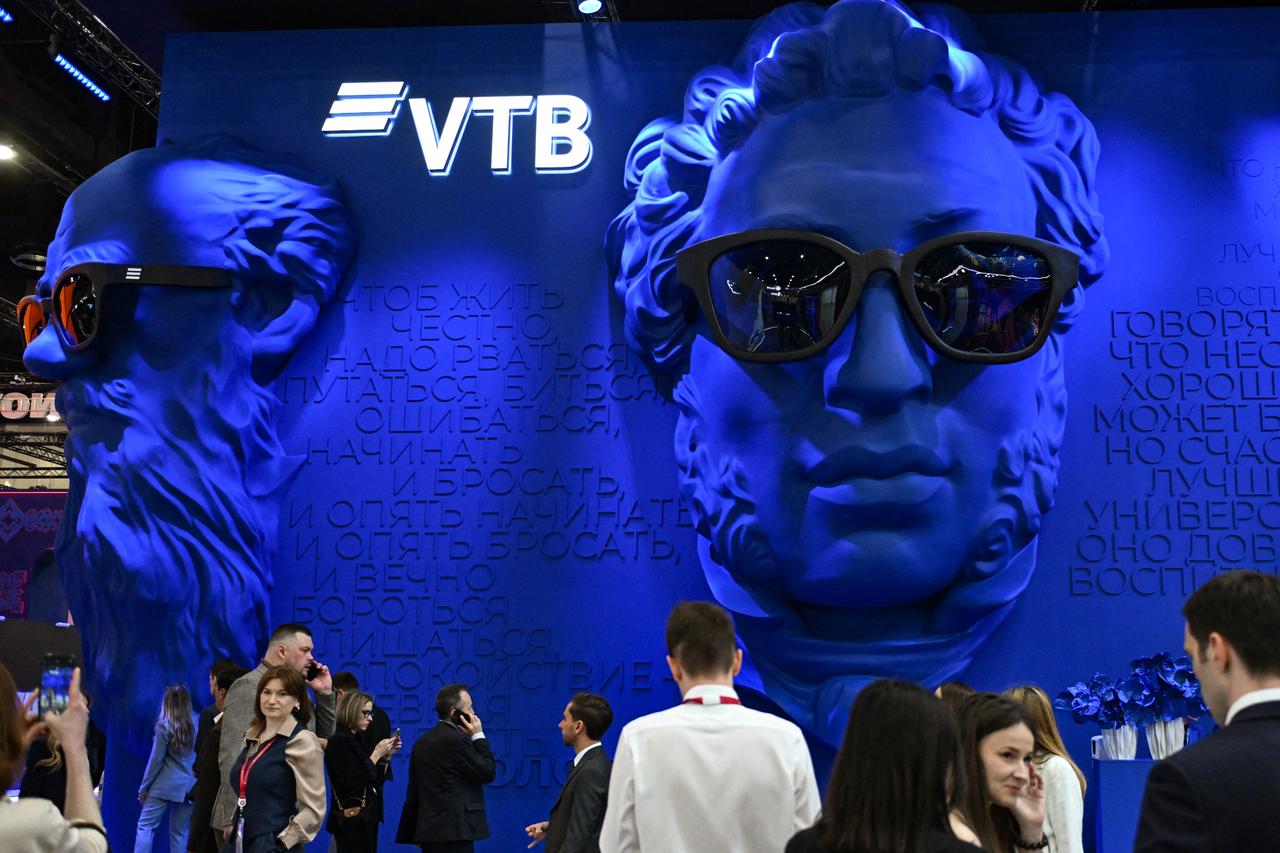


The most useful way to read this year's St. Petersburg International Economic Forum (SPIEF) is to avoid two easy conclusions.
One says Russia has defeated sanctions and returned to normal economic life. The other says the forum tells us little about economic reality.
Both interpretations miss the point.
What I saw in St. Petersburg was a more complicated picture: an economy operating under sanctions while keeping important international economic channels open; a visible presence from Asia, the Gulf and the wider non-Western world; and a global economy that no longer functions through a single political center.
The forum’s official theme, "pragmatic dialogue as a path to a stable future," sounded modest. Yet it captured a real mood.
The old language of globalization promised efficiency, cheap supplies and open markets.
Today’s language is different. Governments and companies ask whether supply routes can survive a war, whether payment systems can be blocked, whether energy contracts are politically safe, and whether technology access can be cut overnight.
Globalization is still alive.
It has simply become more guarded, more regional and more transactional.
U.N. Trade and Development points in the same direction. South-South trade has expanded, developing economies have gained more weight in goods trade, and the map of commerce looks less simple than it did two decades ago.
This does not mean the West has disappeared from the global economy. But it means more countries are looking for additional routes, additional partners and additional bargaining space.
The change is not only about trade volumes. Instead, it is about the questions states and companies now ask. In the 1990s and 2000s, the main language was cost, scale and market access.
Today, those issues still matter, but security and resilience have moved closer to the center.
The developing world is also more visible, but it should not be romanticized. The so-called Global South countries do not form a single economic bloc.
Their interests overlap in some areas and diverge in others. That is precisely why the new globalization is harder to read.
It is not replacing one hierarchy with another. It is producing several layers of trade, finance, energy and technology relations at the same time.
The successful states in this environment will not be those that close themselves into one camp.
They will be those who can work with different centers at once, without losing their own capacity to decide.
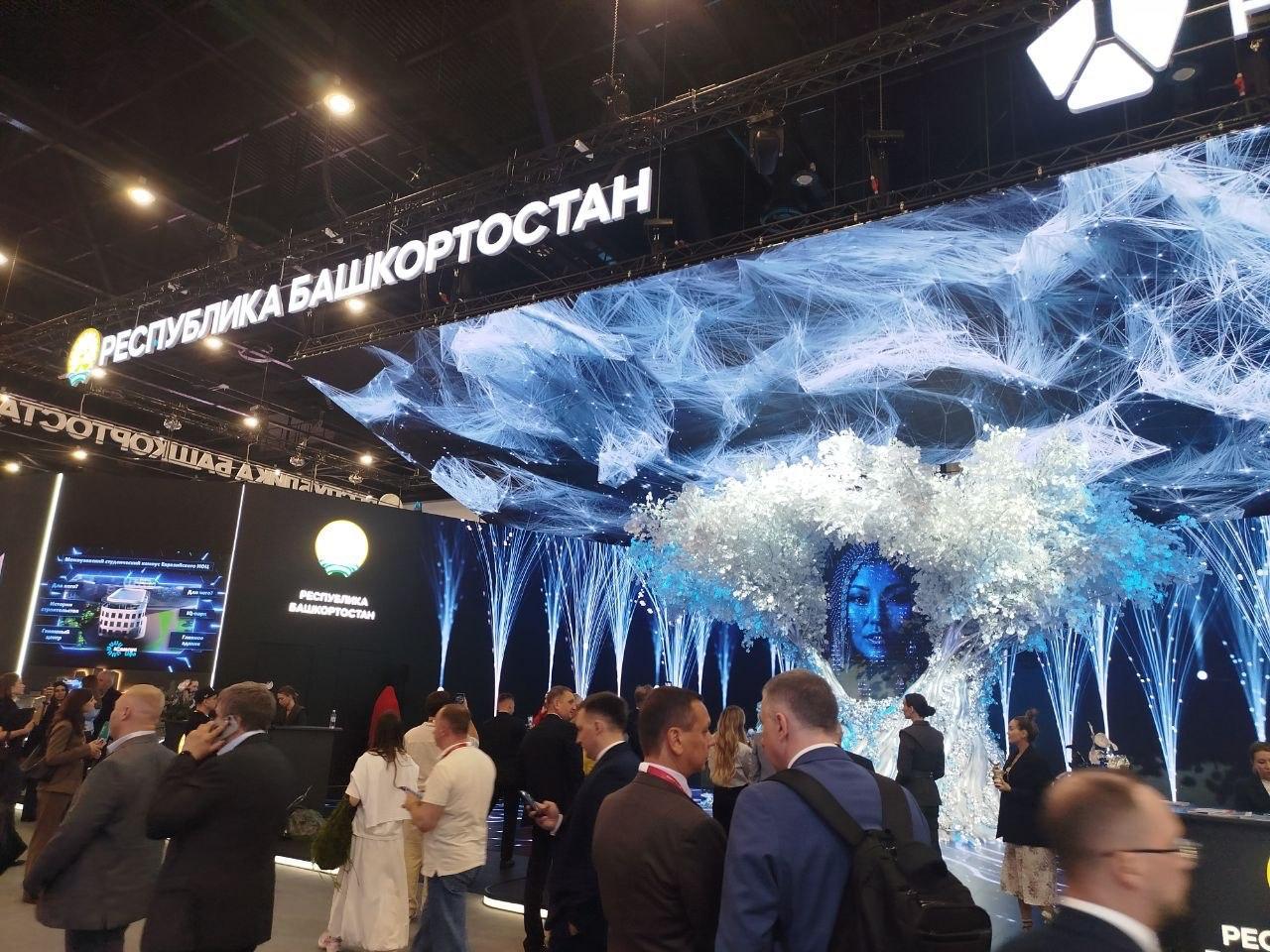

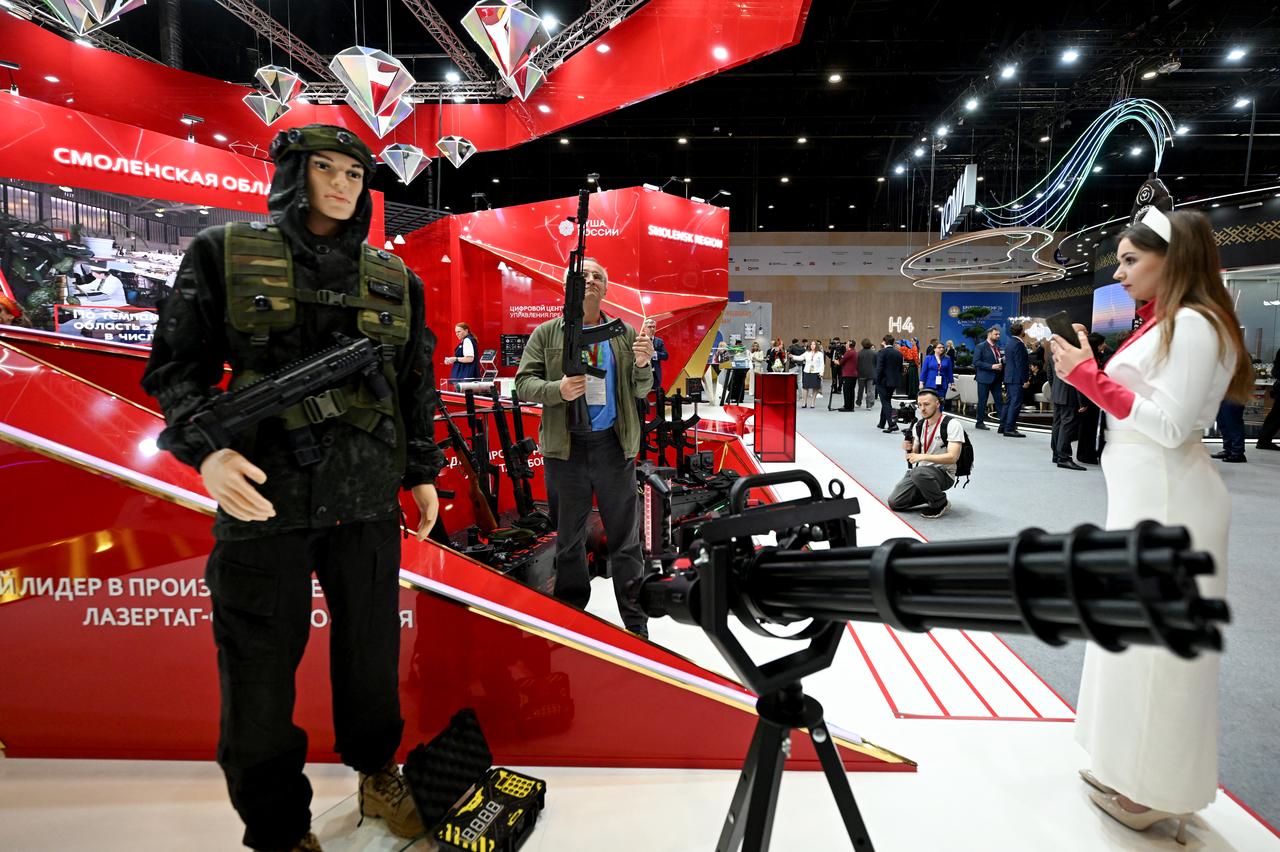
The forum floor showed this shift more clearly than any panel title. There were visible visitors and business groups from Asia, the Gulf and the wider Arab world. The stands for mining, chemicals, agriculture technology and industrial software were polished and confident.
A visitor could easily ask whether sanctions work at all. That is the wrong question.
Sanctions rarely erase an economy of Russia’s size. They change their costs, partners, incentives and time horizon.
They make some technologies harder to obtain, some financing more expensive, and some logistics more indirect. They do not prevent every factory, bank, trader or region from adapting.
Russia has adapted more successfully than many expected in 2022. Energy exports, defense production, state spending, Asian trade and rerouted supply chains have all helped Moscow adjust. The shock did not produce the rapid collapse some in the West had anticipated.
Yet the other side of the story is equally visible.
The World Bank’s latest Russia assessment points to a clear slowdown after stronger growth in 2024. Investment is constrained, labor is tight, and monetary conditions remain heavy, as the Bank of Russia’s key-rate data also shows. The forum showed resilience and adaptation, but resilience under pressure is not the same thing as an easy long-term growth path.
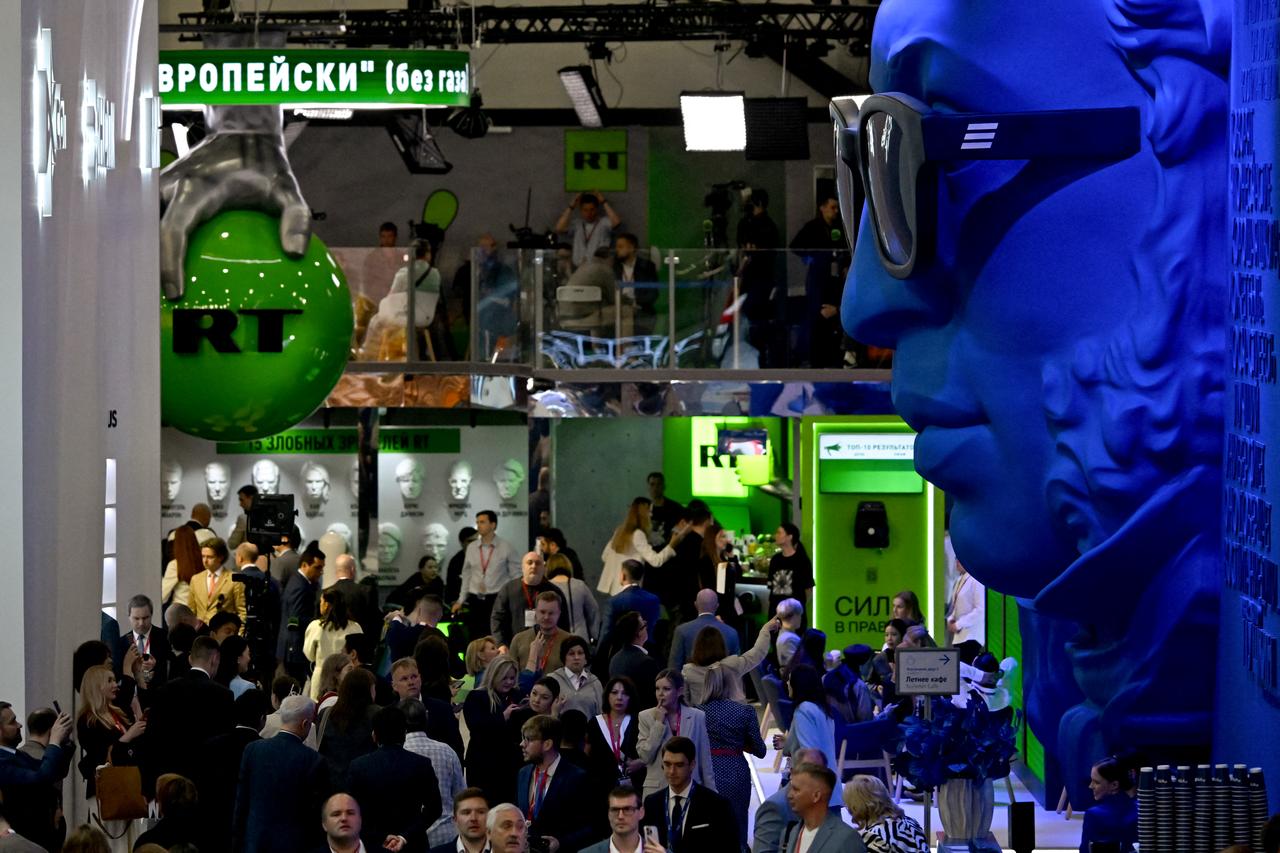
The war in Iran has made the picture more complicated. The Strait of Hormuz remains one of the world’s most sensitive energy chokepoints. For a commodity exporter such as Russia, higher energy and commodity prices can provide temporary relief.
Still, the benefit should not be overstated. Higher export revenues can be partly offset by domestic costs, sanctions, logistics problems, wartime spending and currency effects.
A commodity windfall buys time. It does not solve the deeper problems of productivity, technology and investment.
This is where the new globalization becomes visible. A state may trade with one side, borrow from another, buy technology from a third, and keep security ties with a fourth. This is not ideological clarity. It is risk management. Smaller and middle powers try to keep options open because they cannot afford a world of closed doors.
One should also treat Gulf-Russia capital flows carefully. It is too early to call the possible return of some Russian capital from the Gulf a major trend. Conversations around the forum suggest that some businesspeople who moved assets after 2022 now look at regional risk differently.
That is a signal but definitely not a conclusion. What is better documented is Russia’s effort to keep Gulf channels open, especially through Saudi Arabia’s guest-country role at this year’s forum.
Development can no longer be reduced to factories, roads and export growth. Those still matter, but they are not enough. The new development question is about capacity.
Energy security comes first. Without affordable and reliable energy, industrial policy and technology policy cannot be sustained. Technology capacity comes next. Artificial intelligence, automation, defense technologies, financial technologies and digital infrastructure are no longer narrow innovation issues. UNCTAD has warned that investment in AI and digital infrastructure is now tied to industrial policy and national security.
That is the right way to see it.
Connectivity is the third pillar. Ports, railways, pipelines, data centers, payment systems and trade corridors are no longer ordinary infrastructure. They are instruments of economic power. Human capital is the fourth. Technology can be imported, but it cannot be absorbed without people who can use, adapt and improve it.
This is also why countries are learning from one another more practically. China offers lessons in industrial scale and infrastructure planning. The Gulf offers lessons in capital management and post-oil investment strategies.
India offers lessons in digital public infrastructure and human-capital scale. ASEAN offers lessons in balancing among larger powers without closing doors. So the point is not to copy any model, but to select, adapt and build capacity at home.
For Türkiye, these developments are highly relevant.
Türkiye’s advantage in the coming period will not come from choosing one camp and closing the rest of its doors. It will come from disciplined flexibility.
Türkiye has deep links with the West, a large trade relationship with Russia, growing ties with the Gulf, energy interests in the Caspian and Black Sea, and a need to expand its presence in Asia and Africa. A country with this geography cannot think in binary terms.
That is why Türkiye should view platforms such as SPIEF not as symbolic gatherings but as venues where business networks, energy discussions, transport corridors and technology partnerships are tested and developed.
 2 min read
This does not require endorsing every political position expressed at the forum.
It requires being present where economic networks are being formed.
Diplomatic representation matters. But Türkiye's private sector, exporters, chambers of commerce, logistics firms, banks, agricultural companies and technology businesses should be equally visible.
If Indian, Chinese and Gulf actors are actively exploring opportunities, Türkiye should not be watching from a distance.


 Set as preferred source
 Set as preferred source


 1 min read