Newsletters


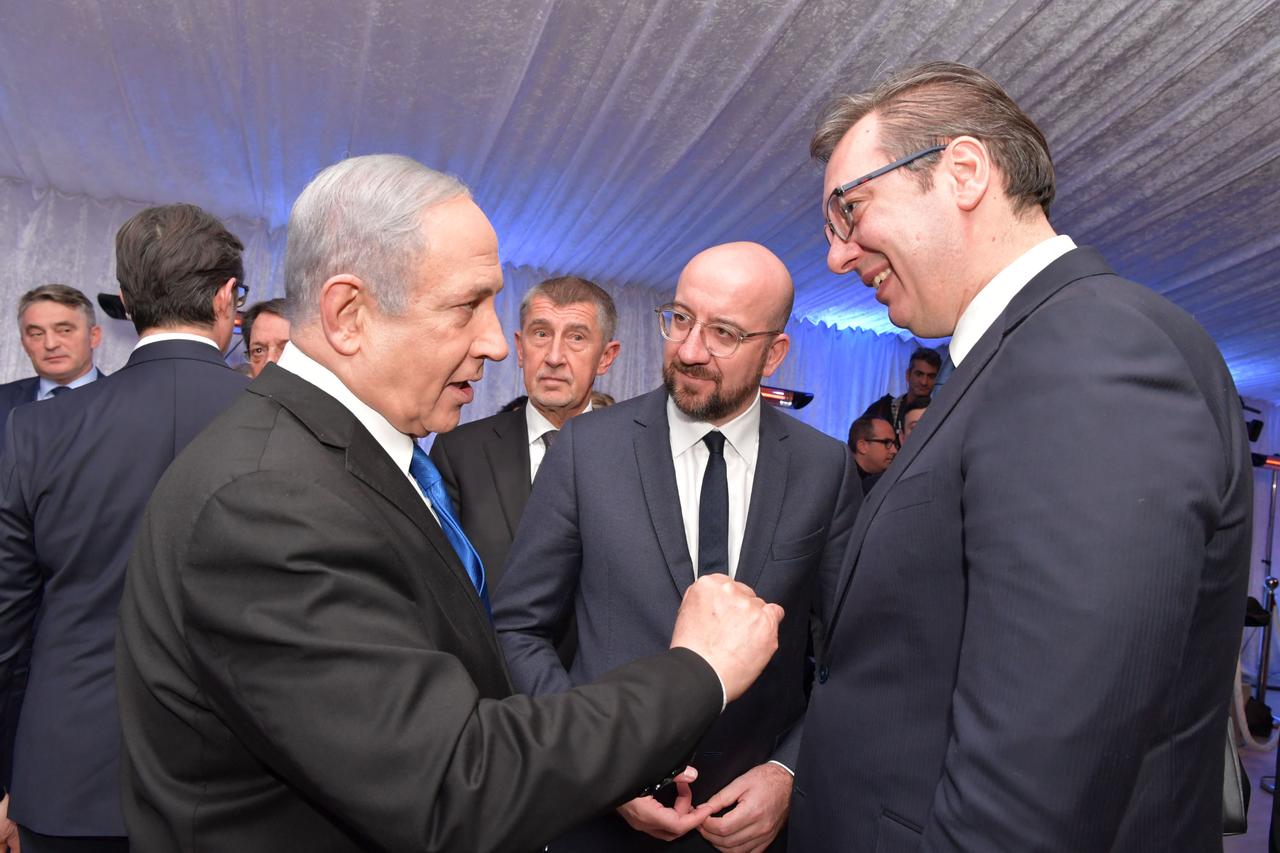


In Belgrade this week, at the International Legal and Human Rights Conference, Francesca Albanese stood before an audience of legal experts and delivered a warning that cut through diplomacy with unusual force.
As the United Nations’ independent expert on human rights in the occupied Palestinian territories, Albanese has spent years documenting patterns of violence and displacement. Her work consistently highlights potential war crimes and, increasingly, acts she warns may amount to genocide in Gaza. Her reports call for arms embargoes, accountability mechanisms and legal consequences, not only for direct perpetrators but also for the states that enable them.
In Belgrade, she made that argument explicit.
Serbia, she said, is “collaborating with Israel without shame.”
This was not just another political critique. It was a legal warning, one that places a Balkan state at the center of a growing global debate: when does cooperation become complicity?
Albanese’s intervention matters because it shifts the geography of accountability. The war in Gaza has largely been framed through the policies of Washington, Brussels, Berlin or Paris. But in Belgrade, the spotlight moved to an EU candidate country often treated as peripheral to Europe’s foreign policy core.
Yet the data tells a different story.
Serbia’s arms exports to Israel, primarily ammunition, have surged dramatically since October 2023, rising from roughly €1.4 million ($1.6 million) in 2023 to tens of millions annually, with 2025 figures already surpassing previous records in the first half of the year. While official disclosures remain limited, investigative reporting and customs tracking point to sustained flows of artillery munitions and related military goods.
This is not symbolic cooperation. It is material.
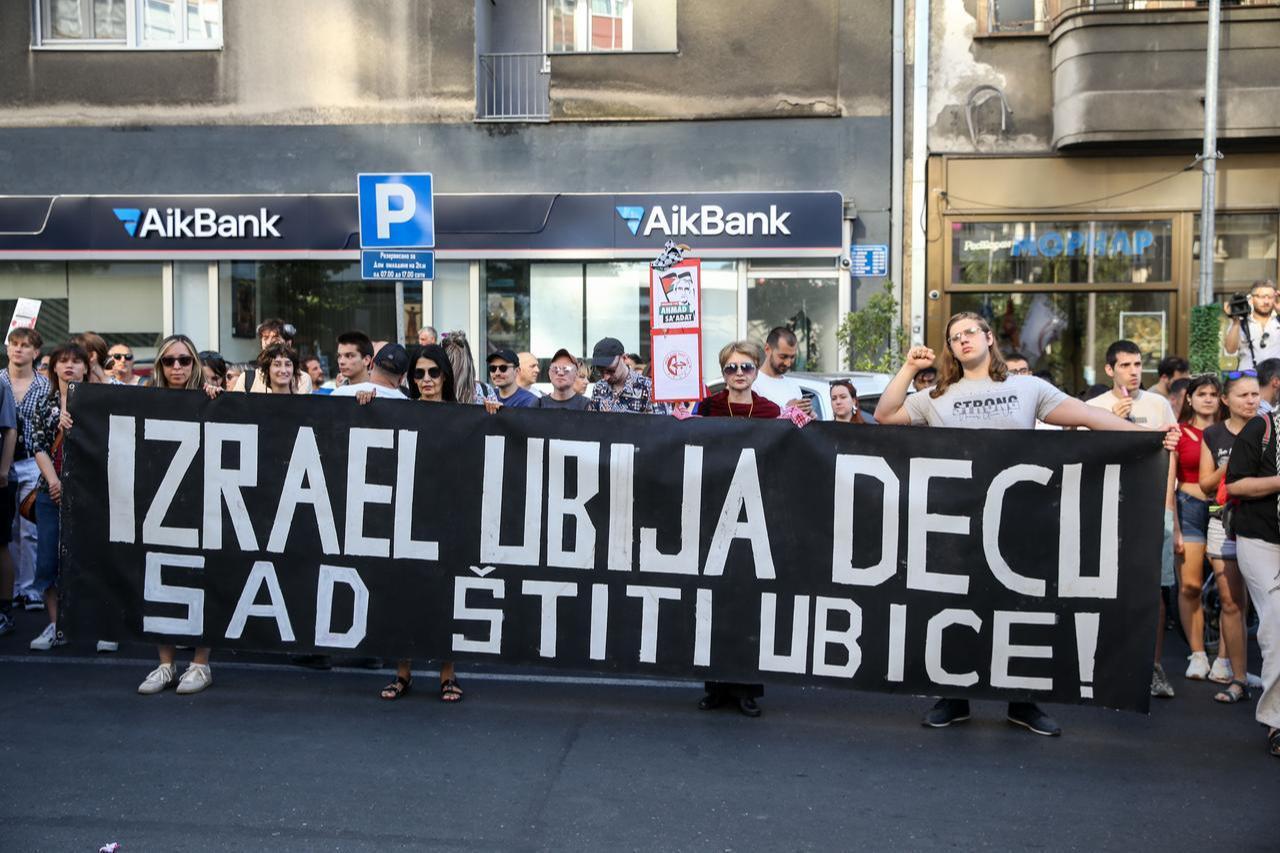

“They sell weapons to us, we sell weapons to them and this will continue,” said Aleksandar Vucic, framing the relationship as a standard bilateral exchange rather than a moral exception.
It is a familiar position. Serbia is not openly aligning itself with Israel’s military strategy, nor is it adopting the language of unconditional support seen elsewhere. Instead, Vucic is pursuing a long-standing doctrine: strategic ambiguity wrapped in pragmatic transactionalism.
Maintain ties with everyone, Brussels, Moscow, Washington. Commit fully to no one. Reject external pressure as interference.
But this balancing act is becoming harder to sustain. Because what Albanese is arguing is not political, it is legal.
This is not the first time Serbia has found itself at the center of international legal scrutiny.
Under the rule of Slobodan Milosevic, Serbia, alongside the political and military leadership of Bosnian Serbs, became the focus of investigations into war crimes and genocide during the 1992–1995 war in Bosnia and Herzegovina.
The International Criminal Tribunal for the former Yugoslavia indicted Milosevic, who died during trial, as well as Bosnian Serb leaders Radovan Karadzic and Ratko Mladic, both of whom were later convicted of genocide and crimes against humanity, including for the Srebrenica genocide.
In parallel, Bosnia and Herzegovina brought a case against Serbia before the International Court of Justice. In its 2007 ruling, the court found that while Serbia was not directly responsible for committing genocide, it failed to prevent it and failed to punish those responsible. That legal precedent now echoes uncomfortably in today’s debate.
Because three decades later, Serbia is again being drawn into a question of responsibility, not as a direct perpetrator, but as a potential enabler.

At the heart of the dispute lies a deceptively simple issue: When does trade become complicity?
Under international humanitarian law, states may be held responsible if they knowingly aid or assist actions that constitute war crimes. Albanese’s argument, echoed by a growing number of legal scholars, is that continued arms transfers to Israel, amid mounting allegations of violations in Gaza, risk crossing that threshold.
Serbia is not alone in facing this dilemma. Several EU member states, including Germany, France and Italy, have maintained varying degrees of defence trade or military cooperation with Israel since the start of the war, even as European institutions call for restraint and adherence to international law.
This is where the discomfort begins.
Because if the legal standard applies to Serbia, it must apply to Europe as well.
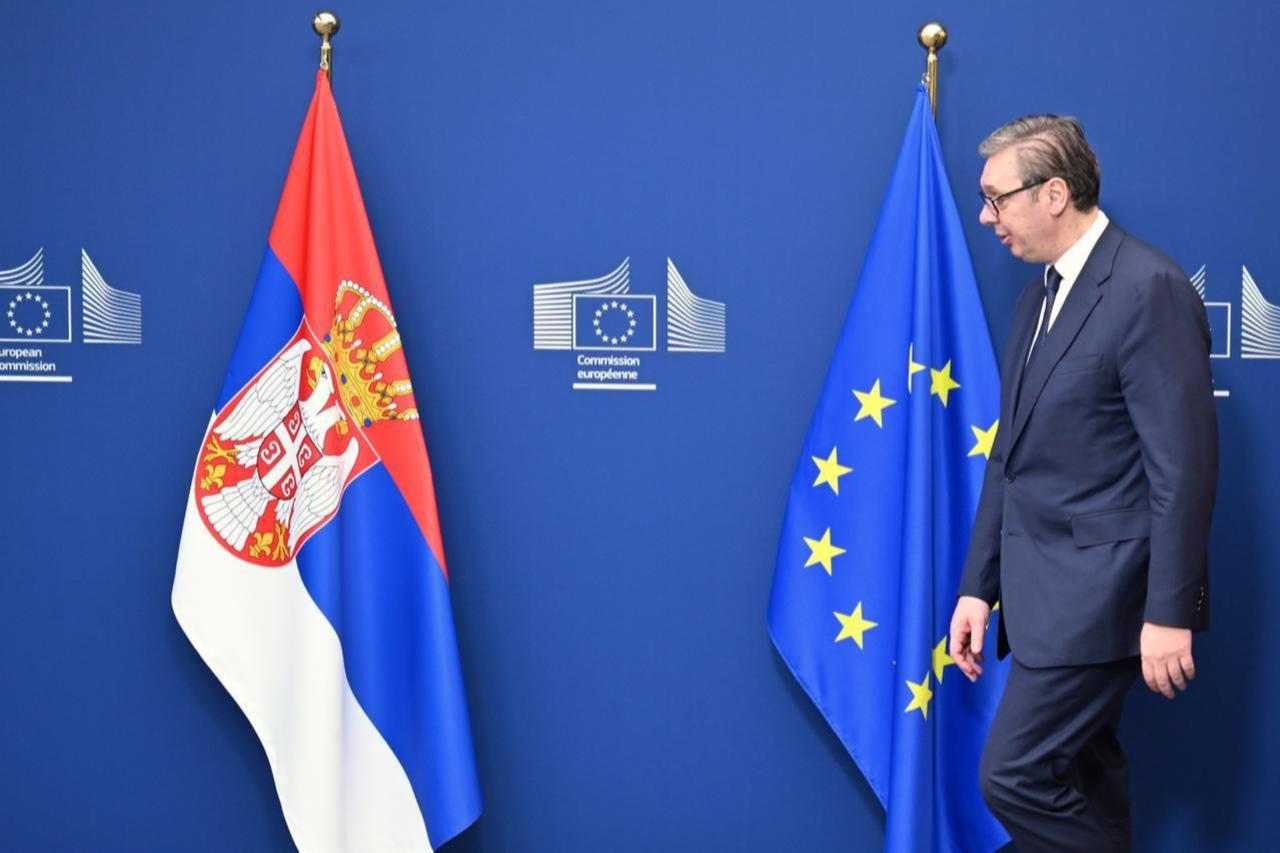
The European Union markets itself as a normative power, anchored in international law and human rights. Yet in Gaza, the bloc appears fractured, calling for ceasefires and humanitarian aid in public, while member states quietly maintain private defense ties with Israel.
Serbia, a candidate country that often lectured on alignment with EU values, now finds itself asking an uncomfortable question:
Aligned with which Europe?
The one that speaks or the one that trades?
What happened in Belgrade is a test of whether accountability in modern warfare can extend beyond those who carry out violence to include those who enable, supply or sustain it from afar.
What Albanese delivered was not just criticism. It was a warning.
A warning that in modern warfare, distance no longer guarantees innocence.
That supplying weapons is no longer politically neutral.
And that the line between observer and participant is becoming dangerously thin.
For Serbia, this is a moment shaped by history and defined by choice.
For Europe, it is something more unsettling: A question it may not be able to avoid much longer.


 Set as preferred source
 Set as preferred source


 2 min read
 1 min read