Newsletters





For a long time, the Yemen file was read like a “frozen” conflict. The lines on the map stayed put, and the capitals managed to reduce the crisis to a manageable background noise. However, recent harsh accusations directed at Riyadh toward Abu Dhabi have shattered this comfort.
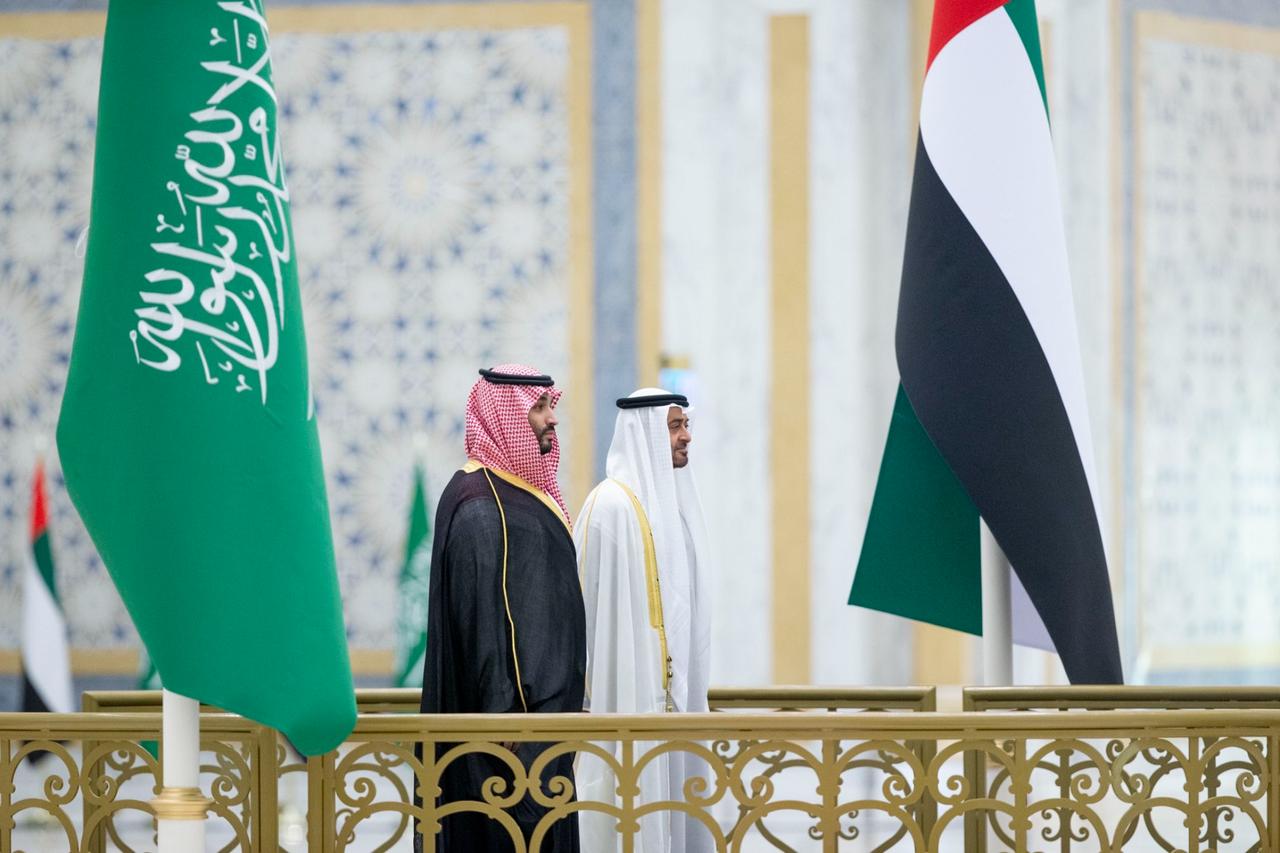
In early January 2026, Riyadh publicly accused the United Arab Emirates of helping Southern Transitional Council (STC) leader Aidarous al‑Zubaidi leave Yemen via Somaliland, framing the move as a breach of trust within the Saudi‑led coalition. This episode transformed what had long been treated as tactical disagreements over Yemen into open accusations that directly question Abu Dhabi’s intentions on the southern front.
Southern Yemen is fast becoming a laboratory testing the internal balances of the Gulf, while the Red Sea line faces the economic bill of this tension. And frankly, this picture does not offer a very comfortable ground for those trying to turn Ankara’s balance of power politics with the Gulf into a game of binary choices.
You can see the rhythm of the fracture right on the field. The fact that crowds gathered around the STC—one of the main carriers of the separatist line in Southern Yemen—have taken to the streets of Aden serves as a reminder that the “southern issue” was never closed. These demonstrations might not produce a regime change on their own.
Yet, for Riyadh, the real problem is that the question of who the actors on the ground take orders from is once again open for debate. In a multi-layered front like Yemen, legitimacy is not carried through flags or declarations; it takes shape at border crossings, in ports, in the militia chain of command, and in the flow of salaries.


This is why Riyadh’s reaction cannot be read simply as a breach of protocol. The Saudi side, bringing up the claim that the separatist leader was spirited out of the country with UAE assistance, has elevated the language of the crisis directly to a “crisis of confidence.”
In the Saudi narrative, the headline about Zubaidi’s alleged UAE‑facilitated escape carries a message less about Yemen’s internal future and more about the hierarchy within the Gulf. The moment moves in the south puncture the framework drawn by Riyadh, the Yemen file ceases to be a coalition field and turns into an arena of competition.
As this competition grows silently, the consequences rapidly regionalize when combined with Red Sea security. The weakness of the central authority in Yemen expands the maneuvering space for the Houthi card. The risk perception regarding maritime traffic produces a chain reaction, from insurance premiums to route choices.
The issue is this: While the language of security hardens over the Red Sea, the language of trade finds its own path; that path often means sailing all the way around Africa. This decision is written as a delay and cost in the global supply map; for regional countries, it returns as direct revenue loss and political pressure.

The starkest indicator is the erosion in Egypt’s Suez revenues. Cairo, citing a monthly loss of roughly $800 million due to the Red Sea crisis, takes the concept of “security cost” from abstract to concrete. This Suez data underlines how cracks in Yemen transform into regional inflation: militia infighting in one place leads to a drop in canal revenue elsewhere, volatility in energy and food prices in another, and eventually, unrest in domestic politics further down the line.
Gaza is often presented as a “side stage” in this picture, but on the ground, it plays the role of the main accelerator. Every movement in the Red Sea touches the legitimacy debate read through Palestine.
Every new chapter opened in Yemen magnifies the question in the regional public opinion: “Who is doing what, and on whose behalf?” The answer to this question also determines the acceptance of maritime security coalitions on the ground. For actors of the war economy, a legitimacy vacuum is an opportunity space.
The humanitarian picture, however, is harsher: As we enter 2026, the framework where the need for aid in Gaza encompasses the entire population and approximately 2.1 million people need urgent support brings a pressure of conscience to every security equation in the region. Every ship patrolling the Red Sea, every container leaving the port, and every rumor spreading in the region passes through this pressure.
At this exact point, Ankara’s Gulf policy sits on a ground much more sophisticated than the dilemma of “taking sides.” While repairing its relations with Gulf capitals in recent years, Türkiye did not fix itself to a single axis. Economy, defense, finance, humanitarian diplomacy, and mediation channels produced a flexibility that complements one another.
The value of this flexibility emerges when the Saudi-UAE line produces tension: For Ankara, the issue is not about choosing one but managing risks as one of the few actors capable of talking to both capitals.

There are two critical dimensions to this management. The first is the use of financial and commercial instruments as a “strategic buffer” in a period where economic ties can rapidly become politicized. The currency swap agreement of 18 billion dirhams (around $4.9 billion) announced between the central banks of Türkiye, and the UAE is one of the signs showing how this buffer is established.
The second dimension is the search for establishing a broader economic bond with the institutional framework of the Gulf. In March 2024, Türkiye and the Gulf Cooperation Council formally launched free trade agreement negotiations in Ankara, as announced in a joint statement by GCC Secretary‑General Jassim Al‑Budaiwi and Turkish Trade Minister Omer Bolat. This development tells us that Ankara does not view the Gulf merely as a sum of bilateral files, but as an institutional economic space in which it seeks a deeper, rules‑based integration.
What do these two dimensions provide for Türkiye on the Yemen-Red Sea line? Primarily, it moves Ankara to a playmaker position outside the calls for a “military solution.” For Saudi Arabia, stability in Yemen means border security and a manageable political transition.
For the UAE, Yemen is intertwined with a sphere of influence in the south, port networks, maritime trade, and regional leverage. When these goals clash, it does not seem realistic for a third actor to enter the field as a “fair referee.” Still, what is sought in moments of crisis is not romantic arbitration but the keeping open of communication channels.
The contribution Ankara can make is to produce a “cooling diplomacy” that diagnoses the elements escalating the tension, understands the red lines of the parties, and reminds them of the economic cost in the Red Sea.
Here, the critical question is: As the bill for the Red Sea grows, how long can Gulf capitals sustain the luxury of competition in Yemen? A second question is important for Türkiye: While preventing Gulf internal tensions from spilling over into Türkiye, how does Ankara define its own role in the regional maritime security architecture?
Türkiye has an interest in every step that prevents Yemen from turning back into a hot front, because a hot Yemen increases the Red Sea risk, feeds the tension in the Eastern Mediterranean, makes energy and trade routes expensive, and deepens intra-regional polarization. Therefore, the balanced policy Ankara has established with the Gulf cannot be seen as a “preference for comfort”; this policy is a strategic necessity aimed at preventing the fires around Türkiye from touching one another.
The crack opening in the south of Yemen has recalled the old arguments between Riyadh and Abu Dhabi. The Red Sea makes the economic price of this argument more visible every day. As the region moves through the first month of 2026, it is approaching a threshold where security and trade cannot be decoupled.
The task before Ankara is not so much to turn this threshold into an opportunity, but to keep the fracture at a manageable level. Because when the silent crack in Yemen deepens, the wave does not stay in Aden; it reaches Suez, the Mediterranean, and eventually, Ankara’s economic calculations.


 Set as preferred source
 Set as preferred source


 2 min read

 1 min read