Newsletters




Once again, the Middle East has stepped back from the brink of a regional war.
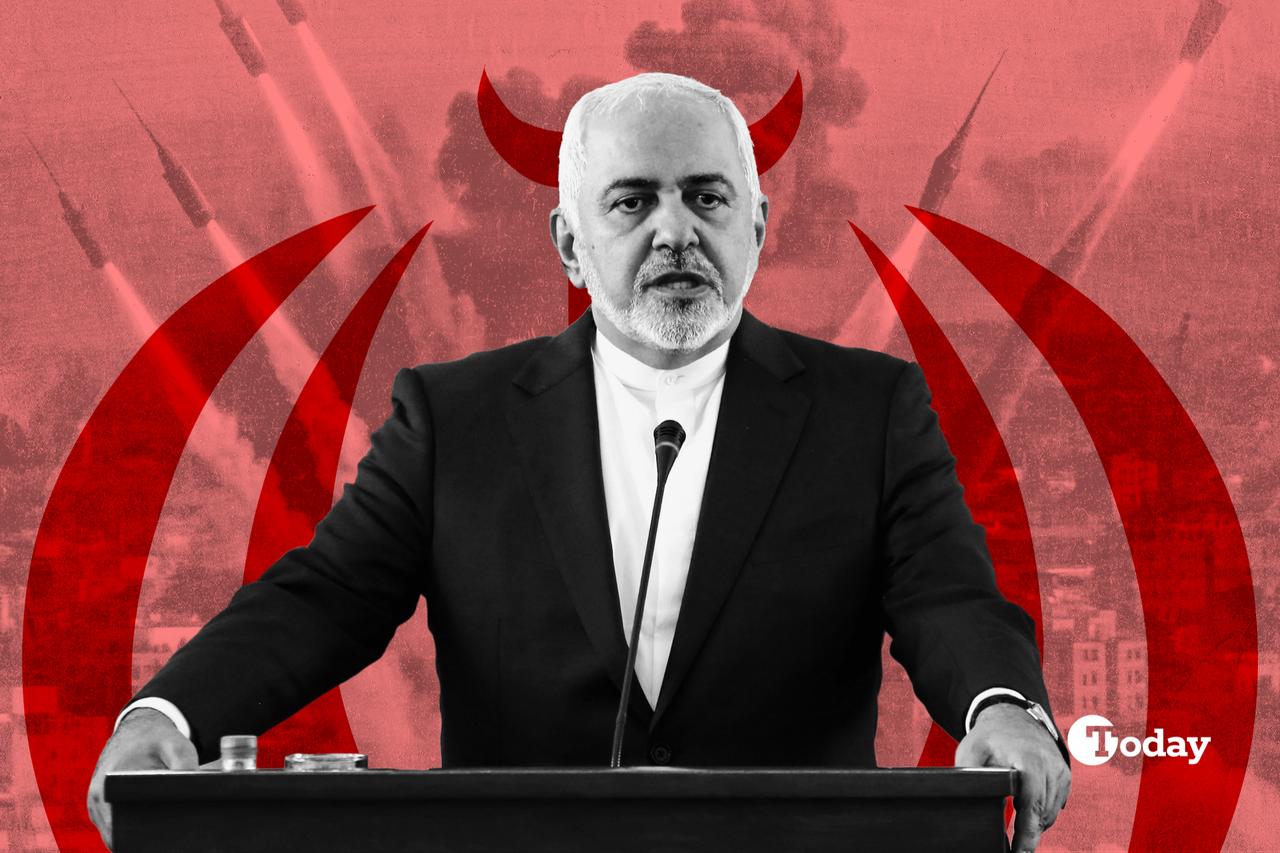
Just a few days ago, the crisis was unfolding under the shadow of the threat that “an entire civilization could be wiped out.” Today, it appears to have been halted by a two-week ceasefire. But this is not an ordinary ceasefire. This is a threshold where tactical gains on the battlefield have been transformed into strategic bargaining at the negotiating table. And at this threshold, the most striking element is that the emerging framework is in fact “Zarif’s peace.”
The peace proposal put forward by former Iranian Foreign Minister Mohammad Javad Zarif in Foreign Policy initially seemed like a theoretical exercise. However, at this stage, this text forms the basis of the negotiations between the U.S. and Iran, according to a regional source familiar with the talks. “More importantly, this framework was not adopted as it was; it was revised through negotiations between the two sides and ultimately formed the basis of the ceasefire and the diplomatic process on the ground,” the source says.
Before the ceasefire was declared, Iranian sources also told me that "the ball is now in the U.S.’ court," noting that following the amendments made to the initial draft, the mediators had conveyed Iran’s proposal to the U.S. and that the decision now rested with Trump. Sources I spoke to in Tehran also said that a reasonable and conciliatory text had been presented to the mediators. This process was conducted through the mediation of Pakistan, Türkiye, and Egypt.
The ceasefire we see today, in this respect, is more than just a ceasefire: it is a negotiation architecture born out of war.
The reality on the ground forced diplomacy. Weeks of mutual attacks, risks to energy infrastructure, the closure of the Strait of Hormuz, the emergence of a prolonged global crisis, and the failure of the United States to achieve its political objectives in the war all pushed toward a diplomatic solution. In this process, Pakistan’s involvement was decisive. Islamabad, through the channels it established with both Washington and Tehran, put forward a formula of “two-week ceasefire and negotiations” based on Zarif’s peace plan.
As a result, the parties accepted the ceasefire in line with this proposal, and talks are planned to begin in Pakistan on Friday. Iran announced that “negotiations will begin on April 10.”
At this point, Türkiye’s role should not be overlooked. As a rare intermediary capable of engaging both Iran and the West, Ankara maintained a delicate balancing act throughout the process. Ultimately, the synergy between Pakistan’s ground-level mediation and Türkiye’s diplomatic framework successfully averted a total escalation of the war.
However, what makes this process truly interesting is not the ceasefire's terms, but the underlying philosophy. The peace plan proposed by Zarif was different from classical “zero-sum” agreements. It did not envisage either Iran’s complete retreat or the continuation of the U.S. maximum pressure policy. Instead, it proposed a balance based on mutual concessions.
Among Zarif’s proposals on the Iranian side were: “a commitment not to pursue nuclear weapons,” “reducing enriched uranium below 3.67%,” “permanently accepting the IAEA Additional Protocol,” “ensuring safe commercial passage in the Strait of Hormuz,” and “signing a permanent nonaggression agreement with the United States.”
In return, what was expected from the United States was also clear: “removal of unilateral sanctions,” “allowing Iran to export oil,” “abandoning the demand for zero enrichment,” and “integrating Iran into the global economy.”
This framework was, in fact, a “mutual normalization package.” Today, it is clear that while it may not have been adopted in its original form, its core principles have been successfully reshaped through the ongoing negotiation process
Developments on the ground confirm this. The United States' acceptance of the ceasefire and Iran's commitment to ensuring safe passage in the Strait of Hormuz became the first concrete reflection of this logic of mutual concessions. As can be clearly seen in the text in which Trump announced that he accepted the ceasefire, the arrangement was based on “the United States halting attacks and Iran reopening the Strait of Hormuz to trade.”
At this point, the following question must be asked: Is this truly a peace process, or just a pause?
The outcome largely depends on the next two weeks. This is not a traditional ceasefire intended to simply freeze the conflict; rather, both parties have explicitly framed this window as a period for active negotiation. Tehran has already suggested that the process could be extended if progress is made.
This leads to one conclusion: the fate of the ceasefire now rests on the success of the negotiations themselves.
Should the parties find a genuine middle ground within Zarif’s framework, these two weeks could serve as the foundation for a new security architecture in the Middle East. If they fail, this period will be remembered merely as a brief postponement of a much larger conflict.

 1 min read

Trump’s statements also reveal the psychological dimension of this process. After announcing the ceasefire, the U.S. President shared another message on social media beginning with the words “A big day for World Peace!” and focused on peace. He stated: “A big day for World Peace! Iran wants it to happen; they’ve had enough! Likewise, so has everyone else! The United States of America will be helping with the traffic buildup in the Strait of Hormuz. There will be lots of positive action! Big money will be made… I feel confident that it will… this could be the Golden Age of the Middle East!!!”
This statement, like many of Trump’s, is far from classical diplomatic language. However, it clearly shows one thing: Washington now sees this process not only as a security issue, but also as an economic opportunity.
Markets immediately priced this in. Oil prices fell sharply, while global stock markets rose. In other words, the economic shock of war turned into a diplomatic relief.
This brings us to the core of the matter: Is the "Zarif model" truly sustainable?
This model requires the parties to abandon their “maximum gain” objectives. For Iran, this means limiting its nuclear program. For the United States, it means partially stepping back from its policy of putting Iran under total pressure. However, Trump maintains his position on the nuclear issue at this threshold. In a brief interview with AFP, he stated that Iran’s highly enriched uranium stockpile would be “perfectly taken care of” within the framework of the ceasefire agreement.
These elements create a peace ground that is far from the maximalist approach described by Zarif and allows everyone to take a share of victory and convince their domestic audiences. Indeed, the fact that both sides declared victory with the mutual acceptance of the ceasefire clearly demonstrates this.
Nevertheless, at this juncture, one conclusion stands out: this ceasefire was born not from military exhaustion, but from the global repercussions of the conflict, which effectively forced the hand of diplomacy. This window of opportunity should, in essence, be recognized as "Zarif’s peace."
This process shows, for the first time, a pivot away from the pursuit of maximalist demands toward a calculated search for equilibrium through mutual concessions. While Pakistan’s mediation on the ground, Türkiye’s diplomatic balancing, and the weight of global pressure have shifted the war’s trajectory, the most profound transformation has occurred at the level of mindset.
The question is no longer "who won?" Instead, the focus has shifted to a more fundamental concern: can a balance be struck that is capable of truly ending this war? The answer will be written in the next two weeks.
Of course, the sustainability of this framework depends entirely on whether Israel refrains from actions designed to destabilize the current momentum.


 Set as preferred source
 Set as preferred source


 1 min read