

 Newsletters


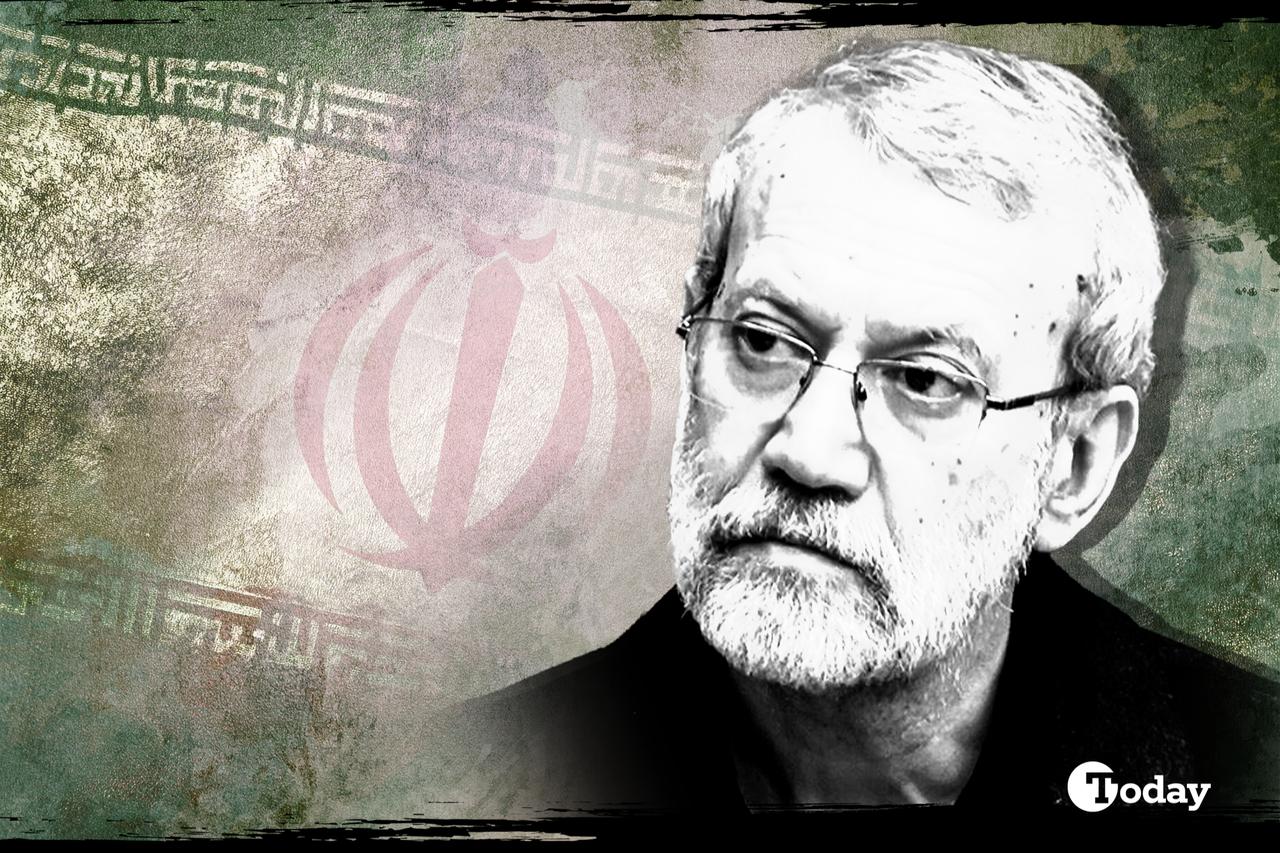


Amidst the chaos surrounding the Islamic Republic’s fate, a well-established veteran figure appears to have played a diplomatic maneuver that could secure the regime’s survival, perhaps for another decade.
Iran’s Supreme Leader Ali Khamenei has appointed Ali Larijani as his “special representative” for talks with the United States. The move places a seasoned insider at the center of sensitive diplomacy at a time of mounting regional tension and renewed American pressure.
Larijani was the country’s de facto leader during the height of the anti-government protests in January.
The security chief is widely viewed as a figure capable of navigating a potential reform phase in a potential post-Khamenei era. Technically, he cannot succeed the supreme leader as he does not hold the clerical rank of "ayatollah" required for the position. Yet his political weight derives from a rare combination of institutional ties, intellectual credentials, and family legitimacy.
For the Islamic Republic, Larijani functions as a bridge: between clerics and generals at home, and between Tehran and Western capitals abroad. His background in the Islamic Revolutionary Guard Corps gives him credibility with the security establishment. His academic work in Western philosophy and years of diplomatic engagement make him legible to foreign interlocutors. Through his family, he retains deep roots in the clerical class.
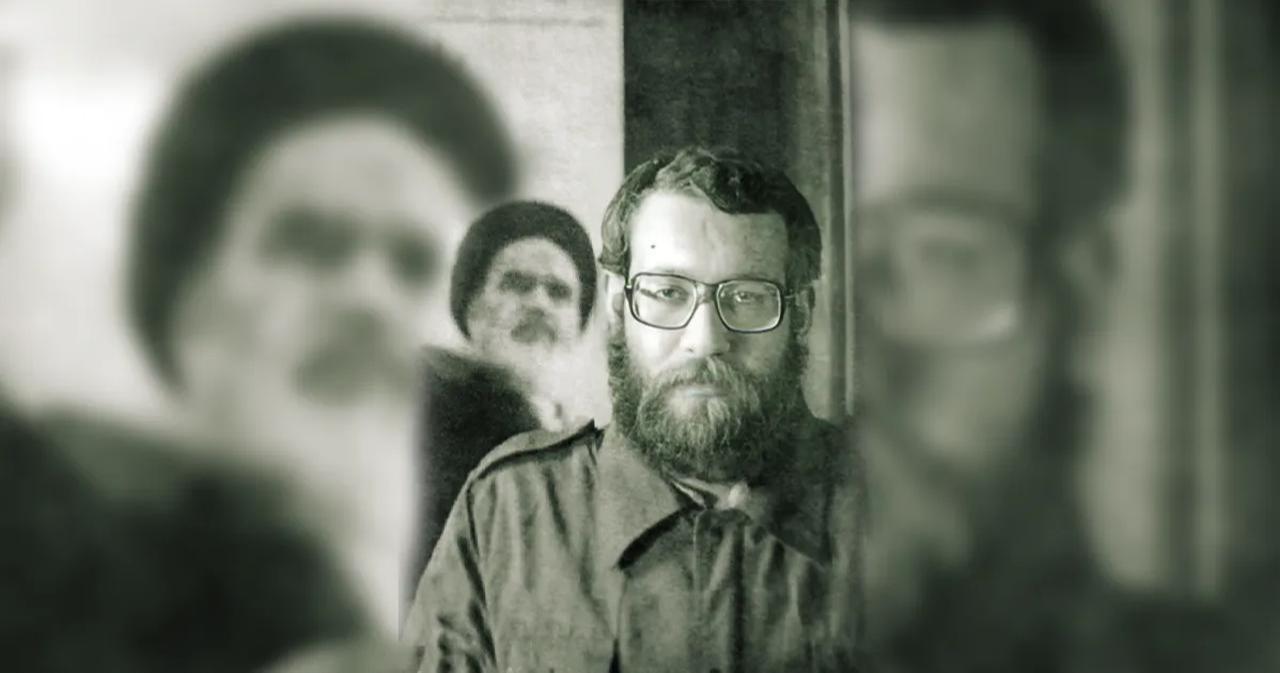

Ali Larijani was born on June 3, 1958, in Najaf, Iraq, into an Iranian Persian family. His family traces its origins to Amol, in Iran’s Mazandaran province, and is well established in the country’s religious elite.
His father, Mirza Hashem Amoli, was a prominent cleric. The family had moved to Najaf in 1931 amid pressures during the reign of Reza Shah and returned to Iran in 1961. This cross-border religious and political heritage shaped Larijani’s early worldview.
He completed his religious studies in Qom before pursuing a secular academic path. He earned a bachelor’s degree in computer science and mathematics from Aryamehr University of Technology, now known as Sharif University of Technology. He later obtained a master’s degree and doctorate in Western philosophy from the University of Tehran.
His scholarly work focused on major Western thinkers, including Immanuel Kant, Saul Kripke, and David Lewis. He also served as a faculty member in the literature and humanities department at the University of Tehran, reinforcing his dual identity as both an intellectual and a political actor.
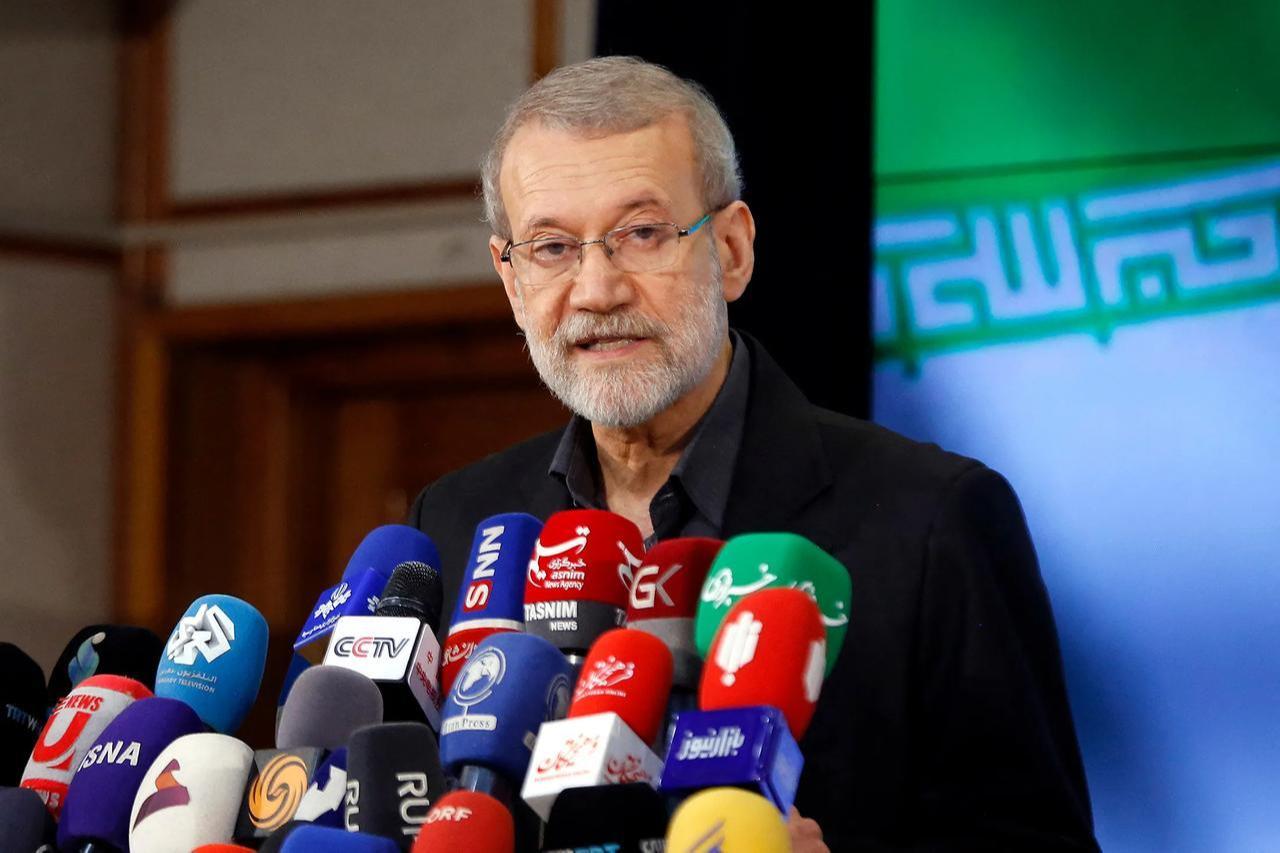
Larijani’s early career included positions within the Islamic Revolutionary Guard Corps; however, rather than serving on the front lines during the Iran-Iraq War, he held posts in the (now defunct) ministry of the IRGC and at joint staff headquarters.
There is no reference to him in the IRGC’s multivolume Iran-Iraq War chronology, and contemporaries have noted that he never fully commanded the respect of peers within the military establishment.
In the early 1990s, Larijani emerged as a key cultural policymaker during what some observers call “The Chief Cultural Engineer” era (1992–2004),” a period in which he consolidated influence over media and public messaging while redefining state cultural management.
Adopting a technophile and pragmatic stance, he legalized video recording equipment and established official rental outlets for Hollywood and Bollywood films in an effort to prevent what authorities described as “moral panic” and the spread of illegal copying. The move reflected a controlled opening rather than liberalization.
In March 1994, he was appointed head of the Islamic Republic of Iran Broadcasting (IRIB), the powerful state broadcaster. Khamenei’s decision to install Larijani at IRIB was widely interpreted as a strategic effort to sideline President Akbar Hashemi Rafsanjani’s brother and to create a political wedge between Larijani and Rafsanjani himself.
During his decadelong tenure at IRIB, Larijani became a central actor in factional struggles. He used the broadcaster to actively undermine President Mohammad Khatami’s reform agenda, a confrontation that eventually led Khatami to bar Larijani from attending Cabinet meetings.
One of the most controversial episodes of this period was his approval of the 1996 broadcast of the documentary “Identity” (Hoviyat), which featured coerced confessions from intellectuals and dissidents; Larijani later sought to distance himself from the program, attributing responsibility to subordinate officials. The episode remains emblematic of the hardline media campaigns that defined the era.
In August 2004, Larijani became security adviser to the supreme leader, and in 2005, he was appointed secretary of the Supreme National Security Council. In that capacity, he served as Iran’s chief nuclear negotiator until 2007.
He took a sharply critical view of earlier diplomatic efforts. He famously derided the 2013 nuclear agreement negotiated by Hassan Rouhani as “trading pearls for bonbons,” signaling his belief that Tehran had conceded too much for too little. The remark captured his preference for a more guarded and leverage-driven approach to negotiations.
Elected to parliament from Qom in 2008, he became speaker the same year and remained in that role until 2020. Over 12 years, he presided over debates on sanctions, regional policy, and internal economic reforms, often positioning himself as a pragmatic conservative capable of brokering elite consensus.
He later registered for the 2021 and 2024 presidential elections but was disqualified by the Guardian Council.
 2 min read
Larijani’s career has not been free of controversy. In 1997, his brother Mohammad Javad Larijani was drawn into what became known as the “British Hand” scandal after meeting a British official in London and suggesting that a conservative electoral victory would better serve Western interests, fueling public perceptions that the Larijani brothers were “agents for the British.”
Although the episode did not derail the family’s political standing, it contributed to enduring suspicions across Iran’s factional landscape. The Larijanis have long occupied influential roles across the judiciary, academia, and foreign policy institutions.
Ali Larijani is the son-in-law of Morteza Motahhari, one of the Islamic Republic’s foundational ideologues. His brothers Sadeq, Mohammad Javad, Bagher, and Fazel Larijani have each held prominent posts, reinforcing the family’s embedded status within the system.
His daughter, Fatemeh Ardeshir-Larijani, trained in medicine in the United States and served as an assistant professor of thoracic oncology at Emory University. In early 2026, amid controversy surrounding Iranian protests and public pressure in the United States, her contract with the university was terminated, underscoring the cross-border reverberations of Iran’s domestic politics.
Since Aug. 5, 2025, Larijani has served as secretary of the Supreme National Security Council. In this role, he coordinates Iran’s security policy, oversees strategic deliberations, and plays a central role in managing internal unrest and external negotiations, particularly on the nuclear file.
He continues to serve on both the Expediency Discernment Council and the Supreme Council of the Cultural Revolution. His portfolio spans domestic stability, regional security, and engagement with global powers.
Recent protests inside Iran and rising regional tensions have prompted additional U.S. sanctions targeting Iranian officials, including Larijani. Even so, his reappointment signals that Tehran views him as a pragmatic operator capable of steadying the system under strain.
Born in Najaf yet firmly anchored in Iran’s nationalist framework, Larijani embodies a particular archetype within the Islamic Republic: a bureaucratic strategist fluent in both revolutionary doctrine and global discourse. As Iran recalibrates its security posture and diplomatic outreach, he stands at the intersection of continuity and cautious adaptation.


 Set as preferred source
 Set as preferred source



 1 min read


