Newsletters


Bulgarians will head to the polls Sunday, Oct. 25, to elect a president and vice president, with 27 candidate pairs competing in an election shaped by growing security concerns in the Black Sea, shifting policies toward Ukraine and questions over the country's relations with Russia.
Approximately 6.5 million registered voters are eligible to participate in the election, which has increasingly become a test of Bulgaria's geopolitical direction and the balance of political power in the Balkan country.
Polling stations nationwide will open at 7:00 a.m. local time and close at 8:00 p.m., although voting may continue until 9 p.m. if voters remain in line, according to the Central Election Commission (CEC).
The same voting hours will apply at polling stations abroad, based on local time.
The CEC announced that 613 polling stations would operate across 60 countries. The United Kingdom will have the largest number, with 82 stations, followed by Türkiye with 78 across 18 provinces, Germany with 70, Spain with 67, and the United States with 44.
Bulgaria's previous presidential election was held on Nov. 14, 2021, with a runoff taking place Nov. 21 that year.

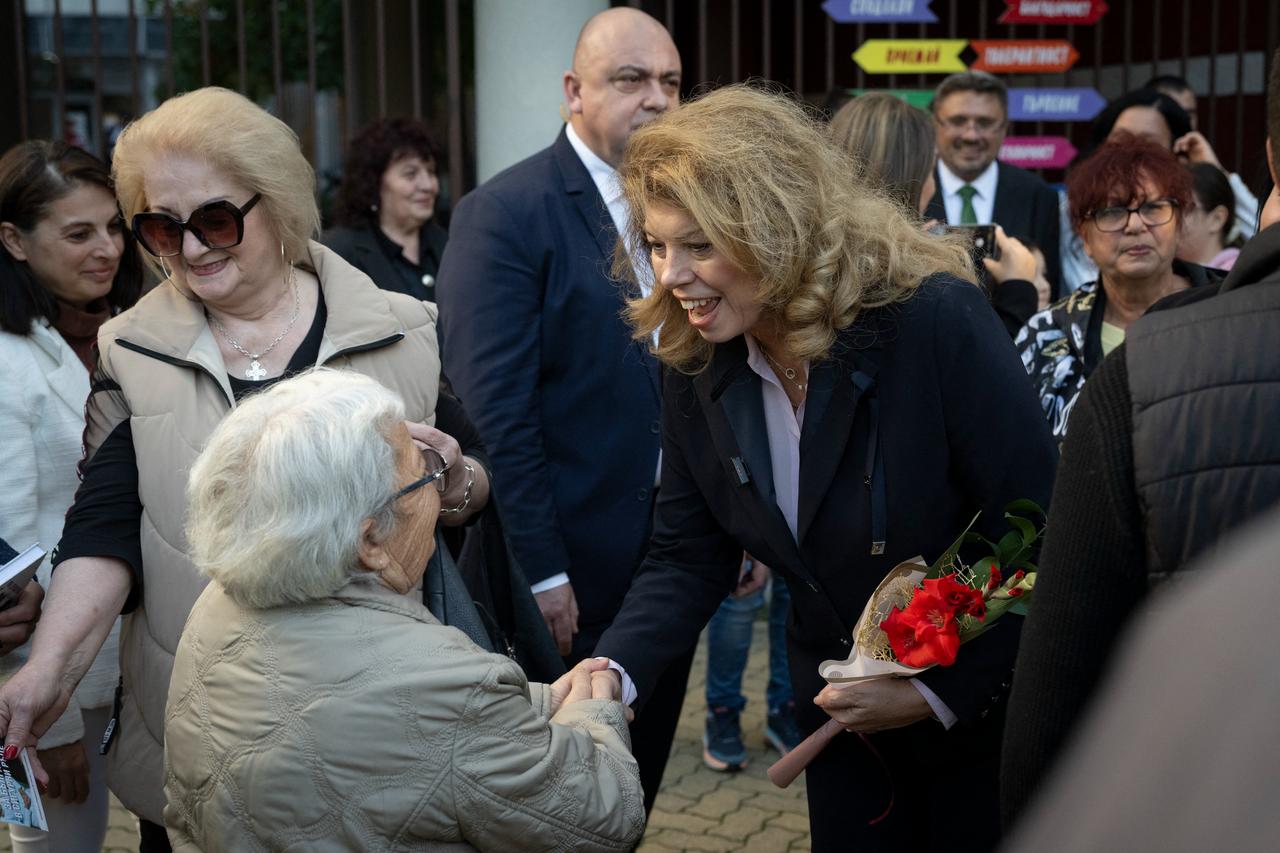
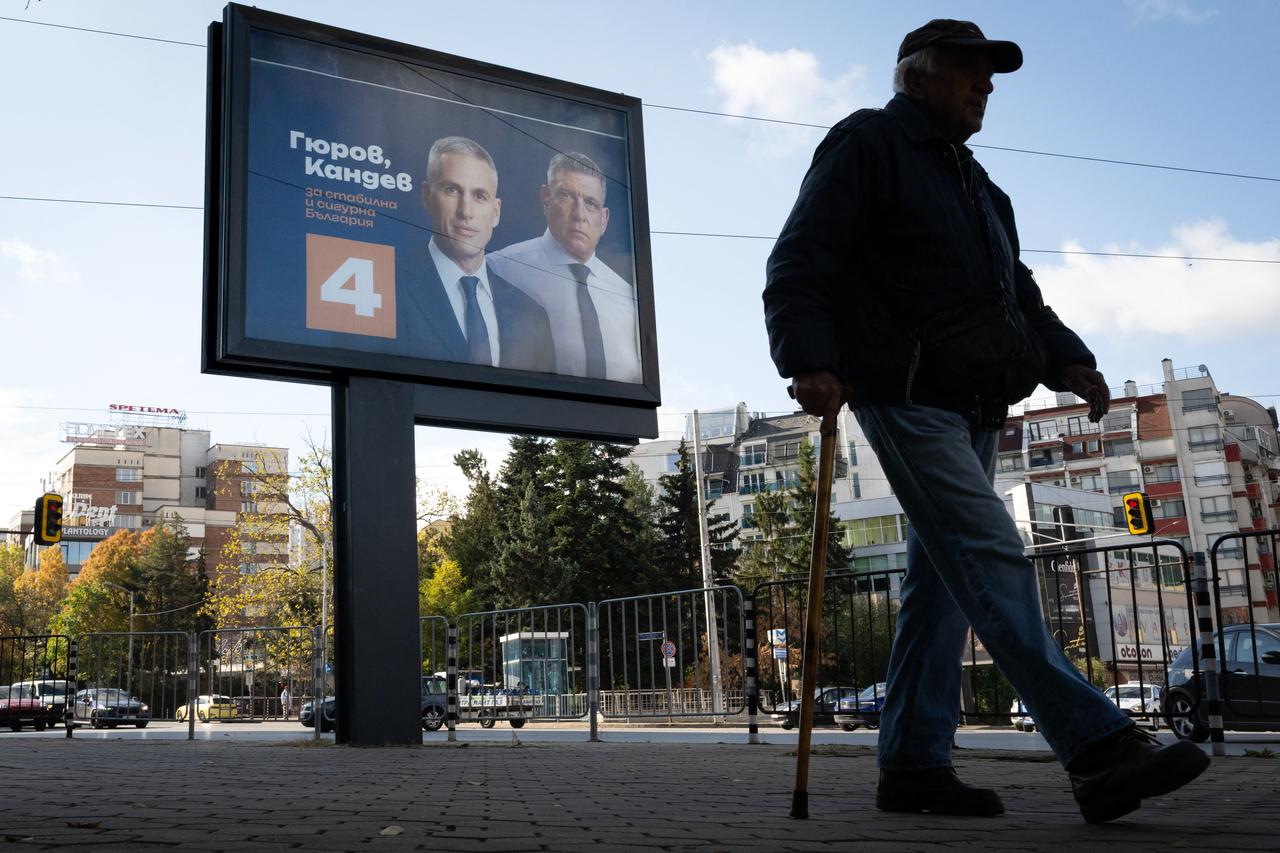
Opinion polls suggest that pro-Russian incumbent President Iliana Iotova and former caretaker Prime Minister Andrey Gyurov, backed by opposition parties, are the leading contenders among the 27 candidate pairs.
One set of public opinion surveys puts Iotova's first-round support at 43.4%, compared with 28.9% for Gyurov.
A separate Gallup International survey cited by analysts places Iotova at 44.9% and Gyurov at 24.8%.
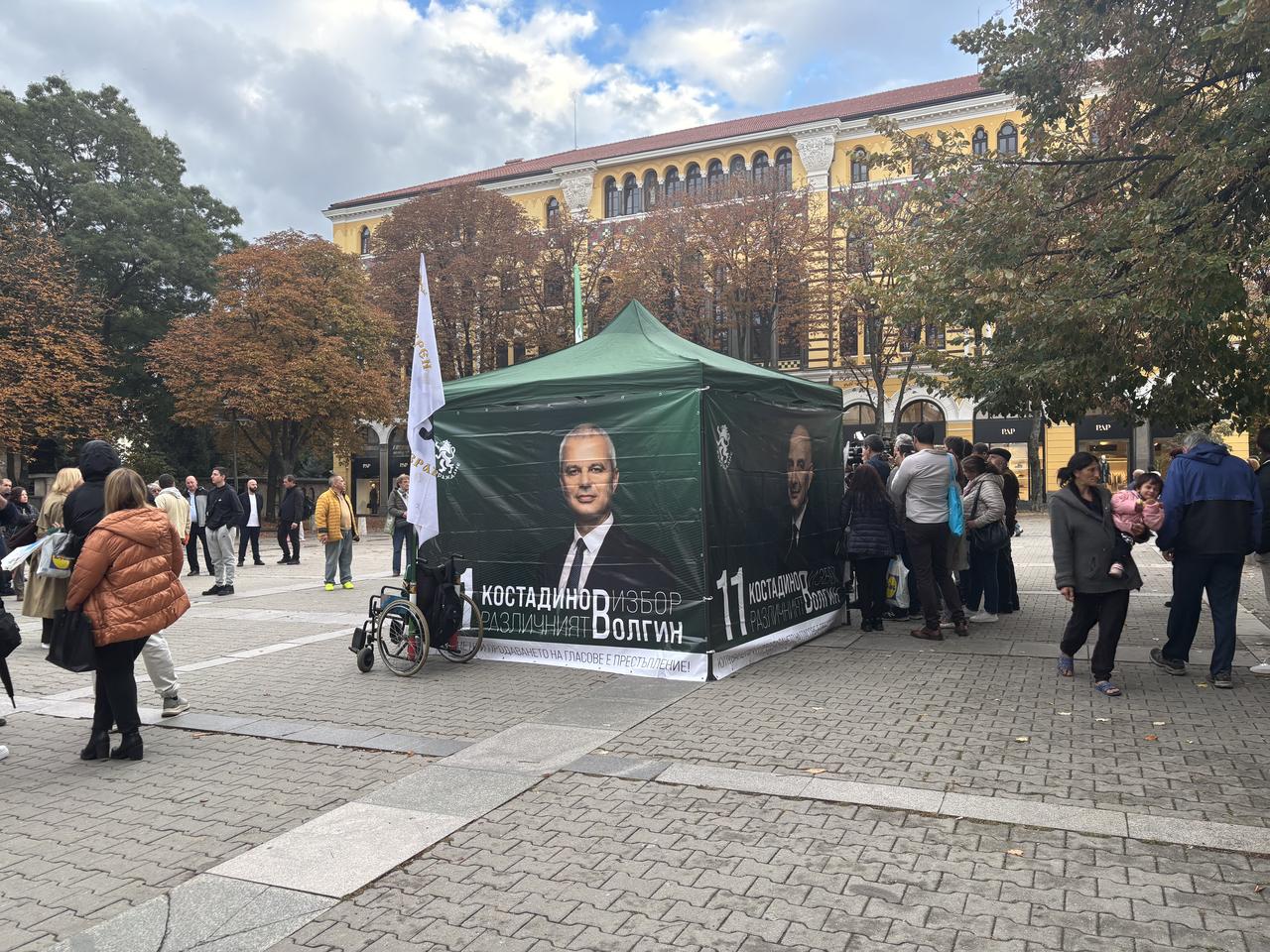
Kostadin Kostadinov, leader of the pro-Russian Revival party, is among the other presidential candidates but trails the two frontrunners in the polls.
Under Bulgaria's constitutional rules, a candidate must secure more than half of the valid votes, with turnout exceeding 50% of registered voters, to win outright in the first round.
If no candidate meets those requirements, a runoff will be held Nov. 1.
Speaking to Anadolu Agency (AA), Stoyan Panov, a senior research fellow at the Sofia-based Institute for Global Analytics, said the election comes amid economic pressures, political uncertainty and growing geopolitical instability in the Black Sea region.
He identified foreign policy and national security as the main issues distinguishing the two leading candidates.
"Gyurov is very pro-Euro-Atlantic oriented, pro-EU, pro-reformist oriented, while Iotova takes a rather ambiguous position," Panov said.
According to Panov, the election presents voters with different approaches to Bulgaria's international positioning at a time when regional security challenges are becoming increasingly difficult to ignore.
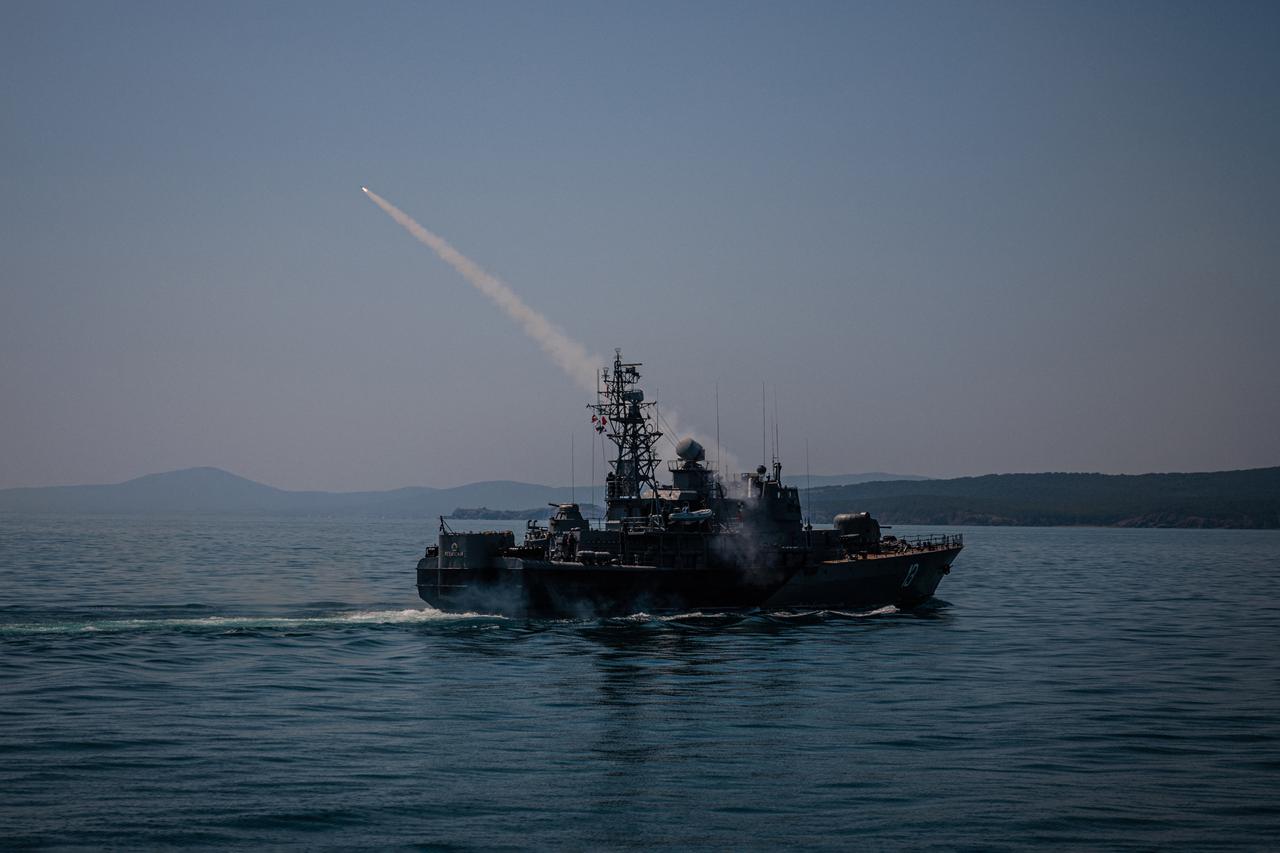
He pointed to recent drone attacks on four merchant ships in Bulgaria's maritime zones as a particularly significant issue in the presidential campaign.
Bulgarian authorities initially said there was insufficient evidence to identify those responsible for the attacks.
Panov characterized the government's response as an example of what he considered an overly cautious approach toward Moscow.
Since taking office in May, the government of Prime Minister Rumen Radev has suspended military deliveries to Ukraine following 13 aid packages, withdrawn from the Coalition of the Willing in July and opposed the European Union's 21st sanctions package against Russia.
The decisions have raised questions about whether Sofia is adopting a more cautious foreign policy approach despite its membership in NATO and the EU.
Mariyan Sabev, a senior security analyst at the Sofia-based Center for the Study of Democracy, told Anadolu that Bulgaria's membership in both organizations remains firmly established and that no president could unilaterally alter the country's international alliances.
However, he said the president could influence how consistently Bulgaria fulfills its commitments, particularly when doing so carries political or economic costs.
Under the Bulgarian Constitution, the government directs foreign policy, while the president represents the state internationally and holds responsibilities related to defense and national security.
These powers allow the presidency to influence diplomatic messaging, defense priorities and the country's public position on international developments.
Sabev said Iotova's longstanding political partnership with Radev was particularly relevant to understanding the government's broader geopolitical orientation.
Although Iotova previously served as a Bulgarian member of the European Parliament, some of her statements and positions concerning Russia have contributed to perceptions of Euroscepticism, according to Sabev.
By contrast, he highlighted Gyurov's record as caretaker prime minister, particularly his approval of a bilateral security agreement between Bulgaria and Ukraine in March.
Sabev suggested that Gyurov would place greater emphasis on Euro-Atlantic commitments and closer cooperation with European partners.
Alongside foreign policy, domestic economic pressures and dissatisfaction with political institutions remain important issues for voters. Inflation exceeded 5.1% in August, adding to concerns over the cost of living.
The presidential election follows a significant shift in Bulgaria's political landscape after Radev resigned as president in January to enter party politics.
He subsequently led Progressive Bulgaria to a landslide victory in April's parliamentary election, securing an absolute majority of 131 seats in the 240-member legislature and ending years of political fragmentation.
His former vice president, Iotova, assumed the presidency following his resignation and is now seeking a full mandate.
Radev has publicly endorsed Iotova and her running mate, Kiril Valchev, urging Bulgarians to participate in Sunday's vote.
“We must now completely close the shameful era of parliaments. That is why voting is so important. We must not give parties that preserve the status quo a chance to disrupt Bulgaria's new momentum,” Radev wrote on X.
Arguing that the country's leadership should not be entrusted to inexperienced politicians amid growing international conflicts, the prime minister emphasized the importance of political stability.
“Bulgaria must be in safe hands. Therefore, we, as Progressive Bulgaria, will vote for Iliyana Iotova and Kiril Valchev for peace and security,” he said.
The prospect of the presidency and government being controlled by the same political camp has also sparked debate over institutional independence and democratic oversight.
Panov said Sunday's vote would test Bulgaria's system of checks and balances if Progressive Bulgaria consolidated its influence over both the government and presidency.
"Is it wise to put all eggs in one basket?" he asked.
He suggested that some voters might favor a divided political structure to ensure the president could act independently and scrutinize government decisions.
A Gyurov victory would not necessarily trigger political instability but could provide an institutional check on the government's domestic and foreign policy decisions, Panov said.
"For the first time in many many years, the government and the presidency could end up being led by the same political camp," Sabev said.
According to Sabev, a Iotova victory could strengthen coordination between the presidency and government on defense and foreign policy but might also raise questions about institutional independence.
"This election will test whether Bulgaria's system of checks and balances works when power is no longer divided... Will the president still use the powers to scrutinize the government when it matters if they are in the same camp?" he asked.
Voter participation is another major concern ahead of the election, with analysts anticipating significantly lower turnout than in April's parliamentary vote.
Sabev estimated that turnout could reach approximately 36%, compared with around 50.7% in April.
He attributed the expected decline to voter fatigue and the perception among some Bulgarians that the presidency has limited executive powers.
Bulgaria's large diaspora and outdated electoral rolls also make it difficult to meet the constitutional turnout threshold required for a first-round victory, according to analysts.
Sabev described Iotova as the frontrunner but said a likely runoff against Gyurov could be influenced by voters who supported candidates eliminated in the first round.
Panov, meanwhile, suggested that the contest could prove closer than current polling indicates, as presidential elections allow voters to focus more on individual candidates rather than party affiliation alone.


 Set as preferred source
 Set as preferred source


 2 min read

 1 min read