Newsletters




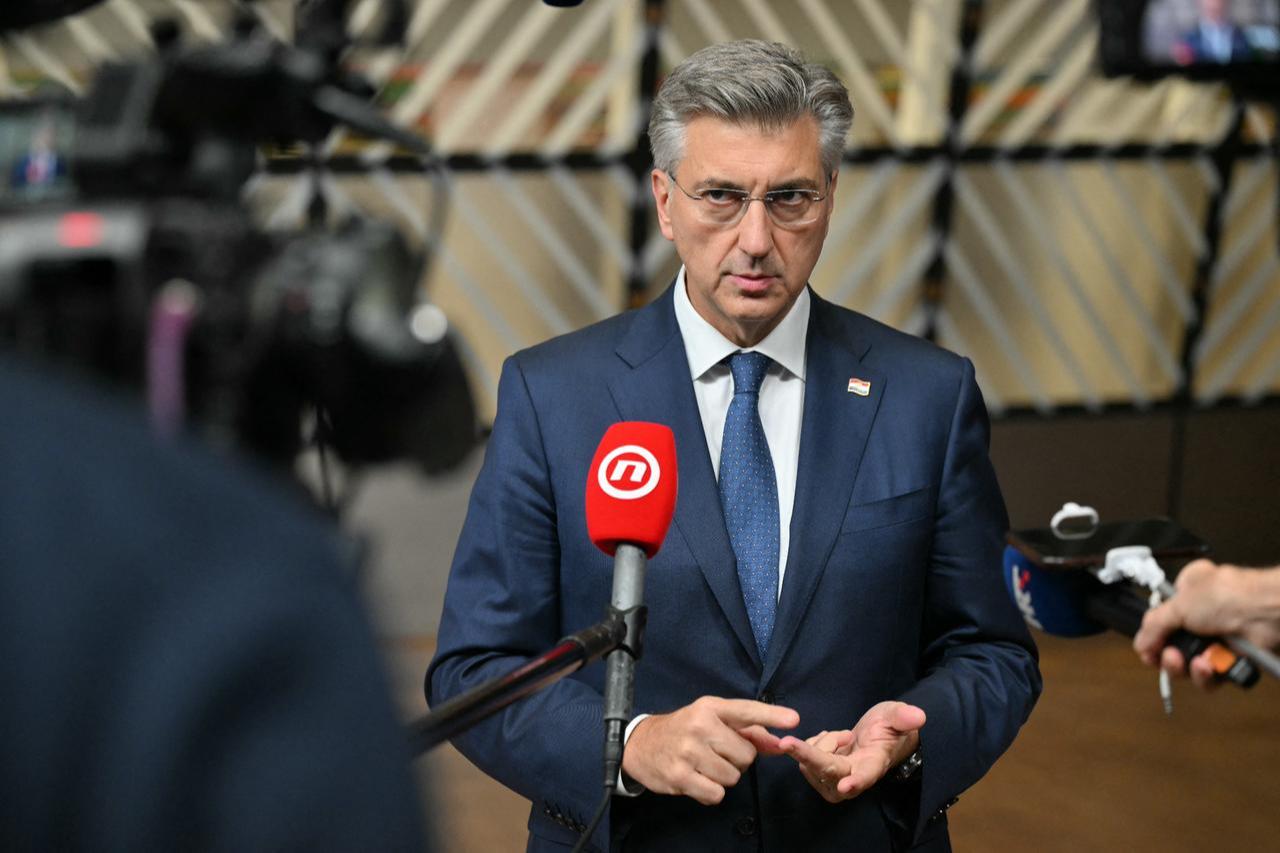
Croatian Prime Minister Andrej Plenkovic warned Thursday that Montenegro would be unable to complete its European Union accession negotiations as planned unless it accepted Zagreb's proposal for a land border agreement, raising the stakes in a dispute between the two neighboring countries.
Speaking in the Croatian Parliament, Plenkovic said Zagreb had submitted a proposal to Podgorica on demarcating their shared land border and insisted that Montenegro should accept the principles established by the Badinter Commission during the breakup of Yugoslavia.
"If this does not suit them, then they are sending the message that 'we cannot accept the principles of the Badinter Commission, and we do not believe in the principle that the borders of the republics became the borders between the states that emerged from the former Yugoslavia.' That would be a serious problem. In that case, Montenegro will not be able to close its accession negotiations as planned. Let me be very clear," Plenkovic said.
He made the remarks in response to a question from Andro Krstulovic Opara, a lawmaker from the ruling Croatian Democratic Union (HDZ), about unresolved bilateral disputes.

Montenegro responded by insisting that it did not challenge the Badinter Commission's principles but that the disputed border had never been fully demarcated.
In a statement to public broadcaster Radio and Television of Montenegro (RTCG), the office of Prime Minister Milojko Spajic said the former boundary between the Yugoslav republics in the disputed area must first be established.
Podgorica expressed readiness to seek a compromise through bilateral negotiations or, if the two countries could not reach an agreement, to refer the dispute to an appropriate international body.
The Badinter Commission, established during Yugoslavia's dissolution, upheld the principle that the internal borders of the former Yugoslav republics would become international boundaries between the newly independent states.
While both governments have indicated their acceptance of that principle, the disagreement concerns the demarcation of their shared border.
The border dispute is among several unresolved issues Croatia has raised in connection with Montenegro's EU membership bid.
Zagreb has communicated its demands to EU member states and institutions, according to Croatian media.
These include compensation for former Croatian prisoners held at the Morinj detention camp during the wars of the 1990s, efforts to locate missing persons, the prosecution of war crimes and protection of Croatian families' property rights.
Croatia is also seeking a settlement on border demarcation and the return of the Jadran naval training ship.
The disputes have already affected Montenegro's EU accession timetable.
Following Croatia's intervention, EU leaders removed a reference to Montenegro completing its accession negotiations by the end of 2026 from the conclusions of an EU summit.
Montenegro, which opened EU accession negotiations in 2012, has provisionally closed 23 of the 33 negotiating chapters, according to the figures provided.
The Montenegrin government aims to complete the remaining negotiations and become the EU's 28th member state by 2028.
However, Plenkovic's latest warning indicates that unresolved bilateral disputes with Croatia could complicate that timetable.
Croatia, as an EU member state, participates in decisions on advancing and concluding accession negotiations, giving Zagreb a role in Montenegro's path toward membership.


 Set as preferred source
 Set as preferred source


 1 min read

 1 min read