Newsletters





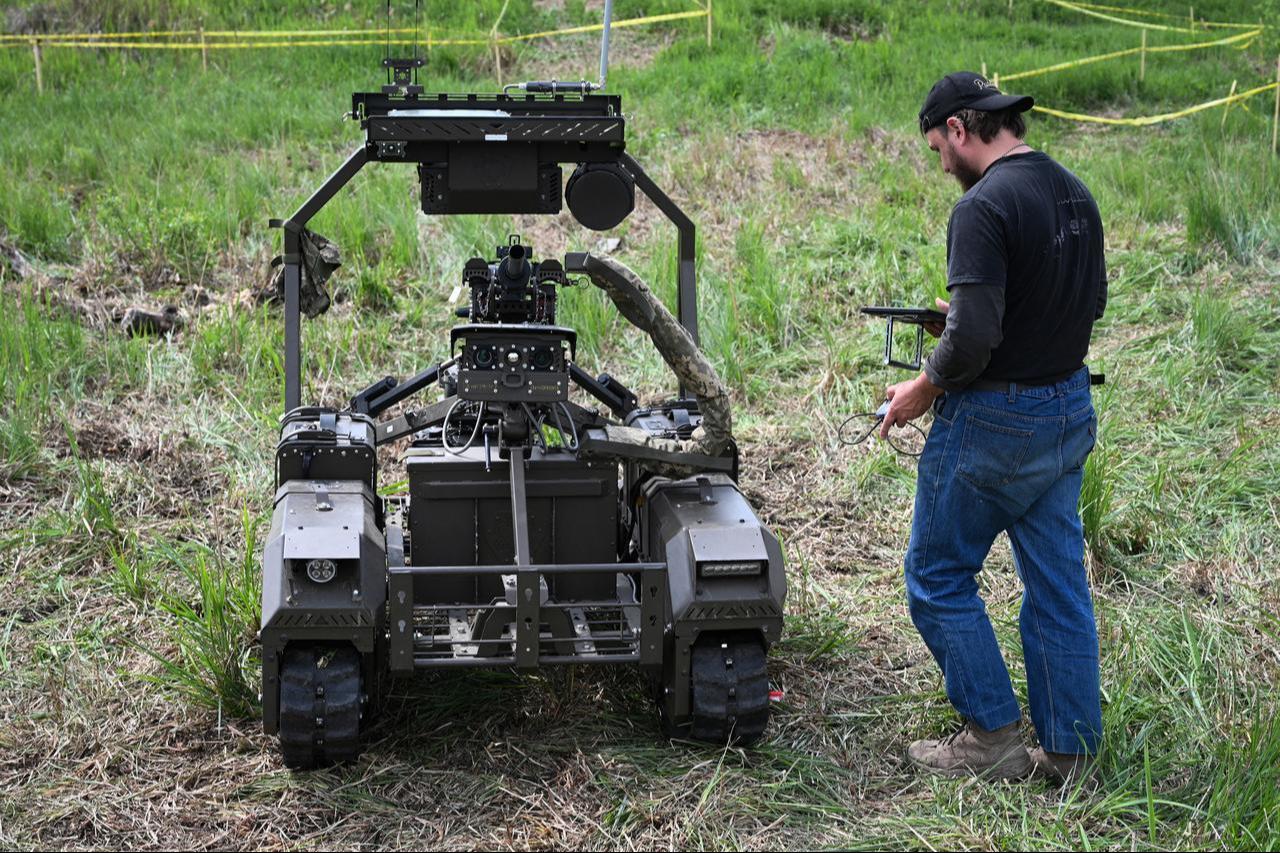
Estonia said Tuesday that an August arson attack on defense company Milrem Robotics, a supplier of unmanned ground vehicles (UGV) to Ukraine, was sabotage ordered by Russian security services.
The Kremlin rejected the accusation as "baseless."
"We can conclude with certainty that the arson attack... in Tallinn was an act of sabotage ordered by the special services of the Russian Federation," Foreign Minister Margus Tsahkna wrote on X, adding that Estonia had summoned Russia's envoy.
The attribution comes as EU governments weigh a coordinated response to what they call Russia's hybrid attacks on Ukraine's backers.
Estonia did not disclose its evidence, citing the confidentiality of its security services.

Tsahkna said the perpetrators of the Aug. 15 attack had been apprehended and "no longer pose a threat to our national security."
"This act of sabotage is part of Russia's broader campaign across Europe, aimed at intimidating us and weakening our support for Ukraine," he wrote.
"Our response will be the opposite. We will increase both our support for Ukraine and the pressure on Russia to end its aggression," he added.
Estonia's Internal Security Service (KAPO) said the fire "was a deliberate and pre-planned act commissioned by Russian security services."
"The modus operandi of the Milrem attack is consistent with other acts of sabotage carried out in Europe on behalf of Russia. KAPO assesses that the attack is directly attributable to the Russian Federation," the agency said.
KAPO said it and its partners have apprehended more than 20 people involved in attacks carried out on behalf of Russian security services since the start of the war in Ukraine. It said defense firms, especially those working on drone technology, have been among Russia's targets.
"Such statements are baseless, ill-considered, have absolutely no relation to reality, and lack any form of reasoning. Consequently, we cannot and will not take such statements seriously," Kremlin spokesman Dmitry Peskov told reporters in response to an Agence France-Presse (AFP) question.
NATO Secretary-General Mark Rutte said: "Russia continues its reckless campaign of hostile actions against NATO allies. It is trying to weaken our resolve and stop our support for Ukraine. But Russia is failing."
"Russia's fingerprints are all over," Lithuanian Foreign Minister Kestutis Budrys wrote on X, adding that Moscow's "hostile activities do not stop at Ukraine's borders."
Swedish Prime Minister Ulf Kristersson called the attribution "extremely serious."
"This pattern of attacks is directed against Europe as a whole," he said.
Latvian President Edgars Rinkevics said, "More support for Ukraine will be needed and must be provided."
Estonia, a NATO member on the alliance's eastern flank, has accused Russia of several hybrid provocations since Moscow's full-scale invasion of Ukraine in 2022.
The Milrem Robotics case is its latest formal attribution.


 Set as preferred source
 Set as preferred source


 1 min read
 1 min read