Newsletters




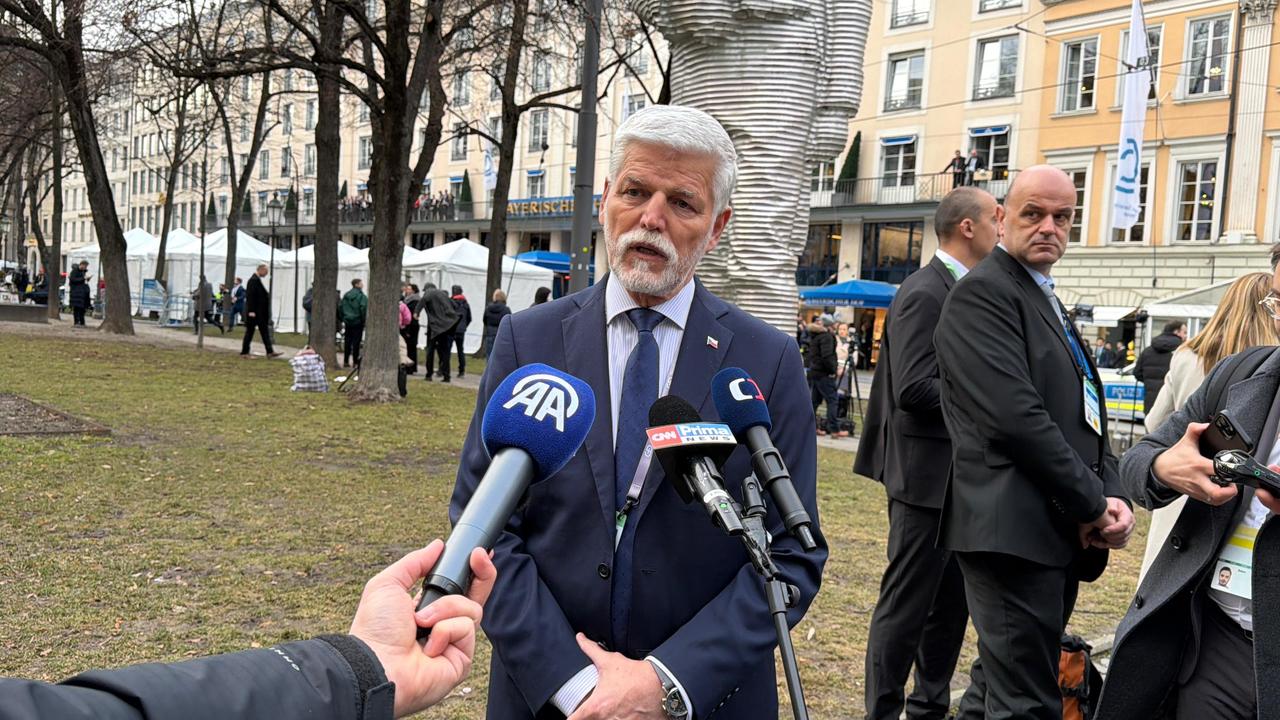
Czech President Petr Pavel said Europe is currently unable to replace the United States’ military role within NATO if Washington were to withdraw its forces, warning that closer coordination is needed as transatlantic defense ties face growing strain and uncertainty.
Speaking to Turkish news agency Anadolu on the sidelines of the Munich Security Conference, Pavel said the U.S. remains central to the alliance’s security architecture.
“The United States is presenting a significant part of NATO defense, and if all U.S. presence and capabilities are withdrawn today, then we could say Europe will not be able to substitute this gap,” he said.
Pavel’s remarks come amid renewed debates in Europe over strategic autonomy and concerns that Washington could scale back its commitments, increasing pressure on European allies to strengthen their own capabilities.

Still, Pavel stressed that the 32-member alliance operates through partnership and consultation rather than abrupt shifts.
“As partners and allies, we always work in coordination,” he said.
He voiced support for strengthening what he described as the European pillar of NATO, provided any transition is carefully managed and communicated in advance.
“I truly believe that the idea of strengthening the European pillar of NATO will be well coordinated in a way that whatever capacity the United States would like to withdraw, they will inform us about the timeframe, which will be realistic enough for European countries to build our own enabler so that we can effectively defend ourselves even if the United States decides to withdraw partially or totally their presence from Europe,” he said.
Pavel indicated that with realistic timelines and adequate preparation, Europe could gradually assume greater responsibility for its own defense even if the U.S. decides to reduce its presence.
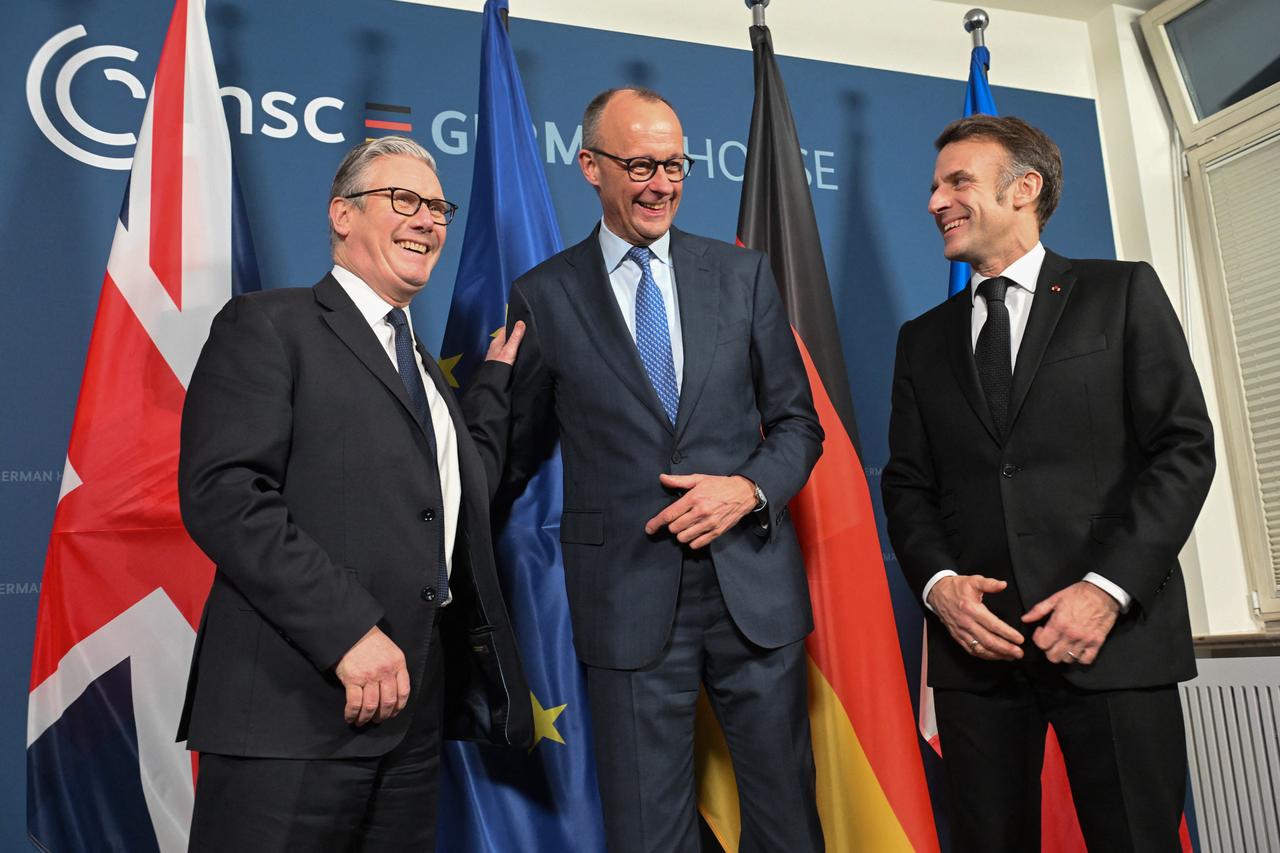
Concerns over the balance of responsibility within the transatlantic alliance were echoed by German Chancellor Friedrich Merz, who said Friday that the United States, acting alone, has reached the limits of its power and may already have lost its role as a global leader.
“In an era of great power rivalry, even the United States cannot go it alone,” Merz said in a keynote speech at the Munich Security Conference, stressing that NATO membership serves the interests of both Europeans and Americans.
“So let’s repair and revive transatlantic trust together. We, the Europeans, are doing our part,” he added.
In his wide-ranging speech, Merz also addressed recent tensions between U.S. President Donald Trump and European countries, saying Europeans are committed to overcoming these strains and strengthening NATO to meet the security challenges of a new era.
Merz warned that the rules-based international order no longer exists as it once did and announced proposals aimed at addressing challenges in an increasingly fractured world.
Referencing this year’s conference motto, “Under Destruction,” he cited Russia’s war on Ukraine, China’s growing assertiveness, challenges to U.S. leadership and tensions in transatlantic relations as signs of a changing world order.
“The conference’s motto signifies that the international order, which is based on rights and rules, is on the verge of being destroyed. I fear we need to put it even more bluntly: this order, imperfect even at its best, no longer exists in its original form,” he said.
Against the backdrop of growing debate over Europe’s strategic autonomy and transatlantic security ties, French President Emmanuel Macron on Friday called for a more “audacious” and self-confident Europe, warning that the continent must take responsibility for its own security architecture rather than allow others to define it.
Addressing the Munich Security Conference, Macron said Europe faces a historic turning point driven by the war in Ukraine, shifting transatlantic dynamics, and a more unstable global order.
“This is the right time for audacity. This is the right time for a strong Europe,” he said.
Macron stressed that Europe must “learn to become a geopolitical power,” arguing that the European Union can no longer rely solely on its economic weight while security decisions are shaped elsewhere.
“Our geography will not change,” he said, referring to Russia. “We will live with Russia in the same place… and I don’t want this negotiation to be organized by somebody else.”
While voicing support for U.S.-led efforts to reach a negotiated settlement in Ukraine, Macron insisted Europe must play a central role in any outcome.
“No peace without the Europeans,” he said. “You can negotiate without Europeans if you prefer, but it will not bring peace to the table.”
Macron also described Russia as “a weakened country” whose invasion of Ukraine had become “a strategic, an economic, and even a military failure,” rejecting claims that Kyiv has already lost the war as “a huge strategic mistake.”


 Set as preferred source
 Set as preferred source


 1 min read
 1 min read