Newsletters


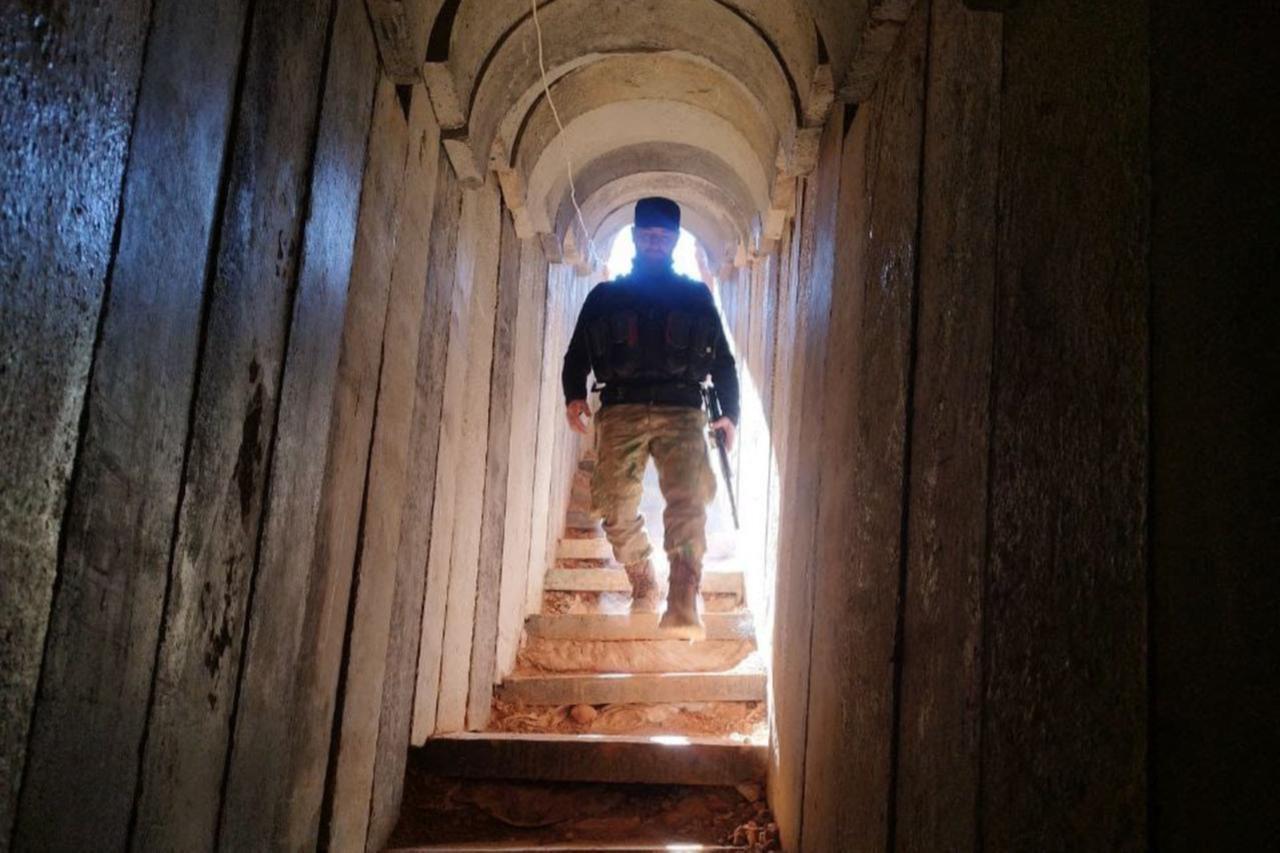


A year after the Deterrence of Aggression operation, fighters in northern Syria are recounting their frontline experiences, offering personal narratives that contrast with the official accounts issued during the 11-day campaign that led to the collapse of Bashar al-Assad’s regime in December 2024.
Amid the rising smoke along the contact lines and the split-second battlefield decisions made at critical moments, accounts are emerging that official statements failed to convey.
The operation opened the door to freedom in Syria and marked one of the most significant turning points in the 13-year revolution.

The 11-day military campaign ushered in a new chapter in Syria’s history, culminating in the collapse of the Baathist regime, the flight of Bashar al-Assad to Russia, and the completion of the revolution’s victory on Dec. 8, 2024.
In an interview with Türkiye Today, Abu Omar al-Amiriyah, a fighter and field commander in the Deterrence of Aggression operation, recounts the details of his military service, from his shift from civilian work to the front lines in Idlib, Aleppo and Damascus.
He offered a personal account that reflects the harsh moments and human emotions he experienced throughout those years.
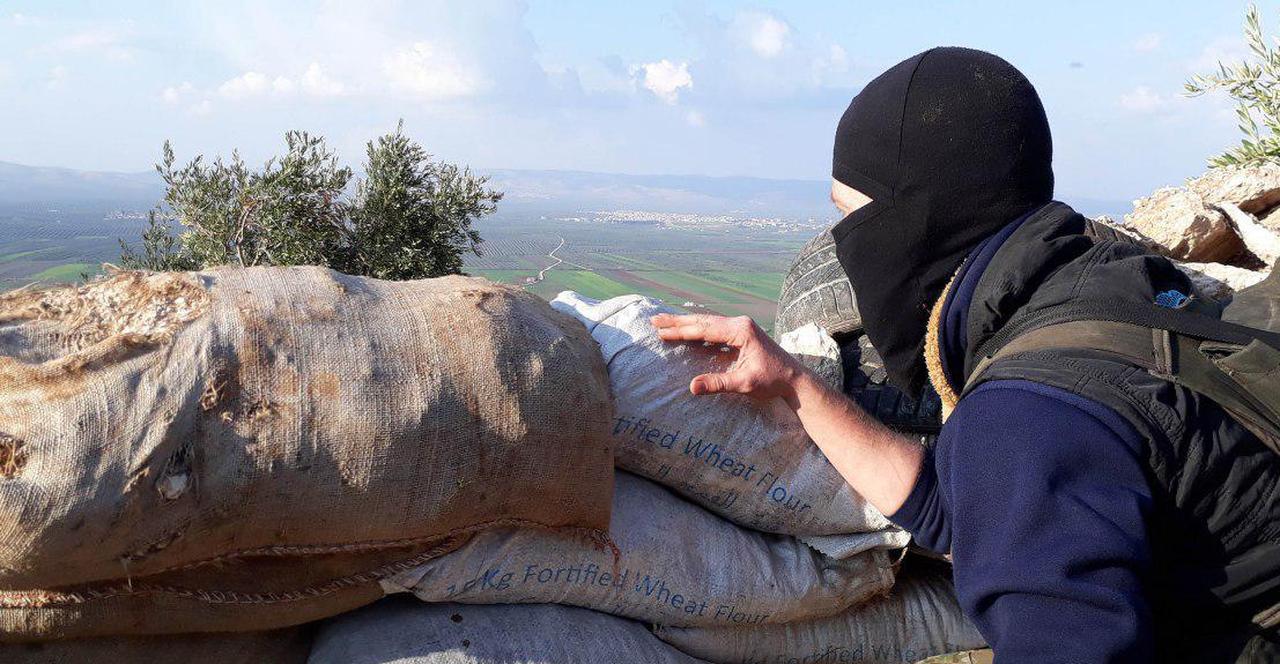
Weeks before the campaign began, he was appointed a field commander on the Idlib fronts, particularly the Saraqeb axis in northwestern Syria, which he described as “the most terrifying front” because of the presence of Syrian, Russian and Iranian forces, in addition to factions that backed the regime.
The Saraqeb front was one of the most dangerous and strategically important confrontation lines between Syrian opposition forces and the Syrian regime.
Before that, he served as the director of the Information Security Office at the Transportation Authority under the Salvation Government in areas controlled by Hayat Tahrir al-Sham.
The Saraqeb contact line was a constant flashpoint, and the former civilian fighter found himself responsible for managing one of Idlib’s most complex battlefronts.
He explained that operations began on the fronts surrounding Aleppo, while his forces were positioned about 50 kilometers (31.06 miles) from the city. Even so, their primary mission was to disrupt regime troops and prevent them from advancing.
After the enemy “took very painful blows,” as he describes the early stages of the campaign in Aleppo’s countryside, the regime began activating other fronts to ease the pressure, including the Saraqeb axis, where a new battle began.
Abu Omar says the warplanes “scarcely left the sky,” while drones followed them everywhere.
When movements by regime forces were detected toward their positions, he issued orders for rapid deployment into the trenches within moments.
They initially faced significant confusion, but once the forces approached the front line, the fighters opened fire to halt the advance. He says the result was “confusing the enemy” and stopping its movement.
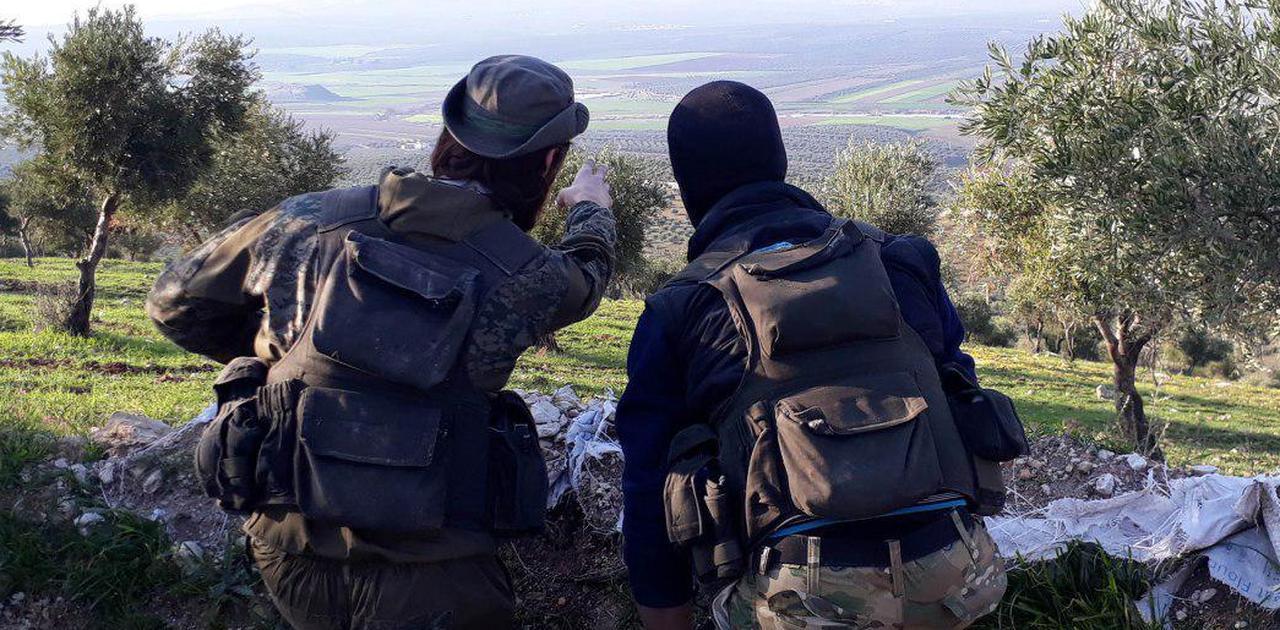
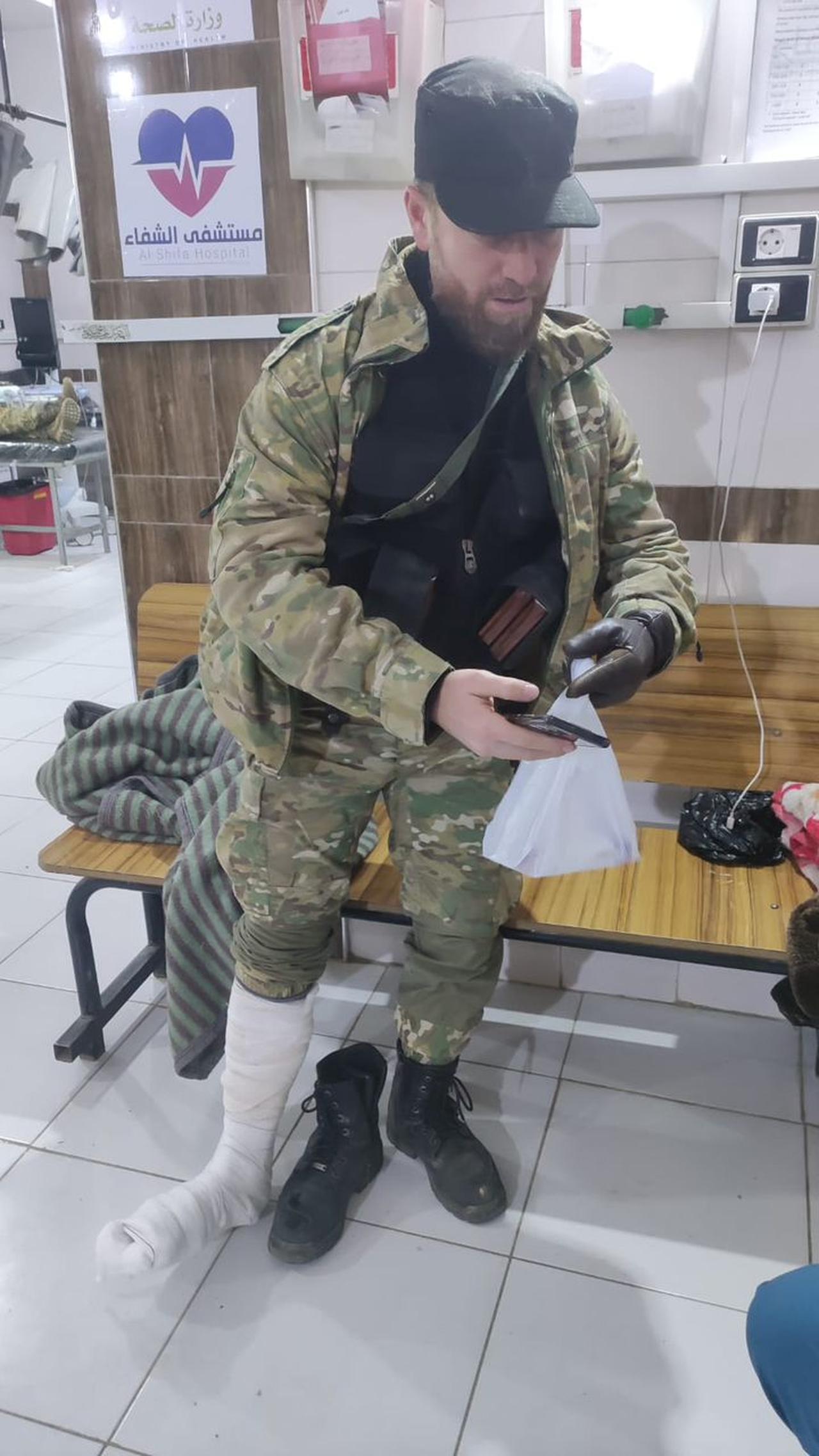
After hours of gunfire, Abu Omar does not forget the moment he realized he had been wounded. When the clashes subsided, he tried to sit down but was struck by sharp pain.
Looking down, he saw “a pool of blood” beneath his feet. When he removed his shoe, he discovered that his foot was injured and needed immediate treatment to stop the bleeding.
He was transported to Idlib University Hospital, where he received medical care. However, the doctor refused to allow him to return to the battle because the cast reached up to his knee and restricted his movement completely. That moment was the hardest for him, as he recalls saying:
“I cried then. I had waited for this moment for so many years. How could I stay at home while others fought?” He told him directly, “I will not falter as long as my heart still beats.”
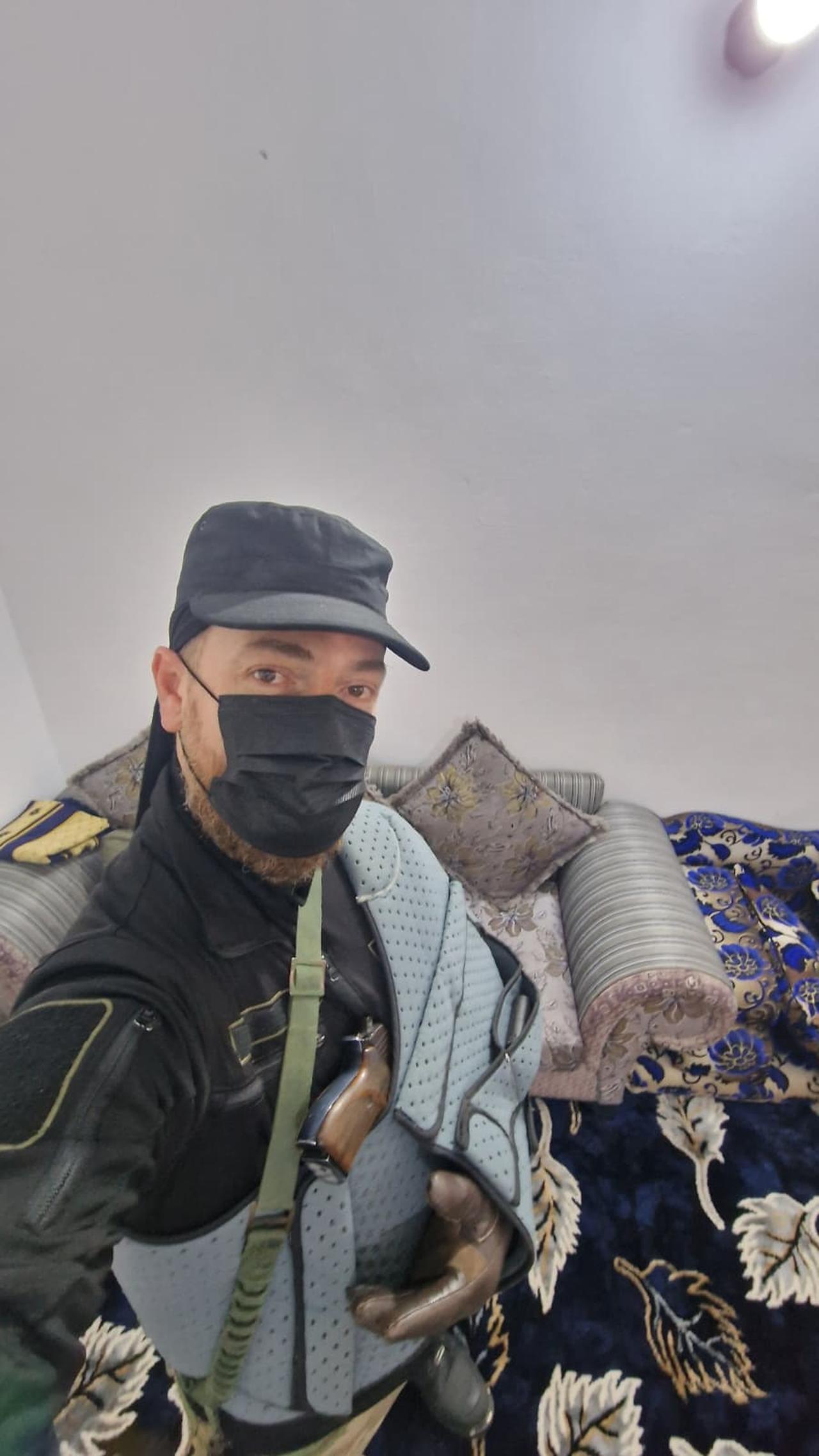
Unwilling to accept the doctor’s decision, he left the hospital and rushed to see Dr. Mohib Qaddour, a physician and the director of Atmeh Charity Hospital in Syria.
After considerable effort from the medical team, the previous cast was removed and replaced with a lightweight plastic cast molded around his foot “as if it were a simple shoe that did not hinder movement.” He immediately set out to resume his military mission in Aleppo.
When asked what he wishes people knew about the untold aspects of the Deterrence of Aggression operation, Abu Omar says the days leading up to the offensive were far more difficult than most accounts suggest.
According to his description, frustration had taken hold of Idlib entirely, fighters and civilians alike, amid widespread rumors claiming the revolution was over and its ability to endure had diminished.
As a field commander, he viewed maintaining the morale of the fighters as one of his primary responsibilities. He stayed with them on the front lines, joking with them at times and offering encouragement, despite the harsh questions he often heard: “Who are we fighting for? Why are we defending emptiness?”
He explained that his answers came from what he witnessed daily: commanders falling one after another, heavy equipment destroyed on multiple fronts, and a determination to continue despite the losses.
He added that the fear gripping fighters under bombardment was not of death itself but of the enemy reaching their families and communities. In those moments, he says, resilience depended on reminding one another that “victory requires patience.”
He noted that a fighter on the ground does not confront gunfire alone but also exhaustion, cold, illness, and psychological pressure.
In concluding his remarks, he said he wished those who criticized the fighters had seen “what we endured and what we gave until the battle reached its outcome.”
In the final days before the fall of Aleppo during the Deterrence of Aggression operation, Abu Omar and a group he described as “the finest fighters” moved into the 1070 Apartments area, where they took positions inside a multi-story building.
He said the building came under intense bombardment from regime forces, including artillery, airstrikes, heavy machine guns and infantry assaults.
The situation worsened to the point of near suffocation inside the building. The fighters were forced to withdraw slightly to regroup before returning to their positions.
After combing the structure, they discovered that regime soldiers were stationed on the upper floor while they were on the lower one, making a prolonged confrontation inevitable.
From dawn until sunset, they lived through what he described as “moments of terror and bombardment.” When an escape route was opened, they found that the fighters positioned above them were 14 Afghan combatants armed only with hand grenades.
Abu Omar recounted that his younger brother and his cousin, Majd, were with him during the battle, Majd having “survived death by grenade more than five times.”
Abu Omar said he chose to call it “the battle of fate” because he never imagined that what awaited him beyond its front lines would surpass the joy of victory itself. As the fighting reached its most intense stages, fate, as he describes it, was quietly preparing an unexpected moment of happiness that would change the course of his life.
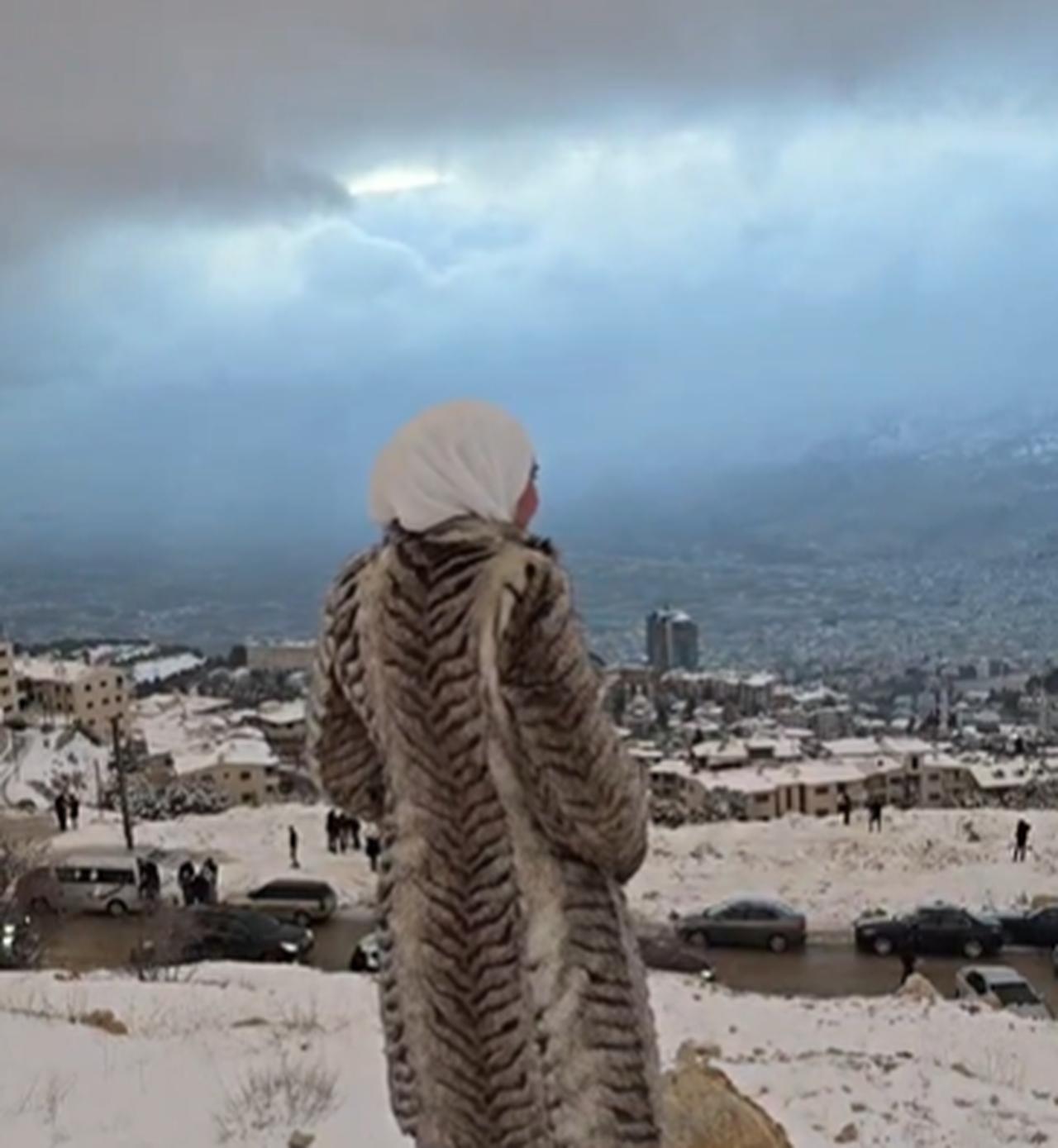
He recalled that during his earlier treatment in Idlib, he needed to have his wound dressing changed twice a day. When military operations shifted toward Damascus, he traveled there on Dec. 8, 2024, in his private car with his aide, Abdo Badleh, wearing his uniform and carrying his gear. After completing their tasks in the capital, his injury began to trouble him again.
The pharmacist they approached refused to come, whether for political, ideological, or professional reasons, he says, and instead directed them to a nearby hospital.
It was inside that hospital that Abu Omar encountered the nurse who would alter the trajectory of his life. As she tended to his injury, a quiet connection began to take shape between them, one that deepened over the days of his recovery.
Abu Omar explained that the battle became a turning point not only militarily but also personally, as the hardship of war unexpectedly opened the door to a relationship he had not anticipated.
Once he regained his health, he proposed to her, sealing what he describes as a love written for him by fate.


 Set as preferred source
 Set as preferred source


 2 min read