Newsletters


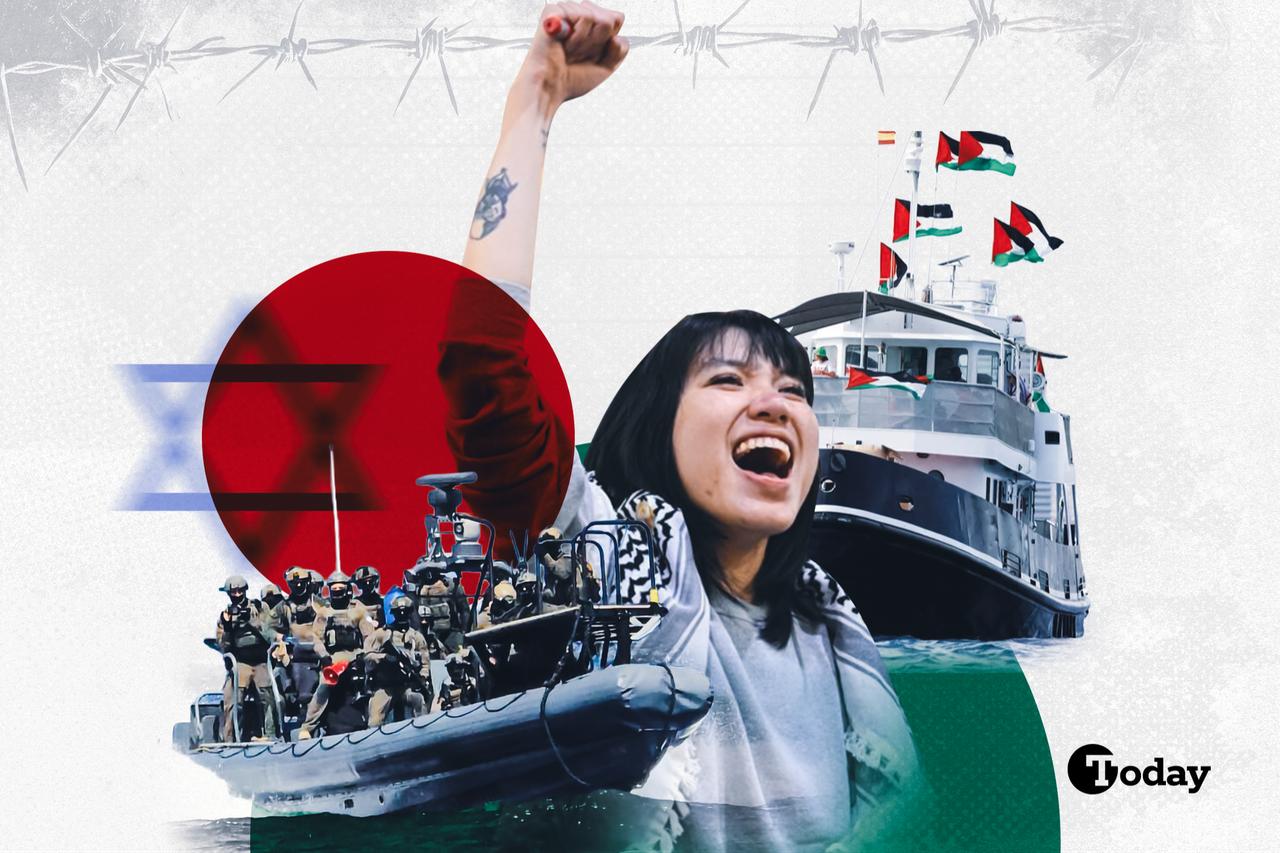


Bao Ngoc Ashley, a Vietnamese researcher and activist, was aboard the latest Global Sumud Flotilla when the Israeli military opened fire on and boarded vessels in international waters off Cyprus after a chase lasting several hours.
She was aboard the Sumud flotilla when Israeli forces intercepted the vessel, detained its crew, and transferred them to Ashdod and Ketziot prisons.
In an exclusive interview with Türkiye Today, she describes the raid, the violence, the racial and sexual abuse she endured, and what awaited her in Türkiye upon release.
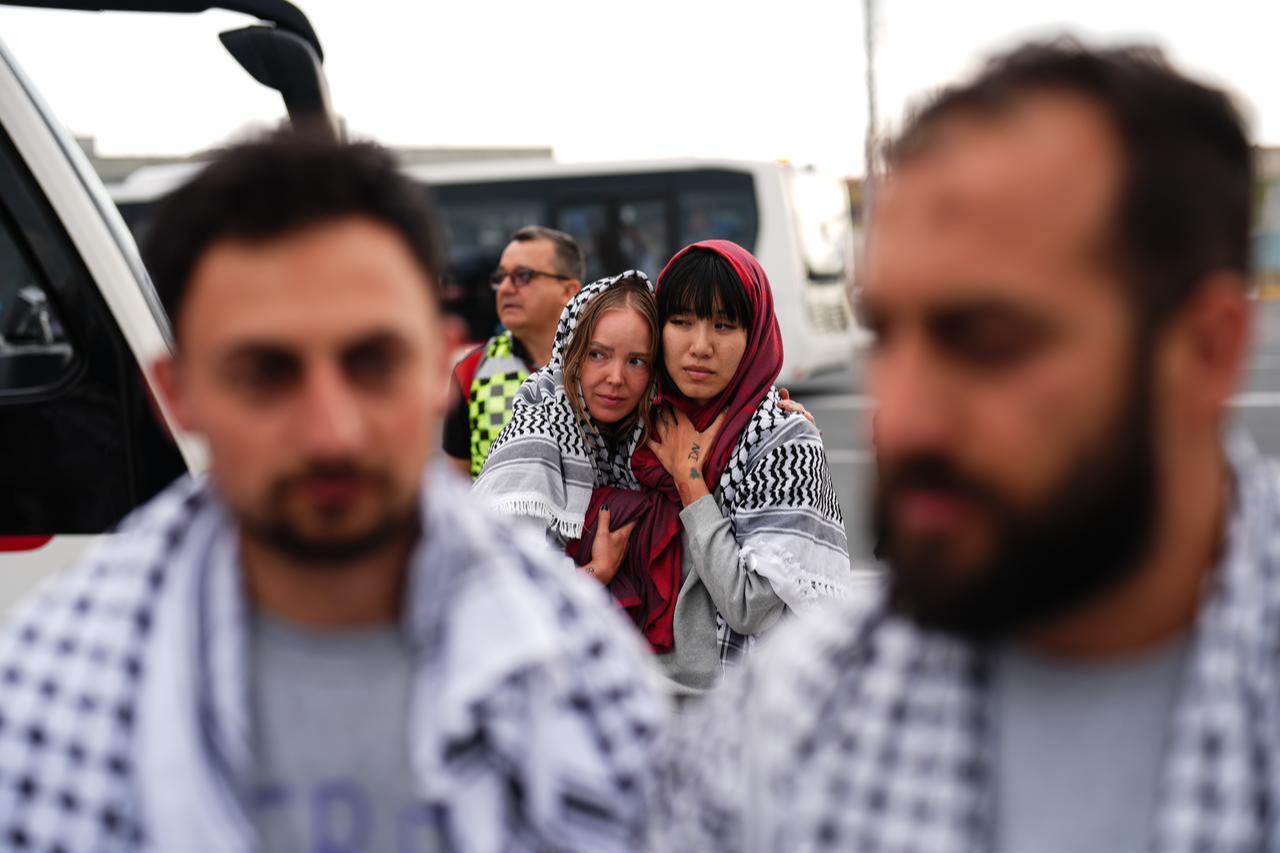

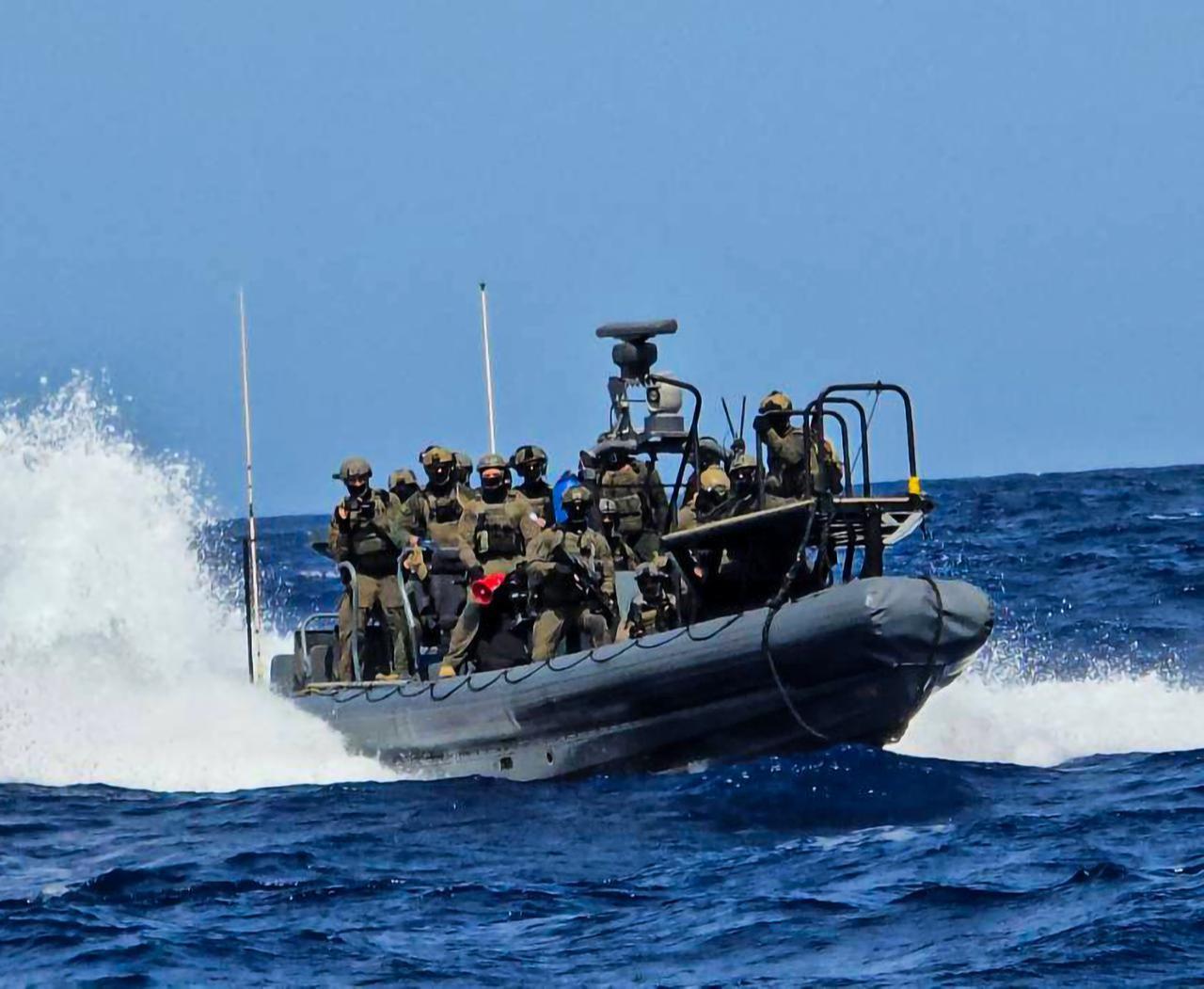
Ashley described the raid in precise detail, beginning with the moment the Israeli military made first contact, stating, "They started shooting rubber bullets before they even stepped on our boat. Before that, it was a long chase between us that lasted for hours. We put up a good fight, strategizing as we're escaping."
"I recall a female IOF soldier screaming through a megaphone, and the male soldiers quickly boarded our boat. They quickly dragged our Turkish male friend out, restrained him, beat him, and then blindfolded him as he was lying on his stomach on top of our solar panel. Then the rest of the soldiers pointed guns at our faces, threatening that if we did anything funny, we would end up like him (our friend)," she said.
Two male soldiers did most of the talking throughout the interception, issuing commands while simultaneously verbally insulting and provoking the group. Ashley noted something that struck her about both: "They spoke perfect American English, with an American accent, and even under those masks, their blue eyes, pale skin, and blond hair were noticeable."
The crew was dragged out one by one for body searches. The three Turkish crew members bore the worst of it, she said, especially the captain, who was violently thrown around during the search and threatened because he couldn't understand English.
The physical violence against the captain was something Ashley witnessed directly. Israeli forces threw him around during the body search and threatened him because he could not communicate in English, a moment she found telling. She noted, however, that the presence of body cameras appeared to impose some restraint.
"As I mentioned above, the IOF (Israel Occupying Force) was aggressive before they even boarded our vessel. Out of everyone, Turkish crew members faced the most violence, while I was subjected to probably the most racist verbal remarks," she said.
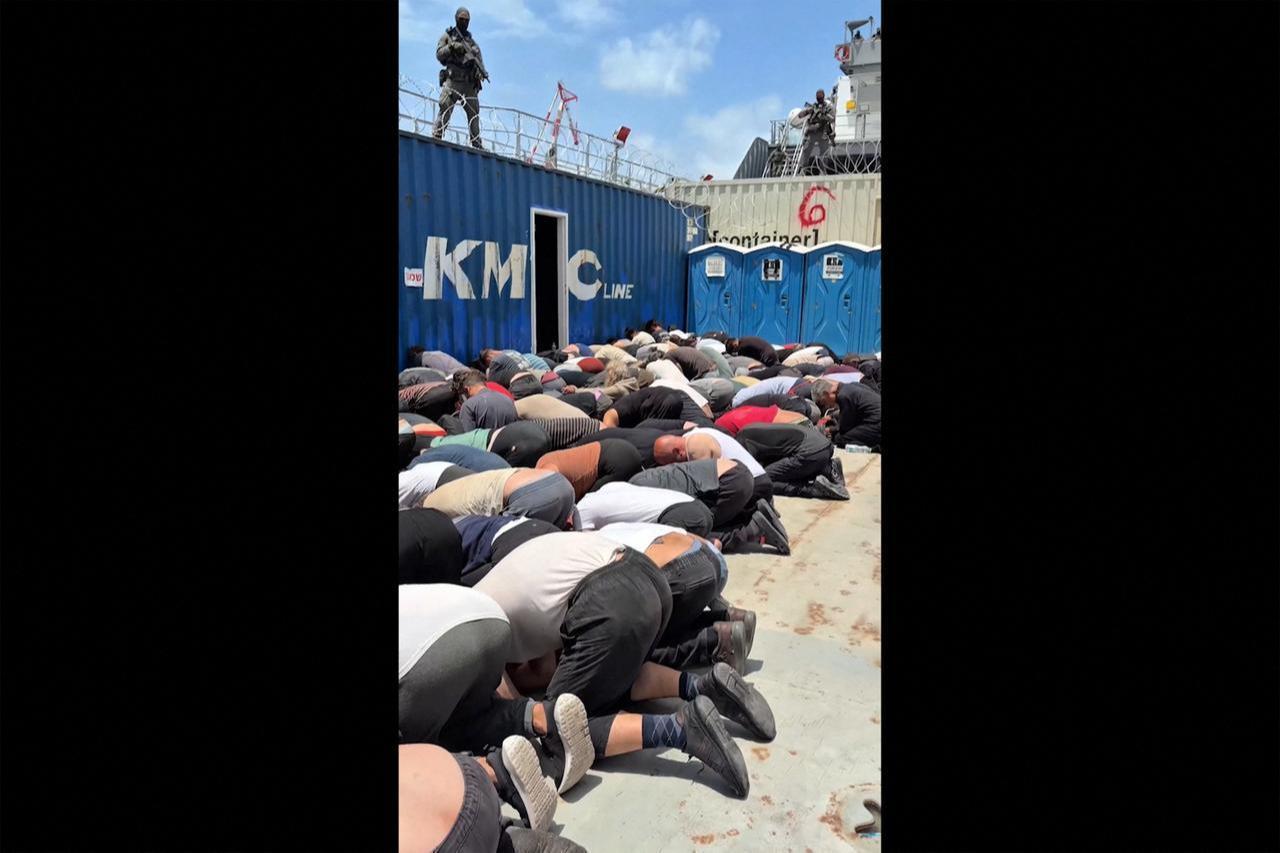
Moving the detained activists from the flotilla to what Ashley calls "the giant prison boat" was an ordeal in itself.
She said Israeli forces made deliberate attempts to drench them with seawater as the raft sped through rough waves, leaving passengers in a small, exposed area with no protection.
"I almost fell into the ocean multiple times had it not been for my crew members, who caught me by my life jacket's collar," she said. A male crew member sitting in front of her took the brunt of the splashing to shield her, ending up completely soaked.
She later understood why. "These soaking attempts were a torture tactic because it was freezing cold on the prison ship at night."
The human cost of the interception was visible before the group had even left Israeli custody.
"On my boat, definitely there were. The most badly and visibly injured was a Turkish crew member, also our youngest. He was shot by a rubber bullet twice and arrived in Türkiye in a wheelchair with bloodstains visible on his trousers. Most of us sustained visible bruises, mainly from the tight handcuffs and shackles on our feet, sometimes on the legs or faces," the activist said.
"For the Turkish crew members, the bruises were much more visible and numerous," she added.
"We were all separated as Israeli forces brutally dragged us out of the prison ship into Ashdod port one by one, so I couldn't see how my crewmates were abused," Ashley said.
For Ashley personally, the abuse took on an additional dimension rooted in her appearance as an East Asian woman, something she said Israeli soldiers at Ketziot prison appeared wholly unfamiliar with.
"This was not only the most violent experience of my life but also racist. I have never walked into a place where almost every single individual displays the same racist remarks collectively like Israel," Ashley said.
"I am convinced they had never seen/encountered an east Asian looking woman before because there was this violent fascination the soldiers had displayed through their behaviors toward me," she added.
She described male soldiers following her in a queue, calling racial slurs, trying to touch or poke her "like a toy," and grabbing her by the hair to show her face to other soldiers. "I endured so much sexual harassment for this reason as well," she said.
The harassment became so visible at one point that other flotilla participants and female soldiers turned to look.
Inside Ketziot prison, whenever soldiers heard the word "Vietnam," they would shout in Hebrew, drawing laughter, before calling her "Jackie Chan" or "Tokyo Drift."
Despite the brutality, she found moments of grim absurdity.
"As much as we suffered brutality and assault, there were moments we could not take the soldiers seriously due to their utter incompetence. They were arguing loudly about what to do with certain cases, failing to call the easiest names amongst us, taking such a long time to read a sentence," she noted.
"They had very little to no protocol; it was pretty lawless at Ashdod and inside Ketziot. Even their ways of tormenting us were different depending on the individuals. The only coordinated thing was their enjoyment while brutalizing us," Ashley said.
Asked specifically about reports of sexual and physical abuse among detainees, Ashley confirmed it happened to her.
"It happened to me. I was stripped naked several times. One of those times was violent, and I was forced to pose for a photograph without any consent. Another time was when I asked them why I should take off my underwear," Ashley described.
"The female soldiers ran to the male soldiers with guns and a dog outside to come in and take my underwear off. I ended up complying, so the male soldier did not touch me. Though that was a sexual threat. Both happened inside Ketziot," she added.
"During the first strip search in Ashdod, I could hear other male activists screaming in agony from the makeshift tents next to mine. One of them sounded like crying and continuously screamed, "Stop," Ashley said.
The contrast upon arriving in Türkiye, she said, could not have been sharper.
"I have never felt safer. And I did not expect such a huge welcome upon returning to Türkiye. I was truly reminded of the collective power and care Turkish people show. A huge part of me feels like I owe Türkiye and its people a lot for the treatment before and especially after my release. We were rushed to the hospital for a check-up," Ashley said.
"The entire process was truly considerate of the well-being of us who had just experienced extreme violence. On the bus, multiple activists and I agreed that nothing could top the treatment we received in Türkiye post-detention," she added.
Türkiye Today conducted this interview exclusively with Bao Ngoc Ashley.


 Set as preferred source
 Set as preferred source


 1 min read