Close
newsletters Newsletters
X Instagram Youtube

Gaza olive harvest plunges up to 80% as war damage leaves farmland inaccessible

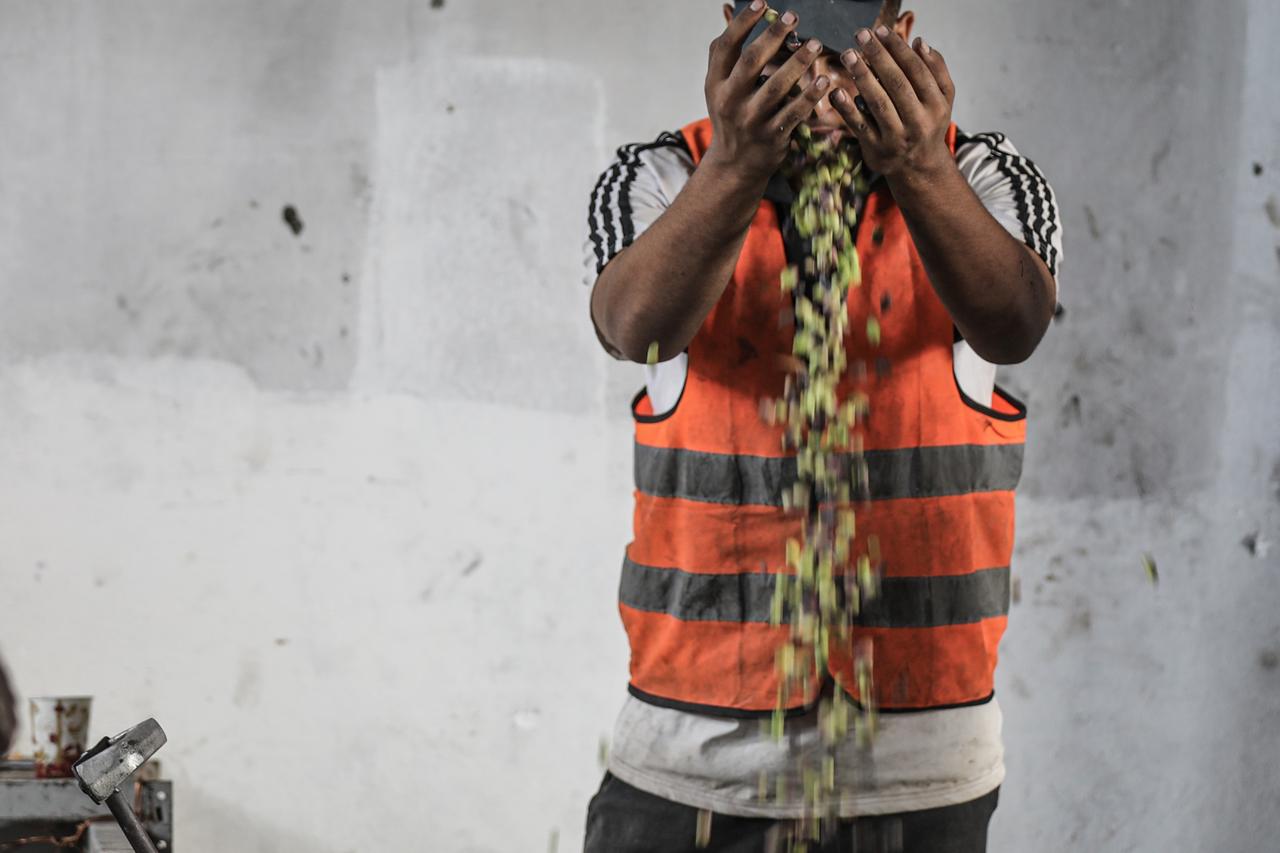
A man works at an olive press facility west of Al-Zawayda as olive oil production continues in the Gaza Strip, Palestine, on October 11, 2026. (AA Photo)
Photo
BigPhoto
A man works at an olive press facility west of Al-Zawayda as olive oil production continues in the Gaza Strip, Palestine, on October 11, 2026. (AA Photo)
October 12, 2026 03:20 PM GMT+03:00

Gaza's olive harvest has fallen by as much as 80% in some areas, as widespread damage to agricultural land, Israeli military restrictions and soaring production costs leave Palestinian farmers struggling to maintain one of their traditional sources of food and income.

According to Gaza's Agriculture Ministry, around 87% of the enclave's farmland has been damaged since the war began in October 2023, contributing to agricultural losses exceeding $3 billion.

Although farmers continue harvesting olives in accessible areas, shortages of fertilizer, irrigation water and equipment have sharply reduced yields, leaving many families unable to store enough olives and olive oil for the year.
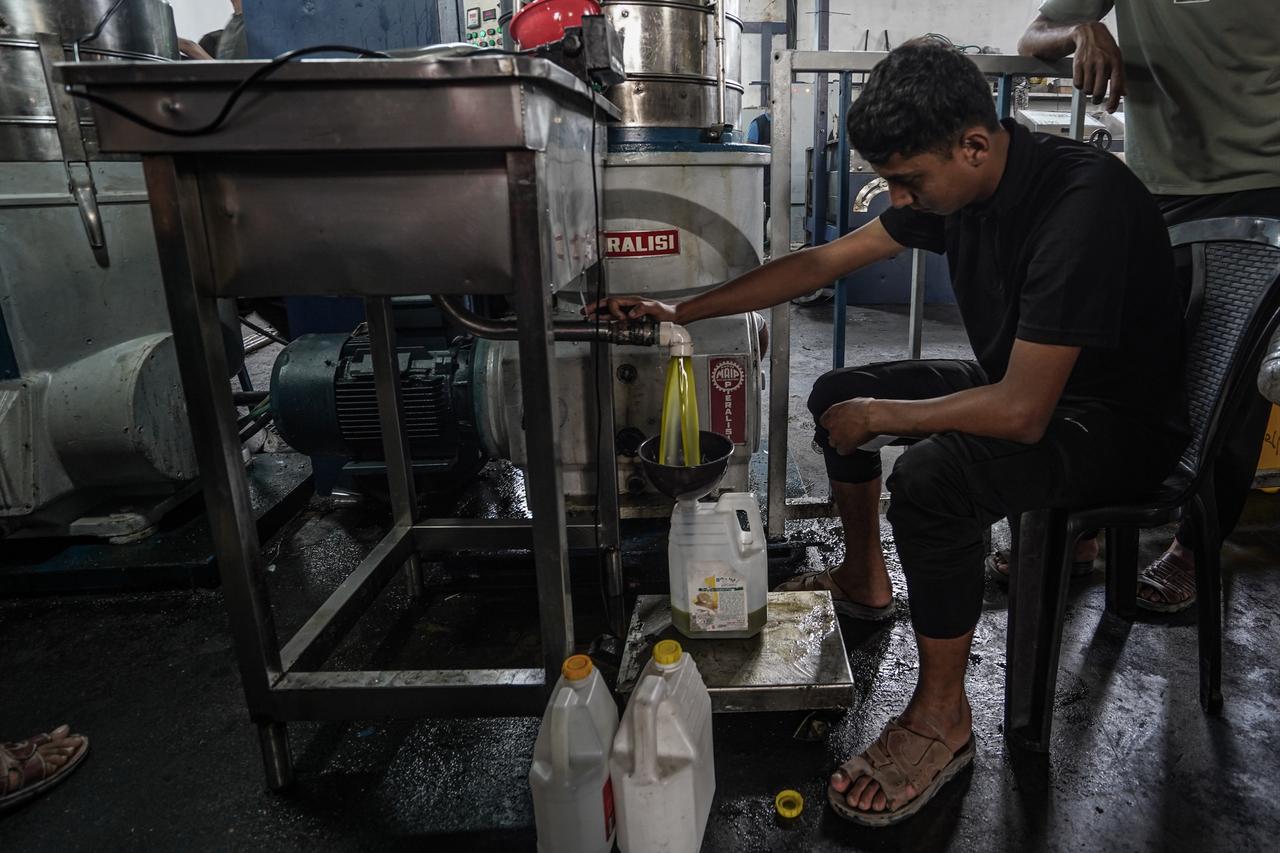
A man works at an olive press facility west of Al-Zawayda as olive oil production continues in the Gaza Strip, Palestine, on October 11, 2026. (AA Photo)

Olive production drops as farmers struggle to maintain groves

Kamel Baraka, an olive farmer from Deir al-Balah in central Gaza, told Anadolu Agency (AA) that trees previously producing around 100 kilograms (220 pounds) of olives now yield only 20 to 30 kilograms.

The decline of roughly 70% to 80% has transformed a harvest season that once supported farmers, traders and agricultural workers into one that barely covers some families' household needs.

Baraka explained that olive cultivation depends on regular irrigation, fertilizer and maintenance, all of which have become increasingly difficult to secure amid shortages of agricultural supplies.

Before the war, farmers typically began preparing for the harvest a month in advance, arranging workers, equipment and transportation while households prepared to store olives and oil for the coming year.

Those preparations have largely scaled back, with some farmers now harvesting only enough for personal consumption and limited sales.
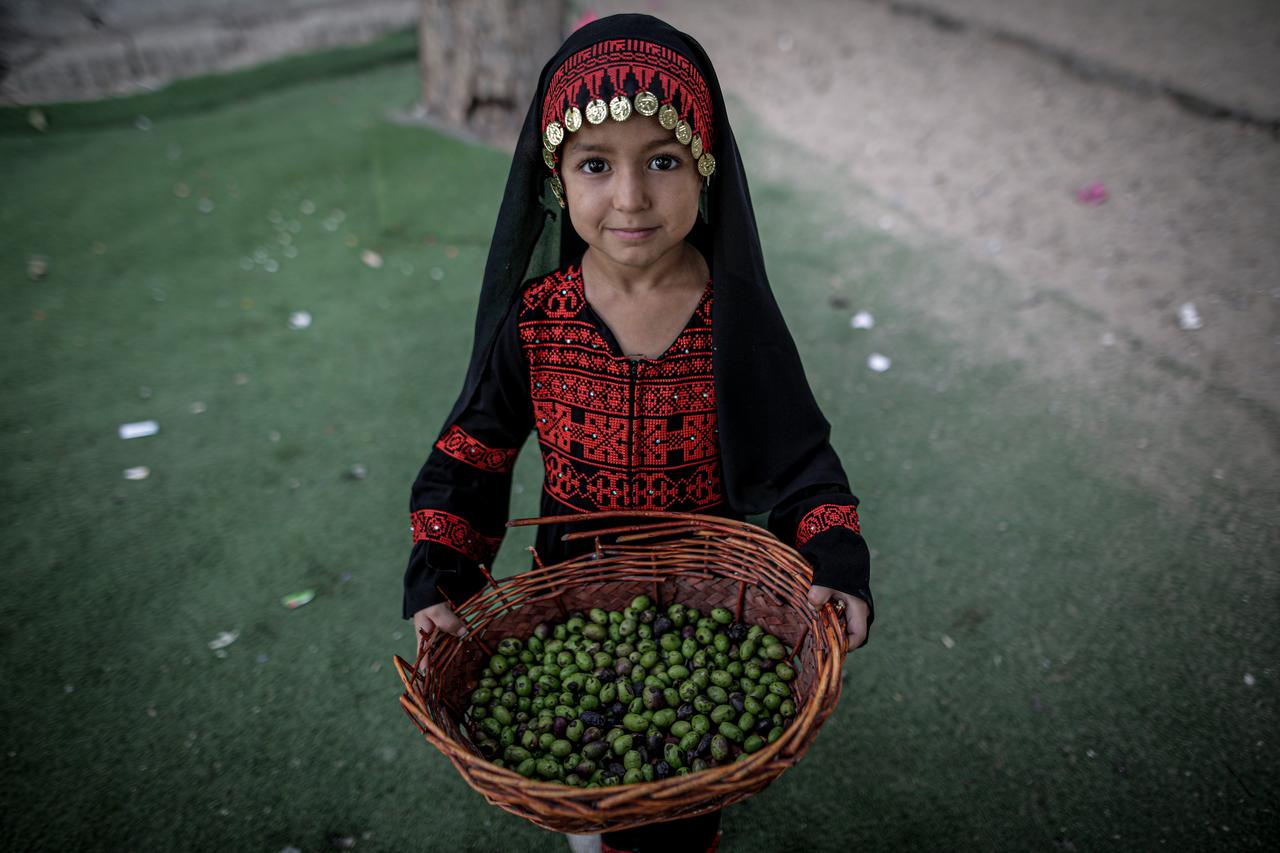
A girl holds a basket of olives as children wearing traditional Palestinian clothing and keffiyehs take part in an event held at an educational point in the Shati Refugee Camp, to pass Palestinian culture and traditions on to younger generations on Palestinian Heritage Day in Gaza City Gaza, Palestine, on October 8, 2026. (AA Photo)

Israeli military control cuts off major olive-growing areas

Access restrictions have further reduced production, particularly in eastern parts of central Gaza, where agricultural land remains beyond the so-called "yellow line."

The line marks the boundary established under the first phase of US President Donald Trump's ceasefire plan, which took effect on Oct. 10, 2025, separating eastern areas under Israeli military control from western areas where Palestinians are permitted to move.

Baraka said farmers in Deir al-Balah, Bureij and Maghazi have been unable to reach important olive groves, particularly those east of Salah al-Din Street, a major road running through Gaza.

He added that the remaining accessible farmland west of the road cannot produce enough olives or olive oil to meet residents' needs.
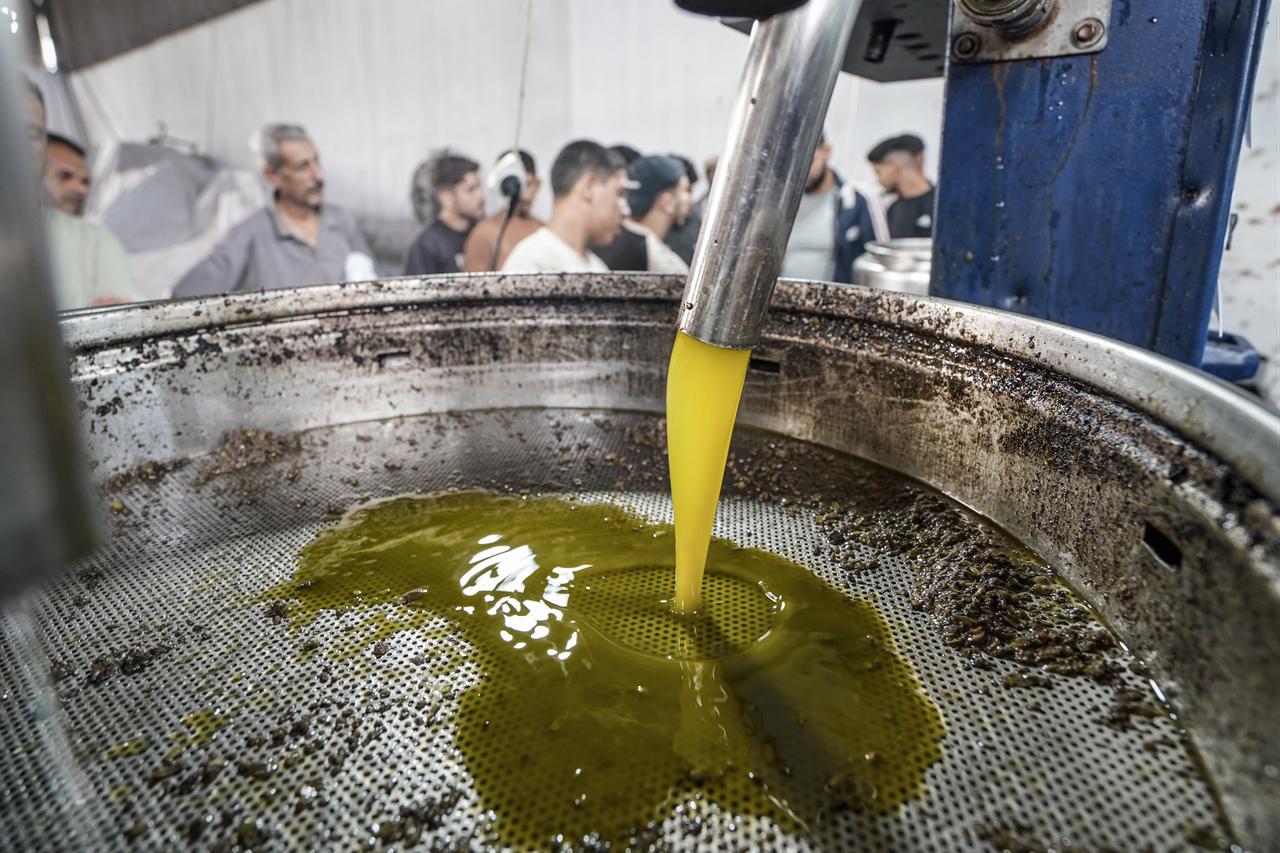
Olive oil flows during the production process at an olive press facility west of Al-Zawayda in the Gaza Strip, Gaza, Palestine, on October 11, 2026. (AA Photo)
GAZA CITY, GAZA, PALESTINE - OCTOBER 8: A girl holds a basket of olives as children wearing traditional Palestinian clothing and keffiyehs take part in an event held at an educational point in the Shati Refugee Camp, to pass Palestinian culture and traditions on to younger generations on Palestinian Heritage Day in Gaza City Gaza, Palestine, on October 8, 2026. The children collect olives and prepare a traditional Palestinian breakfast during the event. ( Saeed M. M. T. Jaras - Anadolu Agency )" data-width="5760" data-height="3840" src="https://img.turkiyetoday.com/images/2026/10/12/gaza-olive-harvest-plunges-up-to-80-as-war-damage-leaves-farmland-inaccessible-3230167_202610121517_20261012151748_2.jpg" width="1280" height="853"> A girl holds a basket of olives as children wearing traditional Palestinian clothing and keffiyehs take part in an event held at an educational point in the Shati Refugee Camp, to pass Palestinian culture and traditions on to younger generations on Palestinian Heritage Day in Gaza City Gaza, Palestine, on October 8, 2026. (AA Photo) Israeli military control cuts off major olive-growing areasAccess restrictions have further reduced production, particularly in eastern parts of central Gaza, where agricultural land remains beyond the so-called "yellow line."The line marks the boundary established under the first phase of US President Donald Trump's ceasefire plan, which took effect on Oct. 10, 2025, separating eastern areas under Israeli military control from western areas where Palestinians are permitted to move.Baraka said farmers in Deir al-Balah, Bureij and Maghazi have been unable to reach important olive groves, particularly those east of Salah al-Din Street, a major road running through Gaza.He added that the remaining accessible farmland west of the road cannot produce enough olives or olive oil to meet residents' needs.

Olive pressing costs triple as agricultural losses exceed $3B

Even where harvesting remains possible, farmers face increasing expenses for transportation, irrigation, labor and olive pressing, the process of extracting oil from harvested olives.

Baraka said pressing costs have risen to approximately three times their prewar levels, while transportation arrangements that previously allowed olive press operators to collect harvests directly from farms have largely broken down.

Shortages of storage containers have also made it harder for families to preserve the oil they manage to produce.

The difficulties reflect wider damage to Gaza's agricultural sector, which the Agriculture Ministry estimated in July had suffered more than $3 billion in losses, including $1.49 billion in direct damage and $1.59 billion in indirect losses.
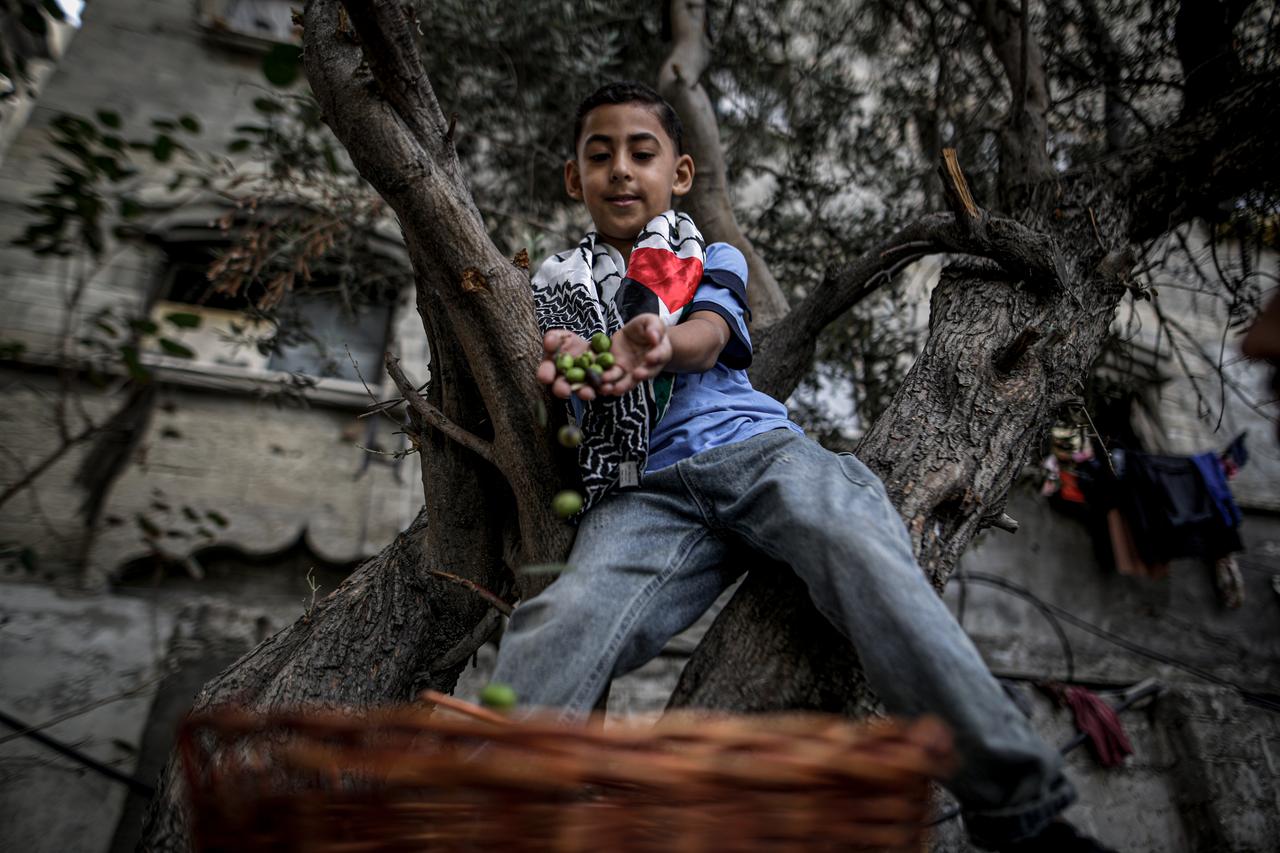
A boy harvests olives a children wearing traditional Palestinian clothing and keffiyehs take part in an event held at an educational point in the Shati Refugee Camp, to pass Palestinian culture and traditions on to younger generations on Palestinian Heritage Day in Gaza City Gaza, Palestine, on October 8, 2026. (AA Photo)

According to the ministry, approximately 158,909 dunams (39,267 acres) of farmland have been damaged out of Gaza's total agricultural area of 182,247 dunams (45,033 acres). A dunam is a land measurement commonly used in the region, equivalent to 1,000 square meters.

The agricultural losses form part of the broader destruction caused by the war, which has killed more than 74,000 Palestinians, injured over 175,000 and damaged approximately 90% of Gaza's infrastructure, according to Palestinian figures.

For farmers such as Baraka, the olive harvest has consequently shifted from a season that provided annual income and food security to one that yields only a fraction of what families previously depended on.

October 12, 2026 03:20 PM GMT+03:00